
When History Is Exchanged for Hero Worship
An Examination of Angel Studios' "Young Washington"


There are few subjects that demand greater care from the artist than history. A fictional tale may invent kingdoms, heroes, villains, and calamities without committing any offense beyond the ordinary hazards of poor storytelling. History affords no such liberty. It concerns itself with men and women who lived, suffered, erred, achieved, and whose decisions still cast long shadows across the present day. When a filmmaker undertakes the life of such a figure, he does not merely entertain an audience for two hours. He enters into an unwritten covenant with the public: that invention may serve drama, but it must not bury the essential reality of the subject. That obligation becomes especially grave when the subject is that of George Washington.
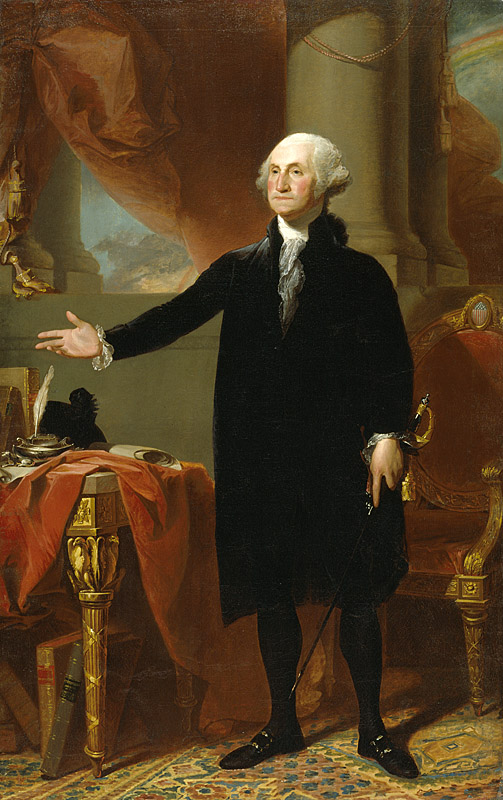
Washington has suffered the peculiar fate of becoming so famous that he is often no longer seen. He is invoked as a symbol, a monument, a proverb, and a patriotic shorthand; yet the living man behind the image remains far more compelling than the marble figures placed upon pedestals. The temptation has always been to present him as something more than a mere mortal: a flawless patriot, a providential instrument, a secular saint in military boots. Such portrayals may flatter national pride, but they impoverish historical understanding. They reduce an extraordinary human being to an uncomplicated emblem.
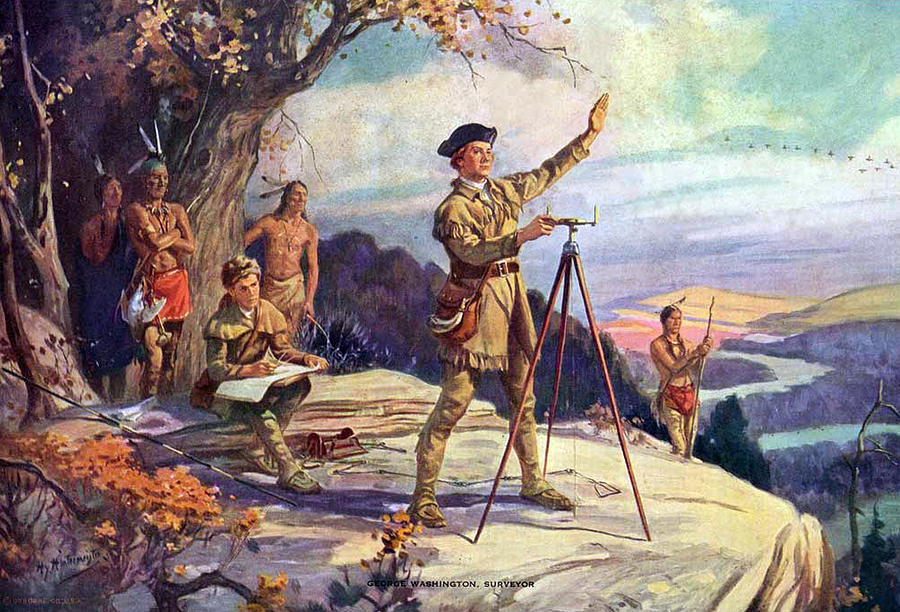
The irony is that Washington requires no embellishment. His early life contains all the materials of enduring drama. Long before he commanded the Continental Army, he surveyed the wilderness west of the Appalachian mountains. Before he became the first president, he stumbled through military blunders that might have ended his career before it properly began. Before he became “the Father of His Country,” he was an ambitious young Virginian navigating a violent frontier where imperial rivalry, Indigenous diplomacy, slavery, land speculation, class ambition, and personal insecurity collided with deadly consequence.
That is the Washington I hoped to find in the Angel Studios film Young Washington. Regrettably, the film too often gives us something simpler, safer, and far less interesting. The central failure of Young Washington is not merely that it gets history wrong, though it does so often and sometimes blatantly. Its deeper failure is that it mistakes reverence for insight. It approaches Washington not as a young man being formed by defeat, ambition, contradiction, and experience, but as a hero awaiting public recognition. His greatness appears predetermined. His moral instincts are rarely allowed serious uncertainty. His errors are softened. His inner life is simplified. The result is not a portrait of a young man becoming worthy of history, but a pious sketch of a man history has already endorsed.
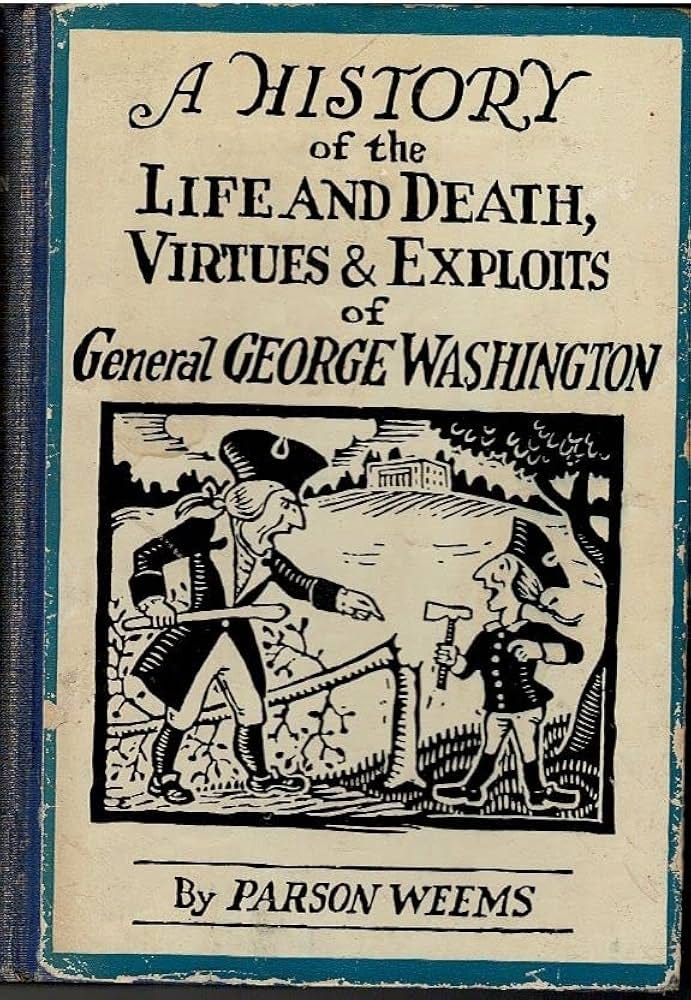
Every nation is tempted to exchange history for mythology. That temptation is not always malicious. It often springs from affection. A grateful people desire worthy ancestors. Children prefer legends over lectures. Politicians prefer symbols over subtleties. Filmmakers (no less than poets) discover that certainty is easier to dramatize than contradiction. Thus the rough edges of history are gradually worn smooth until the living man disappears beneath the polished marble of his own monument. Washington has long been vulnerable to this treatment. The famous cherry tree story from Mason Locke Weems’ biography endured not because historians ever substantiated it, but because it expressed the Washington that Americans wished to believe in: honest from childhood, morally complete from the beginning, incapable of the ordinary human mixture of ambition, vanity, anger, confusion, and growth. Yet such legends (however comforting they may be) are dangerous. They persuade us that greatness consists in perfection rather than discipline; that virtue is inherited rather than cultivated; and that extraordinary leaders arrive upon the stage of history fully formed.
The real Washington knew better. His military career began not with triumph, but humiliation. His early military experiences at Jumonville Glen, Fort Necessity, Braddock’s defeat at the Monongahela, and a friendly fire incident during the Forbes Expedition were not minor interruptions in an inevitable ascent. They were the hard education of a young officer whose ambition frequently exceeded his experience. He desired recognition. He sought advancement within the British imperial system. He wanted a royal commission. He cared deeply about his reputation. His pride & ego were genuine. His temper could escape him. Yet, these defects became part of the discipline by which he matured. That is a far more dramatic story than perfection.
Unfortunately, Young Washington repeatedly chooses reassurance where history offers tension. The screenplay surrounds its protagonist with figures who too often exist only to reflect his significance. Friends admired him. Opponents underestimated him. Mentors validated him. Critics appeared chiefly to be corrected. Too few of the supporting characters possess lives independent of Washington’s destiny. History, by contrast, was populated by intelligent people pursuing competing interests. French officers believed they were defending legitimate imperial claims. British commanders often looked down upon the colonial officers. Virginia elites balanced public service with land hunger and nepotism. Indigenous nations navigated imperial rivalry with diplomatic arbitrage and political leverage. None of these people existed merely to advance George Washington’s character arc.
When supporting characters lose that independence, historical drama becomes moral instruction rather than lived experience. The result is not only weaker storytelling. It is poorer history. The film’s treatment of slavery illustrates this failure most sharply. No honest examination of George Washington can ignore the world of Virginia slavery into which he was born into and from which he benefited. Washington inherited enslaved people as a child and, as an adult, expanded the enslaved labor force connected to Mount Vernon through inheritance, purchase, and marriage. By the end of his life, hundreds of enslaved men, women, and children lived and labored at Mount Vernon; though not all were legally his property. His views on slavery evolved over time, especially during and after the Revolution, and his will famously provided for the emancipation of those he legally owned after Martha Washington’s death. Yet he remained entangled in the institution throughout his life (Chernow; Ellis).
This contradiction does not make Washington less worthy of study. It makes him more necessary to study honestly. He was capable of public virtue while participating in an institution that denied liberty to others. That is not a detail to be hidden in the corner of the frame. It is central to understanding colonial Virginia, Washington’s social position, and the moral contradictions of the American founding. A film about a young Washington need not become a dissertation on slavery; but when enslaved people are minimized, softened, or treated as scenery in a world sustained by their labor, silence becomes its own historical argument. It suggests that reverence requires omission. It does not. Washington’s legacy is strong enough to endure honesty.
The same problem appears in the film’s treatment of Indigenous people. The French and Indian War (also known as the Seven Years War) was not merely a contest between Britain and France conducted in empty wilderness. It was a struggle in which Native nations were sovereign actors pursuing their own interests, defending their own homelands, forging their own alliances, and making their own decisions that shaped the outcome of entire military campaigns. The Ohio Country was not vacant. It was inhabited, contested, negotiated, and defended. Indigenous diplomacy was not background material. It was central to the war itself (Anderson; Taylor).
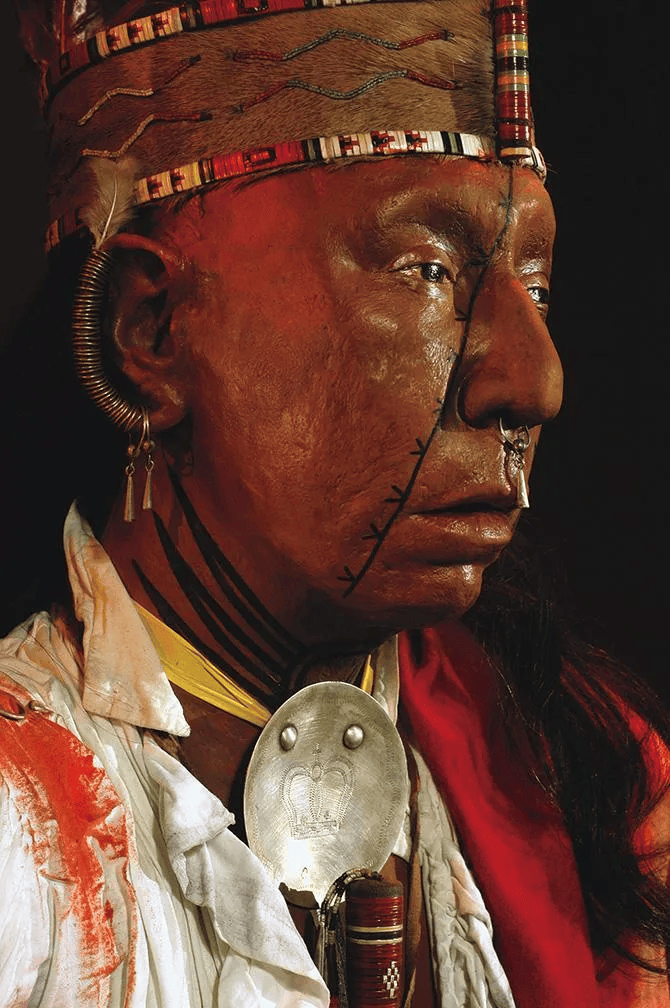
This is precisely why the film’s handling of Tanacharison, the Seneca leader known as the Half King, is so frustrating. Tanacharison was not a decorative frontier figure. He was a crucial Indigenous ally during the opening phase of Washington’s military career, especially at Jumonville Glen. Yet the film reportedly reunites him with Washington after Braddock’s defeat at the Battle of the Monongahela in July 1755. Such a meeting was impossible. Tanacharison had died of pneumonia in October 1754, mere months after the surrender of Fort Necessity. To resurrect him for dramatic convenience is not a harmless chronological shuffle. It reduces an Indigenous leader with his own political life, alliances, and consequences into an accessory for Washington’s story.
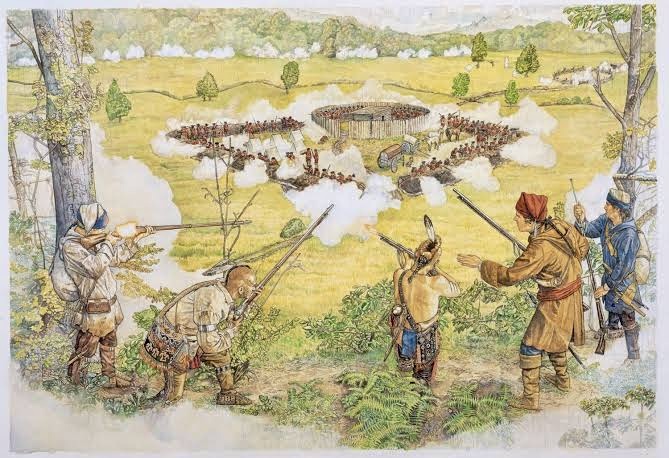
The same carelessness also infects the film’s depiction of Fort Necessity. The actual Battle of Fort Necessity, fought on July 3, 1754, was a miserable, confused engagement in driving rain. Washington’s men defended an unfinished and poorly situated fortification while French forces and their Indigenous allies fired from the surrounding woods, ravines, and brush (on high ground). The weather was not atmospheric decoration. It was part of the disaster. Rain soaked the trenches, rendered the fort's gunpowder supply useless, deepened confusion, and contributed to the miserable conditions under which Washington surrendered.
The film, by contrast, deliberately places the rainstorm before the battle and then stages the French assault as if it were a conventional open-field engagement, complete with French troops advancing in exposed formation and cannons that look less like mid-eighteenth-century field artillery, and more like they were dragged from a medieval castle. This is not merely a visual quibble. The historical Fort Necessity taught Washington painful lessons about the importance of terrain, proper fortifications, alliance establishment, weather, logistics, and the limits of European style tactics in North America. By replacing that ugly, claustrophobic reality with visual wide-shot spectacle, the film obscures the very lessons that shaped him.
Even more baffling is the film’s treatment of casualties. Christopher Gist and Captain James MacKay are depicted as dying violently at Fort Necessity, despite the fact that in real life, both men survived the battle. Gist (the experienced frontiersman and guide) and MacKay (the officer commanding an independent company from South Carolina) were real people with documented roles in the campaign. Killing them for dramatic weight may provide a momentary emotional jolt, but it does so at the expense of compromising that historical reality. If a film must invent deaths to make Fort Necessity dramatic, then it has failed to understand Fort Necessity. The actual event was dramatic enough.
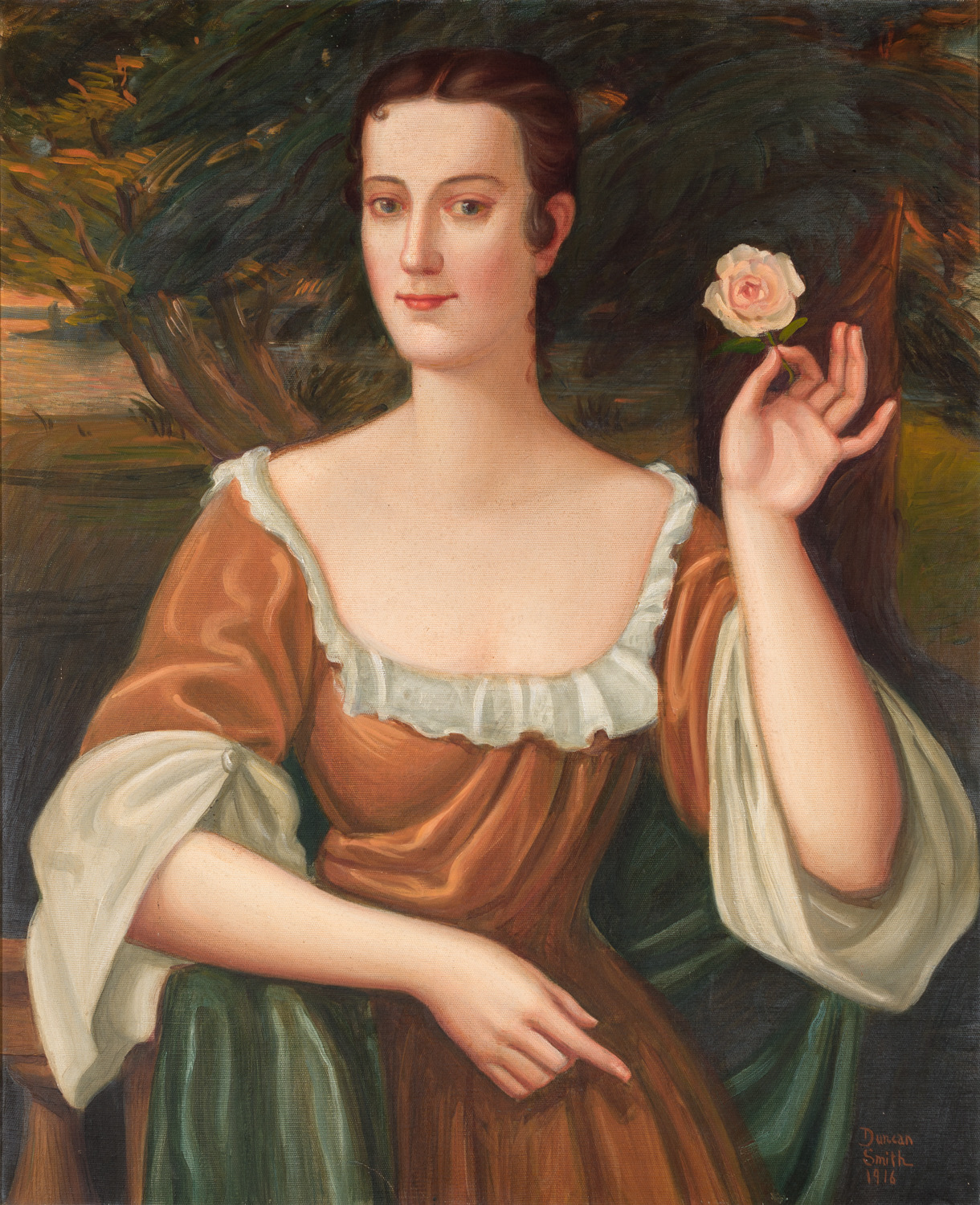
Furthermore, the invented romance between George Washington and Sally Cary is another example of the film’s preference for conventional storytelling over documented complexity. Sally Cary was already married to George William Fairfax in 1748, before Washington first met her. Whatever later admiration Washington may have felt for her, the relationship depicted in the film as a youthful romance is unsupported by the historical record. Granted, dramatic invention is common in historical cinema, but this subplot contributes little beyond unnecessary sentimentality. Worse still, it does not even succeed as romance. The dialogue between Washington and Sally is wooden, materialistic, and beyond superficial; with so little emotional texture that the actors appear virtually stranded. Rather than recalling the effortless elegance of John Barrymore & Greta Garbo in Grand Hotel, the scenes evoke the famously stiff exchanges between Natalie Portman and Hayden Christensen in Star Wars: Attack of the Clones. That is not a comparison any historical romance should invite. The time would have been better spent developing Washington’s documented relationships with figures who actually shaped his early career: Christopher Gist, George William Fairfax, or Tanacharison.
In addition to that, the film’s religious framing also demands scrutiny. Washington historically was an irregular attendant of the Anglican Church, throughout the course of his life, while also being a more active member of the fraternal order of Freemasons; with the rank of Master Mason. He also irregularly employed religious rhetoric in his correspondence, and regarded morality as essential to one's social/political life. However, the jury is still out regarding the precise nature of his own private theology. He rarely discussed the doctrines of any particular religious denomination in detail, he seldom referred to the teachings of any particular religious figure in either conversation or writing, and such rhetoric as his often favored broad terms: Providence, the Supreme Being, or the Grand Architect of the Universe (matching that of Freemasonry). Some even regard him as an agnostic rationalist, heavily influenced by the philosophical tenants of the Enlightenment. Nevertheless, historians caution against any certainty towards one theological classification in Washington's case (Chernow; Ellis).
The problem with Young Washington is not that it acknowledges religion. The problem is that it appears to present Washington’s inner religious life with a certainty that the historical record simply doesn't permit. In doing so, it risks replacing eighteenth-century ambiguity with contemporary reassurance. Washington was not an evangelical mascot. He was a man of his own century, formed by a combination of Anglican culture, Enlightenment restraint, Masonic public virtue, and a lifelong habit of disciplined self-presentation. A good film would allow that ambiguity to breathe. This one, does not.
Now, having considered the historical record, the film must also stand before the tribunal of cinema itself. It is possible for a historically inaccurate film to succeed as compelling drama. It is also possible for a factually scrupulous film to fail as a visual art form. Historical authenticity and artistic excellence are not identical virtues; though, the finest productions strive to unite them. Young Washington, regrettably, struggles to achieve either. For, its most serious artistic deficiency lies in the screenplay. The first obligation of a screenplay is not to educate, inspire, or flatter. It is to persuade us that the people on screen possess lives independent of the camera’s attention. Characters must want something, fear something, conceal something. They must surprise us without betraying themselves. Above all, they must possess agency. Too often, Young Washington substitutes function for personality. The supporting characters serve to encourage, warn, correct, or admire the protagonist, and then vanish once their purpose has been served. Their conversations frequently resemble speeches rather than exchanges. Instead of dramatic friction, the film offers affirmation. Instead of conflict rooted in competing desires, it offers moral signposting.
This also weakens the perception of Washington. A protagonist becomes interesting through resistance. The greatest historical dramas surround their protagonists with adversaries and allies whose arguments possess genuine force. They understand that conflict is not merely physical. It is philosophical, emotional, social, and political. Young Washington too often removes that friction, by leaving its protagonist less challenged, and makes their struggle for their goals less interesting.
The dialogue suffers from a similar uncertainty. At moments, the script reaches for an elevated eighteenth-century cadence. While at others, it drops into the polished plainness of contemporary inspirational drama. The result is neither authentically period nor convincingly stylized. One need not reproduce eighteenth-century speech exactly to evoke the period. One need only trust that the people of the past were intelligent enough to speak with specificity, wit, tension, and contradiction. Instead, the film repeatedly tells the audience what to admire rather than allowing admiration to arise naturally.
Granted, the actors fare better than the material. William Franklyn-Miller (known more widely as a model than as an actor) brings a composed physical presence to Washington. At his best, he showcases a young man conscious of responsibility beyond his years. His posture, restraint, and quiet determination occasionally hint at the disciplined commander that history would later remember. Unfortunately, an actor cannot reveal contradictions that the script refuses to. Subtle performance alone cannot indefinitely compensate for dialogue that explains feeling, rather than actually dramatizing it. The supporting cast labors under similar constraints. Kelsey Grammer as Lord Fairfax and Ben Kingsley as Lieutenant Governor Robert Dinwiddie bring professionalism and weight, but even accomplished performers cannot transform a sketch into a portrait. Their presence lends the film a degree of credibility, yet the characters themselves remain dramatically limited. The failure belongs less to the cast than to the architecture of the screenplay.
Visually, the film is likewise uneven. Mid-eighteenth-century North America offers astonishing cinematic possibilities: endless forests, rivers as highways, mountains dividing empires, mist over frontier settlements, lonely outposts surrounded by hostile uncertainty. Such landscapes should feel vast, beautiful, and threatening. Too often, they merely occupy the background. The cinematography records events competently, but seldom discovers a visual language equal to the grandeur or menace of the setting. Establishing shots rarely linger long enough to impress upon the audience the scale of the frontier. Interior scenes lack the atmosphere that candlelight, firelight, shadow, and natural illumination might have provided. The wilderness should function almost as a character. Here, it too often feels like scenery.
The costumes and production design are similarly inconsistent. Some interiors display care. Certain garments suggest research in cut and silhouette. But other costumes look conspicuously modern in fabric, finish, or construction. Uniforms often lack the weathering expected of soldiers campaigning through mud, rain, smoke, and forest. Civilian clothing sometimes appears newly purchased rather than lived in. These details matter because costume is one of the audience’s first encounters with the past. Poor texture erodes illusion long before a line of dialogue can repair it.
Last, but not least, the battle choreography is perhaps the clearest collision between historical misunderstanding and cinematic weakness. The North American theatre of the Seven Years War was not Napoleonic spectacle (akin to War & Peace or Waterloo) or Victorian pageantry (akin to Charge of the Light Brigade or Zulu Dawn). It was a conflict of broken terrain, ambush, uncertainty, improvised tactics, and fragile alliances. European drill mattered, but survival required adaptation. Dense woods could conceal enemies at close range. Roads were crude or nonexistent. Supplies failed. Intelligence was incomplete. A commander could be defeated as much by geography and weather as by enemy gunfire.
That uncertainty rarely emerges in Young Washington. The combat often feels too clean, too orderly, too modern in its staging. Musket volleys lack almost any tactical coherence. Formations simply appear in one shot, and then dissolve in next one for so-called visual convenience. Officers expose themselves without convincing purpose. Most damagingly, the frontier seldom feels dangerous. Every tree should suggest concealment. Every moment of silence should carry weight and a threat. Instead, many of the sequences proceed with a predictable rhythm that sacrifices the element of suspense for straightforward action. One cannot help thinking of The Last of the Mohicans, a film hardly immune from historical liberties, yet one that understood how geography, weather, exhaustion, and fear could become instruments of storytelling. Its combat felt physical, chaotic, and tied to the landscapes from which the production was filming at. Young Washington never approaches that level of visceral conviction.
This is the film’s central artistic disappointment. It's not wholly incompetent. The cast is earnest. Certain locations are attractive (partially filming on location in Virginia; but then filming the wilderness scenes in Ireland). Some design elements work. The score has moments of restraint. Unfortunately, the parts never cohesive enough to form a compelling vision. The screenplay lacks dramatic complexity. The cinematography lacks distinction. The production design lacks consistency. The battle choreography lacks historical and physical authenticity. The film is sincere, but sincerity is not the same as success.
Every generation inherits the privilege and burden of interpreting the past. The historian does so through archives. The teacher through instruction. The actor through performance. The filmmaker through images capable of reaching millions, who may never open a scholarly biography or step inside a museum. A single scene can shape popular memory for decades. That influence is an extraordinary opportunity and an equally extraordinary responsibility. It is because I believe in that responsibility that I cannot in good conscience recommend Young Washington. My disappointment does not arise from hostility toward patriotic storytelling. Nor does it come from the belief that historical films must behave like visual equivalents to textbooks. Drama requires compression. Dialogue must often be invented. Timelines must sometimes be adjusted. No serious critic demands perfect reproduction of every event. What cannot be justified is the abandonment of historical character.
There is a difference between simplifying history and distorting it. One clarifies. The other obscures. Young Washington consistently chooses certainty where history offers complexity, reverence where history offers contradiction, and inspiration where history offers humanity. It softens or invents where the reality would have been far stronger. It kills people who did not die. It stages battles in ways that erase the struggles that Washington actually faced. It resurrects Tanacharison after his documented death. It invents romance where the record doesn't support it. It treats religion with more certainty than the evidence permits. It minimizes slavery and Indigenous agency when both are essential to the world that formed George Washington.
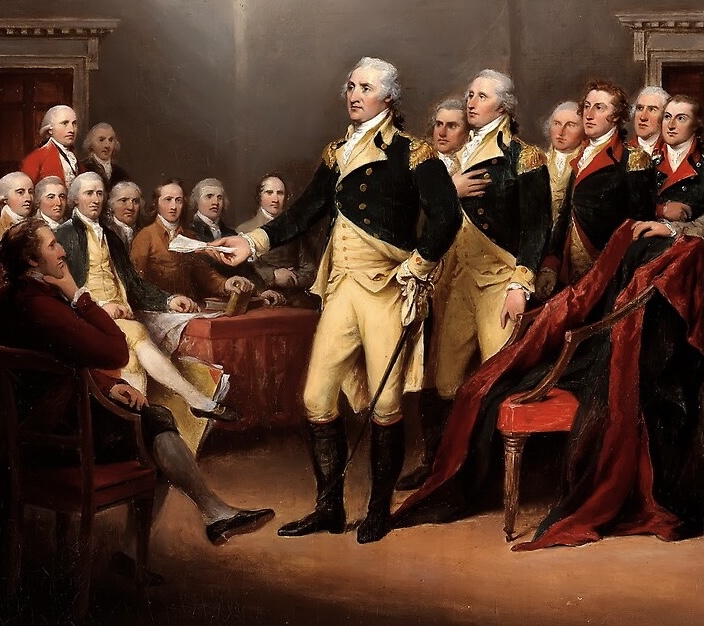
The tragedy is that the man never needed such protection. His actual life contains greater drama than any screenwriter could reasonably invent. Here was a young surveyor who learned the wilderness before he learned command. Here was an ambitious provincial officer whose early failures became the foundation of later humility. Here was a Virginia planter whose participation in slavery existed alongside an evolving discomfort that never fully freed him from complicity. Here was a commander who endured defeat, ridicule, illness, mutiny, and exhaustion, yet continued to persevere. Here was a president who voluntarily relinquished his power when history supplied countless precedent of victorious revolutionary leaders choosing absolutism, autocracy, & dictatorship instead.
If these facts do not inspire, no amount of embellishment ever will. Washington’s greatness rests not upon perfection, but discipline. He mastered himself before he mastered armies. He cultivated restraint in an age when ambition frequently consumed public virtue. He understood that democracy depended not merely upon brilliant speeches, but upon habits of character: patience, moderation, duty, endurance, and the willingness to place collective institutions above individual glory. Those lessons remain modern because they are human. A flawless Washington offers little instruction. An imperfect Washington who learned, failed, corrected himself, governed his ambition, and surrendered power offers something far more valuable. He offers an example not of sainthood, but of character formed under pressure. That's the Washington I hoped to encounter, and that's the Washington largely absent from this film.
As an actor myself, I recognize the immense labor required to bring any production to life. Every motion picture represents the combined efforts of performers, designers, technicians, editors, composers, craftspeople, and countless others whose names pass quickly through the credits. I do not question their dedication. Several performances suggest sincere commitment. My criticism is directed not at the labor of those artists, but at the creative decisions that shaped the final product.
For viewers unfamiliar with Washington’s early life, Young Washington may appear persuasive. For those acquainted with the record, it is difficult to escape the sense of an extraordinary opportunity diminished by timidity, ideology, and dramatic convention. America’s first president deserves better. Not because he was flawless. Not because he was beyond criticism. Not because he should be worshipped. He deserves better because the reality is infinitely more compelling than the legend. History does not require its greatest figures to be perfect. It requires only that we remember them honestly.
When cinema chooses honesty, it can entertain, educate, challenge, and inspire. When it chooses mythology in place of understanding, it may comfort the audience, but it does not enlighten them. George Washington earned his place in history through difficult choices made in an imperfect world. His legacy deserves storytellers with the confidence to trust that those choices, loyally portrayed, are dramatic enough. They always were. They always will be.
Final Verdict:
Film: ★★☆☆☆ (2/5)
Historical Accuracy: ★☆☆☆☆ (1/5)
Performances: ★★★☆☆ (3/5)
Recommendation: George Washington deserves better, and so does the audience. Save your money, spend an evening with a good biography, and discover the far more compelling story that history has preserved.
WORKS CITED
Anderson, Fred. Crucible of War: The Seven Years’ War and the Fate of Empire in British North America, 1754–1766. Vintage, 2001.
Chernow, Ron. Washington: A Life. Penguin Press, 2010.
Ellis, Joseph J. His Excellency: George Washington. Knopf, 2004.
Preston, David L. Braddock’s Defeat: The Battle of the Monongahela and the Road to Revolution. Oxford UP, 2015.
Taylor, Alan. American Colonies: The Settling of North America. Penguin, 2001.
Weems, Mason Locke. The Life of Washington. 1800.
About the Creator
Jacob Herr
Born & raised in the American heartland, Jacob Herr graduated from Butler University with a dual degree in theatre & history. He is a rough, tumble, and humble artist, known to write about a little bit of everything.
Enjoyed the story? Support the Creator.
Subscribe for free to receive all their stories in your feed.
Comments
There are no comments for this story
Be the first to respond and start the conversation.