
Transportation Mistakes Large Groups Should Avoid
Why Passenger Count Isn't the Whole Pictur

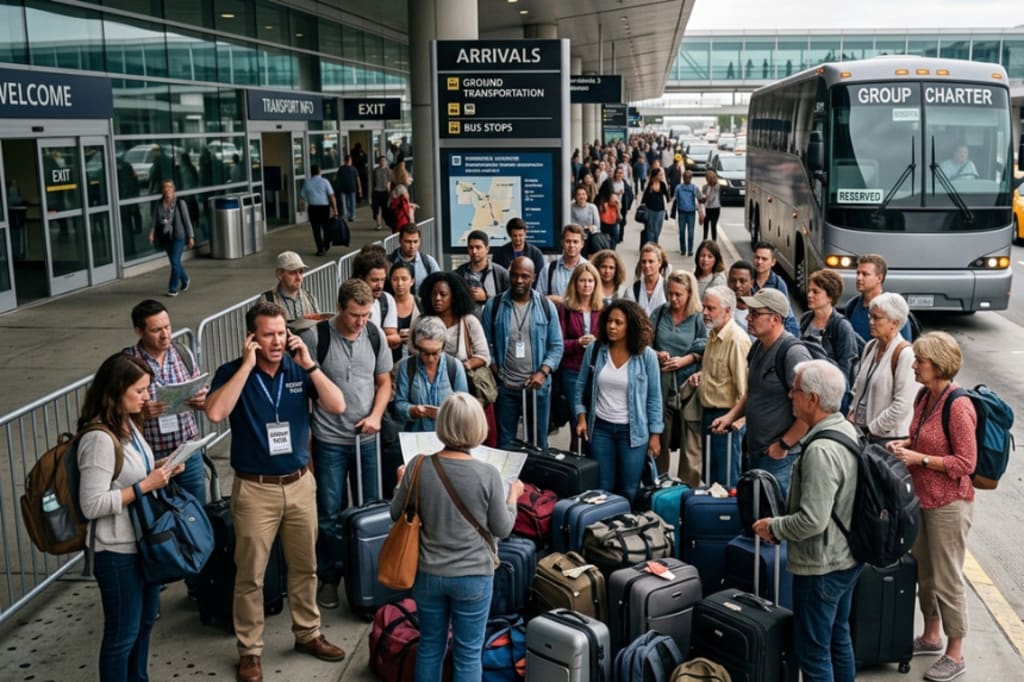
Planning a trip or event for a large group is already a lot of work. The venue, the schedule, the food - there's plenty to think about. But one thing that gets underestimated more than almost anything else is transportation.
Get the transport right and nobody even notices. Get it wrong and it becomes the thing everyone remembers - for the wrong reasons. Missed pickups, overcrowded vehicles, no backup plan when something goes sideways - these are the kinds of problems that turn a well-organized event into a stressful one.
Mistake #1: Waiting Too Long to Book
This is the most common one, and it happens to experienced planners too. You know the event is coming, you figure there's plenty of time, and then suddenly it's six weeks out and the vehicles you need aren't available.
Transportation companies - especially quality ones - book up fast, particularly on weekends, around holidays, and during peak seasons. Waiting until the last minute usually means fewer choices, higher prices, and the risk of settling for a company you haven't had time to properly research.
A good rule of thumb: book at least two months out for most group events. For large events or peak dates, six months is safer. Even if your plans aren't fully locked in, securing the vehicle early with a clear cancellation policy gives you flexibility without losing your spot.
Mistake #2: Counting Seats Instead of Planning the Trip
Here's where a lot of groups go wrong. They figure out how many people are coming, find a vehicle with enough seats, and call it done. But seats aren't the only thing that matters.
Do your passengers have luggage? Sports equipment? Presentation materials? A 35-passenger minibus technically fits 35 people - but if those 35 people each have a suitcase, you have a problem. Luggage needs real undercarriage space, not just overhead bins.
The other side of this mistake is booking too large. A full motorcoach for 20 people going across town is an expensive waste. Match the vehicle size to your actual group and trip logistics, not just your headcount.
Also think about your route. Multi-stop trips, venues with tight access, or urban drop-off zones may require a smaller or more maneuverable vehicle than a standard full-size coach.
Mistake #3: Skipping the Research on the Transportation Company
Not all transportation providers operate the same way. Some are well-maintained and reliable. Others show up late, send the wrong vehicle, or have poor communication when something changes.
Before booking, check reviews on Google and other platforms. Ask about their backup plan - what happens if a vehicle has a mechanical issue on the day of your event? Ask whether you'll have direct contact with the driver or if everything routes through a dispatch line. Ask about their experience with events similar in size to yours.
A company that's done this dozens of times knows how to handle the unexpected. One that hasn't may leave you problem-solving on the day.
For groups traveling outside Connecticut - say, for a conference, a destination event, or a multi-city itinerary - this research matters even more. Companies that operate in unfamiliar markets need local knowledge to navigate efficiently. Groups heading to the Atlanta area, for example, benefit from working with providers who actually know the region's traffic patterns and venue logistics. The kind of experienced, locally knowledgeable service that charter bus Atlanta specialists provide - professionals who understand the routes, the peak times, and the venues - is what prevents the small miscalculations that delay entire groups.
Mistake #4: Not Having a Backup Plan
Things happen. A vehicle runs late. Traffic stacks up on I-95. A flight is delayed and half your group won't arrive until two hours after the original pickup time. These aren't unlikely scenarios - they're predictable ones.
The groups that handle these moments smoothly are the ones that planned for them in advance. That means asking your provider about contingency vehicles, having a direct line to your driver or coordinator, and building buffer time into your schedule at key transition points.
Don't plan a transportation schedule that requires everything to go perfectly. Plan one that can absorb a delay without everything else falling apart.
Mistake #5: Leaving One Person to Manage Everything Alone
Large group transportation is a coordination job. Someone needs to track who's boarded, manage questions from passengers, communicate with the driver, and handle issues if they come up.
When that responsibility falls to one overwhelmed person who's also trying to manage everything else about the event, things fall through the cracks. Designate a specific transportation coordinator for the day - someone whose only job during loading and travel is making sure the transport piece runs smoothly. Give them the driver's direct contact, a printed copy of the itinerary, and the authority to make judgment calls if something changes.
Mistake #6: Giving the Driver Vague Directions
"The venue near downtown" or "the hotel on the main road" aren't directions. Drivers need full addresses, specific drop-off zones, and clear timing - especially in unfamiliar areas or at large venues where buses have designated loading areas separate from the main entrance.
Share a detailed itinerary with your driver before the day of travel. Include every stop with the full address, arrival time, and any access notes - like "enter from the south gate" or "loading zone is on the second level of the parking structure." The more specific you are, the less room there is for confusion that costs everyone time.
Conclusion
Transportation is one of those things that works invisibly when it's done well and becomes the story of the whole event when it isn't. The good news is that most large group transportation problems are entirely preventable with the right planning.
Book early, match the vehicle to the actual trip, research the provider, and have a backup plan. Those four steps alone prevent the vast majority of group transportation headaches.
About the Creator
Veyla Drovik
Research-driven real estate and home improvement writer creating informative, locally focused content for Connecticut homeowners, property buyers, and community readers.
Enjoyed the story? Support the Creator.
Subscribe for free to receive all their stories in your feed.
Comments
There are no comments for this story
Be the first to respond and start the conversation.