
The Sixth Sense (1999) is Not the Movie You Think it Is.
Brilliant? Absolutely, but still an overrated ghost story.

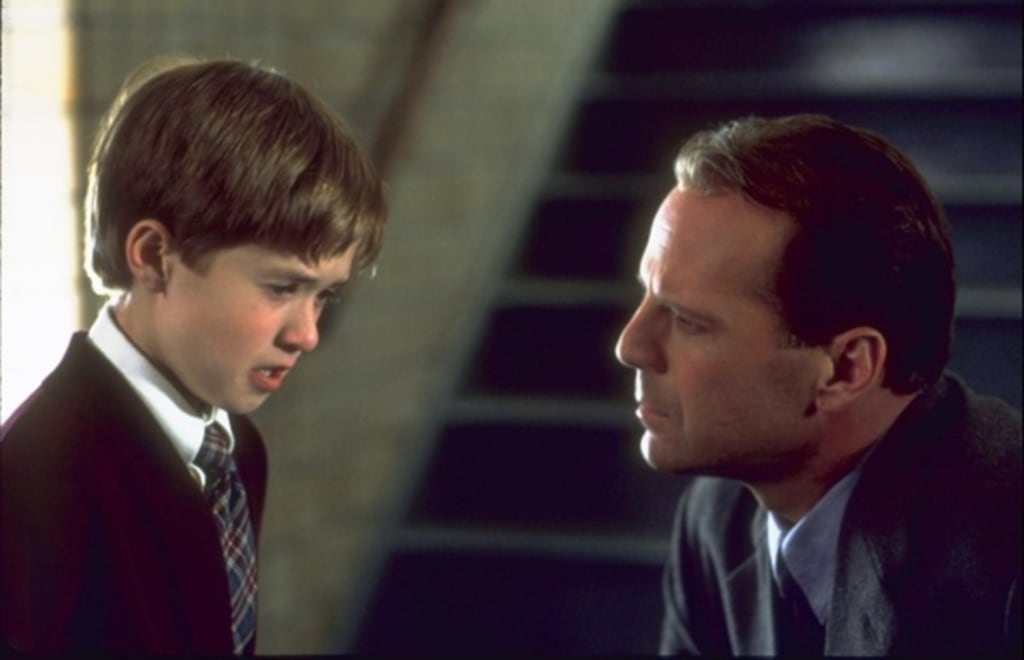
Who does Dr. Malcolm Crowe truly help in "The Sixth Sense?"
It's hard to believe that The Sixth Sense (1999) is over a quarter of a century old. I say this, not just because I saw it in the theatre before "everyone" knew the twist and that I was blown away by the ending. What amazes me is that--even though I know the ending and its twist--I can watch it and still get teary-eyed at Cole's hug with his mother and openly weep at Malcolm's discovery. I love this movie. That's why I acknowledge that, if you assume that the story is about a child psychologist who does his best to help a boy deal with his ability to see ghosts, the film is an abject failure. And, because I will definitely be spoilery in this post: IF you haven't watched it and IF you don't know the twist and IF you still want to be surprised, then go stream it now. Amazon Prime viewers can watch it for free. Come back when you've seen it (or have read all about it on TV Tropes), so that I won't ruin the movie for you.
AVAST! HERE BE SPOILERS!
In a nutshell, the plot of The Sixth Sense is often described as a little boy learning to cope because he sees ghosts. That assumption is not true at all, as I will explain below. Malcolm is discussed as being deeply caring and as being tied to the living over his guilt for being unable to help his former patient, Vincent Gray. If that was truly the theme of this movie then the movie is highly overrated, given that it is not guilt or his truly caring nature that holds him back from leaving the living world. That's right. Malcolm did not stay behind because he wanted to help Cole. Neither helping people or guilt had anything to do with his being unable to cross over.
But wait? What about Malcolm's final speech to his wife? Wasn't the hidden subplot that the deceased Malcolm must help Cole learn to cope, assuaging his guilt over his former patient, so that he, Malcolm, can shuffle off this immortal coil? No, although that's how he explains it to himself. It is true that several subplots exist. Cole needs to overcome bullying. Cole needs to learn to open himself up to caring again. Cole's mother needs to learn to understand why her son is so troubled. Malcolm's wife needs to make a new life for herself. Part of what makes this movie so impactful is that all of these subplots are intertwined by a single theme, even if the characters are completely unaware of each other's actions. So, let's take a look at these subplots before trying to answer the big question: who exactly did Malcolm help in order to be able to move on?
Cole is Bullied: Cole a troubled nine-year-old boy who sees ghosts. He's coping, but barely. One thing that makes his life difficult is that the other children seem to recognize that something is odd about him. As a result, they tease him, call him names, and lock him in a room at a party--and he is submissive to their behavior. It is not until he begins to realize that his life has value, even if he's not entirely what is considered "normal," that the bullies lose power over him. Interestingly, part of his change in attitude comes after he calls his teacher "Stuttering Stanley." Did his brief stint as a bully teach him how to beat the bullies? Or was this incident only bringing forth something that he had to confront within himself?
The audience later learns that a teacher* died in an auditorium fire and that she later spoke to Cole, so it is entirely possible that this ghost is the source of his information. What we do know is that Cole eventually comes to terms with being bullied, becoming the star of the play while his tormentor becomes the "village idiot." Where was Malcolm in all of this? Watching from the wings.
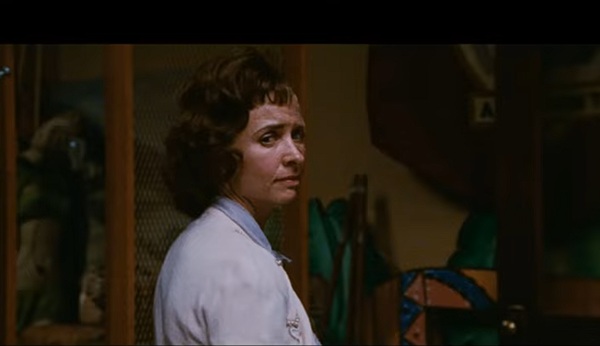
Cole Needs to Open Up: Like a lot of children, Cole is traumatized by his parents' marriage ending. Like Malcolm, Cole has a difficult time moving on from what he perceives as a tragedy. Like many children his age, he closes himself down from human contact. Not only does Cole allow the bullying mentioned above, but he also withdraws from his mother and from the world in general. Through the course of the movie, the audience sees Cole make small attempts to communicate with his mother, with Malcolm, even with his teacher, only to withdraw again when his attempts are cut down through misunderstanding.
As he makes connections, both with Malcolm and with the father of the poisoned girl, he slowly figures out how to reach his mother. Again, Malcolm watches as Cole models the behavior. We don't see Cole talking to his mother while she sleeps, as Malcolm suggests. However, we do see Cole reflect that advice back to Malcolm, later seeing Malcolm talking to his wife as she sleeps almost immediately before he moves on.
Cole's Mother Doesn't Understand: Honestly, how do you understand that your child sees dead people? The school frames Cole's behavior and drawings in the only way they understand, as dysfunction. She cannot see the ghosts, even if she can see the results of their interactions with the living world. She cannot see Malcolm, although one scene of the movie is clearly manipulating the audience to make it seem so. She has not hired Malcolm. She has never spoken to him.
Lynn Sear is not a small-minded woman, but she is a very rational and practical one, trying to hold her life with Cole together in the face of difficulty. She cannot accept Cole's explanation about the brooch because she has not yet come to understand that the strange things she's been seeing are supernatural. She begins to believe that there is more to Cole than she understands when she sees the same shining artifact in all of the pictures of Cole on the wall. When Cole finally tells her about the bicyclist who has been killed, followed by telling her about his grandmother's story being at Lynn's recital, she opens herself to accepting her son's differences. She still doesn't understand, but she's willing to listen and to learn.
Malcolm's Wife needs to Move On: It's true. Anna Crowe has apparently been struggling to adjust to life without her husband. The few scenes we see of her show her has a strong, capable woman who needs help adjusting to moving on through her widowhood. She's young. She speaks passionately about the wedding band to the couple who are ring shopping. She's sending out tentative messages of interest to a young man who seems interested in her. And yet, she still goes out for an anniversary dinner. She still sleeps on the couch with a wedding video playing. Malcolm's "permission" to her notwithstanding, Anna has already set the foundation for a new life post-Malcolm. If his final words to her do anything, it's to provide her with a sense of relief that she did not feel earlier. She is able to let him go, enabling him to finally leave.
As can be seen, all of these subplots would resolve whether Malcolm was present or not. And, in all fairness, he really isn't present for them at all. Cole finds value in himself as he helps the living and the dead. This ability to see that he has value allows him to reopen to the world. He's no longer afraid of the ghosts because he understands his role in their afterlives more clearly. He is free to open up, to take risks again. He also knows that his mother will be supportive of him. She might struggle to understand his gift, but over time their little family can be healed. Finally, Malcolm's wife was already in the process of moving on. She clearly still loved her late husband and found it hard to come to terms with his death, but she was already making steps towards making human connections in her post-Malcolm life. She did not need his help to move on, despite his final scene making it easier to do so.
Malcolm is scoring 0 of 4 as the movie ends. The people who tear up at the beautiful final scene between Malcolm and his wife are inflating its value, becoming emotional over a lie that they are telling themselves. The fact is, Malcolm Crowe helped only one person during the movie: himself. And, truthfully, his belief about why he can now move on is a lie.
But What About Helping Cole Through Assuaging his Guilt Over Vincent? That's the rub, isn't it? Ghost-related mythology suggests over and over that a ghost remains among the living due to having "unfinished business."
If "The Sixth Sense" is a ghost story, then it is highly overrated. The ghosts play a relatively minor part in the story and are virtually indistinguishable from living people in appearance. Fail. If it is about Malcolm helping other people or finishing unfinished business, then it is highly overrated. He spends much of his screen time watching Cole or fruitlessly trying to communicate with living people. Fail.
If "The Sixth Sense" is about his assuaging his guilt over Vincent, then it is also highly overrated. Malcolm learns that Vincent is like Cole. Vincent heard the ghosts. The audience sees Malcolm's face when the truth becomes apparent to him. What does Malcolm do with the information? The audience is never told, although we see Malcolm become more accepting of Cole's ability. Realistically, the audience might even understand that Malcolm could never have helped Vincent, not without Cole giving him the needed context for what he learned.
While Malcolm may have also reached that conclusion, his need to free himself of the guilt from failing Vincent was not enough for him to move on. Rather, Malcolm lingers on until he can help himself understand one thing. Malcolm learns that he is dead.
Because it is a movie, the audience never questioned why he appeared in the middle of ongoing situations, or why some scenes seemed to imply that important actions had taken place off screen. Establishing shots are, simply put, boring. In the audience's mind, it was clear that he'd had a disagreement with Lynn Sear before Cole showed up from school. The disagreement itself was not important, only their silence afterward was. The way movies are made lent credibility to the audience filling in the blanks. But Malcolm was "living his life." In his mind, he was not in a movie. It was not until he became aware of his death that he could see that his "life" played in scenes. He had no memory of going anywhere or of having daily interactions with anyone.
Once again, the audience had been told the truth, from almost the beginning. Cole has been our truth-teller all the way through the film. He states, "I see dead people," as he looks squarely at Malcolm. Malcolm can't hear this truth for what it is. He doesn't know that he's dead. He (and the audience) simply believes that Cole is identifying his problem. Cole later states, "Ghosts see what they want." Once again, Malcolm cannot hear this truth. He doesn't know he's dead. All the knows is that he can't open the door with the red knob. He can't see the table that has been moved in front of it. He can't see that Lynn and Ann fail to interact with him simply because they cannot hear him, not because they are upset with him in any way. The audience sees him making notes and listening to tapes, but can he really manipulate the world that way? Or does Malcolm only believe that he is doing those things, because that is what he wants to see and wants to believe?
Shyamalan never answers that question, because, ultimately, the answer is unimportant. The brilliant twist? It's a big, huge, gnarly McGuffin that has no real impact on the story. The importance rests not with the fact that Malcolm is dead. The importance rests with Malcolm realizing that he's dead. "The Sixth Sense" is not about Malcolm helping Cole or assuaging his guilt over Vincent. Rather, it's ultimately about letting go, about accepting loss, and about how failure to see the obvious holds people back. Every vignette is ultimately resolved by acceptance, however bittersweet. Every person who has achieved acceptance is permitted to move on, even Malcolm himself.
Is "The Sixth Sense" an overrated ghost story? Absolutely. Has the twist been afforded too much importance over the years? No doubt. Regardless, "The Sixth Sense" remains M. Night Shyamalan's masterpiece and one of the most brilliant films of the late twentieth century, despite being overrated for the wrong reasons.
M. Night Shyamalan discusses deleted scenes from "The Sixth Sense." I thought that I saw the scene referenced at about the 3:45 minute mark in the theater, but I may have seen it on a second viewing via a streaming service. That scene further drives home how Cole has learned to cope with the ghosts and learned how to use their information on his own.
*The identity of the woman is never confirmed, according to an article on "Screen Rant." While it seems likely that she was a teacher due to her presence in the auditorium, parents and teaching assistants often help put on plays.
About the Creator
Kimberly J Egan
Welcome to LoupGarou/Conri Terriers and Not 1040 Farm! I try to write about what I know best: my dogs and my homestead. I'm currently working on a series of articles introducing my readers to some of my animals, as well as to my daily life!
Enjoyed the story? Support the Creator.
Subscribe for free to receive all their stories in your feed. You could also become a paid subscriber, letting them know you appreciate their work.
Comments
There are no comments for this story
Be the first to respond and start the conversation.