
The Alchemist Is Not as Deep as We Pretend It Is!
Maybe the problem isn't the book's message, it's what happens when we start believing that every dream must be followed.

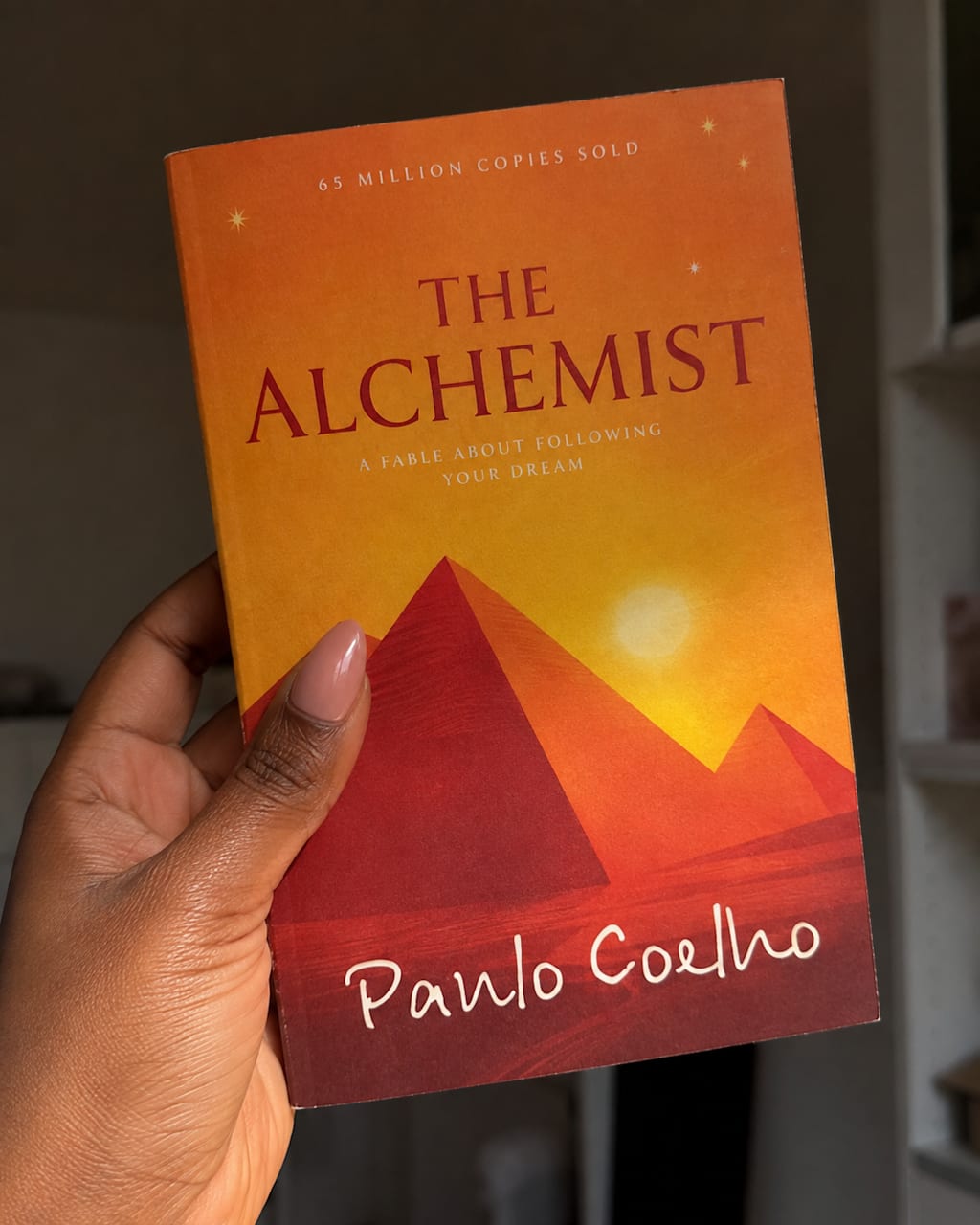
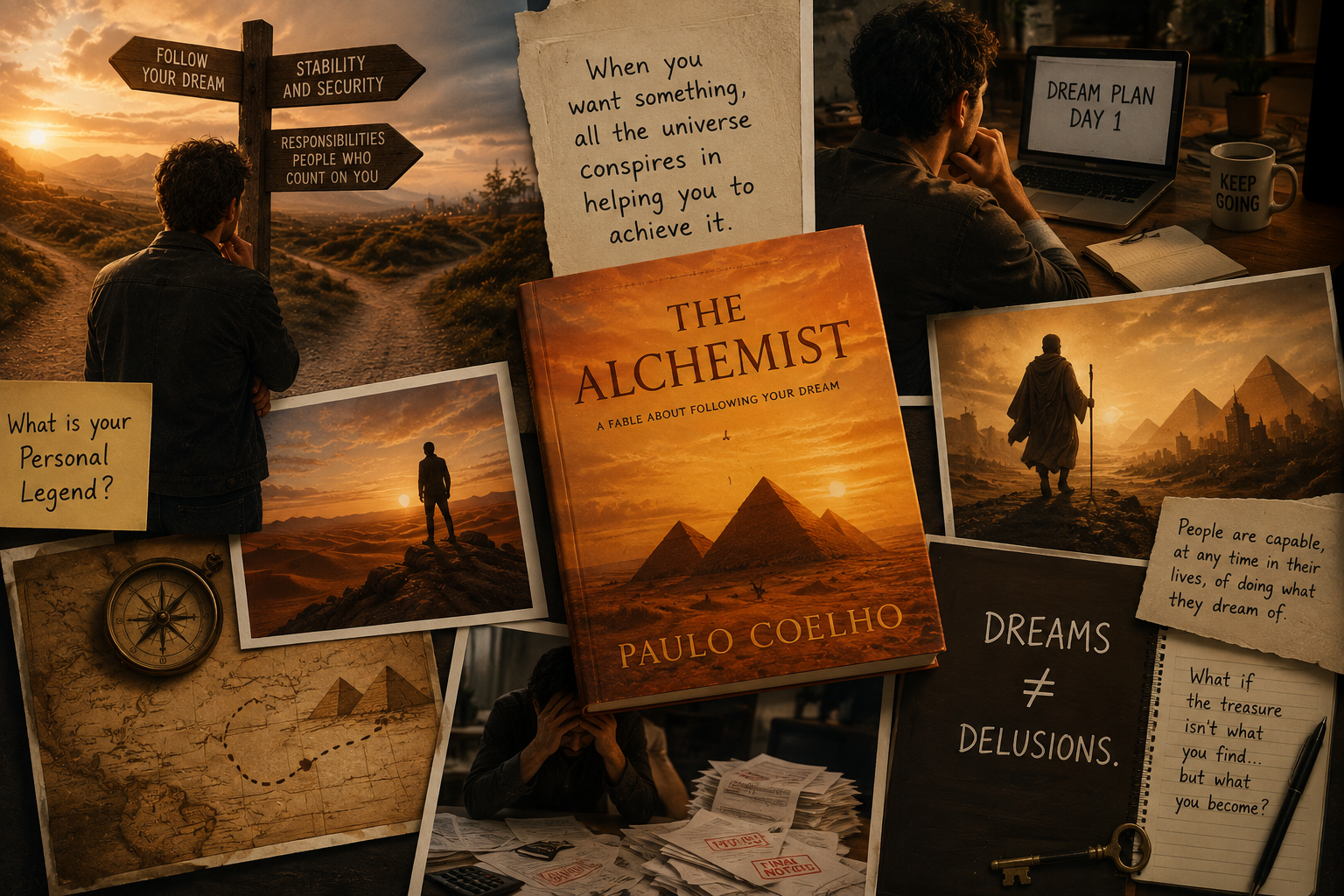
At 38, Jake finally quit his job.
He had been talking about it for years.
His wife had heard the speech so many times that she could almost recite it.
“I wasn’t meant to sit behind a desk.”
“I want to build something of my own.”
“I know I can do more.”
“One day, I’m just going to leave.”
Then, one Monday morning, Daniel finally did leave- yes, he did.
He walked into his manager’s office, handed in his resignation, and walked out feeling strangely light.
He called his wife.
“I did it,” he said.
His wife was silent for a while.
Then she said:
“You actually did it?”
“Yes.”
“What are you going to do?” she asked
“I don’t know yet.”
He laughed.
“But I’ll figure it out.”
That evening, Daniel bought a copy of The Alchemist.
Someone had recommended it to him years earlier.
He read it over the next few days, and the story seemed to speak directly to him.
A young shepherd leaves everything familiar behind to pursue a dream.
He faces setbacks.
He meets people who change his path and learns to listen to his heart.
He keeps going despite the difficulties he encountered along the way.
Eventually, he discovers his treasure.
Daniel closed the book feeling very certain.
He had been waiting for a sign, and now, he had one.
He was going to follow his dream.
His wife smiled when he told her.
She didn’t want to discourage him.
So she said the thing people say when someone makes a frightening decision in the name of happiness:
“Maybe this is exactly what you’re supposed to do.”
Daniel nodded.
“Exactly.”
Two years later, they were selling their house.
Jake’s business had failed.
They had used their savings.
They had borrowed money.
They had stopped going on holidays.
They had started arguing about small things because small things were easier to argue about than the enormous thing sitting between them. The one they intentionally avoided discussing.
One evening, Daniel sat at the kitchen table with a stack of unpaid bills.
His wife stood at the sink.
Neither spoke for a long time.
Finally, she asked:
“Do you still believe you were supposed to do this?”
Daniel stared at the papers.
“I don’t know.”
She turned around.
“That’s the first honest thing you’ve said in months!”
That story isn’t from The Alchemist....
But it is the question I wish we’d ask more often when we talk about the book.
What happens when the dream doesn’t work?
What happens when following your heart costs more than you expected?
What happens when the sign you thought was destiny turns out to be nothing more than just a coincidence? Hmmn?
Most importantly:
What if the advice to “follow your dream” is sometimes bad advice?
That is why I think The Alchemist is one of the most overrated books we’ve collectively decided is profound.
This is really not because it is badly written or that its ideas are worthless.
And certainly not because millions of people have found comfort in it.
I think it is overrated because we have taken a simple, beautiful fable and elevated its central message into something much more universal than it really is.
We have confused comfort with wisdom.
Those are not always the same thing, you know!
Let’s look at a few more things I consider very concerning.
The seduction of the Personal Legend

For anyone who hasn’t read it, The Alchemist follows Santiago, a young shepherd who has a recurring dream about treasure near the Egyptian pyramids.
Instead of dismissing the dream, he decides to pursue it.
Along the way, he meets people who teach him lessons about life, courage, love, faith, and destiny.
At the heart of the story is the idea of a personal legend: the thing you are meant to accomplish with your life.
It is a beautiful idea.
I truly understand why people love it.
Who doesn’t want to believe that their life has a special purpose? Not me and definitely not you.
Who doesn’t want to believe that the strange disappointments, coincidences, encounters, and opportunities along the way are all somehow connected?
It is an incredibly comforting way to look at life, yes.
However, comfort can be dangerous when we mistake it for truth because real life doesn’t really behave or look like a Paulo Coelho novel.
The universe does not always conspire to help us.
Sometimes it barely seems to notice us.
We love stories that make life look organized
Don’t we?

Think about how often we tell ourselves stories after something happens;
“I got rejected from that job because something better was coming.”
“That relationship ended because I was meant to meet someone else, someone much better.”
“I missed that flight for a very good reason.”
“That particular failure taught me exactly what I needed to know.”
Really?
You see, sometimes those things may be true, but sometimes, if you’re honest enough, you would admit that a job rejected you because another candidate had more experience.
Sometimes, a relationship ends because two people simply weren’t right for each other.
Sometimes, you miss a flight because you were late.
And sometimes, a terrible thing happens for no beautiful reason at all.
Human beings are uncomfortable with randomness.
We want our suffering to have a purpose.
We want our pain to be part of a story.
We want to believe there is a sentence somewhere explaining why everything happened.
The Alchemist feeds that hunger beautifully.
It tells us that the world is full of signs.
That the language of the universe is always speaking.
That if we pay attention, we can understand what life is trying to tell us.
It’s lovely, honestly.
It is also incredibly easy to believe.
So, I believe that’s precisely why we should be careful.
What if the “sign” is just a sign?

Imagine you’re thinking about quitting your job.
You are miserable.
So, you keep thinking about starting a business.
Then, on your way home, you see an advertisement for entrepreneurship.
You think:
That’s it.
A sign.
The universe is telling you to quit.
So you quit, yes, you quit!
Perhaps the universe wasn’t talking to you.
Perhaps an advertising company paid for that billboard.
Perhaps the algorithm noticed that you had been searching for business ideas.
Perhaps you were simply looking for evidence to support a decision you’d already made.
This is one of the problems with turning every coincidence into a message.
Once you believe the universe is sending you signs, almost anything can become great evidence.
Also, when you desperately want something to be true, you become very good at finding signs. Think about it for a moment.
There is a problem with the “never give up” idea

One of the most seductive messages in inspirational culture is:
Don’t give up on your dream.
It sounds courageous and strong.
It sounds like something we should put on a wall and frame it up there.
But sometimes, giving up is exactly what wisdom looks like.
Imagine a woman who starts a business at 25.
She struggles.
She keeps going.
She loses money.
She keeps going.
She borrows money.
She keeps going.
Eventually, she becomes exhausted.
Her marriage begins to suffer.
She keeps going.
Her health deteriorates.
Still, she keeps going.
At what point does perseverance stop being admirable? Really.
At what point does “believing in your dream” become refusing to accept reality?
We rarely ask these questions because our culture loves persistence.
We celebrate the person who refused to quit.
We don’t celebrate the person who recognized that something wasn’t working and quietly walked away.
But both can be considered courageous.
Sometimes, the bravest sentence a person can say is:
“I wanted this badly. But I don’t want it anymore.”
That isn’t failure.
That’s growth.
Not every dream deserves your whole life

This is perhaps the biggest problem I have with the way people interpret The Alchemist.
This book makes dreams sound very sacred.
As if the dream you had at twenty is something you are morally obligated to pursue forever.
But people change. Yes, we do.
At twenty, you might dream of becoming famous.
At thirty, you might want stability.
At forty, you might want to spend more time with your children.
At fifty, you might realize that the thing you once chased doesn’t interest you anymore.
Why should that be considered failure?
We change our minds about restaurants.
We change our minds about clothes.
We change our minds about where we want to live.
We change our minds about relationships.
Why do we act as though our dreams are the one thing we’re not allowed to change?
Maybe the dream was right for you once and it truly served its purpose.
Maybe you don’t have to finish every journey you begin.
There’s the privilege of “following your dream”
This is the part inspirational books don’t like to actually admit.

Following your dream requires resources.
Time, money, support, health, and opportunity.
Sometimes, a safety net is required too.
A person with savings can take six months to “find themselves.”
A person living paycheck to paycheck might not have that luxury.
Someone with a supportive partner can quit their job and experiment.
Someone supporting three children may have to stay.
Someone with citizenship in a country full of opportunities has choices that someone trapped by war, poverty, or discrimination may not have.
We should be careful when we turn personal freedom into universal advice.
“Follow your dream” sounds beautiful.
But sometimes, the person saying it has never had to choose between their dream and their family’s electricity bill.
I understand why people keep recommending this book
Press enter or click to view image in full size
Photo by Fairuz Naufal Zaki on Unsplash
The world can make us afraid.
Afraid to fail.
Afraid to disappoint people we love.
Afraid to leave familiar places.
Afraid to even begin again.
Afraid that we’re wasting our lives.
And The Alchemist speaks directly to that fear.
It tells us that our desires matter.
That the life we want is worth pursuing.
That setbacks don’t necessarily mean the end.
Those are good things to remember.
Especially when you’re stuck, and you’ve already spent years living according to somebody else’s expectations.
Especially when fear has convinced you that staying miserable is safer than changing.
Nevertheless, a good message does not automatically become a complete philosophy of life.
“Follow your dream” is one piece of wisdom.
It is not the whole puzzle.
Sometimes, you should follow your dream.
Sometimes, you should modify it.
Sometimes, you should postpone it.
Sometimes, you should share it.
Sometimes, you should abandon it.
Well, sometimes, you should understand that what you thought was your dream was actually somebody else’s idea of a successful life.
We have misunderstood the treasure
There is something interesting about Santiago’s journey.

He travels a great distance looking for treasure.
He crosses deserts, meets strangers, suffers setbacks, and learns.
Eventually, he discovers something important about where the treasure actually is.
The obvious interpretation is that the journey was necessary.
Maybe there’s another way to read it.
Perhaps the treasure isn’t proof that the universe rewards people who follow their destiny.
The treasure could be simply what Santiago learned about himself while searching.
And if that’s the case, then the destination isn’t the most important part.
Which means the book’s most useful lesson may be much simpler than the one we usually quote.
You don’t need the universe to guarantee that your dream will work out.
You need to become someone capable of living with uncertainty.
That’s harder.
So much harder because it means accepting that you can make the best decision you know how to make and still get the wrong outcome.
You can love someone and still lose them.
You can build something and still watch it collapse.
You can work hard and still fail.
You can choose the safest path and regret it.
You can choose the risky path and regret that too.
There may be no cosmic explanation waiting for you anywhere or at any point in time.
There may simply be you, standing in the middle of your life, trying to decide what to do next.
So, is The Alchemist overrated?
I think it is!
Not really because it is meaningless
The truth is, we’ve made it mean too much.
We’ve turned a fable into a prescription.
We’ve taken a comforting metaphor and treated it like a law of the universe.
We’ve convinced ourselves that every setback is secretly redirection, every coincidence is a sign, every dream deserves pursuit, and every journey eventually leads to treasure.
But life doesn’t promise us any of that, does it?
Strangely, I think accepting that makes life more beautiful.
If there is no guarantee that your dream will come true, then choosing to pursue it becomes an act of courage rather than complete obedience to destiny.
If there is no sign telling you what to do, then your choices actually belong to you.
If there is no predetermined treasure waiting at the end, then perhaps the people you meet along the way matter more than the destination.
And, if your dream changes halfway through the journey?
Maybe that’s okay too, yes.
Maybe you are not lost.
Maybe you’re simply becoming someone who wants something different.
So maybe the question isn’t:
“What is my Personal Legend?”
Perhaps the harder question is:
“If nobody promised me that my dream would come true, would I still choose to pursue it, and if the answer is no, was it ever really my dream?”
There!
About the Creator
Ajan Lori A.
My mind screams, I write!
(Author exploring education, identity, human behavior, life between cultures, business and entrepreneurship)
Find my writing on Medium: https://medium.com/@loriaa
My books on amazon: amazon.com/author/loriaa
Enjoyed the story? Support the Creator.
Subscribe for free to receive all their stories in your feed.
Comments
There are no comments for this story
Be the first to respond and start the conversation.