Plot Development
Why We’re Exhausted by Reboots, Remakes, Sequels, and Prequels
There’s something powerful about a story that stays with us. The kind of story that lingers in our hearts, shapes the way we see the world, and calls us back to it time and time again. But there’s a difference between honoring a story’s legacy and draining it of all meaning by repeating it over and over again. And right now, we are drowning in repetition. We see it everywhere—franchises brought back to life decades after their last installment, classics reimagined with a fresh coat of paint, beloved tales stretched out into endless prequels and sequels. And while there’s always excitement in revisiting something familiar, there comes a point when the magic fades, and all that’s left is a hollow imitation of what once felt special. The Power of Nostalgia—And Its Limits There’s no denying the power of nostalgia. It connects us to moments we cherish, bringing back the feelings we had when we first fell in love with a story. It can be comforting, like an old song that takes us back to a specific time in our lives. But nostalgia alone isn’t enough to sustain a story. A great story lives and breathes. It evolves with time, reflecting the world around it in new and meaningful ways. When a story is revived simply to capitalize on nostalgia, without adding depth or purpose, it starts to feel empty. The warmth we once felt turns into exhaustion. We begin to see the strings being pulled, and it becomes clear that what was once crafted with heart is now a product designed to keep us looking backward instead of forward. Repetition Does Not Equal Innovation A sequel, a prequel, a reboot—none of these are necessarily bad on their own. Some of the most powerful stories ever told have been expansions of existing worlds. But not every story needs to be continued. Not every beloved film or series needs a modern update. When the focus shifts from storytelling to prolonging a brand, something gets lost. Instead of taking risks, we see the same formulas, the same arcs, the same conflicts repackaged with slight variations. And after a while, audiences start to notice. The thrill of anticipation is replaced by fatigue. The magic of discovery is replaced by predictability. And the connection we once had to these stories begins to fade, not because we stopped caring, but because they stopped giving us something to care about. New Stories Deserve A Chance For every reboot or sequel that takes up space, there are countless original stories waiting for a chance to be told. Stories that could move us, challenge us, make us see the world in ways we hadn’t before. But too often, these stories struggle to break through because the focus remains on what is safe, what is familiar, what is guaranteed to draw attention. Creativity thrives when new voices are given the space to shine. And audiences deserve the opportunity to experience something unexpected. Something that doesn’t rely on nostalgia to hold their attention, but instead captivates them with fresh ideas, new perspectives, and bold storytelling choices. The Beauty of Letting Go There’s something to be said for knowing when to step back. When a story has been told in its truest form, there is power in letting it stand on its own. Some of the most beloved tales in history remain timeless not because they were endlessly revisited, but because they were allowed to remain what they were meant to be—a complete, singular experience. That doesn’t mean we stop appreciating them. It doesn’t mean we forget what they meant to us. But it does mean we make space for something new. It means trusting that the next great story is still waiting to be discovered. It means believing that audiences are ready for more than just the same story retold. Because at the end of the day, storytelling is about more than familiarity. It’s about connection. It’s about inspiration. It’s about reminding us that there is always more to see, more to feel, and more to experience. But that only happens when we’re willing to let go of what has already been told and open ourselves up to what’s still waiting to be heard.
By Talea Weeanor2 years ago in Critique
Review of Long Legs - Pass on This Horror Flick
Longlegs, to me, was neither scary nor good . I have watched horror films on television since the 1960s, such as The Twilight Zone and Outer Limits. I grew up reading Alfred Hitchcock's Presents hardcover oversized books. With friends, we went to movie double features for the original Godzilla vs. King Kong movies and Vincent Price and Ray Milland horror movies. I'm a Stephen King, Dean Koontz, and Peter Straub fan - it takes a lot to scare me. I might jump at a startling scene, but a scream won't leave my lips.
By Andrea Corwin 2 years ago in Critique
The Failure of RPG Adaptations in Cinema: Why Hollywood Doesn’t Understand Role-Playing Games
For decades, Hollywood has attempted to adapt role-playing games (RPGs) into movies, often with disastrous results. Whether it’s the infamous Dungeons & Dragons (2000) or other lesser-known attempts, RPG films frequently fail to capture the essence of the games they are based on. But why does this happen? Why do movies inspired by RPGs rarely succeed critically or commercially? This article explores the key reasons behind this ongoing failure and examines what Hollywood could learn to improve future adaptations.
By Bounty Hunter 2 years ago in Critique
THE (great indian anti-detection circus)
Introduction In the realm of cybersecurity, a fascinating phenomenon has emerged in India, known as the Great Indian Anti-Detection Circus. This clandestine world is inhabited by skilled hackers, coders, and cybercriminals who continually devise innovative methods to evade detection. This article delves into the mysteries of this underground ecosystem, exploring its inner workings, key players, and the cat-and-mouse game played with law enforcement agencies.
By mukesh jaiswar2 years ago in Critique
The Brutalist
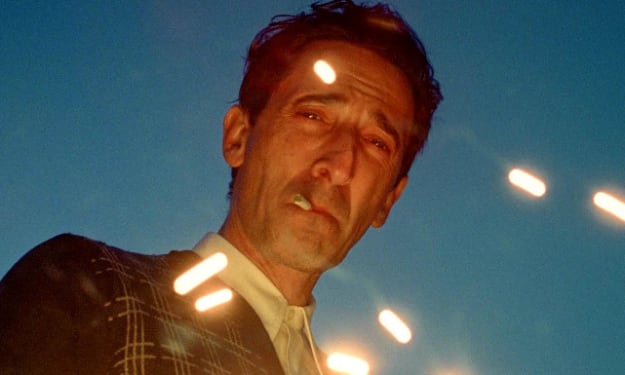
In the aftermath of World War II, Europe lay in ruins, its cities shattered and its people displaced. Among the countless souls fleeing the devastation was Lázló Toth, a visionary architect whose life, career, and marriage had been torn apart by the war. With nothing but his talent and an unyielding determination to rebuild, Toth set his sights on America, a land of opportunity and uncharted potential. This is the gripping premise of The Brutalist, a film directed by Brad Corbett, written by Mona Fastvold, and brought to life by the exceptional Adrian Brody. Alongside Brody, the film features a stellar cast including Felicity Jones, Guy Pearce, and Isaach De Bankolé, among others.
By A História2 years ago in Critique
Marvel's "Brave New World
In the midst of the relentless churn of Marvel’s sprawling universe, there comes a moment—a fleeting 20-minute burst of pure, nostalgic magic. "Captain America: Admirable New World" dares to revisit the golden era of Marvel storytelling when heroes weren’t just defined by flashy CGI and recycled tropes, but by genuine grit and emotional resonance.
By A História2 years ago in Critique
The True Pain
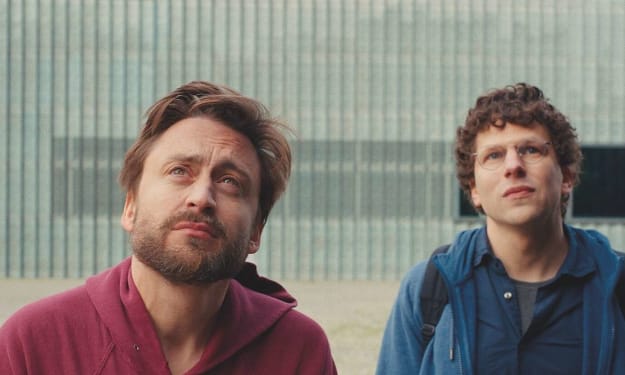
Jesse Eisenberg's newest film, The True Pain, invites viewers on a reflective exploration of history, memory, and the complexities of personal identity. The narrative centers on two distant cousins who embark on a journey to Poland, seeking to reconnect with their family's heritage. What emerges is not merely a story of rediscovery but a profound investigation into the contradictions and moral dilemmas we face when trying to fully understand the suffering of others.
By A História2 years ago in Critique
How many more people will the sea swallow, and how much europe will endure? . AI-Generated.
The Mediterranean Migration Crisis: Why People Risk Everything for a Better Life Every year, thousands of people from Asia and Africa embark on perilous journeys across the Mediterranean Sea, hoping to reach Europe in search of safety, opportunity, and a better life. These journeys are fraught with danger—overcrowded boats, treacherous waters, and the constant threat of exploitation by human traffickers. Tragically, many do not survive the journey, and the Mediterranean has become one of the deadliest migration routes in the world. Yet, despite the risks, the number of people attempting this crossing continues to rise. To understand why people leave their homelands and risk everything, we must examine the complex interplay of economic, political, social, and environmental factors that drive migration.
By Banik Sojib2 years ago in Critique
Conclave
In the heart of the Vatican, where the echoes of centuries-old prayers linger in the air, a profound silence descends. The Pope has passed away, and the weight of the Catholic Church now rests on the shoulders of its most powerful leaders. The time has come for the conclave—a sacred and secretive process where cardinals are cloistered away to elect the next Vicar of Christ. But this time, behind the solemn rituals and whispered prayers, a web of mystery, conspiracy, and moral dilemmas begins to unravel.
By A História2 years ago in Critique
The Dark Renaissance of Cinema
There are filmmakers, and then there are auteurs—those rare artists who infuse every frame, line, and gesture with their unique voice. Robert Eggers stands tall among the latter. His works, including The Witch, The Lighthouse, and The Northman, showcase his mastery of crafting bold, visually stunning, and profoundly dense films that feel like modern fables. These cinematic achievements are steeped in his uncompromising vision, striking a delicate balance between beauty and terror. Now, with Nosferatu, Eggers takes a step that feels not just logical but inevitable—as though his entire career has been a preparation for this moment.
By A História2 years ago in Critique
Anora
In 2024, the Cannes Film Festival awarded the prestigious Palme d'Or to Anora, a film by the immensely talented director, writer, and editor, Shan Bake. This film, with its daring narrative structure and sharp critique of society's obsession with superficial success, solidifies Bake's distinctive voice as a filmmaker who deserves not just our attention but also our deep reflection.
By A História2 years ago in Critique