Novel
🧀 Society of the Human Rats
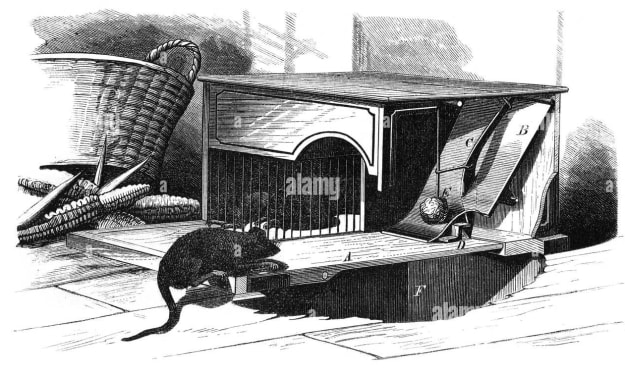
I feel that society increasingly resembles a house of rodents, in which the luckiest and most fortunate rats —whether due to effort and dedication (because yes, there are rats that truly fought and worked hard to get a good chunk of cheese that allows them to live well and happy in their rat world)— have their place. But there are others who simply had a smart daddy rat who accumulated and accumulated —sometimes selfishly— a great amount of cheese. And there they are, just roaming, eating and spending, and spending, jumping from trap to trap, because they know that the biggest piece is already in their burrow. And they’re not satisfied with the scraps offered in the traps set out for rats in the world.
By Leonardo Albercaabout a year ago in Critique
The Roar and the Hee-Haw
In the heart of the Serengeti, where animals roamed free and drama bloomed like wildflowers, there lived a lion named Leo. He was everything you'd expect from a king of the jungle: majestic, strong, a little vain, and absolutely terrible at telling jokes. Not far from Leo’s den lived a donkey named Danny. Now, Danny wasn't majestic, nor was he strong. But what he lacked in royal gravitas, he made up for with... confidence. Too much confidence. The kind of confidence that made him wear sunglasses at night and believe he could sing like a nightingale (spoiler: he couldn't). One sweltering afternoon, Leo was practicing his “intimidation face” in a puddle—because, as he always said, “a king must have the perfect snarl”—when Danny strolled by, chewing on a suspiciously loud carrot. “Hey Leo,” Danny brayed. “You know what your face reminds me of?” Leo raised an eyebrow. “Dare I ask?” “A constipated hedgehog trying to do algebra.” Leo blinked. Danny grinned. “You're welcome. I do comedy now.” It was true. Danny had recently taken up stand-up comedy. Or more accurately, stand-on-a-rock-and-shout-nonsense comedy. His first audience had been a group of mildly offended meerkats. His second audience had been an angry porcupine who chased him for three hours. Still, Danny was undeterred. “I have a proposition,” Danny said, dramatically flipping his imaginary cape (which was actually just a banana leaf). “Let’s have a contest. You and me. A Joke-Off. The winner gets to be the Official Jungle Entertainer.” Leo snorted. “I'm the king. Why would I need to be the jungle entertainer?” “Because,” Danny said, poking him in the paw, “your jokes are about as fresh as a hippo’s backside.” Leo growled. Not out of anger, but because deep down, he knew Danny had a point. So, the jungle assembled the next day. Elephants, zebras, monkeys, even a slightly confused flamingo showed up. The stage was a fallen tree. The judge? An owl with glasses and a clipboard. Because glasses = wisdom, and clipboard = authority. Leo went first. “Why did the antelope bring a ladder to the bar?” he roared. Silence. “Because he heard the drinks were on the house!” One monkey chuckled. The rest just blinked. Danny cleared his throat. “Ladies, gents, and miscellaneous feathers! Ever notice how lions act all mighty until a bee shows up? I saw Leo run from a bee once like it owed him money!” The crowd erupted. Leo twitched. Danny bowed. “And don’t get me started on his mane. I’ve seen better hair on a coconut!” The owl scribbled furiously on his clipboard. Round after round, Danny destroyed Leo with zingers, impersonations, and one unforgettable interpretive dance of Leo tripping on a rock. By the end, even Leo was laughing—though trying very hard to hide it behind his tail. Finally, the owl stood up. “By unanimous laughter, the winner is... Danny the Donkey!” Cheers. Applause. One meerkat threw confetti made from dried grass. Leo approached Danny, head held high. “Alright, donkey. You win. You’re the Official Jungle Entertainer.” Danny beamed. “But,” Leo added, “if I ever hear you call my face a constipated hedgehog again, I’m going to use you as a footstool.” “Deal,” Danny said, offering a hoof. “But only if I can tell that story during my next set.” They shook on it. And so, the jungle gained not just a king, but a court jester with a laugh louder than a stampede and jokes so bad, they somehow became good. As for Leo, he decided to take up yoga instead. Because apparently, even kings need to learn how to laugh... and stretch. Moral of the story? Never challenge a donkey to a joke contest. Especially one who thinks he’s the reincarnation of Eddie Murphy. (And always run from bees. Seriously. They don’t mess around. #JungleLOL #DonkeyRoast #KingOfComedy #LeoVsDanny #RoarVsHeeHaw #ComedyClash #WhenAnimalsGoVira #StorytimeSunday #ViralAnimalStory
By Dr Gabriel about a year ago in Critique
"Echoes of the Forgotten"
A Journey Through Lost Memories and Hidden Truths The rain had just begun when Elira stepped into her grandmother’s attic for the first time in years. Dust swirled in the air, lit by the pale light seeping through the cracked windowpanes. She was here for closure. After her grandmother's funeral, Elira returned to the house she hadn't visited since childhood, hoping to find something—anything—that would explain the strange dreams that had haunted her for weeks. They weren’t ordinary dreams. They felt real. A golden field beneath a violet sky, a melody played on a strange instrument, a boy with eyes like a storm. Each night, fragments of a life she didn’t recognize surfaced in her mind, growing more vivid, more desperate. While rummaging through a trunk of yellowed letters and old photographs, her fingers brushed against something cold and metallic. A silver locket, its surface engraved with unfamiliar symbols. As soon as she touched it, a pulse of warmth shot through her chest. The attic blurred, her knees buckled—and suddenly, she was standing in that golden field from her dreams. She turned in disbelief. Everything looked exactly as it had in her visions. The violet sky rippled like silk, and wind whispered secrets through the tall grass. A figure stood ahead, half-shadowed. It was the boy. His storm-colored eyes widened. "You’ve returned," he said softly. "But you're... different." Elira stepped back. “Who are you?” The boy tilted his head. “You don’t remember me, do you? Not yet.” Lightning cracked across the sky. When Elira blinked, she was back in the attic, breathless. The locket dangled from her hand, warm against her palm. Shaken, she took it to the local library, desperate for answers. There, she met Callen, a quiet, reclusive archivist who recognized the symbols. “These are from the Valean language,” he said, pulling a faded book from a high shelf. “A culture wiped out during the Cataclysm War... over two hundred years ago.” “That’s impossible,” Elira murmured. “How could I dream about something from two centuries ago?” Callen frowned. “Sometimes the past doesn't die. Sometimes, it sleeps—in blood, in memory.” Together, they began to uncover the truth. Elira was a Descendant, born from a bloodline cursed to forget its origins. During the war, her ancestors sealed away their memories to protect knowledge that could destroy—or save—the world. The locket was the key. Each night, Elira wore it and returned to the dream world. And each time, the boy was waiting. His name was Kaelen. He had been her guardian, her friend—her love—in a life she had forgotten. But the dreams began to shift. Darker images bled through. A masked figure watching from the shadows. Screams in the night. A city crumbling into dust. One night, Kaelen told her the truth. “You weren’t just anyone,” he said. “You were the Keeper of Truth. You held the knowledge to stop the war. But you chose to forget—to seal it away so no one could use it.” Elira’s heart ached with confusion. “Then why now? Why am I remembering?” “Because the war is rising again,” Kaelen said, eyes heavy with sorrow. “And only you can stop it.” In the waking world, Elira and Callen searched for remnants of the lost Valean civilization. Beneath the ruins of a forgotten temple, they found it: a sealed chamber, guarded by ancient glyphs. When Elira placed the locket into a carved indentation, the door groaned open. Inside, the chamber thrummed with power. Murals on the wall showed glimpses of her past life—her and Kaelen standing together, leading others, protecting knowledge too dangerous to exist. At the center stood a crystal pedestal. Resting atop it, a book bound in silver. As Elira opened it, a flood of memories surged back. She remembered the war. The betrayals. The terrible knowledge that could destroy worlds. But she also remembered love, sacrifice, and hope. Kaelen’s voice echoed in her mind. “You don’t have to carry this alone this time.” Elira turned to Callen. “We have a choice. Use this knowledge to stop what’s coming—or seal it away forever, again.” Callen looked at her. “What will you choose?” She closed the book. “This time, I’ll remember. This time, we fight.” The echoes of the forgotten had awakened. And Elira was ready to face them.
By Kaleem Ullahabout a year ago in Critique
Cardinals choosing the next pope have been offered a dossier on candidates – with a subtext. Content Warning. AI-Generated.
Cardinals Choosing the Next Pope Have Been Offered a Dossier on Candidates – With a Subtext May 7, 2025 As speculation mounts about who will succeed Pope Francis, an intriguing development has emerged behind the scenes: cardinals preparing for a future conclave are quietly being offered dossiers detailing the strengths, weaknesses, and past actions of potential papal candidates. But these documents aren’t just dry summaries – they come with a subtle subtext that could shape the future direction of the Catholic Church.
By Rasel Ahmedabout a year ago in Critique
A History of Revolution in Whispers of the Fire
A young girl by the name of Elara came across a worn leather-bound journal hidden beneath layers of dust and cobwebs in the quiet library of the old city of Lyon. It didn't have a title; all that was on the cover was a phoenix rising. When she opened it, the pages began to whisper stories and the scent of aged parchment filled the air. memories of the world's most powerful revolutions, not just any stories. The first whisper came from France, 1789. The journal described a world in which peasants starved outside of palace gates while kings lived in golden halls. A man named Jacques stood in the crowd at the storming of the Bastille, his hands trembling as he clutched a torch. A loaf of bread had cost the life of his brother. Jacques contributed to the demolition of not only the prison walls but also the appearance of royal divinity that night. The people rose, chanting “Liberté, égalité, fraternité!” as the monarchy crumbled and the seeds of democracy were sown in blood.
By MD BILLAL HOSSAINabout a year ago in Critique
Unpacking White Lotus Season 3: Gorgeous Scenes and Frustratingly Familiar Tropes
For the last eight weeks, my morning routine has been to get up, make coffee, and mentally get ready for the upcoming episode of HBO's The White Lotus. It has evolved into a weekly immersion in opulence, dysfunction, and mortality rather than merely a viewing experience. I was optimistic, high, caftan-clad, sun-kissed aspirations about the upcoming show.
By Hridya Sharma2 years ago in Critique
Dr. Muhammad Yunus
Dr. Muhammad Yunus: The Banker to the Poor and Pioneer of Microcredit Dr. Muhammad Yunus, a Bangladeshi economist and social entrepreneur, is a globally renowned figure best known for his groundbreaking work in microfinance and poverty alleviation. Born on June 28, 1940, in the port city of Chittagong, Bangladesh, Yunus has dedicated his life to addressing the root causes of poverty and empowering the poor through innovative financial systems. His most notable achievement is the founding of Grameen Bank, a revolutionary institution that provides small loans to the impoverished without requiring collateral. Yunus began his academic journey in Bangladesh and later earned a Fulbright scholarship to study in the United States, where he obtained a Ph.D. in economics from Vanderbilt University. He returned to his home country in the 1970s during a time of immense economic struggle following the Bangladesh Liberation War. It was during this period, while teaching at Chittagong University, that he started to question the relevance of traditional economics in solving real-world poverty. In a village near Chittagong called Jobra, Yunus observed the plight of local women who were caught in a cycle of poverty due to their dependence on moneylenders charging exorbitant interest rates. He lent a total of just $27 from his own pocket to 42 women, enabling them to buy materials to make and sell bamboo stools. This small act proved transformative: the women were able to earn a profit and repay the loan, breaking free from exploitative debt. This experience became the foundation for Grameen Bank, officially established in 1983. Unlike traditional banks, Grameen Bank's model is based on trust, solidarity, and social empowerment. It targets the rural poor, particularly women, who make up over 90% of its borrowers. The bank operates on the principle that even the poorest individuals are creditworthy and capable of lifting themselves out of poverty with a little help. The success of Grameen Bank has been phenomenal. Over the decades, it has lent billions of dollars in small loans, achieving high repayment rates. Its model has been replicated in more than 100 countries, both developed and developing. Beyond microloans, Yunus has expanded the Grameen concept to encompass other areas such as education, health, energy, and telecommunications through a network of social businesses. Dr. Yunus's contributions to social and economic development have earned him international acclaim. In 2006, he and Grameen Bank were jointly awarded the Nobel Peace Prize for their efforts to create economic and social development from below. The Nobel Committee praised Yunus for demonstrating that “even the poorest of the poor can work to bring about their own development.” A key aspect of Yunus’s philosophy is the concept of “social business,” a model he describes in his books such as Banker to the Poor and Creating a World Without Poverty. A social business is a non-loss, non-dividend company designed to solve social problems rather than maximize profit. Through this idea, Yunus envisions a world where entrepreneurship is driven by purpose, not just profit. Despite his accolades, Yunus has faced criticism and challenges, especially in his home country, where he was removed from his position at Grameen Bank in 2011 amid political controversy. Nevertheless, he remains a vocal advocate for social innovation and continues to inspire initiatives worldwide. Dr. Yunus’s legacy is not just in the institutions he built, but in the lives he transformed. His belief in the potential of the poor and his unwavering commitment to economic justice have sparked a global movement. Today, he is considered not only a pioneer of microcredit but also a visionary who redefined the role of business in society. In a world still grappling with inequality and poverty, Dr. Muhammad Yunus stands as a powerful reminder that sustainable change is possible when compassion, innovation, and courage come together. His life and work continue to inspire millions to believe in the power of human potential.
By Nabir Mondol2 years ago in Critique
Snow White 2025: Balancing Woke Themes with Classic Storytelling – A Review
The 2025 version of Snow White, to be fair, Disney's live-action remake of its first animated picture, has received mixed reviews from the audience. The remake tried its best to be accepted as a feminist film and one that promotes woman empowerment while balancing the old and the new. I watched the film with a grain of salt and kept my logical mind aside—at least, I tried to! However, I could only fathom the discourse of its nurture to a certain extent. In this review, I go deeper into the intricacies of empowerment, fantasy and the performances the film encompasses.
By Hridya Sharma2 years ago in Critique
Chapter II: The Optics of the Soul
The gallery smelled of varnish and dust, a kind of hideout for creative things. Ivan Nikolayevich stood still in front of the Magritte painting, *The False Mirror*. He felt like his fingers had been unwittingly strumming some invisible instrument. The eye in the painting was huge and never blinked. The swirling blue iris seemed like the sky overhead filled with clouds and completely unsure about answering questions. Encapsulated in the glass was Ivan's whirling stream of consciousness; he couldn't help but wonder if this eye was a portal, or if just the opposite was true, another trap entangling him in another dubious reality. He cycled through the question- is it more advantageous to know a real sheeple world, or to wish it to be something else entirely? Did it really even matter? He could see his own tired, bloodshot eyes in the glass and questioned what person he was in relation to the artwork engulfed in both separate mirrors. There lay two Ivans, one searching for dream awareness and another person desperate to meet the day, the absolute vacant spirit.
By LUCCIAN LAYTH2 years ago in Critique
The Self-Editing Epiphany That Transformed My Writing
For the longest time, I believed that writing was all about inspiration. A spark of an idea would come to me, I’d put it down on paper, and the story would be born. Simple, right? But no matter how much I wrote, something always felt off. My prose felt clunky, my pacing inconsistent, and my dialogue unnatural. I couldn’t quite pinpoint what was wrong, but I knew deep down that my writing was missing something.
By GoldenSpeech2 years ago in Critique