Nonfiction
Ink That Bleeds
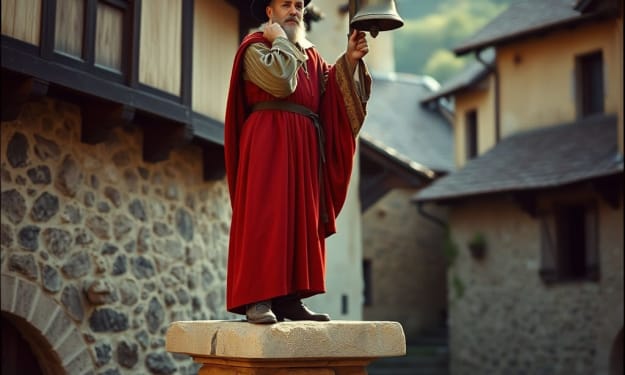
Elias Thorne sat in his small, cluttered attic studio, the harvest moon spilling pale light through the dusty window. On his desk lay his newest treasure a black fountain pen with a gold nib, bought from a shadowy antique shop in Prague. The shopkeeper, an old man with ink-stained fingers, had handed it over with a strange smile. "This pen writes truths," he whispered, "and truths become reality." Elias had laughed it off as a sales trick. But now, staring at the pen, he felt a twinge of excitement. He was a failing novelist, worn down by rejection after rejection. Tonight, he decided, he would start the thriller that would save his career. The pen’s ink flowed like midnight water, smooth and dark. Elias wrote: "The killer claimed his first victim, Mayor Harlan, in a freak accident on Elm Street. A loose manhole cover swallowed him whole during his evening jog." He leaned back, sipping his whiskey. The words felt… alive. The next morning, Elias woke to sirens outside. Turning on the news, he froze. Mayor Harlan had died the exact way he had written fallen into an open manhole on Elm Street. It had to be coincidence. But that night, he wrote again. This time: "Detective Lila Voss dies, poisoned by her own coffee." The pen felt warm in his hand, almost pulsing. Elias could picture her gasping for breath, clutching her throat. By morning, the radio confirmed it. Detective Lila Voss was dead poisoned. Elias’s heart pounded. The pen was no ordinary pen. Somehow, his words were becoming real. At first, he tested it harmlessly. "Old Mrs. Finch passes away peacefully in her sleep." Sure enough, the paper reported her death the next day. Then came the temptation. His literary agent, who’d been ignoring him for months? Dead from a sudden heart attack. A rival author? Struck by lightning. A critic? Killed in a car crash. One by one, the obstacles in Elias’s life disappeared. And each time, the town grew more afraid. People spoke of a shadow killer, a curse. One night, Elias dreamed of the pen’s past. He saw a 19th-century scribe whose writings sparked real wars, toppling kings and destroying lives. In the dream, the scribe tried to destroy the pen, but it survived waiting for another writer. When Elias woke, he vowed to stop. He locked the pen in a drawer. But at night, it called to him. Write me… He tried to write something good. "The killer is caught. Justice is served." But the ink twisted his words into something else: "The writer becomes the final victim." The next morning, news broke. Police had found Elias’s manuscript, which described the murders before they happened. He was the prime suspect. Sirens wailed outside his window. Panicked, Elias snatched the pen. He tried to write an ending that would undo it all: "The pen breaks, the curse is gone." But the pen bled ink like warm blood, staining his hands. Pain shot through his chest. Visions of every victim filled his mind their faces pale, their eyes accusing. Elias collapsed. Pages scattered across the floor. His last sight was of his final line, written in dark, wet ink that looked too much like blood: "And the writer bled out, alone, his story unfinished." The pen rolled under the desk, still gleaming. Far away, in the quiet antique shop in Prague, the old man at the counter smiled faintly. Somewhere, the curse had ended and somewhere else, it was about to begin again.
By Muzamil khanabout a year ago in Critique
The Mysterious Library
In the heart of a bustling city, there existed a library like no other. Its exterior was unassuming, with worn stone walls and a faded sign that creaked in the wind. But step inside, and you would find yourself in a world beyond your wildest dreams.
By Tariq Pathan about a year ago in Critique
New Avenues
I was looking at the opening page when signing out of Vocal, and that is when I decided to re-read some of the articles on working here on Vocal.com. I went to the old article about enhancing how to earn more here. I was happy just writing, reading, commenting, and even getting a few tips I wanted to find a way to 'enhance' more. So, I read about that we were allowed to suggest future challenges and found in the article where to make those suggestions and name two. I hope they read and accept them. To me: good ideas.
By Mark Grahamabout a year ago in Critique
System and Economy Failing
Have you heard yet? Not "The Struggle is Real" slogan but the new gregorian chants "The System is Failing" or "We (the citizens) are facing Economic Uncertainty" or "Panic is in the Air". I have. I see it on the news, I watch it on TikTok or Youtube or other channels. I hear it in the wind, the storms, and the voices that speak to the schizos. It's causing me so much anxiety I have no fingernails left to bite. I know I'm not the only one who is scared, but I think I get more upset than most people because I am so exhausted from having to move and migrate. I moved so many times in my childhood you may as well have called me a military brat. Then in my young adult life, it was as if my childhood was haunting me as history repeated time after time. I counted the addresses. Of over 20 residences where I stayed and called "home" for some period, I could only recall about 5 of the actual addresses. That's because those were the only 5 where I lived longer than 2 years. People asked me rudely and often "Why can't you stay with a job for longer than a year?" I would try to explain the disabilities that come with bipolar symptoms and schizophrenia. But it's more than that. I couldn't hold on to a job for a long time because none of the jobs that I had could afford the rent or the mortgage as they were defined. So what was the point? And I'm not alone in this sad epiphany. I didn't want to believe or tell others what they are discovering for themselves now: The System and The Economy are set up for you to Fail. That's shocking enough, but what's even worse? It's boomeranging back in a karmic cosmic explosion, and now the System is failing itself as the Economy is the worse I've seen it in 50 years.
By Shanon Angermeyer Normanabout a year ago in Critique
On the Shame that Breeds Deviance
Formation You don’t survive shame. You become what it needs you to be. Not in one moment, and not in response to a single harm - but over time, through repetition, silence, and cultural enforcement. Through the slow redirection of instinct into obedience, of autonomy into performance, of natural impulses into strategic ones.
By Sevryn Camoisabout a year ago in Critique
Tunisian Man Sentenced to Six Months in Jail for Refusing to Listen to President's Speech
In a development that has sparked serious concerns among human rights activists and international observers, a Tunisian citizen has been sentenced to six months in prison for refusing to listen to a televised speech by President Kais Saied. The unusual and controversial sentence, handed down by a local court, has once again brought Tunisia's declining state of freedom of expression under the spotlight. According to the citizen’s lawyer, Adel Saghir, the case began when the man, already incarcerated on a separate charge, declined to watch or listen to a presidential address broadcasted on national television. This occurred within a local prison facility, during a news bulletin that featured live coverage of President Saied's activities. The Case and the Charges The incident came to light when one of the man’s fellow inmates reported his refusal to prison authorities. An investigation followed, and the prisoner was later charged under Article 67 of the Tunisian Penal Code, which traditionally deals with offenses against the head of state. However, perhaps sensing the political sensitivity of invoking this article, the court eventually dropped the original charge and sentenced him under public decency laws instead. According to the court's reasoning, refusing to listen to the president’s speech amounted to “indecent behavior in public” and “setting a poor example for society.” The verdict, Saghir claims, was politically motivated, despite attempts to frame it as a non-political issue. The modification of charges was allegedly done to avoid labeling the case as one of political repression or a direct attack on freedom of thought. > “The authorities did not want this to be seen as a political punishment, so they shifted the charge to a vague violation of public decency,” said the lawyer. “But everyone knows the real issue was the refusal to comply with what they consider a show of loyalty to the president.” What Happened in Prison? The man was reportedly in a provincial detention facility, where he was serving time for a prior, unrelated case that had recently concluded. During the airing of the president’s speech, when asked to watch the broadcast, he refused, saying he had no interest in the president’s activities or speeches. It is also reported that he may have made disrespectful comments about the president during that time, which further fueled the legal response. Human rights NGO Tunisia League for Human Rights confirmed that the man had completed his sentence in the earlier case and was on the verge of release. His family had been preparing for his return home. However, this new charge blocked his release, resulting in yet another prison term. According to the NGO, “The man did not commit any criminal offense in a conventional sense. He merely expressed disinterest in a political figure’s speech. The decision to imprison him again is not only unjust—it is alarming.” Broader Context: Tunisia's Shrinking Civic Space Since his controversial power grab in 2021, President Kais Saied has been widely criticized for eroding democratic norms in Tunisia. He dissolved parliament, took control of the judiciary, sidelined political opponents, and passed a new constitution via referendum—moves seen by critics as steering Tunisia toward authoritarianism. Many Tunisian and international observers believe that this latest incident is emblematic of a broader pattern of silencing dissent. Journalists, civil society leaders, and now even ordinary citizens are increasingly finding themselves under threat for expressing views that do not align with the official narrative. > “This is not just about one man refusing to watch a TV broadcast,” said a regional expert on North African politics. “This is about a regime that sees any form of indifference or criticism as a threat to its legitimacy.” A Deal with Italy and Political Anger There is an additional layer to this story. The individual reportedly expressed anger toward President Saied over a recent agreement signed with Italy, which involves cooperation on the deportation of undocumented migrants. The man had previously been deported from Italy after residing there illegally. However, under the new agreement, returning to Tunisia may carry criminal consequences, further complicating the lives of many former Tunisian migrants. This agreement, hailed by some European governments as a breakthrough in controlling migration, has faced criticism inside Tunisia for being exploitative and dangerous for returning citizens. The convicted man’s comments against the president, as per his lawyer, were partly fueled by this personal frustration and political disagreement. International Reaction and Human Rights Concerns Human rights organizations in Tunisia and beyond are calling for the immediate release of the man and a re-evaluation of laws that criminalize nonconformity or dissent. They warn that such actions risk setting a dangerous precedent, where even silence or disinterest can become a punishable offense in an authoritarian system. > “Punishing someone for not watching the president’s speech is a gross violation of personal liberty,” said a representative from Amnesty International. “This is not just repression—it’s absurdity, weaponized.” So far, there has been no official response from the Tunisian presidency or the Ministry of Justice regarding the incident. --- Conclusion This case highlights the increasing crackdown on freedom of expression and political neutrality in Tunisia. What may seem like a minor act of protest—refusing to listen to a televised speech—has led to a six-month prison sentence, underlining the extent to which civic space in Tunisia has deteriorated. As international pressure builds, many are watching to see whether Tunisia will uphold basic human rights—or continue its descent into political repression cloaked under legal formalities.
By Ikram Ullahabout a year ago in Critique
Diagrams of Sentences
I have an idea that could be many pieces of writing and art for I was reading and commenting on my notifications and other stories. While, scrolling through others works I stopped on one that brought back a very fond memory for me, although it is an odd one, but here goes. I am going to hunt for varied lengths of sentences and diagram them as artwork for some are very intricate almost like advanced math problems. The images will be the diagrams with a brief description. Some will be short and some very long. Please comment on this idea.
By Mark Grahamabout a year ago in Critique
🎼 Music: The Language That Speaks When Words Fail . AI-Generated.
Have you ever listened to a song and felt like it was telling your story—without a single word? Music is a universal language, but not in the way we usually think of language. It doesn’t rely on grammar or vocabulary. Instead, it uses rhythm, melody, harmony, and silence to speak directly to our emotions.
By The Yume Collectiveabout a year ago in Critique