Movie
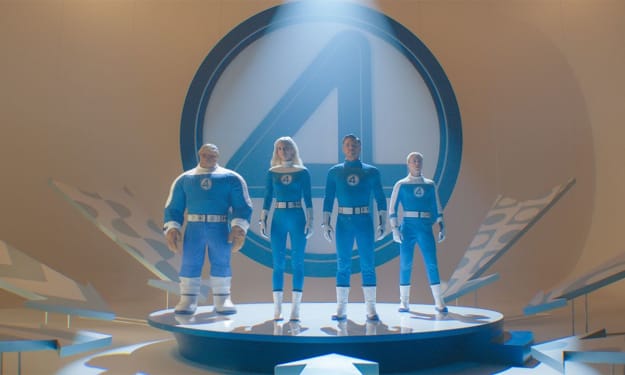
The Fantastic Four: First Steps (2025) – A Retro Marvel Reboot with Heart and Vision
Marvel’s The Fantastic Four: First Steps arrives as a stylish, emotionally rich reboot that balances superhero spectacle with a heartfelt family saga, set against a retro-futuristic backdrop that feels both nostalgic and fresh. Directed by Matt Shakman, this film invites audiences into a world where the beloved First Family of Marvel embarks on cosmic adventures, battling colossal threats while navigating deeply personal challenges.
By NII LANTEY PARKERabout a year ago in Critique
Bambi: The Reckoning Review: a much more violent version than expected
Bambi: The Reckoning reimagines the beloved animated deer as a mutated, grief-stricken monster seeking vengeance, transforming the classic tale into a horror film. Directed by Dan Allen and with a screenplay by Rhys Warrington the movie is part of the Poohniverse
By Ninfa Galeanoabout a year ago in Critique
I Know What You Did Last Summer Review: return with extreme challenges
I Know What You Did Last Summer has managed to stay current over the years. When it was released in 1997 it resurrected the slasher subgenre, then it had an immediate sequel in 1998, I Still Know What You Did Last Summer and a third part, I'll Always Know What You Did Last Summer, released in 2006. To that we must add a television series, I Know What You Did Last Summer, premiered in 2021.
By Ninfa Galeanoabout a year ago in Critique
1917: From Dream to Greatness
War conflicts in cinema have been portrayed in a wide variety of ways over the years. Some stories have been more moving than others, endowed with greater quality. We can find films of this type with adventurous tones; some are purely documentaries, others depict genuine romances, and several have been created in which comedy serves as the main attraction. Militarism has undergone a remarkable evolution in terms of the message it seeks to convey. Today, while some productions attempt to denounce the crimes committed in war and the urgent need to end all existing conflicts, others aim to highlight the supposed heroism of victorious powers and discredit their enemies—and even some allies.
By Cesar Alejandro Mursuli Abreuabout a year ago in Critique
Tunisian Man Sentenced to Six Months in Jail for Refusing to Listen to President's Speech
In a development that has sparked serious concerns among human rights activists and international observers, a Tunisian citizen has been sentenced to six months in prison for refusing to listen to a televised speech by President Kais Saied. The unusual and controversial sentence, handed down by a local court, has once again brought Tunisia's declining state of freedom of expression under the spotlight. According to the citizen’s lawyer, Adel Saghir, the case began when the man, already incarcerated on a separate charge, declined to watch or listen to a presidential address broadcasted on national television. This occurred within a local prison facility, during a news bulletin that featured live coverage of President Saied's activities. The Case and the Charges The incident came to light when one of the man’s fellow inmates reported his refusal to prison authorities. An investigation followed, and the prisoner was later charged under Article 67 of the Tunisian Penal Code, which traditionally deals with offenses against the head of state. However, perhaps sensing the political sensitivity of invoking this article, the court eventually dropped the original charge and sentenced him under public decency laws instead. According to the court's reasoning, refusing to listen to the president’s speech amounted to “indecent behavior in public” and “setting a poor example for society.” The verdict, Saghir claims, was politically motivated, despite attempts to frame it as a non-political issue. The modification of charges was allegedly done to avoid labeling the case as one of political repression or a direct attack on freedom of thought. > “The authorities did not want this to be seen as a political punishment, so they shifted the charge to a vague violation of public decency,” said the lawyer. “But everyone knows the real issue was the refusal to comply with what they consider a show of loyalty to the president.” What Happened in Prison? The man was reportedly in a provincial detention facility, where he was serving time for a prior, unrelated case that had recently concluded. During the airing of the president’s speech, when asked to watch the broadcast, he refused, saying he had no interest in the president’s activities or speeches. It is also reported that he may have made disrespectful comments about the president during that time, which further fueled the legal response. Human rights NGO Tunisia League for Human Rights confirmed that the man had completed his sentence in the earlier case and was on the verge of release. His family had been preparing for his return home. However, this new charge blocked his release, resulting in yet another prison term. According to the NGO, “The man did not commit any criminal offense in a conventional sense. He merely expressed disinterest in a political figure’s speech. The decision to imprison him again is not only unjust—it is alarming.” Broader Context: Tunisia's Shrinking Civic Space Since his controversial power grab in 2021, President Kais Saied has been widely criticized for eroding democratic norms in Tunisia. He dissolved parliament, took control of the judiciary, sidelined political opponents, and passed a new constitution via referendum—moves seen by critics as steering Tunisia toward authoritarianism. Many Tunisian and international observers believe that this latest incident is emblematic of a broader pattern of silencing dissent. Journalists, civil society leaders, and now even ordinary citizens are increasingly finding themselves under threat for expressing views that do not align with the official narrative. > “This is not just about one man refusing to watch a TV broadcast,” said a regional expert on North African politics. “This is about a regime that sees any form of indifference or criticism as a threat to its legitimacy.” A Deal with Italy and Political Anger There is an additional layer to this story. The individual reportedly expressed anger toward President Saied over a recent agreement signed with Italy, which involves cooperation on the deportation of undocumented migrants. The man had previously been deported from Italy after residing there illegally. However, under the new agreement, returning to Tunisia may carry criminal consequences, further complicating the lives of many former Tunisian migrants. This agreement, hailed by some European governments as a breakthrough in controlling migration, has faced criticism inside Tunisia for being exploitative and dangerous for returning citizens. The convicted man’s comments against the president, as per his lawyer, were partly fueled by this personal frustration and political disagreement. International Reaction and Human Rights Concerns Human rights organizations in Tunisia and beyond are calling for the immediate release of the man and a re-evaluation of laws that criminalize nonconformity or dissent. They warn that such actions risk setting a dangerous precedent, where even silence or disinterest can become a punishable offense in an authoritarian system. > “Punishing someone for not watching the president’s speech is a gross violation of personal liberty,” said a representative from Amnesty International. “This is not just repression—it’s absurdity, weaponized.” So far, there has been no official response from the Tunisian presidency or the Ministry of Justice regarding the incident. --- Conclusion This case highlights the increasing crackdown on freedom of expression and political neutrality in Tunisia. What may seem like a minor act of protest—refusing to listen to a televised speech—has led to a six-month prison sentence, underlining the extent to which civic space in Tunisia has deteriorated. As international pressure builds, many are watching to see whether Tunisia will uphold basic human rights—or continue its descent into political repression cloaked under legal formalities.
By Ikram Ullahabout a year ago in Critique
🎼 Music: The Language That Speaks When Words Fail . AI-Generated.
Have you ever listened to a song and felt like it was telling your story—without a single word? Music is a universal language, but not in the way we usually think of language. It doesn’t rely on grammar or vocabulary. Instead, it uses rhythm, melody, harmony, and silence to speak directly to our emotions.
By The Yume Collectiveabout a year ago in Critique
Please Don't Feed the Children Review: a dystopian scenario that could happen
Please Don't Feed the Children is the debut film by Destry Allyn Spielberg, which tells a plot set in an alternate world where a serious pandemic has wiped out the adult population. In this dystopian scenario, a group of orphaned children escape in search of a new life, only to meet a woman who keeps a sinister secret.
By Ninfa Galeanoabout a year ago in Critique
M3GAN 2.0 Review: a horror comedy in which the absurd predominates
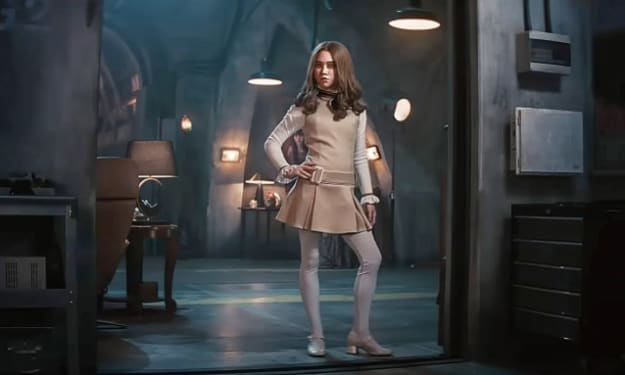
M3GAN 2.0 is directed by Gerard Johnstone, the film continues the story of M3GAN, an AI-powered android, but now pits her against a new adversary, AMELIA, a military robot created using M3GAN's technology.
By Ninfa Galeanoabout a year ago in Critique
Materialists, more like wtf did I watch
Hello, hello On the other day me and my best friend decided that we needed to have a movie night, and, because we both really like romcoms (romantic comedies) the movie that was chosen was "Materialists" we both watched the trailer liked it and everyone and their mother was talking how this was going to be the romcom of the year.
By Joana Piresabout a year ago in Critique
The Sabotaging of Sam Wilson's Captain America
Today we will talk about the undermining of Sam Wilson's Captain American. a lot of people are being very dismissal of the character's progression; not welling to give Sam Wilson a chance. They're are many ways the character Is being sabotage.
By Melvin Savageabout a year ago in Critique
Selah and the Spades: How the Series Would've Benefited Young Adult Media
The world was introduced to Selah Summers and Haldwell Academy in April 2020. Selah is the titular character of Selah and the Spades, an independent Young Adult drama that tells the story of how Selah walks a fine line between being feared and being loved. Months before the film’s release, Variety released an article stating that Amazon Studios had bought the rights to the film and planned to develop a series based on the movie. According to the article, the show was supposed to expound on the world of Haldwell Academy, possibly after Selah graduated. Unfortunately, we learned a few years back from Tayarisha Poe (the writer and director) on Twitter that the series isn’t happening. Looking at the current state of Young Adult Entertainment, Amazon should've developed the series. Teen media today lacks authentic minority representation, original content, and has alienated teen audiences. If the Selah and the Spades series existed, there would be more minority representation in teen media, an original show amongst the sea of remakes and reboots, and a show that doesn't alienate teen audiences.
By Tallulah Chanelabout a year ago in Critique