
Jack Kerouac raked my brain
for "The Most Overrated" challenge


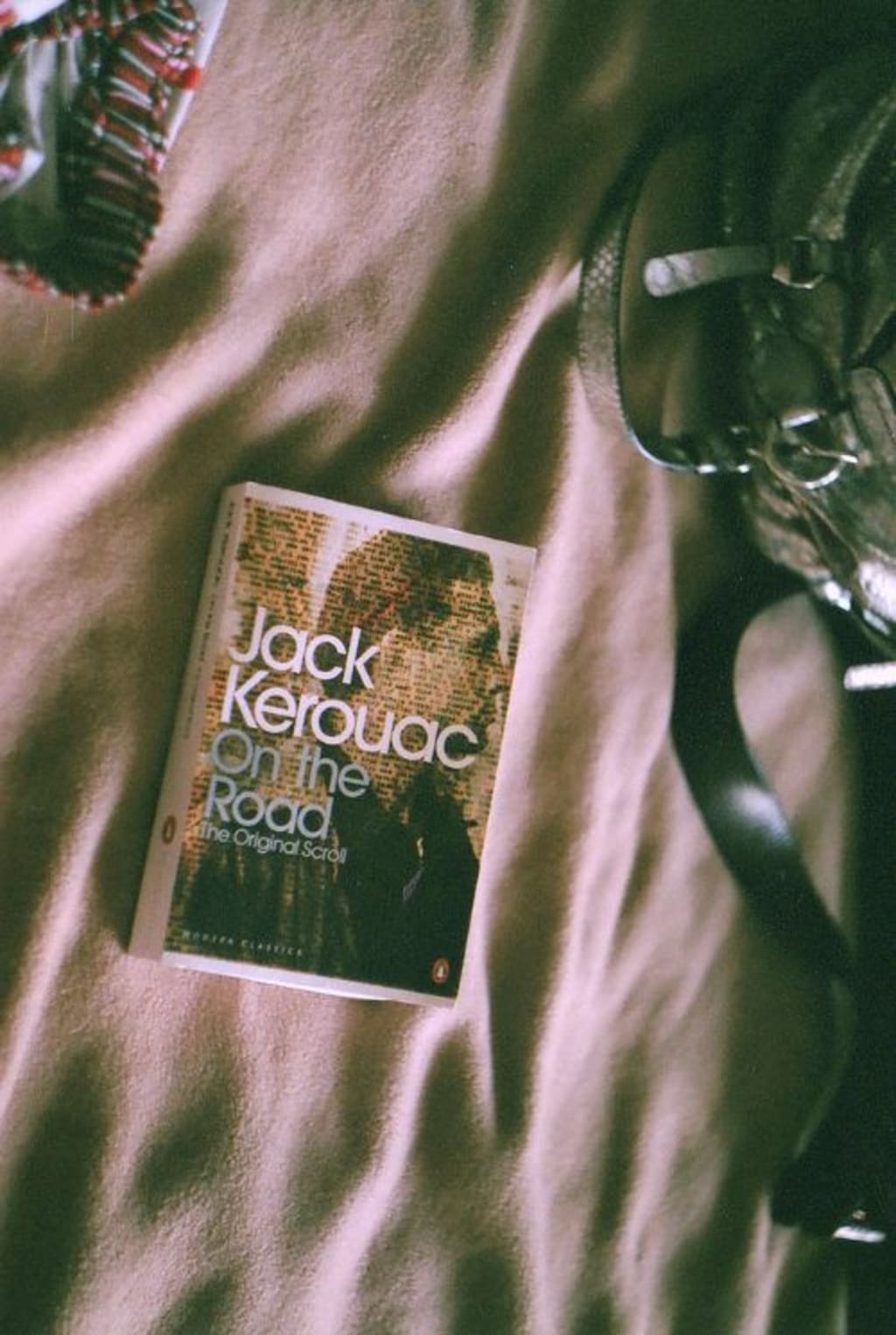
When I was about seventeen, I had a phase.
It was a kind of hippie-rock'n'roll phase, although calling it a phase now makes it sound much more serious than it actually was. I was living with my grandmother's sister, who had been a hippie herself, or as close as anyone could get to being one in communist Hungary.
I was mesmerized by her stories.
She told me about smuggled American bell-bottom jeans and forbidden records exchanged under the table. She had once eloped on a motorbike with a long-haired guy in a leather jacket, only for my great-grandfather to have to go after her and bring her back. She had been a rebellious free spirit, and the shame of the village.
She didn't exactly settle down afterwards, either. Eventually, her rebellion evolved into something resembling the leftovers of feminist philosophy. She still followed her own head, and generally considered other people's expectations to be someone else's problem.
Naturally, she was a terrible influence on me if you ask my parents.
As for me? She was an excellent one.
We watched movies together, from Zabriskie Point to—and yes, this actually happened—the homemade porn film of Jimi Hendrix.
My parents didn't know of the last one, but they were already worried that, according to their logic, exposure to these movies and bands would most definitely turn me into a drug addict and some kind of easy woman.
She also gave me books.
Lots of lots of book.
I still haven't made it through Ulysses, but one book seemed particularly suited to my teenage self, especially because I could read it in the breaks between university classes:
On the Road by Jack Kerouac
I jumped on that book like a cartoon character leaping from a great height into what they believe to be a conveniently placed swimming pool.
I expected to come out of it transformed.
My aunt had told me it changed her life, and I was—and still am—a sucker for anything that promises to change your life.
But instead, I landed on asphalt. There wasn't even a puddle or a small glass of water to fall into.
Reading On the Road felt like Jack Kerouac was personally raking my brain. And I am still baffled that I am supposed to consider this a masterpiece.
The book I thought I was going to read
On the Road was published in 1957, and quickly became one of the defining books of the Beat Generation. It follows Sal Paradise and Dean Moriarty, Kerouac's fictionalized versions of himself and his buddy Neal Cassady, as they repeatedly cross America.
The novel does not have a classical three-act structure. It’s more like a extended narrative with little conflict, limited character development and no satisfying moral transformation.
The main characters travel, drink, have sex, look for jazz, women, and money. Sometimes they work a bit, but mostly they don't. They drive some, hitchhike, separate, reunite. They drink and have sex and drive some more to do it all over again.
The story itself is promising.
America is enormous, the road is open, and they have all the freedom with endless possibilities in front of them.
Who wouldn't love that?
I understand why people fell in love with it. I even understand why I was supposed to.
I myself did it—not once. I left my job, my apartment, sold my belongings, packed my bag and literally walked out of my boring, predictable life.
I know the fantasy of the road.
What I still don't understand is why the book's reputation has become so much larger than the book itself. At some point, it became the symbol of freedom, rebellion, spontaneity and refusing to live an ordinary life. But why?
Jack Kerouac wrote the original version on a CVS receipt, and allegedly typed the second draft on one long roll of paper and in just three weeks in 1951.
And that sounds like a genial thing. Pouring prose directly from his consciousness.
Except... it really shows.
Don't get me wrong. I think Kerouac could write.
There are passages in On the Road that I do like, like when he wrote:
"The evening star must be drooping and shedding her sparkler dims on the prairie, which is just before the coming of complete night that blesses the earth, darkens all rivers, cups the peaks and folds the final shore in, and nobody, nobody knows what's going to happen to anybody else besides the forlorn rags of growing old."
—Jack Kerouac
But there aren't enough moments like these.
Through the entire book, you can feel that it was written in a rush, without much editing going into it. The story rushes forward, accumulates images, repeats itself, then rushes on again to repeat itself again.
I know, I know. That's the point. That's how you're supposed to write a Beat novel.
Except that spontaneity is not the same thing as mastery.
As a reader, I don't care how Beatnik his writing process was. And despite the guidelines of the Beat generation, Kerouac did write several versions of the book until he got to the one that we read now.
But as a reader, I care if the result works on the paper. And for me, too often, it doesn't.
The novel often reads to me like a public diary of a dude who desperately tries to prove that he is living up to his own idea of what a Beat writer should be. He has created these extraordinary characters, as he said "the mad ones, the ones who are mad to live, mad to talk, mad to be saved, desirous of everything at the same time, the ones who never yawn or say a commonplace thing, but burn, burn, burn[...]"
And then he seems determined to make sure that we understand, again and again, how extraordinary they are.
I remember thinking: Yes, Jack, we got it, right at the beginning of the book. They don't want to be or live like everyone else. Now, can we actually go somewhere?
My biggest problem is that while the road goes somewhere, the novel doesn't.
Geographically, the characters are moving a lot, almost non-stop. But for me, a journey implies that eventually, something changes. I was waiting for an emotional or intellectual destination.
But I ended up feeling like I went all the way down the road, and walked back up on the other side of it, when I could just simply spare the myself the miles and cross the road.
I finished the book eventually, but it took me way longer than I expected.
I still think Kerouac was a good writer, and he could have written an actual masterpiece if he just spent the time with editing his book, and working on the characters and the story a bit more (especially if he really wrote six or seven versions of it).
Especially when it comes to the female characters. The male characters get to be realistic, complicated, contradictory even. And the women just feel flat.
It makes the liberated world feel pretty narrow.
I wonder if I would like the novel more if there was a female character I could actually relate to? The potential was given.
Or is it simply because I already met the spirit in real life that I expected to find in the book: my aunt.
She lived her own version of the fantasy. She had lived strangely in a country where living strangely wasn't easy, especially as a woman.
Maybe that's why the book is still disappointing to me. At seventeen, I was basically the perfect reader, with a rebellious aunt feeding me rock music and once forbidden movies and books. But I just couldn't see what the hype was all about.
I already met a more interesting version of the central fantasy.
About the Creator
Enjoyed the story? Support the Creator.
Subscribe for free to receive all their stories in your feed. You could also become a paid subscriber, letting them know you appreciate their work.
Comments
There are no comments for this story
Be the first to respond and start the conversation.