

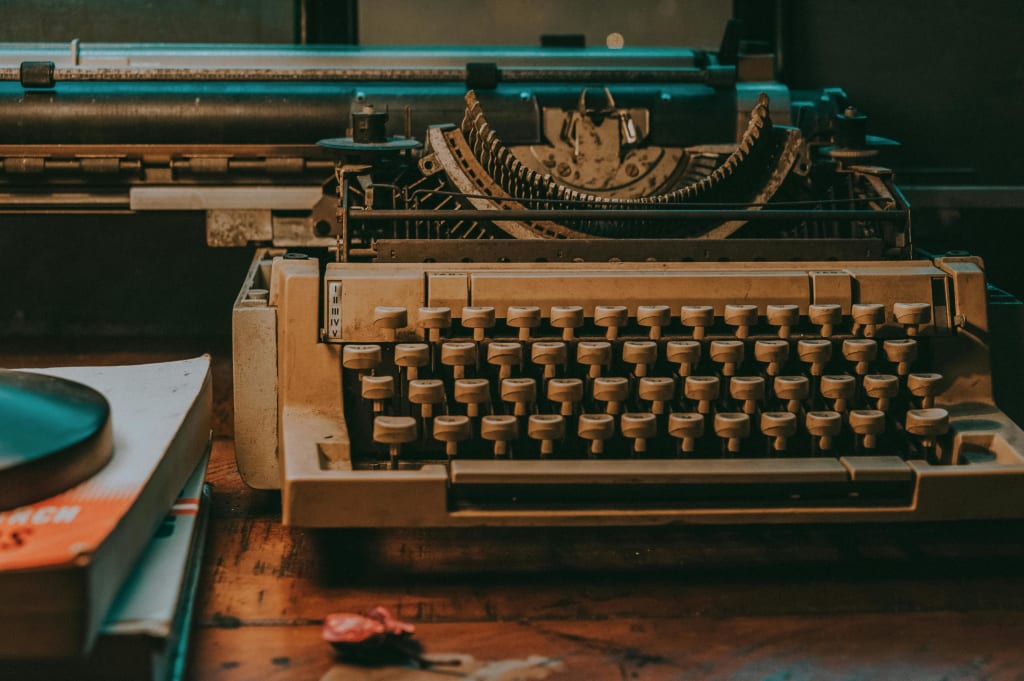
The image is one of an old electric typewriter that has probably typed quite a bit of work by various writers of all kinds. This is an image of an electric typewriter that I also had at one time. I remember the buzz sound it made when you turned it on the element scanned across the platen as you waited to start typing whatever you had planned, whether it be a story, poem, or term paper. It still had the clickity clack sound of an old manual, but one did not have to punch the keys so hard as one had to do on a manual.
This one kind as the image shows is one, I had at home, but when I first learned how to type on an electric it was in high school with and IBM Selectric the ones with the little ball element that seemed to move along so smoothly that even made typing fun. Electric typewriters were to make typing more speedy and efficient if I remember correctly. Then it seemed a few years later there appeared what were known as electronic typewriters that were more like word processors that hardly made no sound at all, and I believe some called them Quietwriters. Typewriters from manuals to the electronic brand have changed the world of typing over the years for now we all use our laptops to do most of our writing (typing). Sometimes I miss the buzz of an electric or even the clickity clack of a manual, but times change.
About the Creator
Mark Graham
I am a person who really likes to read and write and to share what I learned with all my education. My page will mainly be book reviews and critiques of old and new books that I have read and will read. There will also be other bits, too.
Enjoyed the story? Support the Creator.
Subscribe for free to receive all their stories in your feed.
Comments
There are no comments for this story
Be the first to respond and start the conversation.