
An Archaeologist's Review of Nolan's Odyssey
An honest and fair review of the widely-acclaimed motion picture



As any archaeologist or historian will tell you, don't study our field unless you want to be angry or disappointed all the time. This joke is largely pointed to films, novels, and video games, all of which those of us in these professions still enjoy despite our seemingly contradictory reservations. The method most of us use is simple: we separate our acknowledgement of its value as entertainment from its historical or literary accuracy. As such, this is how I will structure my review in order to maintain fairness to Christopher Nolan and the entire cast and crew of his 2026 adaptation of Homer's Odyssey.
To outline the criteria I will use in my review, I shall split a ten point scale evenly among both types of critique as follows:
Entertainment Value
Cinematography & Score (1 point)
Casting (2 points)
Writing (2 points)
Cultural/Historical Value
Respect for Source Material (2.5 points)
Historical and Cultural Accuracy (2.5 points)
In addition, I want to ensure you that I have both watched the movie recently and given The Odyssey (another) read. As I cannot fluently read ancient Greek, I will be basing my knowledge of the text off of the 1996 Robert Fagles translation (as it is the one I currently possess in my personal collection) as well as my BA in Classical Archaeology with honors from Saint Anselm College.
Beware spoilers for 2,700 year old piece of Greek cultural heritage and also a month-old movie.
Entertainment Value
Cinematography & Score
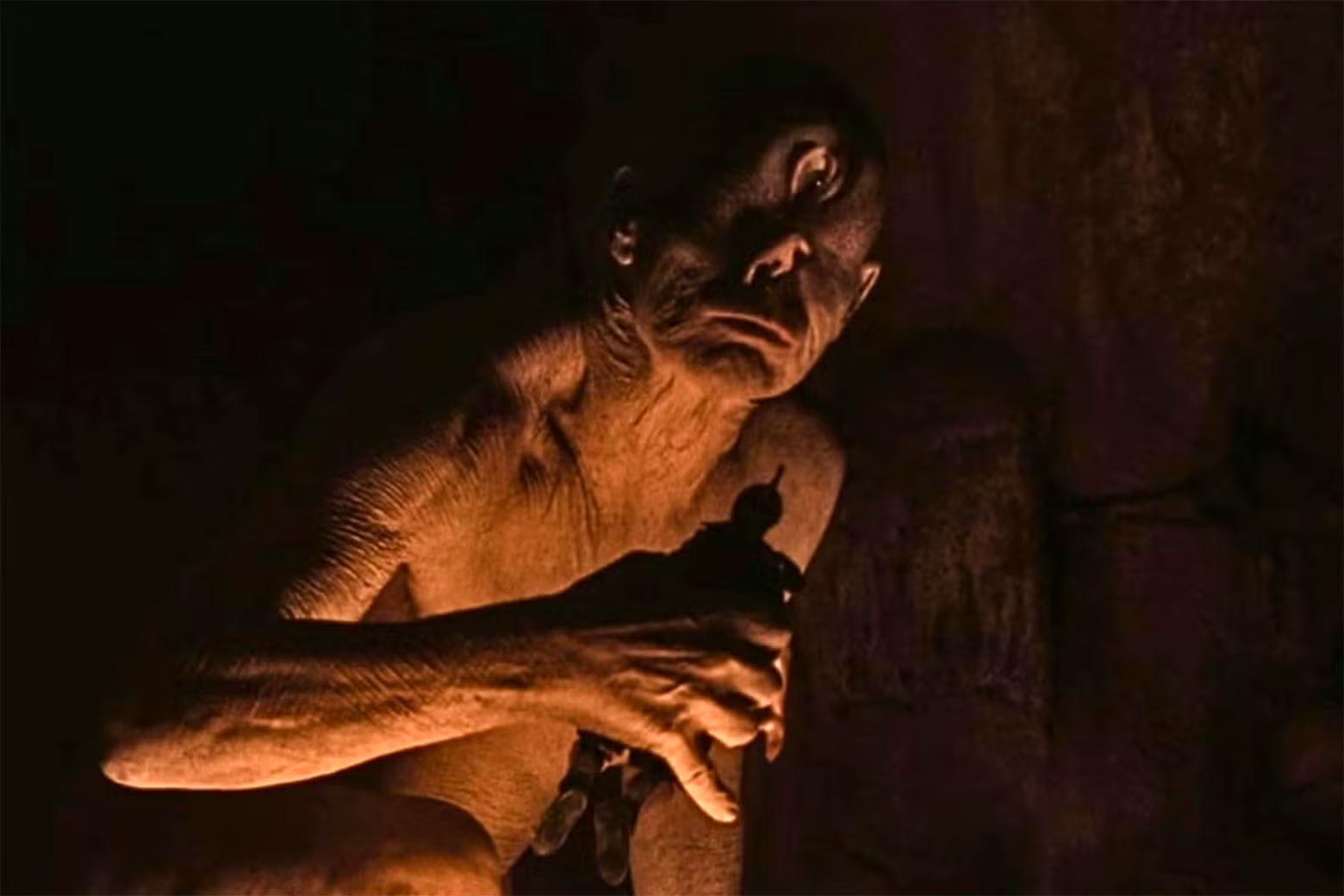
From the very first moment the movie began I was completely floored by the quality of the score and the filming. One thing in particular stood out to me, especially as a student of the classics. Rather than using the orchestral score one would expect of a major Hollywood production, they used largely original compositions using historical instruments - two of which being the aulos and the lyre. I feel that this inclusion helps give the film its unique historical flair and exposes the audience to something that they otherwise might not hear.
I also appreciated the incorporation of practical effects over complete CGI. I felt this detail brought back some of the wonder and rigor that used to be in many of the older Greek mythology films like the 1963 Jason and the Argonauts.
Category Award: 1 point
Casting
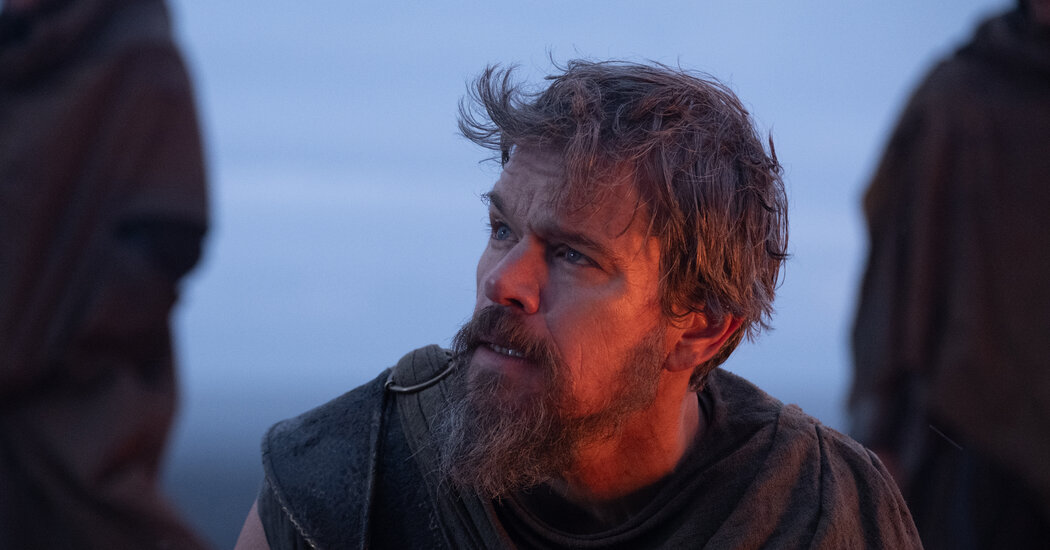
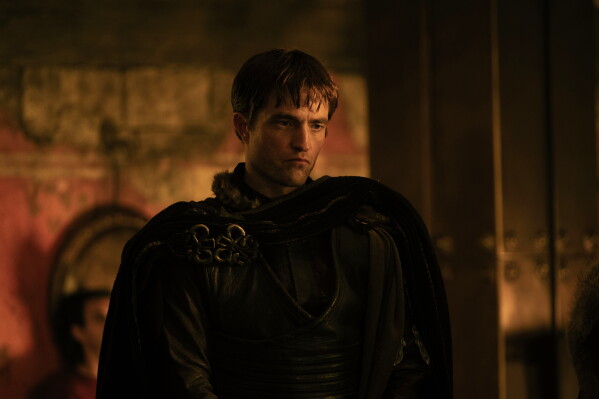
I had general misgivings about the casting from the very first moment I saw the trailer. Several actors in the movie are A-list celebrities, many of which being veterans of Nolan's previous films including Anne Hathaway, Robert Pattinson, and Matt Damon. I'm sure this helped sell the movie to the studio, but as an audience member I couldn't help but feel this casting was largely gratuitous or even type-cast in certain instances - especially with Matt Damon playing the wearied Odysseus flung far from home. Nevertheless, I feel the cast performed generally well in their roles and delivered a compelling performance.
One thing I would be remiss not to note would be that there is an overall lack of actors of Greek or even Eastern Mediterranean heritage in the film. There were also some general oversights regarding the familial relations of the characters on screen. Namely, Penelope and Helen are first cousins, so they should have also had Penelope and Telemachus played by black actors in that instance. As I will get to further on, the inclusion of actors with multiple racial heritages is probably one of the few historically accurate things they got right for the ancient Eastern Mediterranean. If only we got more of Lupita Nyong'o's Helen on screen, that would have been amazing.
Category Award: 1.5 points
Writing
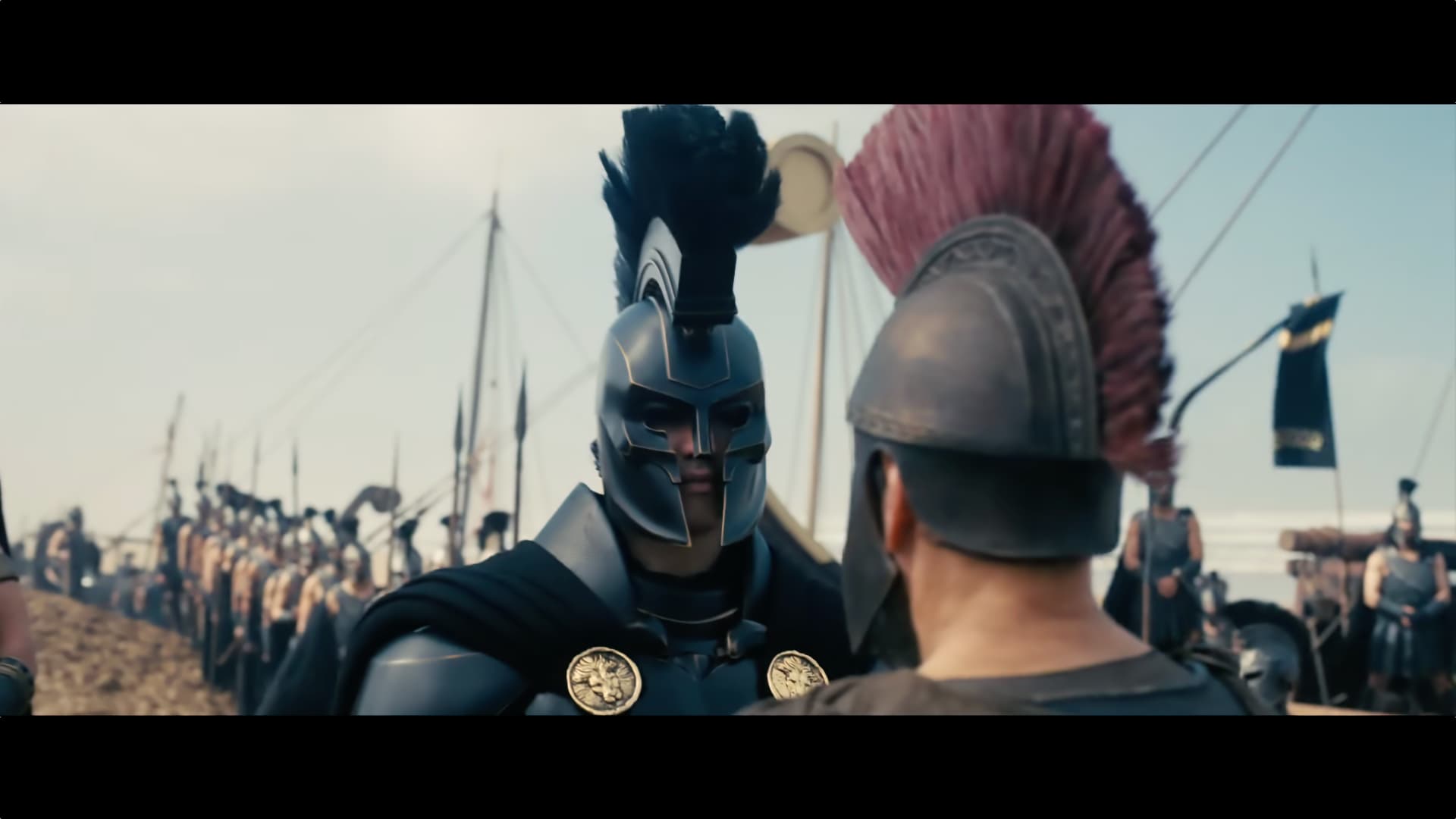
To continue being fair, this category specifically critiques the quality of the screenplay, not its relation to the original text. When taken in this independent manner, I quite enjoyed the writing. I felt the message of the movie about the ruin of war and the breaking of bonds between men to be rather poignant and relevant. This in particular was one of the highlights of the film for me.
Category Award: 2 points
Cultural and Historical Value
Respect for Source Material
In general, the film hit most of the major plot points of Homer's Odyssey: Telemachus' voyage, Ogygia, Aeaea, Polyphemus' Island, Odysseus' journey to Hades, the Sirens, Scylla and Charybdis, the Laestrygonian Giants, and the Cattle of Apollo. In general, Nolan and the writers did a good job of fitting a great volume of content into a three-hour block. This is, however, where my major criticism for this category is: it is all volume and very little substance of the original Odyssey. In order to keep this article brief, I cannot review every single deviation from the translated text (though I will make a separate article if there is enough interest in the comments), so I will choose some of the most glaring differences that highlight absence of the original plot, character arcs, and key cultural characteristics from the Late Bronze Age and early Archaic periods.
One over-arching criticism is the change to Odysseus' character himself. In the movie, Matt Damon delivers a compelling performance as the war-wearied stoic hero whose singular focus is to get home amidst his continued trial and trauma. While well-performed, this depiction of Odysseus couldn't be further from the original. Odysseus is hailed as one of the most clever and cunning among the heroes at Troy. He is - without a doubt - the best at not only contests of skill, but at pulling off elaborate ruses with the greatest of ease. This is best seen not only with the Trojan Horse, but with his manipulation of the cyclops Polyphemus in a famous dialog that is noticeably absent from the movie. In the book, he introduces himself as Outis, which is often translated as either 'No One' or 'Nobody', which recurs over the course of the following interaction with some clever wordplay that tricks the other cyclopes of the island (which are also absent in the movie) out of helping Polyphemus get revenge. Odysseus' 'fatal flaw' comes soon afterwards, which is frustratingly missing from the entire movie, as his hubris and arrogance lead to him revealing his name to Polyphemus as his crew sails away, leading the cyclops to curse Odysseus and beg his father, Poseidon, to make it so he never reaches home. While such bursts of unbridled arrogance are common in the story, the Odysseus of the film remains as stolid as a stone throughout.
Another point is that nearly all of the women characters of the book are either greatly diminished or entirely absent. For example, the role of Nausicaa (and pretty much all the Phaeacians) is folded in with Calypso in a rather confusing jumble of other plot points. Helen's role is also tragically diminished, as she originally had a very active role in welcoming Telemachus to Sparta and officiating the feast with her husband. Circe's role is also reduced to a pittance. In the book, Odysseus spends several months with her, befriends her to a certain extent, and even agrees to have a brief extramarital affair with her as a ploy to get his crew turned human again (which students of myth also know results in their love-child, Telegonus). In the movie, despite the scene's outstanding terror, the visit to her island is brief. Furthermore, all of the warnings and omens she gives him are folded into the prophecy of Tiresias, one of the male characters. As a final example, and much onto the subject of Odysseus' journey to Hades, a notable absence that is a major plot-point in the story is him meeting the shade of his mother, Anticlea, who reveals that she died of grief for him - believing him dead - and that his father, Laertes, now lives a joyless life of squalor of the same grief.
Continuing that point into the next topic, none of the men in the movie weep. In the book, it is common for the men to openly weep and grieve: Telemachus for his missing father, Odysseus for the men lost at Troy, Menelaus for the ignoble death of Agamemnon, as well as others. Unlike the rigid, stoic depiction of the men in the movie, the men of the Odyssey showed their emotion and were encouraged by those surrounding them to overcome it, not hide it. Likewise, the men also weep for joy, such as Odysseus being reunited with his son. Strong emotion is treated as a natural consequence of life, and I feel like this would have been an important message for men today had this been included.
As a final note in this category, and a particular source of consternation for me, was the shocking lack of gods and overall dearth of magic. The gods take an active role in the book, with the mortals of the story interacting with them either directly or through prayer and sacrifice. For example, Athena directly aids Odysseus, Penelope, AND Telemachus in numerous scenes, and she is directly responsible for assuming the guise of Mentor and urging Telemachus to make the voyage to Pylos and Sparta in search of his father. She also intercedes with her father Zeus on their behalf, prompting him to send Hermes to provide Odysseus with a means to leave Calypso's isle. Hermes even helps him evade Circe's charms by providing him with and instructing him to eat moly, a magical herb only the gods can collect. These and the other interactions with the gods are totally absent save for a few scenes with Odysseus chatting with Athena, who turns out to be an implied PTSD hallucination. The complete lack and disregard for fantastical elements in a movie that is supposed to be based on one of the most famous myths in western culture for millennia made the whole film feel sterile in comparison to the original work.
Category Award: 0.5 points
Historical and Cultural Accuracy
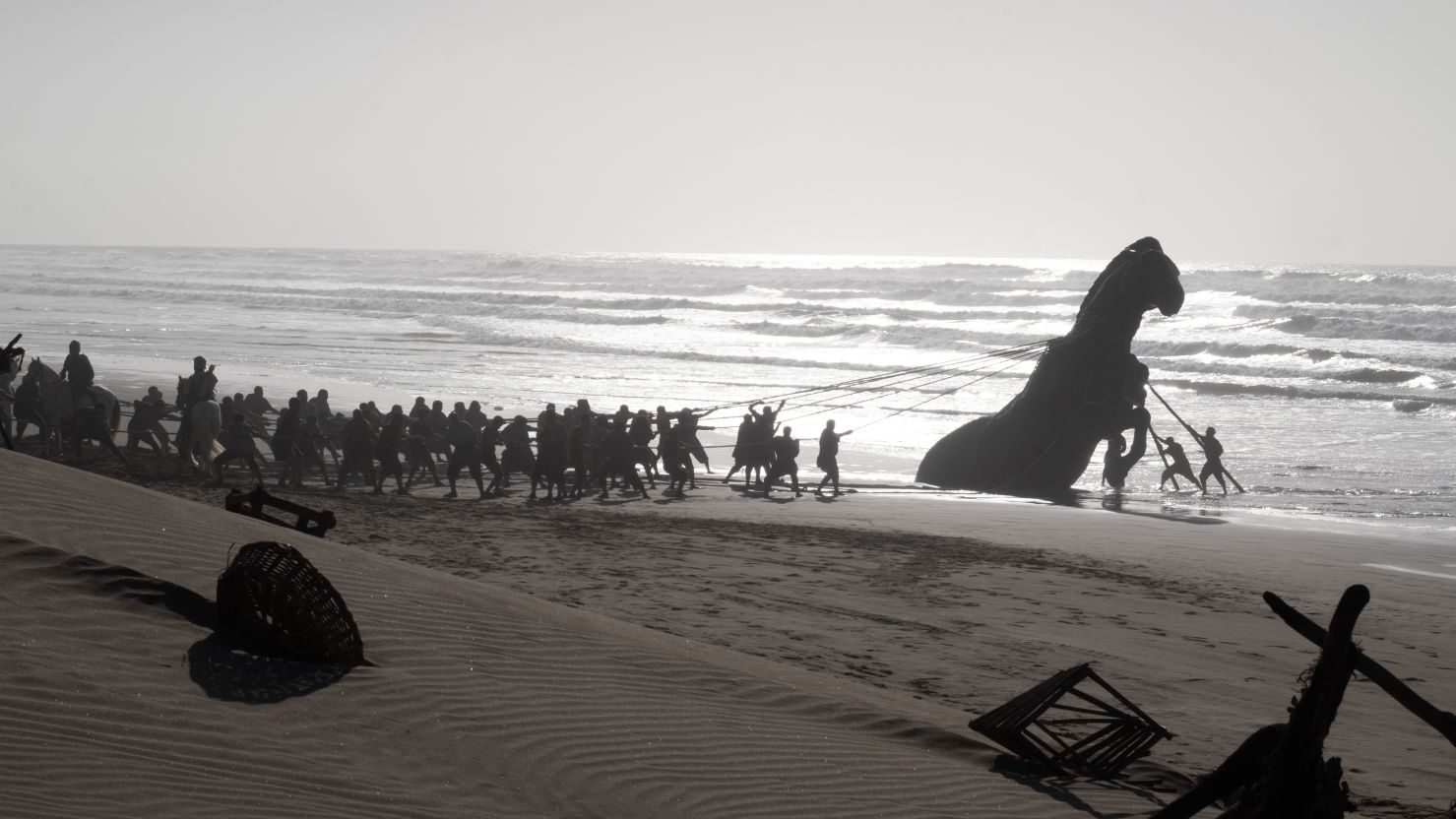
This category covers the historical and cultural accuracy of the movie with regards to historical records, archaeological studies, and wider scholarship regarding the period(s) depicted by the film. Before I cover the major gripes I have, I would like to state that I will not be going in depth about accuracy regarding armor and weaponry. This has been covered ad nauseam by other creators, writers, classicists, and academics. The reason why this will not feature heavily in this particular review is that Homer's Odyssey itself - being a product of a long oral tradition that preceded its writing by several centuries - is full of anachronism. While the story roughly occurs in the late Bronze Age, physical elements from the Greek Iron Age were inserted by later Greeks who likely wished to make the story more relatable to their contemporary audiences. While I am remiss to think Christopher Nolan's choices of set and costumes perfectly appropriate even in this context, I would not be considered a fair reviewer if I did not acknowledge this fact and allow him some grace.
The first point of criticism follows from the last point of the previous category. Just as the gods are absent from the movie, so is any depiction of ancient Greek religion. Ancient Greece was an overwhelmingly religious and superstitious society. Prayers were often accompanied by sacrifices - usually either libations of wine, burnt offerings of choice food, animal sacrifice, or the dedication of prestigious or otherwise valuable objects to a particular god. Feasting was also a mainstay of their religion, as choice portions of the feast were always kept aside and burned for the veneration of the gods. Bards also sung at these events, begging the muses for inspiration and choice of song. Similarly, contests of skill and arms could also be religious depending on the event in question, as we see in the funerary games of the Iliad (in which Odysseus participated), games accompanying religious feasts, or even the ancient Olympic Games themselves. Such activity is not only extremely visible in Greek myths (including the Odyssey), but also in the archaeological record. This is why it came to my surprise that it was largely omitted from the movie. In direct contradiction, Odysseus says in the movie "We should not be beholden to omens and superstitions." Not only would this have been completely incongruous with the world of the Odyssey, this could have been deemed sacrilegious and in direct opposition to the morals of the original, as Odysseus' hubris and his crew's disregard of omens are what get him in the most trouble.
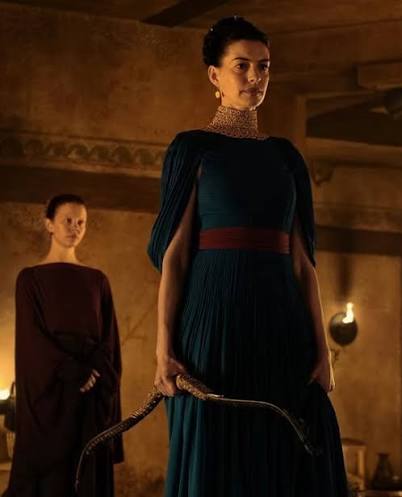
The second point of criticism is admittedly a rehashing of an old Hollywood sin: the costumes and set are too dark and bland. The ancient world, especially the Mediterranean, was a bright and vibrant place. Statues and buildings were painted with what we would consider gaudy colors, interior walls were adorned with bright and complex frescoes, and people expressed themselves with richly dyed clothing and metal jewelry if they could afford it. As two examples directly from the book, Odysseus is described as donning a purple cloak with an ornate gold brooch once reclaiming Ithaca, and Telemachus wore a rich red cloak. Even the bronze armor is described as 'gleaming'. Ancient people would have thought the uniform blacks, grays, and earth tones of the film to have been unfashionable at best and boorish at worst. The only costumes that would have come close to what I would have expected are Penelope's, particularly the one with her deep blue dress, red sash, and gold ornamentation. While this escapes the notice of most viewers, this old Hollywood trope of 'darkening' the past reinforces outdated and ultimately harmful preconceptions that past people were simplistic, dirty, and 'primitive' compared to modern man.
My third point is mixed with a bit of praise. Nolan does include some Bronze Age 'Easter Eggs' in the film. For one, Odysseus's stone throne is based on an artifact from a Mycenaean site and there is a fresco copied from one of the ones recovered from the Minoan palace of Knossos. The one I think even most laymen would have noticed is the repeated mention of the invasion of the 'Sea Peoples'. This references an earlier theory about the Late Bronze Age Collapse of nearly all major eastern Mediterranean palatial states and nations except for the Egyptian New Kingdom and the cities that would later comprise what we call the Phoenician city states. While there is no evidence that a Bronze Age Greek would have used the term, it actually does appear in two Egyptian inscriptions dating to the reigns of Pharaohs Merneptah and Rameses III, blaming the Sea Peoples for the widespread destruction that the Egyptians weathered. Most archaeologists will tell you now that the truth was much more complicated, with factors ranging from earthquakes, droughts caused by shifting climates, forced migrations due to food insecurity, the introduction of better iron-smithing technologies that upset traditional bronze-based exchange systems, and -yes- large-scale invasions. Despite my original interest at the mention of the 'Sea Peoples', Nolan immediately took me out of my admiration with the line "this will bring the end of our Age of Bronze." For those unaware, the term 'Bronze Age' is not an artifact of ancient records but the scholarship of one Danish scholar by the name of C.J. Thomsen who created the original 'Three Age System' (Stone, Bronze, and Iron Ages) of chronological identification in the early 19th century that continues to be improved upon today. Hence, it is not something Bronze Age Greeks would have used to describe themselves. This combined with certain other extreme forms of anachronism (dreary garb, Christian-format prayers and calling Hades 'Hell', and Norse ships instead of any sort of historical Greek craft) made the earnest attempts of including the aforementioned Bronze Age historical 'Easter Eggs' feel more like a tease than anything sincere.
Category Award: 1 point
Final Review Score and Closing Thoughts
Entertainment Value Award: 4.5/5
Cultural and Historical Value Award: 1.5/5
Total Award: 6/10
Christopher Nolan's Odyssey is not a bad film by any means, but I think where it fails is trying to be the Odyssey of Homer. Entire major plot points and characters are drastically altered, if not entirely omitted, and the original elements he included have very little thematic relevance or accuracy to either the literary work or the time period. I think the story he was trying to tell was important, but there are many other stories he could have told instead of almost entirely rewriting the Odyssey and then marketing it as a faithful adaptation. Likewise, I feel like one major misunderstanding that makes itself apparent in this film is the lack of understanding what a hero means in the context of Ancient Greek heroic epics. To the modern age, a hero is someone who serves as an example of morality and virtue. To the ancient Greeks, a hero was someone of blood-relation to either a king or god. As such, the Odyssey is not a story about how good of a guy Odysseus was, it was the story of 'the man of twists and turns driven time and again off course, once he had plundered the hallowed heights of Troy'. Odysseus is a deeply flawed character. His story is about honor and glory, which he may only attain by returning home from his journey. This is why I say that independently the film is very good, but it can hardly be considered a respectful emulation of the source material.
Recommended Further Reading:
"The End of the Bronze Age: Changes in Warfare and the Catastrophe CA. 1200 B.C." by Robert Drews. (Internet Archive Edition)
"The Odyssey" by Homer. Translated by Robert Fagles. Introduction by Bernard Knox. 1996. (Internet Archive Edition of Translated Text)
About the Creator
Enjoyed the story? Support the Creator.
Subscribe for free to receive all their stories in your feed. You could also become a paid subscriber, letting them know you appreciate their work.
Comments
There are no comments for this story
Be the first to respond and start the conversation.