
What the Operating Room Taught Me About Performing When the Pressure Is Real
What 40 Years of Trauma Surgery and Combat Medicine Teach Us About High-Stakes Performance
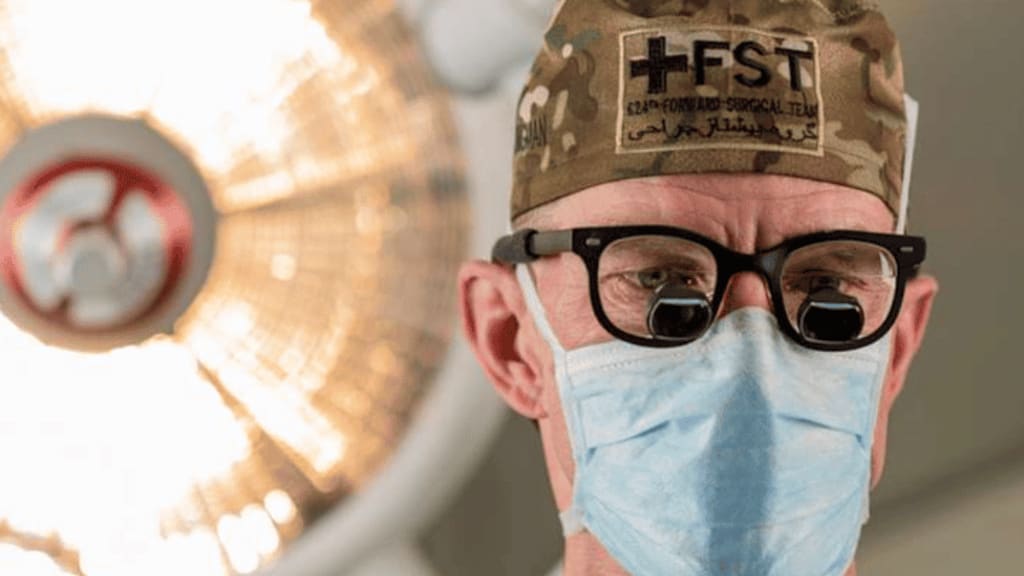
Every surgeon has a version of this moment. The patient is deteriorating faster than the plan allows. The tools you expected are not available. Two people on your team are giving you conflicting information. And the decision you make in the next sixty seconds will determine whether this person survives.
That is not a thought experiment. That is a Tuesday morning in a combat hospital in Iraq. I lived those moments across eight deployments and 40 years of trauma surgery. They shaped how I think about pressure, performance, and what it actually takes to function well when the stakes are real.
Pressure Does Not Create Your Capability. It Reveals It.
The belief that people rise to the occasion under pressure is mostly wrong. In reality, people fall to the level of their preparation. The surgeon who stays calm when things go sideways does not summon calm from somewhere in the moment. That calm was built through training, repetition, and an honest accounting of past failures.
This is why mentally preparing for setbacks before they happen is not an optional habit. It is the work that determines your actual ceiling when the pressure is highest. The people who look composed under fire rehearsed that composure long before the fire started.
The Best Decisions Come From Clarity, Not Confidence
One of the most useful lessons from trauma surgery is that confidence and clarity are not the same thing. Confidence can be performance. Clarity is functional. A surgeon who is certain and wrong causes harm. A surgeon who is uncertain but clear about what they know, what they do not know, and what the next step is can still save the patient.
In combat trauma care, the protocols that reshaped how civilian emergency care operates were built on that principle. Stop the bleeding first. Restore perfusion. Treat the physiology before completing the anatomy. Every step exists because someone got clarity on what mattered most and built a protocol around it.
Routine Is the Foundation, Not the Ceiling
People sometimes assume that high performers improvise constantly. They do not. They rely on deeply practiced routines that free their minds to manage what is genuinely unpredictable. The checklist before a procedure. The pre-operation briefing. The rehearsed communication patterns between a surgeon and a scrub tech. These are not bureaucratic formalities. They are cognitive infrastructure.
The same logic applies to advances in how we manage hemorrhage in the field. The shift toward whole blood transfusion succeeded because teams practiced the protocol until it became automatic. When the patient arrived, the team did not have to think about the process. They could think about the patient.
Recovery Is Part of Performance, Not the Opposite of It
High-pressure environments wear people down. Sustained performance requires sustainable recovery. This is not a soft observation. It is a physiological and cognitive fact that anyone who has worked through a 36-hour stretch in a trauma bay understands from the inside.
Resilient leadership includes knowing when to rest, delegate, and reset. A leader who burns out does not just harm themselves. They erode the performance capacity of every person around them. The obligation to recover is not personal. It is professional.
Review What Happened, Then Move Forward
The single most effective practice I have carried from military medicine into every other area of my work is the structured review of what happened, what worked, and what needs to change. The After-Action Review is not optional in an environment where performance gaps cost lives. I have brought that same discipline to how I evaluate my own performance in clinical, leadership, and personal contexts.
The review does not require perfection in what preceded it. It requires honesty. What was the plan, what happened, why was there a gap, and what changes next time. Four questions. Applied consistently, they compound into something significant over years of practice.
The Civilian-Military Bridge Goes Both Ways
One of the most important things I have observed across 40 years is how much military and civilian medicine each have to teach the other. The synergy between these two worlds has produced real advances in hemorrhage control, damage control surgery, aeromedical transport, and trauma systems. The learning traveled in both directions. It still does.
Performance under pressure is not a skill exclusive to either setting. The principles that help a surgeon stay functional at 0300 in a combat hospital also apply in a boardroom, a classroom, or a family facing a crisis. The environments differ. The underlying human requirements do not.
Final Thoughts
Performing under real pressure is not about being fearless. It is about being prepared. It is about building the routines, the mental habits, and the self-awareness that hold up when the situation demands more than you feel you have.
I have had the privilege of working alongside people who were extraordinary under pressure. Almost none of them were born that way. They were built that way, through repetition, honest review, and a commitment to showing up and doing the work before anyone was watching.
That is the standard I have tried to hold throughout my career. It is the standard I still work toward every day.
About the Creator
Dr. Jay Johannigman
Dr. Jay Johannigman has served in the military medical corps for over 40 years and is a Colonel in the US Army Reserve. He has received several awards, including the Legion of Merit, the Bronze Star, and the Meritorious Service Medal.
Enjoyed the story? Support the Creator.
Subscribe for free to receive all their stories in your feed.
Comments
There are no comments for this story
Be the first to respond and start the conversation.