Teenage years
The Sound of Her Silence
The first time I saw Ayesha, she did not say a word. It was a rainy afternoon. I had escaped to a half-occupied bookstore between two rusted shopfronts on a quiet street in Dhaka. I wasn't looking for anything particular—just peace. The doorbell rang softly as I entered, and there she was.
By Bari Mir Rahamatulabout a year ago in Confessions
The Unspoken Words
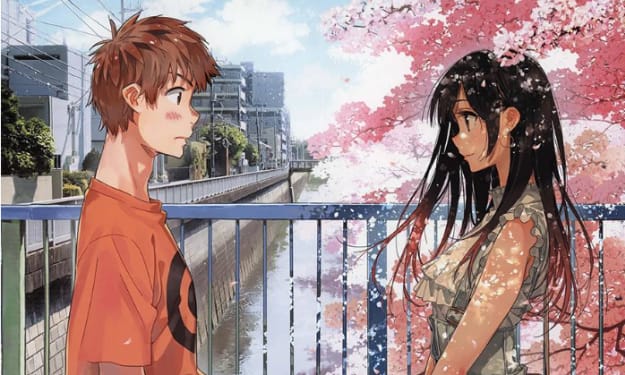
There are moments in life when life turns around, and yet you don't realize it until later. That was one of them. It started when I first saw her at the park. The weather was mild, the kind of day that enticed you to sit in the sun and watch the world go by. I had been going to that park daily for a month, trying to find peace, trying to escape the insanity that had consumed my life. I wasn't looking for anything or anyone, then she appeared.
By Bari Mir Rahamatulabout a year ago in Confessions
The Art of Living Lightly: A Symphony of Small Things
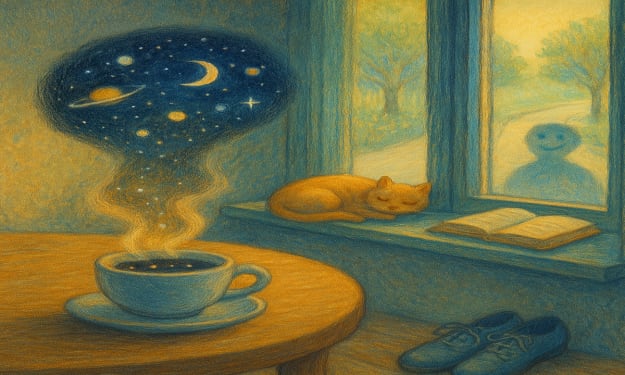
I. Grand Theatre of the Everyday Life My dear reader, the Grand Theatre of the Everyday Life is not a dreadful affair to be suffered through, nor a burdensome ledger of duties to be tallied and settled. It is a theatre — no, a carnival — splendid and tragic, absurd and luminous, unfolding in your living room, at bus stops, in the slicing of apples and the tying of shoelaces. We are all actors, unwitting but dazzling, wearing bathrobes instead of cloaks, reciting soliloquies to our pets, and dreaming revolution between morning coffee and emails. What folly to think only philosophers wear long beards and live in ivory towers! Philosophy is not reserved for musty books and ponderous monks. It is found in the boiled egg, in a late train, in the laughter shared with a stranger. To live well is to philosophize well, not with the tongue, but with the soul. II. Of Toast and Transcendence You see, the way one butters toast — hurriedly, carelessly, or with reverence — speaks volumes of one’s inner life. Some rush through breakfast as though chased by time itself. Others arrange their morning rituals as priests might prepare for sacred rites. Why not pause a moment and ask: What if the divine hid in marmalade jars? What if the answer to happiness lies not in a grand purpose but in the precision of pouring tea without spilling a drop? Oscar Wilde once wrote, “To live is the rarest thing in the world. Most people exist, that is all.” And I say to you — dare to live, even in the smallest things. The universe may be large, but the joy of life often fits in a teacup. III. The Philosophy of the Shoe Rack Let us speak of shoes — those silent companions of our daily quests. The child’s muddy sneaker, the heel of the hurried woman, the slipper of the retired gentleman. Each pair carries a thousand steps, a thousand unspoken philosophies. Some walk with purpose, eyes on the horizon. Others shuffle, distracted, their feet lost in the fog of thought. Do you walk to arrive, or do you walk to wander? The humble shoe rack, chaotic or orderly, reveals the chaos or order of the mind. Are you someone who lines up your thoughts or lets them tumble like sandals on a summer evening? Philosophy isn’t a question of what you believe — it’s how you walk through your hallway. IV. Mirrors and the Myths of the Self The mirror is a philosopher’s favorite adversary. It shows us what we are, but never what we feel. It reflects a face, but not the poems behind it. Daily life, too, gives us mirrors — in moments of anger, love, embarrassment, and boredom. What do you see? We wake up each morning and wear not only clothes but identities. The serious father. The witty student. The tired employee. But who are we beneath the layers? Wilde might say, “Be yourself; everyone else is already taken.” But even being yourself is an act of interpretation. Do not trust mirrors too much. They can only show you what others might see. The soul, my friend, is best glimpsed in laughter, silence, and kindness to cats. V. The Poetry of Doing the Dishes Ah, the dishes — philosophers' enemies and poets’ inspiration. There is something rebelliously beautiful about scrubbing a pan while thinking of mortality. Soap suds and existential dread go hand in hand. But here’s the secret: in every mundane chore, the universe is humming. To clean is to create order. To fold clothes is to shape the chaos of existence into neat little stacks. Even gods would envy the power of homemakers who build worlds anew every morning with mops and music. Why must the meaning of life be grand? What if it is simply to do things beautifully? VI. Arguments with the Clock The clock ticks with the arrogance of a dictator. It tells us when to rise, when to eat, when to sleep. But time, in truth, is far more elastic. A single second of love can stretch into eternity. A year of monotony may vanish like mist. We should not live by clocks, but by wonder. Children know this well. Give them five minutes with a butterfly and they will remember it for life. Adults, meanwhile, spend decades chasing deadlines they cannot even remember. Time should be measured not in hours but in heartbeats — in those rare, full-moon moments when life feels too vast to name. VII. Conversations with Your Shadow At night, when the world grows quiet and your phone has nothing left to show you, there comes a moment — soft, strange, like the scent of forgotten flowers — where your shadow leans in to speak. “What do you believe in?” it might ask. “Whose voice do you hear when you are alone?” The truest philosophy begins not in books but in those silent self-dialogues — when you ask yourself why you are here, and what you truly fear. Be brave enough to answer. Be bold enough to change. VIII. On Loving Without Reason To love someone — a person, a plant, a poem — without needing a reason is the purest philosophy. Love makes no sense, and that is its glory. It’s the great rebellion against utility and logic. A child’s drawing, a grandmother’s recipe, a stray dog following you home — these are not efficient things, but they are essential. Oscar Wilde said, “The mystery of love is greater than the mystery of death.” And perhaps that’s all we need to know. In daily life, love wears quiet clothes. It brews tea. It checks if you’ve eaten. It holds the umbrella slightly more over your side than its own. IX. Living Lightly, Dying Fully The ultimate philosophy is not about avoiding death, but about not dying while you live. To live lightly does not mean carelessly — it means joyfully. It means forgiving swiftly, laughing deeply, and not waiting for permission to dance in your kitchen. Philosophy is not meant to weigh us down with questions, but to lift us up with meaning. Ask the questions — yes. But also water your plants. Write letters. Sing badly. Life is brief, but it need not be small. X. A Final Whisper So let this be your creed: Find magic in mornings. Hear poetry in traffic. Let your socks be philosophical. Speak kindly to pigeons. Wear your scars as medals. And never, ever apologize for feeling too much. For in the grand book of the universe, it is not the philosopher who has read the most who is wise — it is the one who has noticed the softness of the world, and chosen to be soft in return. And that, dear reader, is the art of living lightly.
By Reshal Manzoor about a year ago in Confessions
Healing Childhood Trauma
Healing from Childhood Trauma: A Journey Toward Wholeness Childhood trauma can leave lasting scars that affect an individual’s emotional, mental, and even physical well-being throughout their life. Whether it involves physical, emotional, or sexual abuse, neglect, loss, or witnessing violence, the impact of trauma in childhood is profound. The effects can range from difficulties with trust and relationships to mental health struggles such as anxiety, depression, and post-traumatic stress disorder (PTSD). However, healing from childhood trauma is possible. It’s a long and often challenging journey, but with the right tools, support, and mindset, it’s a path toward recovery and emotional freedom.
By Gabriela Toneabout a year ago in Confessions
Aren't Women More Than Just Wives in Punjabi Stories?
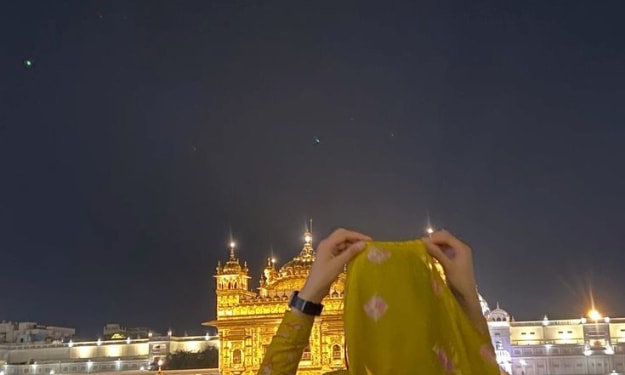
When Punjab is remembered, either pictures of gigantic, hulking men willing to fight for their motherland or the popular love stories come to our imagination. Punjabi literature can submerge both extremes of love and war it most delicately. While the literature of the wars is resistance against invaders or powers, love is also highly militant.
By Hridya Sharmaabout a year ago in Confessions
“Forbidden Flames”
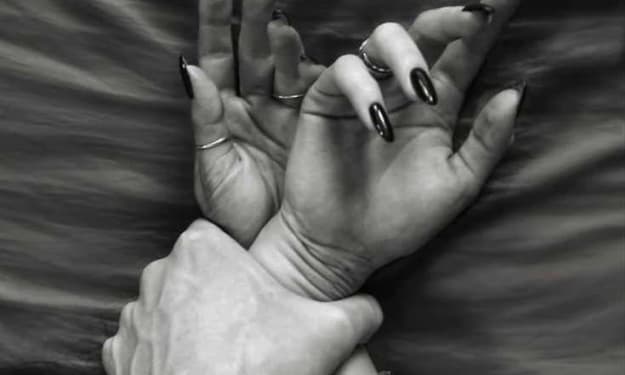
Falling Into Temptation They had always been close. Since childhood, Ethan and Aria had shared everything—secrets, laughter, late-night conversations whispered under the covers. It had always been innocent, just warmth and comfort—until it wasn’t.
By Dr. Kinjal Shahabout a year ago in Confessions
Young Man Finds Unexpected Comfort After Romantic Struggles
Sitting on his grandmother’s vibrant red sofa, 20-year-old Jayden tried to lose himself in a movie, but a heavy cloud of frustration clung to him. For four days, he’d been wrestling with a gnawing disappointment that began the previous Saturday night. After months of dating a charming, petite woman with a warm mahogany glow, he’d hoped their evening in a hotel room would mark a turning point-his first time stepping beyond virginity. At 20, he was eager, and she, an 18-year-old virgin too, had seemed just as willing. But as the moment drew near, everything unraveled.
By KWAO LEARNER WINFREDabout a year ago in Confessions
A New Life in the Fast Lane: Josh’s American Adventure Begins
Josh van der Haagen stirred awake to the clamor of workmen outside his new home, the late morning sun filtering through the opaque window of his bathroom. His body ached from the 16-hour flight from Europe, a discomfort even first-class luxury couldn’t erase. Stretching with a groan, he tried to cling to sleep, but the relentless noise won out. Resigned, he rolled out of bed, weaving through a maze of unpacked boxes and furniture to reach the shower. As hot water cascaded over him, he surveyed his new surroundings-his room and bathroom, meticulously crafted to match the 3D models he’d approved. The spacious house, a gift from his father, was one silver lining to this transatlantic upheaval.
By KWAO LEARNER WINFREDabout a year ago in Confessions
A Single Father’s Journey Through Love and Temptation
Raising a teenage daughter alone is no small feat, and for Logan Palmer, it’s been the defining challenge of his life. Since his wife Jennifer passed away years ago, leaving him to care for their young daughter Clarissa, Logan has poured every ounce of himself into being a devoted father. Work and parenting have filled his days, leaving little room for anything else-no dates, no nights out, no chance to fill the void left by his late wife. At times, the sacrifice feels overwhelming, especially for a man whose desires still burn brightly beneath the surface. But Clarissa is his world, and for her, he’s set aside his own needs without a second thought.
By KWAO LEARNER WINFREDabout a year ago in Confessions
Chapter VII: The Ontology of Silence
From every corner of experience quiet, in its variations, is the sound of existence itself, the sound of absence. Silence has varied qualities. Think about the silence of dawn in the woods where the light of day pierces the top of the trees each moment like God holding its breath a split second longer; unmistakably old silence vibrating with memories of a forming world. Or, consider the silence of the city at sleep, thick with human noise, its asphalt heating up from the day's activity, not yet dissipated, a whole inhabited unconscious simmering like neurons firing in synchronization. Or, think about the silence before storm, a stretch, poised like a bow-and-arrow, the sound of silence true, always an inevitability; and, then there is the silence after-storm the world emerged as if it was hollowed out from a gutting, shaken pure everything is deemed newborn
By LUCCIAN LAYTHabout a year ago in Confessions