Teenage years
We’re More Connected Than Ever, But Lonelier Than We’ve Ever Been: A Day in 2025
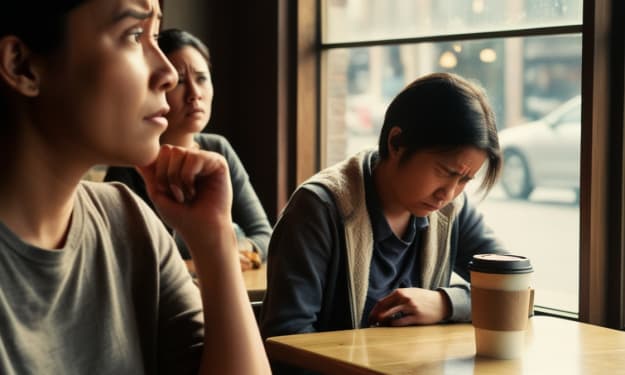
This morning, I woke up to 134 notifications. Messages from group chats I barely participate in, app updates, news alerts about a wildfire on the other side of the world, and a reminder from a mental health app that I haven’t “checked in” for four days. A part of me smiled at the digital buzz — a small, addictive rush of relevance. But another part of me, the quieter, honest part, sighed. Because despite the constant pings, replies, and virtual thumbs-ups, I haven’t had a real, meaningful conversation in person for over a week. And I know I’m not the only one. A Hyperconnected World with Disconnected Hearts It’s 2025, and technology has officially won the race for our attention. We live in a time where you can FaceTime your cousin in Australia while ordering groceries through an app, all while streaming a show recommended by an algorithm that knows you better than your closest friends. We carry tiny glass rectangles in our pockets capable of connecting us to anyone, anywhere, anytime. And yet — statistically and emotionally — people have never felt more alone. A recent global study showed that nearly 45% of young adults report feeling lonely most of the time, despite spending upwards of 7 hours a day on social media and messaging platforms. How did we get here? And more importantly, how do we find our way back? The Illusion of Connection I remember when technology was supposed to bring us closer together. Back in the early 2010s, apps like Facebook and WhatsApp promised to bridge oceans and time zones. And for a while, it felt like they did. We reconnected with old school friends, shared pictures of our pets and plates of food, and sent each other silly voice notes just because we could. But somewhere along the way, something changed. What began as a way to nurture friendships turned into an endless competition for attention. The highlight reels replaced honest conversations. People started measuring their worth in likes, followers, and story views. We became performers on a stage with no intermission. And in this constant performance, something vital got lost — authenticity. Now, I scroll through my feed and see people I used to know posting motivational quotes about growth and gratitude while I know they're struggling in silence. I see perfect selfies with captions about "good vibes only," while their eyes tell a different story. It’s a digital masquerade, and most of us are too tired to take our masks off. Always Online, Always Lonely The irony of this hyperconnected world is that while we have more ways to reach each other than ever before, we rarely actually connect. A friend leaves you on 'read' for hours, and you assume they’re busy. But deep down, you wonder if you’re annoying, irrelevant, or easy to ignore. You get tagged in memes instead of receiving phone calls. Birthdays get a generic "HBD 🎉" on your Facebook wall rather than a warm hug or a meaningful message. We’ve replaced depth with convenience, vulnerability with curated images, and conversations with emojis. And while these tiny interactions keep us superficially tethered, they rarely nourish us in the way true human connection does. The Rise of Digital Companionship In 2025, loneliness has quietly become an epidemic. Mental health professionals warn that prolonged social isolation — even when you're technically surrounded by people online — is just as damaging as smoking 15 cigarettes a day. The situation is so severe that AI companionship apps are exploding in popularity. Programs designed to mimic friendship, romance, or mentorship are topping app store charts because people desperately need someone to talk to. An AI that never judges, always listens, and remembers your favorite color might sound comforting, but it’s also a tragic commentary on where we are as a society. When artificial relationships feel safer than human ones, we have to ask ourselves: what went wrong? When Everything Is Performative, Nothing Feels Real Another unsettling truth about modern connection is its performative nature. I remember last month, scrolling through TikTok, I came across a woman sobbing about her breakup. It was raw and emotional — until I realized it was staged content for followers. In the very next video, a man pretended to find an abandoned puppy on the street for likes, even though it was his own pet. Social media incentivizes drama, vulnerability, and human moments — but only when they’re packaged, edited, and filtered for public consumption. As a result, many people now struggle to recognize or engage in genuine connection. We hesitate before sharing a tough moment with a friend, wondering if it’s “oversharing.” We downplay joy in case it seems boastful. And so we drift, further and further apart. The Quiet Return of Small, Real Moments And yet — in the middle of this digital noise, there are still flickers of hope. The other day, my elderly neighbor left a basket of lemons from her tree at my door. No text, no Instagram story, no public display. Just a small, human gesture. At the park, a little boy sold painted rocks for $1.50 each. I watched strangers stop to admire his work and actually talk to one another — not about politics or algorithms, but about how their week was going. These moments reminded me that the human instinct for connection is still alive. It’s buried under push notifications and doomscrolling, but it’s there. And perhaps that’s our way back. Choosing to Be Present If there’s one thing this year has taught me, it’s that presence is a choice. You can scroll for hours and feel emptier than before. Or you can meet a friend for coffee, even if you both just sit quietly. You can put your phone on silent during dinner. You can ask someone how they’re really doing — and wait for the real answer. Because while the world profits off our distraction, what we really crave is attention — not the kind you get in likes or retweets, but the kind where someone looks at you and says, “I see you. You matter.” Final Thoughts 2025 will likely bring even smarter gadgets, AI friends, and virtual worlds. But the most precious thing we’ll ever have is still each other. So maybe it’s time to rebel. Talk to someone in person today. Notice the sky. Leave your phone behind for a walk. Compliment a stranger. Check in on your quiet friend. Because in a world addicted to performance and connection on-demand, choosing real, unfiltered human moments might be the most powerful thing you can do.
By Muhammad Ilyasabout a year ago in Confessions
Can You Be in Love With Someone Who Never Loved You Back?. AI-Generated.
The First Time I Saw Him I still remember the first time I noticed Ayan. He wasn’t loud or trying to be the center of attention — he just had this quiet, calm energy that made you feel safe. We were in the same literature class. He raised his hand to talk about a poem one day, and the way he spoke, like he really felt the words… it stayed with me. He didn’t just understand things — he saw them, in the kind of way most people miss. From Classmates to Friends That Felt Like More We gradually started talking after class — nothing dramatic, just easy conversations about books, music, and random things like whether tea is better than coffee. It turned into study sessions, long walks around campus, sending each other memes at midnight, and sharing playlists. He made me feel seen, in a way no one else really did. With him, I didn’t have to try too hard — I could just be. And honestly, I started to fall for him long before I realized it. It wasn’t the butterflies kind of love. It was much more — the kind that settles in slowly, quietly, and then refuses to leave. Everyone used to ask if we were dating, and I’d laugh it off. But deep down, I wanted it to be true. He never said anything that crossed a line, but the way he cared, the way he showed up… it felt like more. The Night I Told Him One evening, we were sitting by the river near campus, watching the lights flicker on the water. I did not know why, but something in me said, just tell him. So I did. I looked at him and said, “I think I’m in love with you.” He didn’t say anything suddenly. Just stared out at the water, then turned to me with the softest expression and said, “You’re one of the most important people in my life. But I don’t feel the same way.” I nodded like I understood. I even smiled. But my heart sank. I’d hoped for so long that maybe, just maybe, he felt it too. Loving Someone Who Couldn’t Love Me Back Here’s the hardest part: I still loved him after that. I didn’t walk away. I stayed. We kept talking, still hung out sometimes, and I acted like I was okay. But I wasn’t. It hurt, every time he called me “buddy” or told me about a girl he liked. I felt like I was slowly disappearing inside myself. But I also couldn’t just stop loving him. Love doesn’t come with an off switch. It lingers — even when it’s not returned. And I started asking myself all those quiet questions… Was I not enough? Did I imagine the connection? Was it one-sided all along? Letting Go Wasn’t a Moment — It Was a Process Eventually, we drifted. Not because we fought — we didn’t. Just… life moved on, and we weren’t part of each other’s everyday anymore. Letting go wasn’t one big dramatic goodbye. It was small things. Not checking his profile. Skipping our favorite song when it came on. Not texting him when something reminded me of him. Slowly, I learned how to live without expecting him to come back. So… Can You Be in Love With Someone Who Never Loved You Back? Yes. I was. And honestly? It was real. Just because it wasn’t mutual doesn’t make it less valid. Loving Ayan taught me things I never knew about myself — that I’m capable of deep love, even when it hurts. That I can hold space for someone and still walk away when I need to heal. That my heart is soft, but strong. And maybe one day, someone will love me the way I loved him — fully, and without hesitation. Until then, I’ll keep choosing to love, even if it’s messy. Even if it breaks a little first.
By Axad Creatorabout a year ago in Confessions
I Judged Someone Too Quickly—and I Was Totally Wrong
We judge people all the time, often without realizing it. A glance, a tone of voice, a facial expression—we take fragments of a person and create a story in our minds. I used to think I was particularly skilled at reading people. I relied on intuition, on my gut, and I was confident that I could assess someone’s character within moments of meeting them. That belief came crashing down the day I judged someone too quickly—and learned just how wrong I could be.
By Muhammad Asimabout a year ago in Confessions
They Turned My Soft Heart Into Stone
We often think heartbreak comes with loud cries, broken promises, or dramatic goodbyes. But the truth is, some heartbreaks are quiet. They don’t come with shouting or tears. They come with slow, small changes that turn a warm heart into a cold one.
By Muhammad Adilabout a year ago in Confessions
Unsent Letters: The Love I Carried In Silence
Some love stories are never spoken, only written in hidden letters no one will ever read. I always believed that if love was strong enough, it would find its way to be spoken. But I was wrong. Some love stories are born in silence, nurtured in stolen glances and quiet prayers, and die quietly within the heart that holds them.
By Asim Aliabout a year ago in Confessions
How Social Media Is Quietly Changing Who We Are
It was all fun when we first joined Facebook, Instagram, or Twitter. We felt a little more connected to the world because we were able to communicate with friends who lived far away, share photos, and write about our feelings. However, gradually, something began to alter. We used more than just social media — We began to change as a result. It started to shape how we see ourselves, how we talk, and how we feel slowly and quietly. It began to quietly rewrite our identity.
By kaykobadabout a year ago in Confessions
Who Are You When No One’s Watching?
We spend much of our lives being seen. Not just literally, but performatively. We curate. We adjust. We smile when we’re supposed to. We speak in ways that feel acceptable. We become versions of ourselves that fit the room we’re in.
By Irfan Aliabout a year ago in Confessions
He Was Everything I Wanted—Until He Broke Me
I didn’t think I was the kind of woman who ignored red flags. I used to be smart, guarded, self-aware. But somehow, somewhere in the mess of late-night texts, love bombing, and the intoxicating feeling of being chosen, I let my guard down for someone who was never safe to begin with.
By Khayal Muhammad about a year ago in Confessions
I Married a Stranger—And Fell in Love Slowly
They say love should come before marriage. Mine came after. It was a quiet January morning when I walked into a courthouse wearing a pale pink dress and a brave smile. Across from me stood Ayaan — tall, dark-eyed, with an unreadable expression and hands tucked in his pockets like he didn’t know what to do with them. We had spoken for 12 days. Arranged marriage. Two families, one decision, and a wedding date that felt more like an appointment than a dream. Our honeymoon was a hotel room in Murree with a broken heater and two people too polite to touch. I remember watching the snow fall through the window, his silhouette lit by the glow of his phone screen. We were strangers sharing a bed, barely brushing shoulders under the same blanket. At night, I’d lie awake and wonder: Is this it? Is this what love turns into when you don't choose it? The early days were stiff. We weren’t unhappy—we just didn’t know how to be with each other. He liked his eggs hard-boiled. I couldn’t function without chai. He stayed up reading articles about finance. I wrote poetry in the margins of old books. We were polite roommates more than newlyweds. But Ayaan was kind. Thoughtful. He never raised his voice. Never touched me without checking my eyes first. That gentleness was his strength. I remember one evening in April when everything changed. I had come home from work soaked in rain, my hair dripping onto the floor. Without a word, Ayaan handed me a towel, then disappeared into the kitchen. Ten minutes later, he returned with hot chai, a bowl of instant noodles, and two samosas from the corner shop. We sat cross-legged on the carpet, laughing at the storm outside. He looked at me, really looked, and said, “You always smell like books and rain.” My heart skipped. That night, he reached for my hand beneath the blanket. It wasn’t bold—just a brush, a question. But my pulse thudded. For the first time, I felt like a woman in love, not a wife fulfilling duty. Over the weeks, his hands began to learn me. The curve of my back while I stood at the stove. The softness of my wrist as he passed me water. The way I leaned into him just slightly more when I was tired. He never rushed. Never claimed. It was patience. A slow burn. One evening, I wore a deep red silk nightgown for no reason at all. I stood by the window brushing my hair. When I turned, Ayaan was at the door, watching. There was heat in his eyes — hunger, reverence. He walked over, brushed my hair back, and placed a kiss just beneath my jaw. My knees softened. He didn’t ask for more that night. He simply held me, his chest warm against my back. I remember thinking: So this is what it feels like to fall, slowly, into someone. When we made love weeks later, it wasn’t rushed. It wasn’t perfect either. There was laughter, soft apologies, tangled sheets and whispered names. But it was real. Messy. Human. And afterward, he tucked a strand of hair behind my ear and said, “You’re my favorite story.” It was then I realized love doesn’t always enter like a thunderstorm. Sometimes, it’s a candle — soft, steady, always glowing. Six months later, we were in the kitchen arguing over how much spice to add to biryani. He paused mid-sentence, looked at me, and blurted, “I love you.” Just like that. Not in bed. Not during some grand romantic gesture. Just in the middle of life. Real life. I smiled, touched his cheek, and whispered, “Finally.” We started as strangers. Now, he’s my home. --- Love isn’t always about sparks. Sometimes, it’s about the slow fire that never dies.
By Umar Farooqabout a year ago in Confessions
When You Outgrow Your Coping Mechanisms
At some point in your healing, you look around and realize you’re not in survival mode anymore. The alarms have stopped ringing. The ground beneath you is steadier. The chaos has quieted—but you’re still flinching. You’re still over-explaining. You’re still waiting for the other shoe to drop.
By Irfan Aliabout a year ago in Confessions