Teenage years
Cabin on the Lake
I had come to the cabin to write and was left alone. It was the last month of fall, the kind of weather that smelled like stale wood smoke and wet pine. I had six weeks of vacation, a suitcase, five unread novels, and every intention of going back to my old self. No phone. No internet. Just books and silence.
By Echoes of Lifeabout a year ago in Confessions
The Day I Stopped Apologizing for Existing. AI-Generated.
Title: The Day I Stopped Apologizing for Existing For as long as I can remember, I apologized for simply existing. It started small. “Sorry for bothering you.” “Sorry for asking.” “Sorry, I didn’t mean to take up space.” At first, it just seemed like good manners. A way to be polite. A way to avoid making people uncomfortable. But over time, it became something deeper—something more damaging. By the time I was a teenager, it was automatic. I apologized when someone bumped into me. I said sorry for expressing my feelings. I apologized for asking for help. I stayed quiet in rooms where I should’ve spoken up, where I had something to say. All because deep down, I believed I wasn’t enough—that my voice wasn’t worth hearing, and my presence was a burden. The worst part? I thought shrinking myself made me kind. I thought if I took up less space, I’d be more likable. I thought being silent made me safer. But it didn’t. Playing small doesn’t protect you. It erases you. It took me years to see that. Years of being overlooked, dismissed, or walked over. And I wondered why I always felt invisible—like I was fading out of my own life. Then one day, the truth showed up—quietly, like it always does. It wasn’t some big dramatic moment. It didn’t happen during a breakdown or a major life event. It happened in a plain conference room, during a regular team meeting at my job. Everyone was tossing around ideas—some bold, some bizarre, some brilliant. People laughed, debated, interrupted each other without hesitation. No one apologized. No one seemed scared to speak. Then it was my turn. I started with, “Sorry if this sounds dumb, but…” Before I could finish, my manager stopped me—calmly but firmly. “Hey,” she said, “stop apologizing for thinking. Your ideas matter. Speak like you believe that.” It was such a small moment. Barely a sentence. But something cracked open inside me. It was like someone held up a mirror, and for the first time, I saw myself clearly. I saw how often I dimmed my own light before anyone else had a chance to notice it. How I silenced myself before the world even had to try. And how all those tiny apologies added up to one big lie: that I wasn’t good enough. That night, I went home and just sat with the feeling. No distractions. Just me, sitting with the weight of years of false apologies. Then I made a quiet promise to myself: No more apologizing for existing. Not for speaking. Not for thinking. Not for being here. Not for wanting more. Not for being human. The next day, I began to practice. At first, it felt awkward. Like learning a new language. I’d catch myself slipping into “Sorry,” pause, and rephrase. Instead of “Sorry I’m late,” I’d say, “Thanks for waiting.” Instead of “Sorry to ask,” I’d say, “I have a question.” Over time, something inside me shifted. I stood taller. My voice became clearer. And slowly, I started to believe what I was saying. It wasn’t about arrogance. It wasn’t about being loud or taking over. It was about belonging. It was about self-worth. And guess what? People noticed. People respected me more—not because I demanded it, but because I respected myself. I wasn’t hiding behind apologies anymore. I was just… showing up. I stopped tying my value to how small I could make myself. And I started tying it to how honest I was willing to be. I still catch myself sometimes—about to apologize for something that doesn’t need one. Old habits take time to break. But now, when I feel it coming, I stop. I take a breath. I remind myself: You belong here. You always have. No apology necessary. We don’t have to shrink to be accepted. We don’t have to stay silent to be safe. And we don’t have to say “sorry” for showing up as we are. You are allowed to take up space. You are allowed to be seen. You are allowed to speak your truth—even if your voice shakes. And maybe, just maybe, the world doesn’t need a quieter you. Maybe it’s been waiting for the real one all along.
By Straylightabout a year ago in Confessions
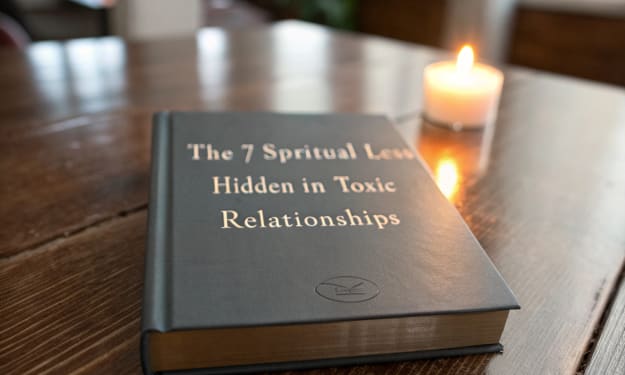
The 7 Spiritual Lessons Hidden in Toxic Relationships
We don’t talk enough about the sacred purpose of pain. When it comes to love, we’re taught to chase the fairy tale—the soulmate, the twin flame, the “forever.” But often, the most transformative relationships aren’t the soft ones. They’re the ones that crack us open.
By Great pleasureabout a year ago in Confessions
His Secret Changed Everything
How One Man’s Hidden Life Destroyed a Family and Shattered a Small Town’s Trust Crestwood was the kind of town where everyone knew everyone—or at least, they thought they did. Neighbors waved from their porches. The baker knew your favorite pastry. And secrets? They didn’t last long.
By Hamad Haiderabout a year ago in Confessions
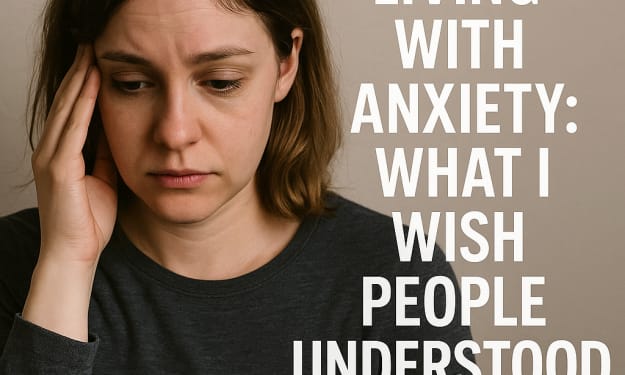
Living with Anxiety: What I Wish People Understood About Me
I. The Face I Show, and the Storm Inside If you met me on the street, you'd probably think I’m doing okay. I smile. I make jokes. I go to work or school. I show up. But what you don’t see is what’s going on behind that smile — a mind running at full speed, always scared of something going wrong, even when everything seems fine. I live with anxiety. And this story is what I wish people understood about me — and about others like me. --- II. It's Not Just Worrying People say, “Everyone gets anxious sometimes,” and they’re right — but anxiety is more than normal worry. It’s not just feeling nervous before an exam or a meeting. It’s waking up with a tight chest for no reason. It’s questioning every word I said in yesterday’s conversation. It’s my heart racing in a peaceful room. I don’t choose to feel this way. I can’t just “calm down” because someone tells me to. Anxiety feels like your mind is stuck in a loop you can’t break. You try to be normal, but inside, you feel like you're drowning — quietly, while still smiling. --- III. Daily Life Is a Battle Simple things are not so simple for me. Making a phone call takes courage. Attending a gathering means preparing mentally for hours. Even replying to a message can feel overwhelming sometimes. People say I’m “too sensitive” or “too quiet,” but they don’t see how much energy it takes for me to just exist in the world. There were times I canceled plans because I felt frozen by fear — not because I didn’t want to come, but because I physically couldn’t. My mind wouldn’t let me. And then I felt guilty about it all night. --- IV. What Triggers It? Sometimes Nothing. One of the hardest parts is not knowing why anxiety hits. It’s not always connected to a reason. I could be eating breakfast and suddenly feel a wave of panic for no reason. My hands sweat. My breathing changes. My heart beats fast. And then the thoughts start racing: “What if something’s wrong?” “What if I embarrass myself?” “What if I’m not good enough?” No one else sees this happening. I’ve learned to hide it well. --- V. Things That Help Me Over time, I’ve found small things that help me cope. They don’t cure anxiety, but they give me some control: Writing: Putting my thoughts on paper gives them less power. Breathing exercises: Deep breaths help me come back to the present moment. Safe people: Having one or two people who don’t judge me makes a huge difference. Routine: Knowing what’s coming next keeps my mind from spinning too much. And sometimes, I just need space — without questions, without pressure. --- VI. What I Wish You Knew 1. I’m not weak. Living with anxiety and still showing up every day takes strength most people don’t see. 2. I’m not avoiding you. If I distance myself, it’s not personal. I’m just overwhelmed and trying to protect my mental health. 3. Your support matters. You don’t have to “fix” me. Just being there, listening without judgment, makes all the difference. 4. Anxiety looks different in everyone. Some of us hide it behind laughter. Some behind silence. Just because you don’t see it doesn’t mean it’s not there. --- VII. I'm Still Growing I’m learning how to manage anxiety — slowly, patiently. Some days are easier. Others feel heavy. But I keep going. I’ve learned to be kinder to myself. To stop calling myself “crazy” or “too much.” I’ve started therapy. I’ve read books. I’ve cried. I’ve healed. And I’m still healing. --- VIII. You’re Not Alone If you live with anxiety too, I want you to know: You’re not broken. You’re not weak. And you’re definitely not alone. Our stories matter. Our voices matter. And even on the hardest days, we are enough. ---
By The Pen of Farooq about a year ago in Confessions