Stream of Consciousness
The Day I Hit Rock Bottom
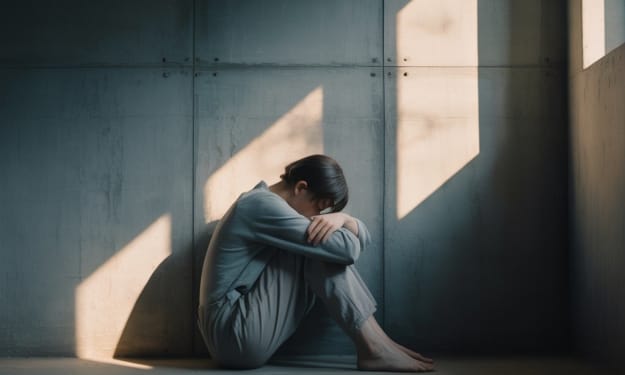
I didn’t know rock bottom had a sound until I heard it echo through my bones. It was a Tuesday. Not a particularly tragic day on the calendar—just dull, grey, and forgettable. The kind of day no one writes poetry about. The rain wasn’t the cinematic kind that brings relief or romance—it was cold, stinging, and indifferent. My coat clung to me like a heavy reminder of everything I was carrying but trying to hide. I had just left a job interview where I smiled too wide and lied too well. I told the manager how “excited” I was to work in a soulless role I didn’t want, just to keep the lights on. I remember sitting on that metal bench at the train station, hands trembling from cold and exhaustion. My phone was dead. My wallet was almost empty. My hope was on its last breath. It wasn’t one thing. That’s the trap people fall into—they look for one dramatic moment to define rock bottom. But in reality, it’s not an explosion. It’s a slow leak. It’s the accumulation of quiet defeats: rent overdue for the second month in a row, unanswered messages from friends who stopped checking in, rejection letters piling up like snowdrifts around your dreams. It’s the day you realize you can’t remember the last time you felt joy—not the manufactured kind, but the real, soul-deep joy that makes your chest feel light. That Tuesday, I had $7.23 in my account. I hadn’t eaten a real meal in two days. I hadn’t spoken to anyone—not really spoken—in over a week. Not since my mother called and I told her, “I’m fine,” and she believed me. Or maybe she didn’t. Maybe she just didn’t know what else to say. I remember watching the train approach and thinking—not about ending things, but about escaping. About disappearing. About what it might feel like to let go of everything and just... stop. The thought scared me, not because I had it, but because it felt like a relief. And that’s when I knew: this wasn’t just a rough patch. This was my bottom. But here’s what happened next. I went home. Not to warmth or comfort. Just a cold apartment, the kind where the silence rings louder than the city outside. The fridge held half a jar of peanut butter and a bruised apple. The heater had stopped working the week before. Still, I went home. That, in itself, was an act of survival. And survival, even at its quietest, is a form of courage. I collapsed onto the floor. Not out of drama, but because I had nothing left to hold me upright. I cried. Not the kind of tears you see in movies—these were raw, ugly, soul-purging tears. My chest hurt from holding in so much for so long. And for the first time, I let it all out. Then something strange happened. I started talking to myself—not out loud, but in that small, steady voice inside, the one that had been silenced by fear and shame. And I said: If this is rock bottom, then everything from here is up. Even one step counts. So I made one. I pulled out an old notebook and made a list—not of goals, but of truths. Not dreams, but reminders: 1. I am still here. 2. I am not broken—only bruised. 3. I want more. And I deserve more. 4. This moment does not define me, but what I do next might. The next morning, I walked to the library. I couldn’t afford coffee, but the library was free—and warm—and quiet. I sat between the aisles, surrounded by the voices of people who had been through worse and lived to tell it. I read about survival. About resilience. About failure and comeback. I felt less alone in those pages than I had in my entire city. That week, I applied for three jobs I actually wanted. Not just the ones I thought I could get. I also wrote a blog post—just a simple one about what I’d been feeling. Three people read it. One of them sent a message saying, “I needed this.” That was the first time in months I felt like I mattered. Weeks passed. Then months. I got a job—not glamorous, but honest. I started cooking again. I reached out to a friend I hadn’t spoken to in over a year. I told her the truth. She didn’t run. She came over with groceries and stayed the night just to make sure I slept. I started writing again—poems, stories, fragments of the person I was trying to rebuild. I smiled at strangers, and some of them smiled back. I started to trust that maybe—just maybe—things could get better. And now, years later, I look back at that Tuesday not with shame, but with gratitude. Because sometimes, the ground has to fall away for you to finally land on yourself. Sometimes you have to lose everything that isn’t real to find what is. Rock bottom isn’t the end. For me, it was the beginning.
By Wasif islamabout a year ago in Confessions
I Quit Social Media for 30 Days — Here's What I Learned About Myself
I Tried Living Without Social Media for 30 Days — Here’s What Changed Let me start by saying: I didn’t think I was addicted. I wasn’t one of those people who posted every meal or uploaded selfies daily. But when I realized I was checking Instagram before even brushing my teeth—and scrolling through TikTok videos at 2 a.m.—something clicked. I had become a quiet addict. Not loud, not flashy, just… silently dependent. So, I decided to do the one thing that sounded both terrifying and oddly freeing: I quit all social media for 30 days. No Instagram. No Facebook. No Twitter (or X, whatever it’s called now). No TikTok. No lurking on Reddit. Just me, my phone (with the apps deleted), and the real world. Week 1: Withdrawal Is Real The first few days were rough. Not dramatic, cold-sweat rough, but I felt it. That automatic reflex of reaching for my phone in idle moments—waiting in line, walking to the kitchen, even while brushing my teeth—was unnerving. It was like my thumbs had a mind of their own. I didn’t realize how much social media filled my micro-moments. The boredom gaps. The “just five minutes” zones that added up to hours. I also noticed an odd sense of FOMO—fear of missing out. What if someone messaged me? What if I missed a birthday? What if there was a trending meme and I became the last person on earth to get the joke? Spoiler: None of that actually mattered. Week 2: Brain Fog Begins to Lift Around day 10, something changed. I was thinking more clearly. It’s hard to describe, but my brain felt quieter. There were fewer voices in my head, fewer comparisons, fewer distractions. I wasn’t constantly bombarded with highlights of other people’s lives—no perfectly posed vacation pics, no six-pack transformations, no viral drama. Without those constant stimuli, my own thoughts became louder. I started journaling again. I read a book—an entire book! I noticed details I’d usually miss: the texture of leaves on a walk, the way my coffee steamed in the morning light, the subtle moods of my own body. I was... present. And that felt revolutionary. Week 3: Dealing With Disconnection One downside I didn’t expect was feeling a little socially “out of the loop.” Social media had become my lazy way of keeping in touch. Without it, I had to be intentional. I had to actually text people, call them, meet for coffee. And you know what? Those connections were so much more meaningful. I wasn’t just “liking” someone’s photo. I was asking how they were—really asking. I had longer conversations, deeper ones. I reconnected with a college friend I hadn’t spoken to in years. We ended up talking for over an hour. It was a reminder: real connection doesn’t come from double-tapping a screen. Week 4: What I Gained (and What I Lost) By the final week, I felt lighter. Freer. Happier. Was I missing out on viral trends? Sure. But I also stopped comparing myself to influencers with highlight-reel lives. I wasn’t measuring my worth in likes or followers. I was sleeping better. I was more focused. I had fewer mood swings. I was spending more time on things that actually fed my soul—reading, cooking, being with people. But I won’t lie—social media does have its upsides. It’s entertaining, informative, and sometimes even inspiring. So after 30 days, I made a choice. I came back—but differently. Now, I limit my screen time. I’ve turned off all notifications. I don’t scroll in bed. I treat social media like dessert—not the main course, just an occasional treat. Final Thoughts If you’re feeling overwhelmed, anxious, or just plain numb… try it. Try stepping back from social media. Not forever. Just long enough to remember what your mind sounds like when it’s not full of noise. You might be surprised what you find in the quiet. I know I was.
By Story Of the Dayabout a year ago in Confessions
Why I Fell in Love With Someone I Never Touched
Why I Fell in Love With Someone I Never Touched By Lila Hart It started with a message. Nothing poetic, nothing profound—just a simple, “Hey, I liked what you wrote.” I didn’t know then that those six words would change the way I understood connection, intimacy, and love itself. We never met. Never brushed hands in a crowded hallway. Never exchanged the kind of glances that say everything without saying a word. But somehow, over late-night voice notes, shared Spotify playlists, and stories told across time zones, I fell—slowly, unexpectedly, completely. This wasn’t just digital infatuation. It was deeper. Stranger. A relationship without touch, but rich with presence. He knew my childhood fears, the way I liked my coffee, the exact pitch of my laughter. And I knew his silences, the sadness behind his sarcasm, the cracks he hid between memes and midnight texts.
By Lila Hartabout a year ago in Confessions
The Beauty in the Bruises
Some wounds don’t bleed they bruise. Quietly. Deeply. You carry them in the way your smile falters at the edge. In the way you hesitate before trusting. In the way you shrink, just a little, when someone gets too close. I used to think healing meant hiding those bruises, pretending they weren’t there. But now I know: sometimes the most beautiful parts of us are born in the aftermath not in spite of the pain, but because of it. There was a time I felt like a stranger in my own skin. Every morning, I woke up heavy, carrying yesterday’s sorrow into today. My smiles were borrowedmore a habit than a feeling. I laughed, but the sound rarely reached my eyes. People told me I was strong, but they never saw the battles raging beneath my calm exterior. The loudest pain, I learned, is often the one that doesn’t make a sound. It was on my birthday a day meant for celebration that something shifted inside me. I was scrolling through a bookstore app, numbing myself with distractions, when I stumbled upon three journals by Nina Madsen on sale. Ninety-nine cents each. I bought them without thinking. Or maybe I did think maybe it was hope in disguise. The first journal prompt stopped me cold: “How might a painting of your life look?” I stared at the blank page, unsure. Then, an image came slowly to life: a girl holding her head, surrounded by bruised blues, purples, and blacks. The background was a storm of pinks and blacks. Behind her, a phoenix rose streaks of gold and silver breaking through the darkness. That girl was me. For the first time, I didn’t try to erase the mess. I sat with it. I honored it. That painting wasn’t tragic it was true. It was survival in color. Each prompt pulled more from me words I’d buried, truths I’d swallowed. I wrote not as a writer, but as someone learning to breathe again. The journal became my confessional, my sanctuary. The page never judged me. It held space when the world didn’t. I wrote about how I treat others with softness now, not because I’ve never known cruelty but because I have. I know what it’s like to feel invisible, forgotten, alone. I promised myself I would never let another person feel that way if I could help it. There’s a line from a song by HONESTAV that echoes in my mind: "And I don’t want no new friends, my heart’s still got bruises."
By Wilfredabout a year ago in Confessions
I Found a Letter Meant for Someone Else in My House
It was an ordinary Sunday morning when I decided to clean the attic—a chore I had postponed for years. Dust particles danced in the sunbeams filtering through the cracked window, and the wooden floor creaked under my steps like it hadn't been touched in ages. I expected to find old boxes, maybe forgotten Christmas decorations or worn-out furniture. What I didn’t expect was a letter. And it wasn’t addressed to me.
By Keramatullah Wardakabout a year ago in Confessions
I Ignored Every Red Flag — Until It Was Too Late
When I first met him, he seemed perfect. Kind, funny, ambitious — everything I thought I was looking for. We met through a mutual friend at a party, and I remember how his eyes lit up when he talked about his goals. I was drawn in instantly. It felt like the universe had finally sent someone just for me.
By MR REDabout a year ago in Confessions
A Letter to My Younger Self
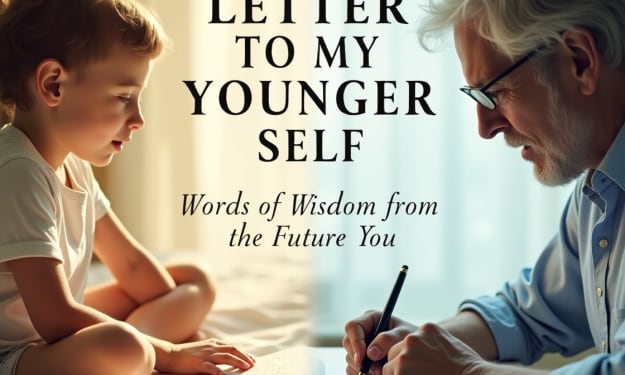
Dear Younger Me, I’m writing to you not from a place of perfection, but from a place of understanding. I’ve lived through the years you’re about to face — the awkward ones, the heartbreaking ones, the deeply uncertain and quietly beautiful ones. And while I won’t spoil the ending, I will offer you the wisdom I wish someone had handed me when I was still in your shoes.
By Muhammad Hashimabout a year ago in Confessions
The Night I Walked Away: A True Story of Silence, Struggle, and Strength
It was almost midnight when I finally opened the door, stepped out barefoot onto the cold pavement, and walked away from everything I thought I had to endure. There was no dramatic fight. No screaming. No chaos. Just silence. The kind of silence that wraps around your throat like a tightening scarf. That night, my silence ended. I was living in a small suburb in France. I had moved here for love, for the idea of something new and exciting. It started like a dream. He was charming, intelligent, and made me laugh until my stomach ached. We talked about literature, shared playlists, and cooked together. He introduced me to his family, and I believed I was building something stable, something forever. But love, as I learned, can be a carefully constructed mask. The Subtle Disappearance of Self At first, the changes were so small I hardly noticed. He would gently correct how I spoke. He’d suggest I wear something more “fitting.” He would roll his eyes when I shared ideas he didn’t agree with. It all seemed harmless. I mistook it for intimacy. I told myself, "He’s just helping me grow." Then, I stopped wearing makeup because he said it made me look fake. I stopped calling my family as often because he didn’t like the noise. I declined job interviews because he said I wouldn’t be able to manage stress. Slowly, the girl who arrived in France full of ambition and fire faded into someone quiet, agreeable, and invisible. But I told no one. Not my family back home. Not the friends I once met for coffee. Shame is a powerful silencer. And fear? Even more so. Emotional Bruises Don’t Show He never hit me. He didn’t need to. He mastered the art of making me feel small with his words. “You’re lucky I put up with you.” “No one else would want you.” “This is why your family gave up on you.” He’d say these things with a laugh, like they were jokes. And when I cried, he’d say, "You’re too sensitive." Every insult was wrapped in a smile, every wound followed by a kiss. I convinced myself this was just how relationships worked. That it would get better. That I was the problem. Until the night I realized I couldn’t breathe. The Breaking Point That evening, we were eating dinner. I had cooked his favorite pasta, hoping to ease the tension of the past few days. But he barely looked up from his phone. When I asked about his day, he replied, "Stop being so clingy." Something inside me cracked. I went to the bathroom and stared at myself in the mirror. My eyes looked hollow. My shoulders drooped. My reflection felt like a stranger. I thought of my mother’s voice on our last call, saying, "You don’t sound like you anymore." And she was right. I had vanished. The Night I Walked Away I didn’t plan it. I just... stood up, grabbed my coat, and walked to the door. He didn’t even ask where I was going. Maybe he thought I’d come back, like always. But this time, I didn’t. I walked through the quiet streets of the neighborhood, my phone buzzing in my pocket. I ignored it. I didn’t know where I was going. I just knew I needed to leave. Eventually, I reached a small hotel near the train station. I had enough cash on me for one night. The woman at the front desk didn’t ask questions. She handed me a key, and I cried harder than I had in years. Starting Over Isn’t Clean The next morning, I called my sister. I told her everything. She didn’t ask why I hadn’t told her sooner. She just cried with me. Within days, I was on a train to Germany, where she lived. She welcomed me with open arms, a warm bed, and an endless supply of tea. Leaving wasn’t a clean break. I had panic attacks. I missed him, or at least the version of him I thought was real. I questioned if I had overreacted. But therapy, long walks, and time reminded me: love doesn’t erase you. Lessons I Carry 1. Emotional abuse is real. You don’t need bruises to prove your pain. 2. Silence protects the abuser, not the victim. Speak up, even if your voice shakes. 3. Healing is messy. You’ll doubt, cry, and question—but keep going. 4. You are not alone. There are people waiting to help. Family, strangers, professionals. To the Woman Still Waiting If you are reading this and feeling seen, please know: you deserve love that doesn’t hurt. You are not too sensitive. You are not overreacting. If your heart feels heavy every day, listen to it. Walking away was the hardest thing I’ve ever done. But it was also the bravest.
By Shabir Ahmadabout a year ago in Confessions
📖 "The Power of Now: A Guide to Spiritual Enlightenment"
Author: Eckhart Tolle Genre: Self-help, Mindfulness, Personal Development 🌟 Why this book? "The Power of Now" is one of the most powerful and practical books for developing both mental focus and inner confidence. While it’s rooted in mindfulness and spirituality, its core lessons are highly applicable to daily life, especially if you struggle with distractions, fear, or self-doubt.
By Muhammad Huzaifaabout a year ago in Confessions