Secrets
Legally Blind but Seeing Clearly: The Mundane Beauty I Learned to Cherish. AI-Generated.
Growing up in a small Ohio town, I was the kid who devoured books and sketched landscapes in notebooks. My world was vivid—crisp leaves in autumn, the glint of fireflies on summer nights. But by my late teens, things changed. Text on signs grew fuzzy, faces blurred at a distance. I chalked it up to fatigue or bad lighting until, at 19, an eye exam revealed the truth: I had Stargardt disease, a genetic condition causing progressive vision loss. By 22, I was legally blind, my central vision a smudge, leaving only peripheral glimpses of the world.
By cyrusazamabout a year ago in Confessions
The Night I Walked Away: A True Story of Silence, Struggle, and Strength
It was almost midnight when I finally opened the door, stepped out barefoot onto the cold pavement, and walked away from everything I thought I had to endure. There was no dramatic fight. No screaming. No chaos. Just silence. The kind of silence that wraps around your throat like a tightening scarf. That night, my silence ended. I was living in a small suburb in France. I had moved here for love, for the idea of something new and exciting. It started like a dream. He was charming, intelligent, and made me laugh until my stomach ached. We talked about literature, shared playlists, and cooked together. He introduced me to his family, and I believed I was building something stable, something forever. But love, as I learned, can be a carefully constructed mask. The Subtle Disappearance of Self At first, the changes were so small I hardly noticed. He would gently correct how I spoke. He’d suggest I wear something more “fitting.” He would roll his eyes when I shared ideas he didn’t agree with. It all seemed harmless. I mistook it for intimacy. I told myself, "He’s just helping me grow." Then, I stopped wearing makeup because he said it made me look fake. I stopped calling my family as often because he didn’t like the noise. I declined job interviews because he said I wouldn’t be able to manage stress. Slowly, the girl who arrived in France full of ambition and fire faded into someone quiet, agreeable, and invisible. But I told no one. Not my family back home. Not the friends I once met for coffee. Shame is a powerful silencer. And fear? Even more so. Emotional Bruises Don’t Show He never hit me. He didn’t need to. He mastered the art of making me feel small with his words. “You’re lucky I put up with you.” “No one else would want you.” “This is why your family gave up on you.” He’d say these things with a laugh, like they were jokes. And when I cried, he’d say, "You’re too sensitive." Every insult was wrapped in a smile, every wound followed by a kiss. I convinced myself this was just how relationships worked. That it would get better. That I was the problem. Until the night I realized I couldn’t breathe. The Breaking Point That evening, we were eating dinner. I had cooked his favorite pasta, hoping to ease the tension of the past few days. But he barely looked up from his phone. When I asked about his day, he replied, "Stop being so clingy." Something inside me cracked. I went to the bathroom and stared at myself in the mirror. My eyes looked hollow. My shoulders drooped. My reflection felt like a stranger. I thought of my mother’s voice on our last call, saying, "You don’t sound like you anymore." And she was right. I had vanished. The Night I Walked Away I didn’t plan it. I just... stood up, grabbed my coat, and walked to the door. He didn’t even ask where I was going. Maybe he thought I’d come back, like always. But this time, I didn’t. I walked through the quiet streets of the neighborhood, my phone buzzing in my pocket. I ignored it. I didn’t know where I was going. I just knew I needed to leave. Eventually, I reached a small hotel near the train station. I had enough cash on me for one night. The woman at the front desk didn’t ask questions. She handed me a key, and I cried harder than I had in years. Starting Over Isn’t Clean The next morning, I called my sister. I told her everything. She didn’t ask why I hadn’t told her sooner. She just cried with me. Within days, I was on a train to Germany, where she lived. She welcomed me with open arms, a warm bed, and an endless supply of tea. Leaving wasn’t a clean break. I had panic attacks. I missed him, or at least the version of him I thought was real. I questioned if I had overreacted. But therapy, long walks, and time reminded me: love doesn’t erase you. Lessons I Carry 1. Emotional abuse is real. You don’t need bruises to prove your pain. 2. Silence protects the abuser, not the victim. Speak up, even if your voice shakes. 3. Healing is messy. You’ll doubt, cry, and question—but keep going. 4. You are not alone. There are people waiting to help. Family, strangers, professionals. To the Woman Still Waiting If you are reading this and feeling seen, please know: you deserve love that doesn’t hurt. You are not too sensitive. You are not overreacting. If your heart feels heavy every day, listen to it. Walking away was the hardest thing I’ve ever done. But it was also the bravest.
By Shabir Ahmadabout a year ago in Confessions
The Day I Finally Learned to Forgive Myself. Content Warning.
Title: The Day I Finally Learned to Forgive Myself Subtitle: It took me years to realize that healing doesn’t begin with apologies from others—it begins with grace for yourself. --- I used to believe that healing came from closure. From apologies. From someone finally saying, “I’m sorry I hurt you.” But that day never came. And maybe it never will. For years, I waited for people to realize what they did to me. I hoped someone would show up, admit their mistake, and ease the burden sitting on my chest. But silence was all I received. I carried so many silent wounds— Words I should’ve said, things I should’ve done differently, people I should’ve let go sooner. I built my identity around regrets, replaying them like broken records. But there’s one thing I never expected: That my biggest enemy wasn’t the people who hurt me. It was me. --- I blamed myself for everything. For trusting too easily. For loving too deeply. For being too kind in a world that didn’t return the same. For not being “smart enough” to see red flags. For not leaving when I had the chance. For staying longer than I should have. For breaking down when I was supposed to be “strong.” For always being “too much” or “not enough.” I carried the weight of other people’s mistakes like they were mine. I didn’t realize that while they moved on with their lives, I was stuck living in the ruins of what they left behind. But then one day, something shifted. --- It wasn’t a dramatic realization. There was no loud thunder, no epiphany in a movie-like moment. It was quiet. Gentle. I was sitting alone in my room, scrolling through old photos— And I came across one particular image. It was me, around 18. Young, hopeful, unaware of the heartbreaks, betrayals, and chaos life was going to throw her way. She had no idea what was coming. And yet, she smiled. Something about that smile broke me. Because I remembered how hard she tried. How deeply she felt things. How much she gave to people who didn’t deserve her. How brave she was, even in silence. And without realizing it, I whispered: “I forgive you.” --- That was the first time I had ever said those words—to myself. Not to someone else. Not as a performance. But as a release. I cried like I hadn’t cried in years. Not because I was weak. But because I was finally free. --- I started to realize that forgiveness isn’t always about the people who hurt us. Sometimes it’s about forgiving the part of ourselves that let it happen. Not because we were foolish— But because we were human. We didn’t know better. We wanted to believe in love. We saw the good in people. We hoped things would change. And that’s not a crime—it’s compassion. --- Since that day, I’ve made peace with a lot of things: — The people who never said sorry. — The friends who disappeared when I needed them most. — The chances I never took because fear held me back. — The versions of me that were just trying to survive. — The mistakes that taught me more than any success ever could. — The relationships that shattered me but taught me what I deserve. But most of all— I made peace with myself. --- Here’s what I’ve learned: Healing doesn’t come from pretending nothing happened. It comes from facing the pain, naming it, and deciding it doesn’t define you. Forgiveness doesn’t mean forgetting. It means refusing to let your past dictate your future. And love—real love—starts with how you talk to yourself. How you show up for yourself on your worst days. How you learn to say: “You’re doing your best. And that’s enough.” --- To anyone reading this—still carrying wounds you never asked for: Maybe you’re still waiting for that apology. Maybe you’re still blaming yourself. Maybe you’re still holding your breath, hoping something will change. But here’s something no one told me— You don’t need permission to let go. You don’t need them to say “I’m sorry” for you to start healing. You don’t need to rewrite the past to move into your future. You just need one thing: Grace. For yourself. So start there. Look in the mirror. See that version of you that survived it all. And say it— “I forgive you. I love you. You did your best.” And slowly, piece by piece, You’ll come back to yourself. --- Tags: self-forgiveness, emotional healing, self-love, personal growth, mental health journey, trauma recovery, healing from the past, inspiration, letting go
By Abidullah about a year ago in Confessions
The Intricate Web of Deception
Deception, in its myriad forms, is an undeniable facet of human interaction. While we often aspire to honesty, the reality is that all individuals engage in untruths, whether consciously or unconsciously. Curiously, even as words are crafted to mislead, our physiology, through the subtle cues of body language, frequently threatens to betray the spoken falsehood. This apparent paradox raises a compelling question: why would evolutionary pressures favor such a seemingly self-defeating mechanism? The answer, complex and multifaceted, is woven into the very reasons we resort to deception. Understanding the motivations behind our lies and the distinct forms they take is crucial to navigating the intricate dynamics of human relationships and societal structures.
By LaMarion Zieglerabout a year ago in Confessions
The Driving Test
Introduction This is an example story for my "Sunshine After The Rain Challenge" that you can find here: One of the things I have noticed about my backup account is I get a lot less comments than I do on my main accounts, as well as, seemingly a lot less reads. One story has five comments and one read, but I suppose, in reality, it is early days, and hopefully, I can let this fade into the background when my main account is restored.
By Mike Singleton 💜 Mikeydred - EBAabout a year ago in Confessions
The Yellow Umbrella
The rain had started gently that evening, as if the skies themselves were hesitating—uncertain whether to weep or whisper. Cobblestone streets shimmered under the amber glow of old-fashioned streetlamps. It was the kind of night that made the city feel like a poem too personal to read aloud.
By Muhammad Sabeelabout a year ago in Confessions
We Stopped Talking… But I Still Wait for His Text. AI-Generated.
It’s been 47 days since we last spoke. I remember the number clearly, not because I try to—but because my heart does. Every morning, I wake up and check my phone. I know it’s silly. I know he won’t text. But I still look. Every single day.
By Nouman waliabout a year ago in Confessions
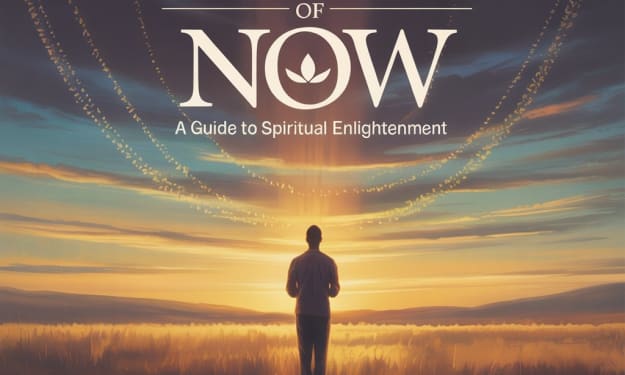
📖 "The Power of Now: A Guide to Spiritual Enlightenment"
Author: Eckhart Tolle Genre: Self-help, Mindfulness, Personal Development 🌟 Why this book? "The Power of Now" is one of the most powerful and practical books for developing both mental focus and inner confidence. While it’s rooted in mindfulness and spirituality, its core lessons are highly applicable to daily life, especially if you struggle with distractions, fear, or self-doubt.
By Muhammad Huzaifaabout a year ago in Confessions
Paper Hearts
Mira had always known the price of words. She learned it not from books, but from bills stacked on the kitchen counter, from her mother’s tired sighs late at night, and from the weight of being too young to carry so much. Her father had left when she was just a child, and her mother—once a poet with a gentle soul—had traded verse for overtime. Poetry didn’t pay for heating or medicine.
By Taslim Ullahabout a year ago in Confessions
"She Woke Up Alone"
The first thing she noticed was the cold. It wasn’t the kind of cold that made her shiver or pull up a blanket. It was a still, unnatural cold—like the air in the room hadn’t moved in years. Her eyes fluttered open slowly, revealing a pale ceiling with unfamiliar cracks. A dim, flickering light buzzed somewhere above, casting long shadows on the peeling wallpaper.
By muhammad khalilabout a year ago in Confessions
Chasing Tomorrow
The first time Eli ran away, he only made it to the end of the street. He was ten, barefoot, dragging a backpack filled with snacks and a flashlight that didn’t work. He sat on the curb until the streetlights buzzed on, watching the world darken while his resolve dimmed with it. He returned home that night with scraped knees and tears he wouldn’t admit to.
By samon khanabout a year ago in Confessions