School
It was always about the littlest things
You know those moments that light you up like a forestfire, the circumstances, people, entities, stories, words or notions that trigger something in you. That makes you act differently, to approach your life differently, to stride a different walk or embrace a new mindset. These are often quite moments that we think are insignificant, but are in reality monumental transgressions of metamorphosis, where everything changes, but also nothing changes.
By Hridya Sharma2 years ago in Confessions
The Day I Stopped Chasing “Enough”
Most of my adult years, I believed being "enough" was something you attained. Enough was about being on at all times. Being agreeable at all times. Constantly reaching for the next milestone, the next promotion, the next unread email in my inbox. I boasted about my fatigue as a badge of honor, as if running on empty indicated that I was doing something right. Society calls it hustle. I called it survival.
By MD NAYEM2 years ago in Confessions
The Hidden Pressure of Social Media: Why Young Minds Feel Left Behind
In today’s fast-paced digital world, it’s nearly impossible to find a teenager or young adult who isn’t actively scrolling through Instagram, TikTok, Snapchat, or YouTube. Social media has become more than just a place to connect—it’s a lifestyle, a marketplace, a platform for creativity, and, unfortunately, a source of mental distress for many. While these platforms can be empowering, there is a darker side that many young minds are silently struggling with: the pressure to succeed too early in life.
By Ahmad Ali2 years ago in Confessions
The Morning I Missed the Bus—and Found My Way Instead
The Morning I Missed the Bus—and Found My Way Instead I was 17, late for school, and flying down the block in the middle of winter with half-frozen hair and a burnt piece of toast in my mouth. Classy. The yellow school bus came around the corner just as I was reaching the stop. I waved frantically, breath clouding in the air, but the driver didn't see. Perhaps he did, and just decided it was too late.
By Amzad Rahid2 years ago in Confessions
The Scam That Taught Me More Than a Classroom Ever Did
I was in 12th grade when I first decided to order something online. Back then, online shopping wasn’t common in my family. In fact, it was strongly discouraged. My parents believed it was risky, and every time I mentioned it, they’d look concerned. They thought everything online was a scam waiting to happen.
By Takbir Hasan2 years ago in Confessions
I tried to be heartless, and here is what happened. Top Story - April 2025.
You know when the shit hits the celing and life is an absolute mess everywhere, yeah that is what I am talking about. My existence has had 22 years on this gorgeous - gorgeous mortal realm and in the recency of my being, my life has sucked a lot. I have had my share of darkness since forever, but of late, my desperation for light has been at its zenith. I have wanted my life to look like the glorious lives of Rory gilmore, an academic scholar, while being the perfect 4.0, a beautiful boyfriend( maybe not necessary), a great deal of money, a stellar institute I go to, a high qualified job in writing or journalism, and parents being super proud of me.
By Hridya Sharma2 years ago in Confessions
The Day I Accidentally Became My School’s Therapist
It all began during recess, when I offered Haris a piece of gum. That’s it. That’s how my life changed. Haris took the gum like it was a sacred offering, sat next to me on the bench, sighed like a 40-year-old uncle, and said:
By Fahad Khan2 years ago in Confessions
The Dangerous Lover
(Dark Romance - Part 6) “Look Neel, I’m really grateful to you all. You took care of my Brishti like your own family when she was sick. But don’t forget one thing—Brishti is my wife. So, the farther you stay away from her, the better it’ll be for you. You have no idea how dangerous I can be when I’m not in a good mood.”
By Sabiha Sums2 years ago in Confessions
When Greatness Meets Clippers: Ronaldo Gets a Cut from Messi
There are rivalries in sport, and then there’s Messi vs. Ronaldo — a saga so iconic that it has defined generations, divided dinner tables, and sparked endless Twitter debates. But what if that legendary rivalry found itself not on the pitch... but in a barbershop?
By Sultan Khan2 years ago in Confessions
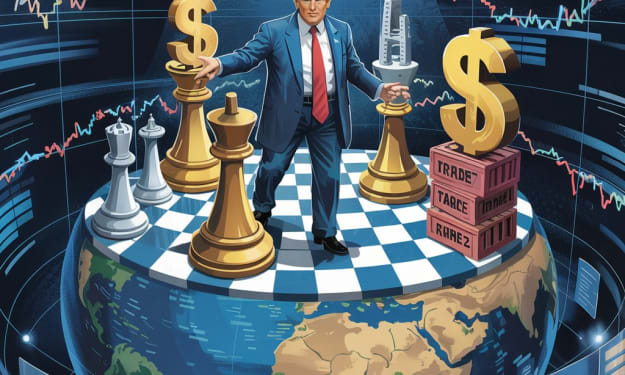
Trump’s Global Economic Battles: Trade Wars and Power Plays. AI-Generated.
Trump and the Economic War with the World In modern history, few U.S. presidents have shaken the foundations of global trade and diplomacy as forcefully as Donald J. Trump. Elected in 2016 on a wave of populist rhetoric and a promise to put “America First,” Trump redefined the rules of economic engagement not just with adversaries, but with long-standing allies as well. His presidency ushered in a new era of trade tensions, tariff battles, and a reshaping of global economic alliances. The economic war he waged was not with guns or bombs, but with policy tools such as tariffs, sanctions, and trade renegotiations. The Rise of “America First” At the heart of Trump’s economic strategy was the “America First” doctrine—a vision that prioritized American jobs, industries, and interests above global cooperation. In theory, this philosophy aimed to revive American manufacturing, reduce trade deficits, and challenge nations like China whom Trump accused of exploiting the U.S. economy through unfair trade practices. Trump often described the U.S. as being “ripped off” in trade deals. His solution? Rewrite the rules of global commerce. This included withdrawing from multilateral agreements, imposing steep tariffs, and demanding renegotiation of long-standing trade pacts like NAFTA. While his supporters viewed this as a bold stand for national sovereignty, critics saw it as reckless, isolationist, and damaging to global economic stability. Trade War with China: The Main Front The most prominent battlefield in Trump’s economic war was the U.S.-China relationship. Starting in 2018, Trump imposed tariffs on billions of dollars’ worth of Chinese imports, accusing China of intellectual property theft, forced technology transfers, and manipulating its currency. The tariffs covered goods from steel and aluminum to electronics and clothing. In response, China retaliated with its own tariffs, particularly targeting U.S. agricultural products—a move that hurt American farmers and led the Trump administration to authorize billions in subsidies to support them. The tit-for-tat exchange escalated into one of the largest trade wars in history, affecting global supply chains, market confidence, and economic growth. By 2020, after years of negotiation, both nations signed the “Phase One” trade deal. While the agreement required China to increase its purchase of U.S. goods and commit to better protection of intellectual property, many analysts argued that the deal was superficial and did little to address the root causes of economic tension. Targeting Traditional Allies Trump’s economic offensives weren’t reserved for rival nations. He also took aim at long-time allies, including the European Union, Canada, and Japan. Claiming that these allies had taken advantage of America’s open markets and military protection for too long, Trump imposed tariffs on steel and aluminum imports from Europe and Canada, sparking diplomatic outrage. His administration also threatened tariffs on European car exports, challenged NATO members to increase defense spending, and accused Germany of being too reliant on Russian energy. These actions frayed relationships that had been strong since World War II and prompted many allies to question America’s commitment to multilateralism. The NAFTA Rewrite: From NAFTA to USMCA Another major milestone in Trump’s economic war was the renegotiation of the North American Free Trade Agreement (NAFTA). Trump labeled NAFTA “the worst trade deal ever made,” blaming it for job losses in American manufacturing. After intense negotiations with Canada and Mexico, a new deal was struck: the United States-Mexico-Canada Agreement (USMCA). The USMCA introduced new rules on digital trade, labor rights, and environmental standards. It also increased the requirement for North American content in automobiles and required higher wages for Mexican auto workers. While the deal had bipartisan support in Congress, some experts argued that the changes were modest and largely symbolic, serving more to fulfill a political promise than overhaul North American trade. The Global Response Trump’s aggressive trade policies were met with mixed responses worldwide. Some countries sought to wait him out, assuming a future U.S. administration would return to traditional diplomacy. Others forged new trade agreements without the U.S., such as the Comprehensive and Progressive Agreement for Trans-Pacific Partnership (CPTPP), which moved forward after Trump withdrew from the original TPP in 2017. China, meanwhile, used the opportunity to deepen economic ties with countries across Asia, Africa, and Europe through its Belt and Road Initiative. The European Union also strengthened its trade relations with nations like Japan and Canada. In many ways, Trump’s America First policy encouraged a more multipolar trade landscape, with other countries learning to operate without U.S. leadership. Domestic Economic Impact Back home, Trump’s economic war had both winners and losers. While some industries benefited from protective tariffs, others—particularly agriculture and manufacturing—faced increased costs, retaliatory tariffs, and disrupted supply chains. The stock market showed overall growth during most of Trump’s term, but this was driven more by tax cuts and deregulation than trade policy. American consumers also bore the burden of tariffs, as import prices rose on everyday goods from washing machines to electronics. Studies estimated that Trump’s tariffs cost American households hundreds of dollars annually. The COVID-19 pandemic further complicated the economic picture, making it difficult to isolate the impact of Trump’s trade policies from broader global disruptions. A Legacy of Division and Debate Trump's economic war left a deeply polarized legacy. Supporters view his policies as a necessary correction to decades of unfair trade and a bold assertion of American strength. They credit him with forcing China to the negotiation table and restoring focus on domestic industry. Critics, however, argue that the strategy alienated allies, damaged global trust, and failed to deliver significant long-term gains. What is clear is that Trump's presidency marked a turning point in how America approaches the global economy. Whether future administrations continue along this path or seek to rebuild traditional alliances remains to be seen.
By Faiq Ahmad2 years ago in Confessions