School
The Prison
The cell was small, barely wide enough for the iron cot and the chipped wooden table that leaned against the wall. A single barred window allowed a narrow sliver of light to filter through, dust particles dancing like ghosts in the dimness. For most, this room was punishment—stone, silence, and steel. For Daniel Carter, it was something far more complicated.
By Saqib Ullahabout a year ago in Confessions
Once Upon a Time in Dubai A Journey Down Memory
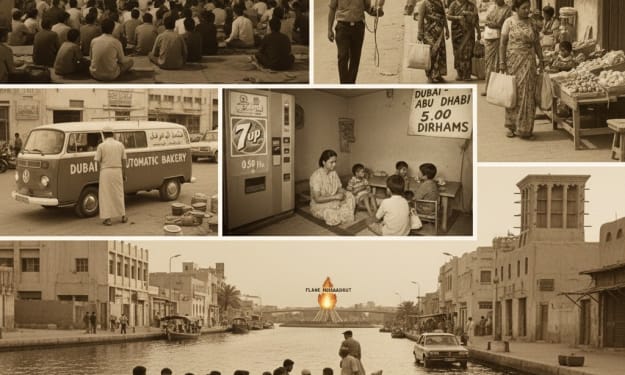
There was a time when bread was sold unsliced, and crossing the creek from Bur Dubai to Deira meant sitting in a rowing boat, long before engine Abras became common. On Thursday nights, the Indian Association would bring families together with free Hindi movies shown in the open-air theatre opposite the Dubai Museum. The community was small, but it felt like one big family.
By Izhar Ullahabout a year ago in Confessions
The Cost of Ignoring a Mother’s Advice
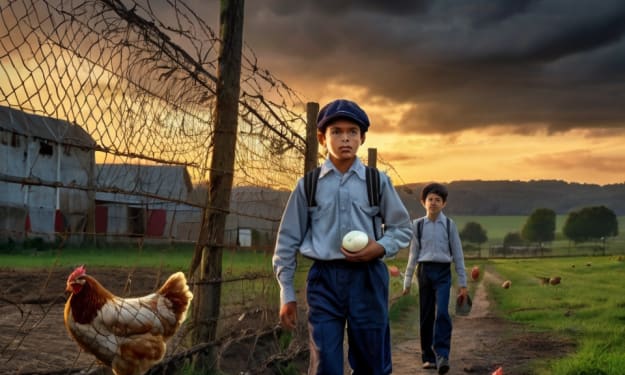
The Cost of Ignoring a Mother’s Advice BY:Khan “Osman, my dear son, don’t play with Nasser,” Mama said firmly one afternoon. “He is not a good boy. I’ve heard he steals, skips school, and spends his time wandering with bad company.” “But Mama,” Osman protested, “he is my classmate and, more than that, he’s my cousin. I meet him every day.” Mama’s face grew serious. “My son, never underestimate the influence of bad company. A person is shaped by the people he spends time with.” Osman tried to reassure her. “Don’t worry, Mama. Your son will never do wrong. I’ll even try to guide him and make him understand.” She shook her head in doubt. “Stealing and roaming the streets have become his habit. Do you really think you can change him?” “Mama, don’t stress yourself. I’ll handle it.” Osman kissed her hand and left the house. Both boys were in seventh grade. During school recess, when students went out to eat snacks, Nasser was always the most active among his group of friends. Four or five boys followed him like shadows. They would devour spicy chickpeas, crispy gol gappas, or cold ice cream—and Nasser was the one who always paid. Osman was puzzled. Sometimes he joined in, sometimes he used his own allowance, but he kept wondering: Where does Nasser get all this money from? Osman only received ten rupees a day, barely enough for a small snack. He knew Nasser’s parents weren’t wealthy enough to give him fifty or sixty rupees every day. Finally, his curiosity overcame him. “Nasser,” he asked one afternoon, “tell me honestly, where do you get all this money?” Nasser lifted a finger to the sky and said, “From the One above.” “That’s true,” Osman replied, “but He gives to everyone. I mean, really, where from?” With a sly smile, Nasser snapped his fingers. “Eat the mangoes, don’t count the trees, brother.” But Osman pressed him. “No, tell me. I want to know.” Nasser narrowed his eyes. “You’re too soft-hearted. You won’t have the courage to do what I do.” “Why not? I also want to spend freely like you.” “It costs nothing to wish,” Nasser laughed. “Look, Nasser, please. I want to be your partner. I want to make money too.” After a pause, Nasser leaned closer. “Are you sure? Think carefully. Once you’re in, you can’t back out.” “I’m sure,” Osman said eagerly. The next day, Osman met Nasser at the appointed place. Together they headed toward a poultry farm at the edge of the village. Nasser carried a sack. He crawled through a broken section of wire fencing and disappeared inside. Moments later, he emerged with the sack full of eggs. Handing it to Osman, he said, “Take this to Sheru’s grocery store. He’ll give you cash. Then go home. Don’t worry, he already knows.” Osman’s heart pounded as he sneaked through the fields, clutching the sack. At the store, Sheru handed him the money. As Osman felt the crisp notes in his hand, his fear faded into excitement. Within half an hour, the boys had earned two hundred rupees. Osman’s hesitation melted quickly. After several trips, he was the one climbing through the fence, filling the sack, and running off boldly. The thrill of easy money drowned his mother’s voice in his memory. But as the saying goes, “The goat’s mother cannot celebrate forever.” One day, the poultry farm’s owner came to inspect. He noticed the egg count was lower than usual. Suspicious, he decided to watch the next day. The following afternoon, just as the boys slipped inside with their sacks, the owner hid nearby. Osman filled his sack and left while Nasser stayed to grab more. Suddenly, the owner appeared. He caught Nasser red-handed. Meanwhile, Osman was on his way back from Sheru’s store with the money when he saw a motorcycle approaching. On it sat the furious owner, gripping Nasser tightly. Osman froze. The owner pounced on him too. Both cousins were beaten severely before being dragged to the police station. A theft report was filed. News spread quickly. At school and in the neighborhood, children mocked them, crowing like roosters whenever they passed: “Cock-a-doodle-doo!” Both boys burned with shame. Osman’s parents rushed to the station, pleaded with the farm owner, and paid compensation to secure their son’s release. Nasser’s family did the same. But for Osman, the humiliation cut deep. He remembered his mother’s warning: “Don’t play with Nasser. Bad company corrupts.” If only he had listened. That day, Osman learned the hardest truth: ignoring wise advice—especially from parents—can lead to disgrace and regret.
By Khan about a year ago in Confessions
Secret Letter. Content Warning.
It started innocently enough. A simple scroll through TikTok at 2 AM, insomnia keeping me awake in my cramped studio apartment where I'd been freelancing for months without human contact. The algorithm, that omniscient digital deity, must have sensed something in my desperate thumb movements because suddenly my feed bloomed with candles and crystals, with young women whispering incantations into their phone cameras.
By Parsley Rose about a year ago in Confessions
Gudia’s Prayer: A Child’s Hope for Her Friend Guddu
Gudia’s Prayer BY:Khan I am Gudia. Right now, I am sitting in the long, silent corridor of a hospital. The floor beneath me is cold, and so is the air around me. It feels like the whole world has fallen asleep, except for me and the sound of my own thoughts. I know my mother must be worried at home. I never returned last night, and she must be pacing, waiting, maybe even crying. In the morning, when I finally go home, she will scold me, perhaps even beat me with the corner of her dupatta the way she does when she is angry. And I will take it silently, because I know she is worried out of love. But how can I leave? How can I go home when Guddu is lying here in this hospital, fighting for his life? Maybe you don’t know who Guddu is. How would you? Let me tell you. Guddu is not just a friend—he is my secret-keeper, my laughter, my world. He is the one who buys me small pieces of roasted corn from the street, who treats me to a kulfi when the heat becomes unbearable, who listens to me when no one else does. But let me tell you how we first became friends. One afternoon, my mother sent me to the market to buy vegetables. On the way, I saw Guddu sitting outside his house, selling candies. I wanted one so badly. I asked him, “Please give me a candy. I’ll bring the money tomorrow.” He didn’t ask questions, didn’t frown. He just smiled and handed me a candy without taking a single coin. That was the beginning. After that day, we were always together. Our neighborhood is dirty, filled with garbage dumps at every corner. The air often smells of rotting food, and stray dogs fight over scraps in the alleys. But somehow, in that ugliness, our friendship blossomed. Guddu and I would sit near the railway crossing, right by the old iron gate where trains would thunder past. He would count the coins he earned from selling candies, his small hands moving carefully as if every coin was a treasure. And I would chatter endlessly—about my school, my mother, my dreams. He would listen, smile, and sometimes laugh out loud. Life was simple, even if the world around us wasn’t. But then came the day everything changed. We were walking home together, chatting as usual, when we came across one of those garbage piles. We tried to walk carefully, stepping around it, but in the blink of an eye, something sharp hidden inside the trash pierced Guddu’s foot. He winced in pain. Blood began to flow from the wound, staining the dust beneath his feet. I quickly tore a strip from my dupatta and pressed it against his foot to stop the bleeding. Guddu tried to laugh it off, pretending it was nothing, but I could see the pain in his eyes. After that day, he was never the same. He started falling sick more often. His laughter faded, his energy drained. His mother took him to the hospital, and then came the words that no child should ever hear: “He has AIDS.” At first, I didn’t understand what that meant. All I knew was that the doctors whispered as if they carried bad news, and people began to look at Guddu differently, as if he was carrying a shadow that could spread. But I knew only one thing: Guddu was my friend. And friends don’t leave each other behind. Now I sit here on the cold floor of the hospital corridor, praying with all my heart. I press my hands together tightly, whispering every prayer I know. “Please, God. Don’t take Guddu away. Please don’t let him die.” Tears burn my eyes, but I don’t let them fall. I believe that if I keep praying hard enough, if I keep believing, then maybe a miracle will happen. Maybe Guddu will open his eyes tomorrow, smile at me, and say, “See, Gudia? I told you I won’t leave you.” I believe in that hope. I must. Because what is friendship without hope? Dear children, if you are reading my story, I want to ask you something. Please whisper a prayer with me. Say it softly, in your heart: “Gudia’s Guddu will live. He will not die.” Because when many hearts pray together, miracles can happen. I know life is cruel sometimes. Our world is full of dirt, pain, and poverty. Children like Guddu and me are often forgotten. But in the middle of all this, love still exists—love in the form of friendship, kindness, and loyalty. That is why I believe Guddu’s story will not end here. Yes, maybe the doctors have given up. Maybe the neighbors whisper that his days are numbered. But I believe differently. I believe that prayer is stronger than fear, and friendship is stronger than disease. So I sit here through the night, on the cold hospital floor, waiting for dawn. The world sleeps, but I stay awake. Because somewhere in that room, on that hospital bed, my best friend is fighting for his life. And I will not leave him alone. Not tonight. Not ever.
By Khan about a year ago in Confessions
The Things We Do in the Dark. Content Warning.
October 12th I saw him again today. It’s stupid, really. The way my body reacts. A full-system reboot from a thirty-second interaction in a coffee line. It’s not even about the words. It’s about the space between them.
By Chahatabout a year ago in Confessions
The Silent Widow: A Village Heiress Who Sacrificed Her Life for Others
The Untold Tale of a Village Heiress BY:Khan In the heart of a vast village during the days of the British Raj lived Raisa Khalid Ahmed, a man of immense wealth and influence. His presence commanded respect; he owned nearly half the agricultural lands of the village and two lush orchards filled with trees heavy with fruits of every season. God had blessed him with fortune, land, and prestige. Yet, despite these worldly blessings, there was a void in his life—he had no son to inherit his legacy. The village spread far and wide, its fields blooming with crops of every variety. His land alone was enough to sustain his entire family’s needs. But those were times when education, especially English education, was frowned upon by the Muslim community, more so in rural areas. Schools did not exist for boys, let alone for girls. Girls were usually taught only to recite the Quran and perform prayers. Medical facilities were equally absent—no clinics, no hospitals. Women rarely traveled to the city for treatment, for there were no proper roads, no transport. A patient often perished on the way in a bullock cart before reaching any doctor. Ahmed Sahib lived with his wife and daughters, holding tightly to the traditions of his time. He was blessed with six daughters, though tragedy struck early—four of them died in childhood. Only two survived: the elder, aged fifteen, and the younger, just nine years old. Like most men of his generation, Ahmed Sahib believed that educating girls was unnecessary. Instead, he prepared them for domestic life and looked for suitable matches when they came of age. When proposals began arriving, suitors often expressed preference for the younger daughter, but since she was too young, the proposals were politely declined. Eventually, an excellent match was found for the elder daughter. She was married into a respectable family, leaving the younger still a child at home. Not long after, another proposal came—this time for the younger daughter. It was from a wealthy family in the same village. The patriarch of that household had passed away, leaving behind vast lands and a young widow raising their only son. The boy, just fifteen, was studying in a prestigious school in the city. His mother wished for him to be married in name only, with the actual wedding delayed until he grew older. Given the wealth and honor of the family, Ahmed Sahib accepted the match, and the two children were bound together in a simple marriage contract. For a while, life went on peacefully. But fate had other plans. When the girl turned eleven, tragedy struck. Her young husband, still studying in the city, fell gravely ill and passed away. The shock reverberated through both families. The boy’s mother, devastated by the loss of her only child, soon followed him to the grave. At the very same time, Ahmed Sahib’s wife gave birth to another baby girl. Their home, once full of anticipation, was suddenly drowned in sorrow. Amid this chaos, the eleven-year-old widow could not even comprehend what had befallen her. When her bangles were broken and she was forced into white garments, she resisted in tears, screaming that she would not give up her colorful clothes or her beloved ornaments. She was too young to understand widowhood but old enough to feel its cruelty. Her mother too shared in her grief, breaking her own bangles in mourning. Life in the household grew somber. The younger sister, as she grew older, was married into a highly educated and prestigious family. Her father-in-law was a barrister trained in London, and her husband held a prominent government position. After Ahmed Sahib’s death, she took her widowed sister into her home. The young widow never remarried, for in their family, second marriages were considered improper. Instead, she devoted herself entirely to raising her sister’s children. Though she had been deprived of the joys of her own marriage, she poured her love and affection into her nieces and nephews. They grew up calling her “Ammi,” treating her with the same respect and love as their real mother. Her wealth remained intact, but she never sought luxury. Instead, she embraced a life of service and sacrifice. Her existence became a testament to quiet resilience—the story of a woman denied her own happiness yet giving boundless love to others. She lived a long life, reaching nearly ninety years of age. In 1975, she finally departed from this world. She was laid to rest from her sister’s home, the same home where she had spent decades nurturing generations that were not her own. Her story is not one of romance or grandeur, but of sacrifice, endurance, and silent strength. In an era when girls were seldom given choices, she bore the weight of her fate with dignity. While the world saw her as a wealthy heiress, in truth, she was a woman whose greatest legacy was not land or riches but the love she left behind in the hearts of those who called her “mother.” May God grant her eternal peace and the highest place in His mercy. Amen.
By Khan about a year ago in Confessions
The Hidden Pain Behind Early School Years
“The average high school kid today has the same level of anxiety as the average psychiatric patient in the 1950s.”)” - Scott Stossel, My Age of Anxiety: Fear, Hope, Dread, and the Search for Peace of Mind
By Gabriela Trofin-Tatárabout a year ago in Confessions
The Gift of Friendship
The Gift of Friendship BY:Ubaid Daniyal Hassan Shoukat went to visit his friend Nasir at his home one afternoon. When he knocked on the door, it was Nasir’s younger brother who came out and told him politely, “Bhai isn’t home right now.” Shoukat and Nasir lived in the same neighborhood and were both students at the same college. They spent a lot of time together and shared many interests. Alongside them, there was another friend, Tanveer, who lived in a different neighborhood. However, Shoukat had been upset with Tanveer for a while, and because of that, their friendship had grown cold. Nasir, being the peacemaker of the group, had tried several times to mend the broken bond between the two, but his efforts always ended without success. On his way back home, as Shoukat turned into the next street, he suddenly saw Nasir coming from the opposite direction. They both noticed each other at the same time. After exchanging greetings and asking how the other was doing, Shoukat said, “I came to see you earlier, but you weren’t home. Where had you gone?” “I went to see Tanveer,” Nasir replied calmly. The mention of Tanveer’s name instantly changed Shoukat’s expression. His face tightened, and he looked away, but Nasir continued before he could say anything. “He’s very worried these days.” “Worried? Why, what happened?” Shoukat asked, his curiosity overcoming his irritation. Nasir hesitated for a moment and then explained, “His father is very ill. The doctors say he needs surgery, but…” His voice trailed off, and he stopped. “But what?” Shoukat pressed. “They don’t have the money,” Nasir finished with a sigh. Shoukat’s face grew serious. “How much will it cost?” Nasir told him the amount, and Shoukat simply said, “Oh… may Allah make things easier for him, InshaAllah.” “Yes, and you should also pray for him,” Nasir added. “May Allah improve their condition.” With that, the two friends said goodbye, and Shoukat walked back toward his own home. Yet, the news of Tanveer’s situation troubled him deeply. On the way, he kept thinking about his friend. Despite their disagreements, he could not ignore Tanveer’s hardship. By the time he reached his home, Shoukat had already made up his mind: not only would he reconcile with Tanveer, but he would also help ease his burden. Shoukat belonged to a well-off family. His father owned a sugar mill, and their household was blessed with wealth and comfort. His father, known to all, was a generous and kind-hearted man. The moment Shoukat stepped inside, he went straight to his father’s room and sat down beside him. “What’s the matter, son?” his father asked after noticing his worried face. “You look troubled. Is everything alright?” Shoukat told him everything—about Tanveer, his father’s illness, the operation, and the financial struggle they were going through. Finally, he explained his intention of helping their friend. After hearing the whole story, Shoukat’s father smiled with contentment. “You are doing a very good thing, my son. Stay here for a while; I’ll be back.” He walked into his bedroom, and after a short while, he returned holding a sealed envelope. Handing it to Shoukat, he said warmly, “Take this, and may Allah accept your good deed.” Shoukat held the envelope with both hands, thanked his father, and left for Nasir’s house. When Nasir opened the door, Shoukat said, “Come with me to Tanveer’s house.” Nasir’s eyes widened in surprise. “Do you mean… you want to reconcile with him?” “Yes,” Shoukat replied with a smile. “Reconciliation and charity.” “What do you mean?” Nasir asked in confusion. Shoukat then explained, “I was upset with him, that’s true. But after hearing about his problems, I couldn’t just sit and watch. I want to help him. Allah has blessed me with the chance to do something good, and I’m grateful for that. Now let’s go.” Together they walked to Tanveer’s modest home. Though Tanveer belonged to a poor family, he was dignified and hospitable. He welcomed them warmly and, with whatever little he had, tried to serve them respectfully. Shoukat noticed the worry hidden behind his friend’s smile. His eyes betrayed the burden he was trying to hide. “Tanveer,” Shoukat finally said, “I’ve come to put an end to our quarrel. I want to be friends again.” Tanveer’s face immediately lit up with joy. Being a generous-hearted person, he accepted the reconciliation without hesitation, and the three of them began talking like old times. After a while, Shoukat quietly pulled the envelope from his pocket and extended it toward Tanveer. “What’s this?” Tanveer asked in surprise. “This is some money for your father’s treatment,” Shoukat explained. Tanveer looked at the envelope, stunned. “But… how can I… I don’t know if I can accept this…” He hesitated, unable to speak clearly. “Keep it, Tanveer,” Nasir encouraged him. “Allah has given Shoukat the chance to do a good deed. Don’t refuse and let this blessing go to waste.” Tanveer hesitated again, his hands trembling. But finally, with tears brimming in his eyes, he accepted the envelope. “Shoukat, I thank Allah for blessing me with such friends,” he said, his voice breaking. As he spoke, tears rolled down his cheeks and soaked into his clothes. Shoukat, equally moved, replied softly, “I too thank Allah for granting me the opportunity to help. It is my good fortune. In this world, very few people are chosen by Allah for acts of goodness.” “You’re right,” Nasir said with a nod. After spending some more time together, Shoukat and Nasir left Tanveer’s house and made their way back home. That night, Shoukat felt a deep sense of peace in his heart. He silently thanked Allah for giving him the chance to reconcile with his friend and to serve humanity in a meaningful way. For Shoukat, the lesson was clear: true friendship was not just about laughter and shared moments but about standing beside each other in times of trial. And above all, real wealth lay not in money, but in the ability to use it for kindness.
By Ubaid about a year ago in Confessions
The Village That Taught Me How to Breathe Again
Most of the world knows Vietnam through travel magazines, war documentaries, or postcard-like images of Ha Long Bay and lanterns in Hoi An. But Vietnam, for me, is not just about breathtaking landscapes or famous tourist spots. It is about a small, quiet village tucked away in the northern countryside—a place that taught me the meaning of stillness, patience, and peace.
By Quangabout a year ago in Confessions