Humanity
The Hands That Braided My Hair
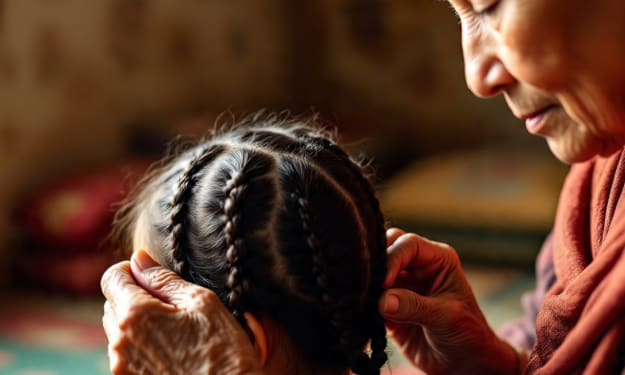
When I was a child, Daadee’s hands were magic. They could soothe any fever, find anything I lost, and braid my hair so perfectly that not a strand dared fall out of place. She wasn’t loud, like Dada. She didn’t tell jokes or command attention at family dinners. But her presence filled the room in quieter, stronger ways. She was the one who remembered everyone’s favorite dishes, who never missed a prayer, who sewed little patches inside our old school uniforms so they’d last another year. Her wisdom wasn’t in books. It was in the way she spoke, slow and thoughtful, as if every word deserved its time. --- As I grew older, I started to forget how powerful her silence was. Life got louder — school, friends, phones, college applications. I’d visit her on weekends, sit for tea, take pictures for Instagram. She’d still braid my hair when I let her, her hands slower now, her fingers trembling just a little more each time. Then one day, she stopped braiding altogether. --- We first noticed something was wrong when she began forgetting names. Nothing alarming at first — she’d call my cousin “Beta” instead of his name. But then she forgot birthdays. Forgot she had already eaten. Forgot she had told a story just an hour ago. “She’s just tired,” Ammi said. But tiredness doesn’t explain confusion. It doesn’t explain getting lost in your own home. --- The doctor’s words came gently, but hit like thunder: "It’s the early stages of dementia. Possibly Alzheimer's." It was like a slow unraveling of the woman we thought would never change. Her world began to shrink. The house she had lived in for 40 years became unfamiliar. Mirrors confused her. She once screamed at her own reflection, thinking a stranger had entered her room. It broke us. But somehow, even in her decline, she remained soft. Not once did she raise her voice. Not once did she forget to say "Shukriya" when we helped her. She still called me to her room sometimes, asked me to sit by her, and gently touched my hair like she used to. Her eyes no longer remembered me — but her hands did. --- One winter morning, I visited her alone. She was wrapped in a shawl, looking out the window, mumbling a lullaby I hadn’t heard in years. I sat next to her, quietly, and placed her hand in mine. After a few minutes, she turned to me and whispered, “I had a granddaughter… she had thick black hair like yours.” Tears burned my eyes. “I’m right here, Daadee,” I said. She looked at me for a long moment. Then smiled. “I know.” I don’t know if she really did. But that smile was enough. --- Her last days were peaceful, in a strange, aching way. She stopped eating much. Slept more. Talked less. Sometimes she hummed songs from her youth. Sometimes she stared at the ceiling and laughed softly, like someone was telling her a private joke. We tried to prepare ourselves. We prayed, took turns sitting with her, combed her hair gently. I would read aloud from her favorite book, even though I knew she didn’t follow the words anymore. One night, I stayed over. She was breathing slow and light, like the air itself didn’t want to disturb her. I held her hand and told her all the things I should’ve said earlier. I told her how her hands raised a whole family. How her food tasted better than any restaurant. How her lullabies still echoed in my dreams. And how I would never let my daughter grow up not knowing her name. She didn’t respond. But her fingers tightened slightly around mine. Just once. --- She passed away the next morning. There were no hospital lights. No tubes. No machines. Just family, quiet sobs, and the scent of rosewater in the air. We buried her beside Dada, under the same tree where they once used to sit every evening. The house felt colder after that. The walls seemed too quiet. Her chair remained untouched for weeks. But her presence — it was everywhere. In the prayer mat she had embroidered. In the spices she blended herself. In the braid that I still make in my own daughter’s hair. --- Grief doesn’t end. It softens, then resurfaces, then softens again. But love — especially the kind Daadee gave — becomes the thread that stitches us back together.
By Muhammad Usamaabout a year ago in Confessions
The Letter I Wrote to Myself the Night I Almost Gave Up
The Letter I Wrote to Myself the Night I Almost Gave Up by (Mujeeb ur Rahman) It was one of those nights when the silence felt heavier than noise. The world outside was asleep, but inside me, a storm raged with no sign of stopping. I sat on the edge of my bed, staring at the floor, not crying just feeling everything and nothing all at once.
By Mujeeb ur Rahman about a year ago in Confessions
In University:Behind Closed Doors
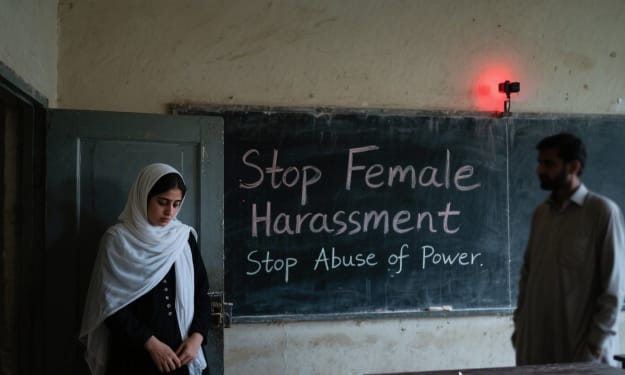
Behind Closed Doors It began like any normal semester. Students at a well-known University in Pakistan began attending their lectures as usual. Among them were students in the Computer Software Department, a place where students dream of launching tech careers, building apps, and writing code. But for many female students, the nightmare began not in a lab—but in an English class.
By Sofia Elira Solenneabout a year ago in Confessions
The Day He Never Came Home
It was a Tuesday morning in early March. Cold, grey, uneventful. My father, like every day, left home at 6:30 AM sharp. He worked as a delivery truck driver for a logistics company. Always on time. Always dependable. He had the same routine every morning — kiss mom on the forehead, grab his thermos, pat me on the back, and walk out the door with his signature “Let’s get this over with.”
By Muhammad Usamaabout a year ago in Confessions
World’s Biggest Non-Nuclear Explosion Ever
On July 31, 2020, a satellite image of Beirut Port in Lebanon looked ordinary. But just four days later, the same port would transform into a war zone—leveled hangars, shattered buildings, and a giant crater the size of two Boeing 747s. What happened on August 4, 2020, would become one of the largest non-nuclear explosions in human history.
By Chronicle of Powerabout a year ago in Confessions
She Walked Out and Never Looked Back
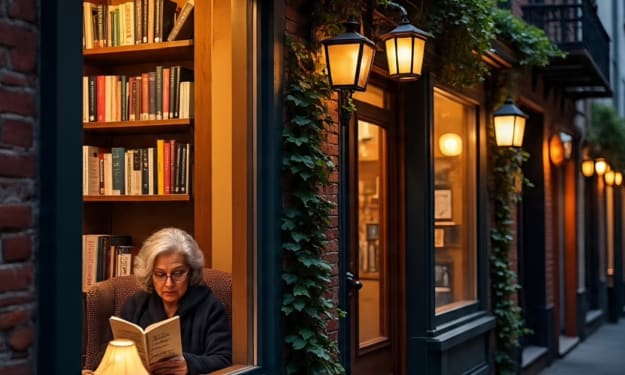
The morning she left was just like any other. Sunlight spilled through the kitchen window, casting warm patterns across the marble floor. The smell of toast and cardamom tea floated through the house. My mother stood by the sink, wiping her hands on her apron, humming a soft tune I never knew the name of. “Do you need anything from the market?” she asked my father. He barely looked up from the newspaper. “Just the usual.” That was the last thing they ever said to each other. She took her handbag, wrapped a shawl around her shoulders, and slipped on her sandals. I watched her from the stairs as she opened the front door. She turned to look back—just a moment—and smiled faintly. Then she walked out. And never came back. --- At first, we didn’t panic. My father assumed she had met a friend and lost track of time. When dusk fell and the sky turned pink and purple, he tried calling her. No answer. He paced. I could tell he was worried, but trying to mask it. By 9 PM, the calls had turned into desperate redials. By midnight, he went to the police. They treated it like a joke. “Adults leave sometimes,” one officer shrugged. “Maybe she needed space.” But we knew better. My mother was the kind of woman who didn’t skip appointments, never missed birthdays, and left love notes in lunchboxes. She made the world feel stable. Her absence felt like the earth had tilted slightly off its axis. --- In the days that followed, we searched every street, every park bench, every hospital. My father printed missing person posters and taped them across the city. He walked miles every day, looking into the faces of strangers, hoping for a flicker of recognition. But the city kept swallowing our hope. The worst part wasn’t the silence. It was the whispers. “She must have run away with someone.” “Maybe she was tired of the life she had.” “Are you sure she didn’t leave a note?” No. She didn’t leave anything. Not a word. Not a clue. Just an empty closet and her wedding ring on the bathroom sink. --- I was 17 when it happened. And in many ways, I stopped growing after that day. My grades dropped. I started sleeping in her bed, surrounded by her scent. My father became a ghost — eating less, working more, talking almost never. Every knock at the door sent my heart racing. Every unknown number brought hope and fear. And every passing woman with a familiar gait or hairstyle made me stop in my tracks. Was that her? --- Five years later, I had left the city for university and was trying to rebuild my life. But I never stopped wondering. What had broken inside her? Was it something we did? Something we didn’t see? Then, out of nowhere, a letter arrived. It had no return address. Just my name, handwritten. Inside was a single sheet of paper. > "I’m sorry I wasn’t stronger. The silence in me grew louder every day. I felt like I was vanishing, piece by piece. I didn’t want to disappear in front of you. So I left before I crumbled. Please know it was never your fault. You loved me more than I ever deserved. I love you. I always have. — Mom" No location. No phone number. Nothing else. My hands shook as I held that letter. I showed it to my father. He read it quietly, folded it, and said, “She’s alive.” That night, he took out the photo album and sat beside me. We didn’t speak, but we turned page after page, remembering a woman who had once held our world together with gentle hands. --- Years passed. I graduated. My father grew older. But we never stopped leaving a light on in the hallway — just in case. And then, one spring afternoon, as I was walking home from work, I passed a small bookstore in a quiet alley. In the window sat a woman, her gray hair pulled back in a bun, reading a book with chipped nail polish and the same birthmark above her eyebrow. I froze. She looked up. Our eyes met. Time stopped. Neither of us moved. She placed her hand on the glass. I walked inside, trembling, breathless. “I’ve been looking for you,” I whispered. “I never stopped looking at you,” she replied. She had been living under a new name, in a new city, working at that bookstore. She’d built a small life, quiet and lonely. She had battled depression, survived the storm, and now sat among books because stories felt safer than people. We talked for hours. She cried. I cried. She asked about Dad. I told her he passed last year—peacefully, with her photo still on the nightstand. She wept for a long time. --- We didn’t return to our old house. That chapter was closed. But we began again—slowly. Weekend visits. Phone calls. Letters that arrived now with return addresses. Some wounds never heal completely. But some hearts find a way to keep beating through the pain.
By Muhammad Usamaabout a year ago in Confessions