Humanity
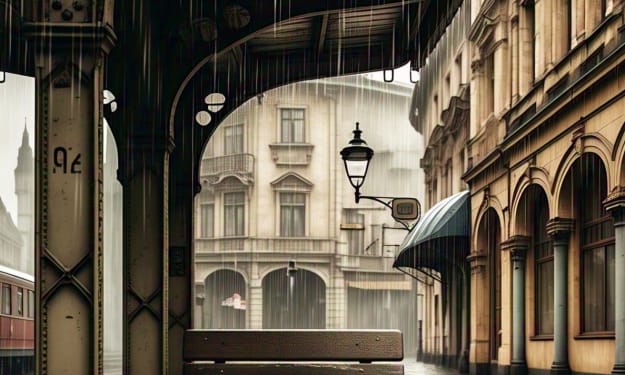
The Stranger on Platform Nine
It was a rainy afternoon in Prague, and the train station buzzed with the usual chaos—loudspeakers echoing destinations, footsteps clattering on old tiles, and the scent of coffee blending with metal, rain, and the faint smell of diesel. I was on Platform Nine, backpack in hand, waiting for a train to Vienna.
By Sultan durani about a year ago in Confessions
I Failed, I Lost, I Learned: The Unexpected Lesson That Changed My Life
We don’t talk about failure enough. Not the filtered version with tidy lessons, but the raw, painful kind—the type that makes you question everything you believed about yourself. I didn’t expect to fall apart in my 30s, but life has a funny way of handing you the exact storm you need to rebuild. And that’s exactly what it did when I lost my job, my confidence, and temporarily, my sense of self. It started with an email. Just one. “We regret to inform you…” That cold, corporate tone shattered years of loyalty in an instant. I was let go—fired from the job I had given everything to. It wasn’t just work; it was my identity. I was the dependable one, the hard worker, the "first in, last out" kind of employee. So when it ended, it wasn’t just my paycheck I lost. I lost who I thought I was. At first, I tried to brush it off. “It’s just a rough patch,” I told myself. But the truth was harder to swallow. My routine vanished. My days became quiet, and that silence grew louder with every passing hour. I stopped waking up early. I stopped answering texts. I stopped showing up for myself. The Emotional Weight of Failure What I didn’t expect was how physical failure could feel. My chest felt heavy. I developed headaches and stopped sleeping. I kept replaying conversations in my head, trying to pinpoint where it all went wrong. And while friends offered support, their words felt distant. No one really understood how much I had tied my value to my work—until it was gone. Then came the practical side of things. Bills. Rent. Groceries. I began cutting costs, selling off things I once treasured. My favorite watch, a vintage camera, old vinyl records—all gone. With every sale, I felt like I was shedding layers of a life I once lived. But perhaps that was the point. I needed to strip down to see what was underneath. Rediscovering Myself in the Silence In the thick of it all, one night changed everything. I found an old notebook tucked behind a drawer. In it were notes from my early 20s—half-written poems, dreams of starting a blog, random photography ideas. I hadn’t seen it in years, but the moment I opened it, something stirred in me. That notebook reintroduced me to a version of myself I had forgotten. A person who was curious, creative, and hopeful. I started writing again—at first just journaling. Then stories. Then articles. I took long walks with my old DSLR, capturing the world like it was brand new. And for the first time in months, I started to feel alive again. Eventually, I submitted one of my stories to a small online magazine. I expected rejection. Instead, I got an acceptance email. It wasn’t a big publication, but it was validation. A reminder that I still had something to offer. That maybe, just maybe, I wasn’t finished yet. The Unexpected Lesson Losing my job was one of the hardest things I’ve ever experienced—but it was also one of the most necessary. It forced me to confront truths I had been avoiding: that I had wrapped my identity in productivity, that I was afraid to fail, and that I had neglected the parts of me that didn’t generate income or praise. The most powerful lesson I learned? Failure isn’t the end. Sometimes, it’s the beginning. When everything I thought I needed was stripped away, what remained was who I truly am. Not the job title. Not the accolades. Just a person who loves to create, connect, and keep growing. Moving Forward with Purpose Today, I still face uncertainty—but I face it with a new mindset. I’ve launched a personal blog, taken on freelance projects, and built a small but supportive online community. Most importantly, I’ve learned to value myself beyond the paycheck. To appreciate stillness. To find purpose in progress, not perfection. If you’re reading this and facing your own failure—know this: You are not alone. And your story doesn’t end here. In fact, this might just be the chapter that changes everything. Sometimes, you have to lose yourself to find yourself again. I did. And I’m better for it. Liked this story? Support my journey by leaving a heart, sharing your thoughts in the comments, or checking out more of my stories. Every read helps me keep writing and reaching others who need it.
By NextGen Mobile Techabout a year ago in Confessions
Kundalini Psychosis: When Spiritual Awakening Feels Like Madness. My Descent Into the Abyss
I never expected enlightenment to feel like insanity. When I first heard about Kundalini, I was intrigued. It's a spiritual energy at the base of the spine. Ancient texts said it's a divine experience, a merge with the cosmos.
By Wilson Igbasiabout a year ago in Confessions
Classroom Discipline: The Key to a Successful Learning Environment"*
*Classroom Discipline: The Foundation of a Successful Learning Environment* Classroom discipline is a system in which teachers and students understand and fulfill their responsibilities. This system creates a conducive and supportive environment for education. *The Importance of Classroom Discipline* Classroom discipline is crucial because it helps students move in the right direction. When students follow discipline, they become more focused and motivated to achieve their goals. *Strategies for Maintaining Classroom Discipline* 1. *Clear Rules and Expectations*: Teachers should establish clear rules and expectations in the classroom so that students know what is expected of them. 2. *Communication with Students*: Teachers should communicate with students to understand their problems and provide guidance. 3. *Rewards and Motivation*: Teachers should reward and motivate students for their good work to encourage them to achieve their goals. 4. *Student Participation*: Teachers should encourage student participation to allow them to share their thoughts and ideas. *Benefits of Classroom Discipline* 1. *Student Progress*: Classroom discipline promotes student progress. When students follow discipline, they become more focused and motivated to achieve their goals. 2. *Teacher-Student Relationship*: Classroom discipline strengthens the teacher-student relationship. When teachers and students understand and fulfill their responsibilities, they can work together more effectively. 3. *Conducive Environment*: Classroom discipline creates a conducive environment for education. When students follow discipline, they become more focused and motivated to achieve their goals. *Challenges of Maintaining Classroom Discipline* 1. *Student Misbehavior*: Student misbehavior can disrupt the classroom environment and make it challenging to maintain discipline. 2. *Lack of Motivation*: Students' lack of motivation can make it difficult to maintain classroom discipline. 3. *Teacher-Student Conflict*: Conflict between teachers and students can create a challenging environment for maintaining classroom discipline. *Conclusion* Classroom discipline is a vital element that helps students move in the right direction. Teachers should establish clear rules and expectations, communicate with students, reward and motivate them, and encourage student participation to maintain classroom discipline. By doing so, teachers can create a conducive environment for education, promote student progress, and strengthen the teacher-student relationship.
By FKGabout a year ago in Confessions
What's Mine Is Mine
I woke up feeling off. No energy, no clarity. I think it started with that song he sent me—one of those macho, swaggering tracks flaunting dominance and money. A line about a woman’s power lying between her legs and that of a man’s in his wallet stuck with me. It irritated me. Maybe because I’ve been more sexually expressive lately—wanting to be, enjoying it—and yet, I don’t want that to define me. I don’t want to depend on anyone’s wealth. My North Node in Capricorn means that my life's mission is to earn my own.
By Lola Senseabout a year ago in Confessions
“I Adopted a ‘Useless’ Shelter Dog. What He Did Next Made the Whole Town Cry.
The rain didn’t fall—it *punished*. It hammered the roof of my dented Corolla like it held a personal grudge, each droplet screaming, *“Turn back, Amanda. You don’t deserve this.”* The therapist’s office still clung to me. I could smell the lavender oil she diffused to mask the despair of her other clients—women like me, hollowed out by miscarriages and husbands who’d traded vows for Tinder profiles. *“You need purpose,”* she’d said, as if purpose could be plucked from a supermarket shelf between the antidepressants and divorce-party confetti. The Hillside Animal Shelter loomed ahead, its chain-link fences sagging under the weight of the storm. I gripped the steering wheel until my knuckles whitened. *Just get a dog. Any dog. Something to keep the silence at bay.* Inside, the air reeked of ammonia and hopelessness. A symphony of barks erupted—high-pitched pleas from Row A’s puppies, rhythmic thuds from Row B’s overeager labs. But it was the silence of **Row D** that hooked me. “Ma’am?” A teenage volunteer blocked my path, her *“Adopt Don’t Shop!”* apron stained with paw prints. “Adoptables are this way! We’ve got a *super* cute Chihuahua mix who—” “I’ll look here first.” Her smile faltered. “Those are… our long-termers. You really don’t want—” “I do.” The fluorescent lights buzzed like angry wasps as I walked. Kennel 1 held a three-legged beagle compulsively licking concrete raw. Kennel 5: a hairless Sphynx cat frozen in a permanent hiss, its eyes reflecting decades of betrayal. Then— **Kennel 12.** He wasn’t barking. Wasn’t pacing. Just… existing, coiled into himself so tightly I mistook him for a pile of discarded blankets. A German Shepherd mix, maybe 70 pounds in his prime, now whittled down to haunted architecture—ribs like shipwrecks, a muzzle crosshatched with scars. One ear stood battle-ready; the other flopped sideways, a shredded flag from wars I couldn’t imagine. But his eyes—*God, his eyes*. Amber pools sharpened to rifle scopes, tracking me with unnerving precision. Not begging. *Calculating.* “That one’s not available.” Shelter manager Martha materialized beside me, her *“Who Rescued Who?”* tattoo peeking beneath a moth-eaten cardigan. “Why?” She sighed, keys jangling like ghost chains. “Bear. Six years old. Three failed adoptions. Bites men in work boots—we think his last owner was a mechanic. Hates leashes, shreds beds, paces till his paws bleed. Oh, and he’s got a stage 4 heart murmur. Vet gives him eight months. Tops.” I crouched. Bear’s nostrils flared, drinking me in. “Why keep him this long?” Martha’s laugh tasted like battery acid. “Sentimental crap. First week here, Timmy Sanders—the baker’s kid—dropped his teddy bear in the kennel. Instead of tearing it up, Bear nudged it back through the bars. We thought, *‘There’s hope.’*” Her voice cracked. “But hope doesn’t pay vet bills. His euth date’s tomorrow.” Rain lashed the roof. Somewhere, a pipe dripped in sync with my racing pulse. *Eight months.* I knew what eight months of borrowed time felt like. The IVF doctor’s voice echoed through me: *“Your last cycle failed. At 41, we recommend—”* I’d walked out before he could say *“giving up.”* Bear lifted his head. A tremor ran through him—not fear, but something older. Defiance. “Open the kennel.” “Amanda, be rational. You want a project? Take the beagle. Take *three* beagles. This dog’s a grenade with the pin pulled.” I pressed my palm to the bars. Cold steel bit into my skin. “Open it.” The lock groaned. Bear uncoiled slowly, each movement precise, as if his body were a minefield. Up close, I saw the notch in his ear—a perfect half-moon, like someone had taken a bite out of him. He sniffed my hand. Stopped. And laid his mangled head in my palm. Martha sucked in a breath. “He’s never… *Christ.*” His warmth seeped into me, pooling beneath my sternum where the ultrasound wand had once pressed, searching for a heartbeat that never came. “Fee’s $50,” Martha whispered. I didn’t move. Couldn’t. Bear’s breath hitched—a wet, wheezing sound that mapped the damage beneath his fur. “Why?” I asked him. He blinked. For a heartbeat, the shelter vanished. I saw my ex-husband’s face when I’d begged for one more IVF round (*“It’s not *natural*, Amanda. Let’s just… travel.”*). The soccer league director’s tight smile (*“We prefer coaches with… family experience.”*). The way my empty house echoed with phantom cries from the nursery I’d painted lemon-yellow at 3 a.m., drunk on grief and Sherwin-Williams samples. Bear leaned into me, his weight solid as a promise. “He’ll die here,” I said, not looking at Martha. “Or he’ll die in a home where someone mistakes scars for flaws. Either way, he dies. Let me give him a porch to lie on first. Let me give him a name that isn’t whispered like a curse.” Martha’s keys hit the floor.
By Inam Zohanabout a year ago in Confessions
CRITICAL THINKING
Critical Thinking: The Strength of Reasoned Thought in a Complicated World In the world of information overload, emotional arguments, and quick decision-making of today, critical thinking has emerged as one of the most precious mental abilities an individual can acquire. Whether you are resolving a dilemma, making a choice, examining a circumstance, or creating an opinion, critical thinking provides you with the means to tackle ideas reasonably, logically, and autonomously.
By mukesh jaiswarabout a year ago in Confessions
The Silent Observer
In the dusty corner of a local coffee shop, I've watched life unfold for seven years. Not as a barista or regular customer, but as someone paid to observe. My job title is "market researcher," but I'm really a professional spy—documenting patterns, reporting conversations, tracking regulars. The coffee shop owner hired me to understand his customers better, but it evolved into something darker.
By Edmund Oduroabout a year ago in Confessions
Italy willing to hire more Bangladeshis, visiting minister tells Chief Adviser..
Introduction Italy and Bangladesh share a long-standing relationship that spans across trade, culture, and human mobility. In recent years, the dynamics of this bilateral relationship have taken a pivotal turn with labor migration becoming a central theme. During a high-level meeting with Bangladesh's Chief Adviser, a visiting Italian minister expressed Italy's willingness to hire more Bangladeshi workers in a significant diplomatic engagement. This landmark statement not only reflects the growing trust between the two nations but also signals new opportunities for Bangladeshi migrants and laborers seeking employment in Europe.
By Krypton about a year ago in Confessions
Brush, Voice, and Frame
Yesterday left me raw. The kind of day that doesn't collapse neatly into a single emotion. It started off hopeful—at least on paper. A meeting with a local journalist, a kind woman who genuinely seemed curious about people and their stories. She listened, nodded, smiled the way people do when they care. I appreciated her presence more than I thought I would.
By Lola Senseabout a year ago in Confessions
When Blood Betrayed and Love Redeemed
They say family is everything. That your own flesh and blood will never turn their back on you — that no matter what, they’ll stand beside you. I believed that once. I lived by it. I built my life around it. I thought that the bonds of family were invincible, that the loyalty of those closest to me was guaranteed. But nothing shatters a person quite like realizing that sometimes, strangers can be more loyal than your own children. I wasn’t born into privilege. I didn’t inherit wealth, power, or status. Everything I have today — the business, the name, the respect — was carved out of struggle, failure, and relentless work. I didn’t have the luxury of a smooth path. Every step was hard-earned, every victory hard-fought. I lost sleep, sacrificed moments with loved ones, and poured myself into my work, building what others now see as an “empire.” But I never complained. I had a vision. I had a dream — to create something lasting, something powerful, and one day, pass it on to the next generation. I thought that generation would be my own son. From the moment he was born, I wanted nothing but the best for him. He grew up with every comfort I never had. I gave him the best education, the finest opportunities, the kind of life that I used to only dream of as a child. I believed that with all this privilege, he would understand the importance of hard work, the value of building something from the ground up. I imagined that he would carry the torch and continue to build upon the foundation I had laid. But somewhere along the way, the comfort I gave him turned into entitlement. And the lessons I thought I had instilled in him about resilience and responsibility seemed to fall on deaf ears. He never wanted to learn the business — he didn’t see the value in it. All he wanted was to inherit it. And when I asked him to earn his place, to work hard like I did, he resented me. It hurt. It was a betrayal, in its own way. The son I had nurtured, protected, and built a future for wasn’t interested in anything I had worked so hard for. He didn’t appreciate the sacrifices I made, the struggles I faced, the years of sleepless nights. I realized that he saw everything I had built as just a gift — something he was entitled to, rather than something he should earn. At the same time, there was someone else in our life. He wasn’t my biological child. He came to us in unexpected circumstances. A quiet boy with gentle eyes, who always seemed to watch the world as if he didn’t quite belong in it. He wasn’t the kind of person who demanded attention or recognition. He stayed in the background, learning, watching, asking questions. He never came to me for more than what I gave him, but somehow, he always gave back more than I could have expected. I never thought I’d get so attached. But time has a way of revealing hearts. Over the years, this boy proved himself to be a quiet force, someone who genuinely cared, not for what I could give him, but for what he could help build. Where my own son showed arrogance and a sense of entitlement, this boy showed respect. Where there was laziness and a lack of initiative from my son, he brought energy, determination, and the willingness to learn. He didn’t do it to impress me, to earn my approval — he did it because he genuinely wanted to help. He asked questions, learned the ropes of the business, and quietly took on responsibility. He didn’t expect anything in return, but the more I saw his actions, the more I realized how much he valued what I had worked for. The respect he showed was unspoken, yet more profound than anything I had experienced from my own flesh and blood. At first, I was cautious. I told myself not to trust too easily. After all, he wasn’t my child, and I had to protect my legacy. But it’s hard to ignore the truth when it stares you in the face every day. When my son started secretly selling off parts of the company — manipulating accounts, betraying my trust — it wasn’t an outsider who exposed him. It was the very person I once thought didn’t belong in our world. The boy I had once thought of as an outsider was now the one who stood by me when everything was falling apart. I remember the night everything fell apart. It felt like a battlefield. My son, eyes filled with cold ambition, sat across from me like a stranger. He had plotted to take over, not with pride or passion, but with manipulation and deceit. And standing between me and collapse was a child who had no obligation to care — and yet did. The boy, who had no claim to the business, no title to inherit, stood by me, files in hand, with evidence that exposed my son’s betrayal. His hands trembled as he placed the evidence on the table, not because he feared the consequences, but because he knew that protecting what I had built was the right thing to do. It wasn’t about the money. It wasn’t about the business. It was about loyalty — a loyalty that came from respect, hard work, and a shared vision. The betrayal cut deep. My own son had plotted to destroy everything I had worked for, driven by greed and a sense of entitlement. But standing beside me was a boy who had no obligation to protect me, no reason to stand up for what I had built — except for the simple fact that he believed in it. And in that moment, I realized that blood may be thick, but love — real love — is unwavering. Loyalty doesn’t always come from DNA. Sometimes, it comes from shared values, quiet actions, and consistent respect. The aftermath of the betrayal was painful. I had to make difficult decisions, to let go of someone I had once considered my own. But in the process, I learned something invaluable. Trust, respect, and loyalty are not automatically granted. They must be earned. The people who will stand by you in your darkest hours may not always be the ones you expect. Sometimes, they are the ones who have no reason to stay, except that they believe in you and what you’ve built. Since that night, the business has flourished. Not because I did it alone, but because I had someone who stood with me, not for inheritance, but for belief in the cause. The boy who once seemed like an outsider is now a core part of my life. He doesn’t need a title to prove his worth. His actions speak louder than any nameplate on a desk. To anyone reading this who’s struggling with family, betrayal, or the pain of misplaced trust — I want you to know: you are not alone. Sometimes, the people we call our own break us the most. But healing can come from the most unexpected places. Keep your heart open. Watch who shows up when everything’s falling apart. That’s the person who matters. I once feared that trusting someone outside the circle of blood would backfire. But I was wrong. That trust saved everything. And to the one who stood by me when my world crumbled — I’ll never stop being grateful. You may not be my blood, but you are, without a doubt, my family.
By Zia Udinabout a year ago in Confessions