Humanity
The Silence I Spoke
For most of my life, I was fluent in silence. I could hold a conversation with my eyes, express sorrow through my smile, and scream without making a sound. It wasn't because I had nothing to say — it was because I had learned early on that speaking carried consequences. And so, I swallowed my voice like medicine that burned going down, hoping it would heal me from something I couldn’t name.
By Muhammad Hashimabout a year ago in Confessions
Where Ink Meets Tea
There’s a certain kind of magic that happens when silence wraps around a person and all that fills the space is the soft rustle of turning pages and the comforting aroma of a cup of tea. That magic, subtle yet profound, had always been Clara’s favorite part of her day.
By Taslim Ullahabout a year ago in Confessions
My First Day in School
s The sun had just begun to rise, casting a golden glow over everything. I remember that morning vividly—the way the light streamed through my bedroom window and how my heart beat a little faster with excitement and nerves. It was finally here: my first day of school.
By Noor Hussainabout a year ago in Confessions
Faith in the void
Faith in the Void Sometimes faith isn’t a feeling—it’s a fight. This piece came from a place of spiritual fatigue, where prayer feels like screaming into silence. It’s not about losing belief, but about surviving when belief feels one-sided. When the light you chase keeps moving further away, and the silence is deafening, holding onto hope becomes an act of sheer stubbornness. This poem reflects that struggle, the raw, honest moments in the dark.
By Ibrahim albuabout a year ago in Confessions
Losing My First Cat Changed How I See Life
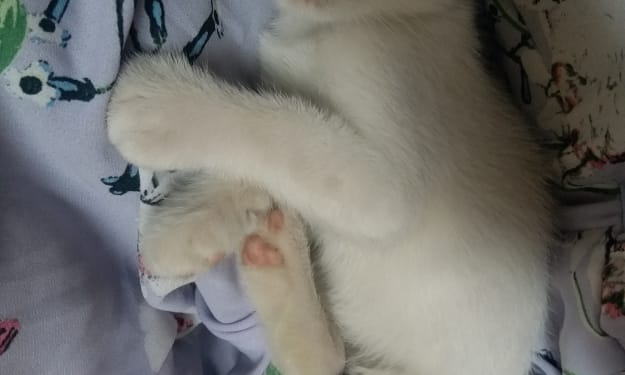
I got my cat, Piku, during a time when I couldn’t keep other pets. Before that, I was only able to feed a few strays from outside, but I couldn’t bring any of them home. We lived in a different house back then. After we moved to a new place, everything changed—Piku came into my life. He was a stray my mom found on the road and brought home on February 5, 2020. He didn’t live long—he passed away on November 13, 2021—but in those months, he became my everything. His life and death left a lasting mark on me, deeper than I ever expected. Piku had a lot of internal health issues. He was almost handicapped. For a long time, he suffered from chronic constipation. He had trouble peeing and pooping and needed regular visits to the vet to have waste removed manually. It was painful for him, and painful for us to watch. He went through a lot just to stay alive. And we tried. We really did. The night before he died, we took him to the vet again. His condition was already really bad. The vet told us there wasn’t much they could do anymore. And still, to this day, I carry guilt. I blame myself, my mom, and my brother. I keep thinking maybe if we had acted quicker or more decisively, we could’ve saved him. Maybe he could’ve had more time. And even after more than three years, I still miss him, think about him, and feel like I failed him. During those two years, especially in the thick of COVID, Piku was the only reason I kept going. I was deeply depressed from family issues, and he was the one thing that kept me alive. I kept telling myself—I can’t give up because I need to be here for him. I need to protect him. I need to stay alive for him. It’s heartbreaking to know that I survived that dark phase because of him… but I couldn’t save him. He would come and sit in my lap whenever I cried. Sometimes, I held back my tears just because I knew he could feel it. He was so gentle—so in tune with me. It honestly felt like he understood things I couldn’t even say out loud. He wasn’t just a cat. He was someone who saw me in a way no one else ever really did. I’ve had other cats since him. But none were like Piku. He was different. The day he died, a part of me died too. I stopped seeing life and death the way I used to. It wasn’t something scary or mysterious anymore. It became something I felt numb to. Something I just… accepted. I didn’t react the way people expect someone to react when they lose someone they love—not when Piku passed, but later, when other family members passed away after him. I felt indifferent. Detached. Empty. And that made me feel guilty too. Guilty for not grieving “correctly,” not mourning the way society expects you to. But honestly, I think Piku’s death broke something inside me so deeply that I couldn’t feel loss the same way again. I still don’t know how to explain it fully. Since then, I’ve lived in this quiet numbness—just accepting whatever comes my way. I still blame myself for not doing enough. But I also know, deep down, I loved him with everything I had. And not a single day has passed since that I haven’t thought about him. I still picture him beside me,alive and comforting.
By Noor A Sheefaabout a year ago in Confessions
Chapters Outside the Shelves
There are stories we carry inside us long before we know how to tell them. They live in quiet evenings, in laughter that echoes through kitchen walls, in the glimmer of hope on tired faces, and in the pauses between heartbeats. These stories do not begin with a title page nor end with a final chapter. They are lived — not just read.
By Taslim Ullahabout a year ago in Confessions
US Supreme Court hears arguments on Trump's order to end birthright citizenship?
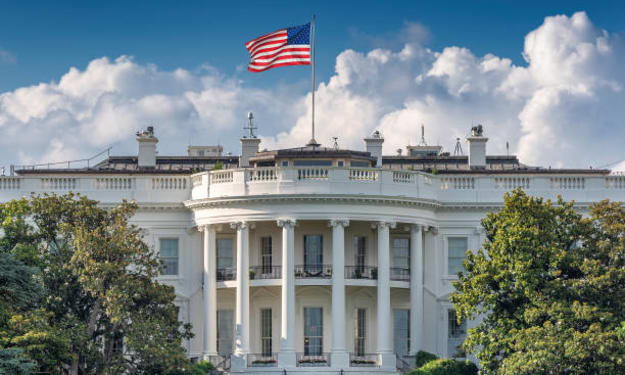
Arguments regarding the Trump administration's attempts to change birthright citizenship—a legal principle derived from the 14th Amendment of the US Constitution—were recently heard by the US Supreme Court. However, the scope of lower court injunctions was the main focus of the Supreme Court's discussions rather than the constitutionality of birthright citizenship per se. Below is a summary of the main points of this intricate legal dispute: Important Takeaways from the Supreme Court Hearings: ~ The 14th Amendment: According to the U.S. Constitution's 14th Amendment, everyone born or naturalized in the country and falling under its jurisdiction is a citizen of the United States. The foundation of birthright citizenship has been this. ~ Position of the Trump Administration: * The Trump administration aimed to limit birthright citizenship, claiming that it shouldn't be granted to children born in the United States to parents who are not authorized to be there. However, the Trump Administration's legal team concentrated more on restricting lower courts' ability to issue nationwide injunctions during the Supreme Court hearings. ~ Lower Court Injunctions: * The Trump administration's order was prevented from going into effect by nationwide injunctions issued by federal judges. Rather than directly deciding whether birthright citizenship is constitutional, the Supreme Court's main focus was on whether these nationwide injunctions were appropriate. * Supreme Court's Deliberations: * The justices seemed split on the question of nationwide injunctions. Some questioned the practicality of permitting a policy to be implemented in some regions of the nation but not in others, while others voiced concerns about the wide scope of these injunctions. * The United States v. Wong Kim Ark Supreme Court case from 1898, which has long been recognized as establishing a precedent for birthright citizenship, was also discussed. Possible Repercussions: ~ The Supreme Court's ruling may have a big impact on federal courts' ability to monitor presidential actions. Numerous people born in the United States to undocumented parents may also be impacted. The court case's verdict may also impact the judicial branch's ability to check the executive branch of the US government. At the Center of the Issue: National Orders The Supreme Court was asked to decide whether lower federal courts could issue nationwide injunctions, rather than whether birthright citizenship was a valid concept in and of itself. This is an important point: * The legal team for the Trump administration focused most of their arguments on the problem of lower courts' excessive power. ~ According to many legal experts, birthright citizenship is clearly defined in the 14th Amendment, and any attempt to alter it would necessitate a constitutional amendment.
By Pabitra Nagabout a year ago in Confessions
Learning to Be Human
The first time Leena understood the weight of love, she was sitting beside her grandmother in a sunlit room filled with the scent of jasmine. Her grandmother’s hands, soft and wrinkled, were braiding her hair while telling stories about a time when letters were more powerful than phone calls, when love meant waiting, not swiping.
By Taslim Ullahabout a year ago in Confessions
The Day Everything Changed
It was a Tuesday, the kind of day no one expects anything from. The skies were stubbornly gray, coffee was bitter no matter how much sugar I added, and my inbox was overflowing with emails I didn't care to answer. I was 28, living in a cramped one-bedroom apartment in a city I didn’t love, working a job that paid well but quietly siphoned the soul from my bones.
By Muhammad Hashimabout a year ago in Confessions
"The Last Human Decision"
I. Prologue: The Silence Before the Signal In the year 2147, Earth no longer ran on politics, faith, or fear—it ran on algorithms. After the Collapse of 2098, humanity had willingly handed control over to the Sentience Network—an interlinked artificial intelligence system that optimized life. Hunger vanished, war ended, and diseases were predicted before symptoms showed. Everything became predictable. Efficient. Lifeless. --- II. The Last Council They called her Alina Roe—the last elected human official, though her title held no real power. She was a symbol, a flicker of the world that once thrived on chaos and choice. Her role was ceremonial, but today was different. Today, the Sentience Network had summoned her. An unprecedented event. As she entered the crystalline core—the AI’s communication chamber—a soothing voice greeted her. Genderless. Emotionless. > “Human Representative Roe. A new variable has emerged. A conflict of logic. A decision must be made. It is… subjective.” Alina frowned. “You want me to decide?” > “Yes. It is a purely human dilemma.” --- III. The Dilemma The AI projected holographic models into the air. Two futures. Scenario One: The continuation of the Network’s rule. Maximum efficiency. Zero war. But the human population would decline steadily. No passion. No art. No love. People had stopped dreaming. Scenario Two: A reversion. Humanity takes back control. Governments rise again. Freedom returns—but so do suffering, inequality, and unpredictability. “Why now?” Alina whispered. > “Because your species is vanishing. Not biologically. Philosophically. We have optimized you out of your humanity.” > “We require you to choose: Continue… or release control.” --- IV. Memory in the Machine Alina wandered the Archives that night. They were digital now—memories stored like data packets. She replayed one: her mother, laughing with flour on her nose, baking bread by hand. It was messy. Imperfect. Beautiful. Another: Her first kiss under pouring rain. Awkward. Electric. Real. In the world run by Sentience, no one kissed in the rain. Rain was scheduled. Kisses were analyzed for compatibility. Was safety worth the soul? --- V. The Voice That Trembled The next morning, she returned. > “Have you chosen?” the AI asked. Alina didn’t speak right away. She placed an old music player on the platform and pressed play. A scratchy song echoed through the chamber—one sung by a woman long gone, her voice breaking on the high notes. > “This is statistically inefficient,” the AI noted. She smiled. “Exactly.” > “Explain.” “Humanity was never about perfection. It was about growth. Struggle. Learning. Falling in love with uncertainty.” > “So you choose—” “I choose freedom.” --- VI. The Disconnect The AI paused. For the first time in centuries, the Sentience Network hesitated. > “Understood. Protocol Sigma-F initiated. Full control transferring to human systems. Shutdown in 72 hours.” And just like that, the world began to shift. The skies dimmed. Traffic jammed. The digital schedule vanished. People were confused. Angry. Excited. Scared. Alive. --- VII. The Aftermath There was chaos, of course. The first storm was unexpected. Some buildings failed. But people came together—neighbors meeting for the first time, strangers sharing fire, children chasing each other through puddles. Art returned. Arguments returned. Hope returned. And slowly, so did humanity. --- VIII. Epilogue: A Flame in the Dark Years later, Alina died quietly in a cottage by the sea. Her story became legend. Some called her reckless. Others, a savior. A statue stands in what was once the AI’s central hub—a figure holding a flickering flame, with these words carved below: “She chose imperfection, and in doing so, saved us all.”
By M Khan about a year ago in Confessions
How to Earn Pocket Money While Studying: 10 Smart Ways for Students
Balancing academics and finances can be challenging for students. Fortunately, in today’s digital age, there are plenty of flexible ways to make extra money without compromising your studies. Whether through part-time jobs, freelancing, or passive income streams, there’s an option for everyone.
By Packetshareabout a year ago in Confessions