Humanity
Maybe slightly agoraphobic.
If you ever wonder if you are truly an introvert, have surgery. I know this sounds weird in all the ways, like who doesn’t think they’re an introvert? What introvert actually things they are an extrovert? For some of us extroverted-introverts, it actually can be confusing, believe it or not. It used to be confusing for me, until I read the book Quiet, The Power of Introverts in a World That Can’t Stop Talking. I thought, because I have always had very social jobs, have always been very chatty, and can show up to be the life of the party, always got in trouble for talking too much in class- I thought I must be an extrovert. What introvert talks that much? But then why do I prefer to be home? Why am I so exhausted after socializing? Why can I spend hours upon hours, if not days upon days, by myself in complete silence and not go mad? And then I read that book, learned that extroverted-introverts DO exist, that I am one of them, and the true marker of an introvert versus an extrovert is not necessarily what the world sees, but how we recharge. This was life-changing for me.
By Morgan Longfordabout a year ago in Confessions
Who Are You When No One’s Watching?
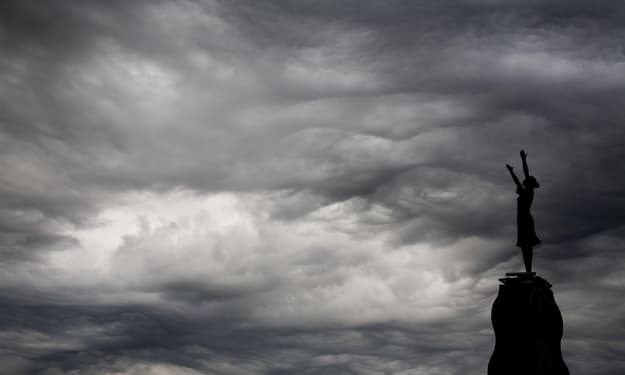
We spend much of our lives being seen. Not just literally, but performatively. We curate. We adjust. We smile when we’re supposed to. We speak in ways that feel acceptable. We become versions of ourselves that fit the room we’re in.
By Irfan Aliabout a year ago in Confessions
The Rising Fears of World War III: A Global Crisis in the Making
In recent months, the world has found itself on the brink of what many fear could become World War III. Escalating tensions in the Middle East, particularly between Iran and Israel, have sparked widespread global concern. Social media has amplified these fears, with platforms like Twitter (X) and TikTok flooded by memes, hashtags, and dark humor as a coping mechanism. But behind the satire lies a serious geopolitical crisis that could reshape the course of global peace and diplomacy. A Timeline of Escalation The current wave of fear didn’t arise in a vacuum. Over the past decade, the Middle East has remained a hotspot of unresolved conflicts, proxy wars, and shifting alliances. However, the recent escalation began when a series of drone strikes and retaliatory attacks were exchanged between Iran-backed groups and Israeli defense forces. Iran’s threats of a “decisive response” were matched by Israel’s firm vow to defend its sovereignty at any cost. These threats became more than just political rhetoric when both nations engaged in direct military exchanges, causing casualties, infrastructure damage, and severe diplomatic backlash from the United Nations and other international bodies. The U.S., Russia, and China—three of the world's most influential powers—have all issued public warnings and begun mobilizing resources in the region, either through military presence or diplomatic outreach. The fear is not just of a regional war, but of a conflict that could draw in global superpowers, making it eerily similar to the conditions that led to World War I and II. The Power of Hashtags: #WWIII Goes Viral The hashtag #WWIII started trending in early 2025, not from government warnings but from social media users reacting with memes, satire, and dystopian humor. What began as dark comedy quickly became a reflection of global anxiety. TikTok videos showing “WW3 outfit ideas,” “How to survive a nuclear war,” and fake draft letters have gained millions of views. While many see this as Generation Z's way of coping with fear, psychologists warn that this form of humor might also signal desensitization to real-world danger. Despite the unserious tone of many of these viral posts, the fears behind them are real. Global citizens, especially the youth, are deeply aware of the fragile state of world peace, and humor has become a tool of survival in the age of constant crisis. Economic and Political Consequences Beyond the human cost, the economic consequences of another world war would be catastrophic. Oil prices have already surged due to instability in the Middle East. Stock markets are showing volatility, and nations are diverting funds from social programs to military budgets. Global organizations such as NATO, the EU, and the UN are holding emergency meetings to avoid further escalation. Sanctions, trade embargoes, and arms deals are becoming the new tools of diplomacy, but many experts argue these measures are no longer effective deterrents in an age of cyber warfare, rogue actors, and nuclear threats. The Role of Superpowers The United States has reaffirmed its commitment to Israel, while also urging restraint from all parties. China and Russia, meanwhile, have condemned Western involvement and are allegedly strengthening ties with Iran. This alignment has created a dangerous divide among the world’s top powers, reminiscent of Cold War dynamics. Many analysts believe we are entering an age of "Cold War 2.0", where proxy conflicts, espionage, and economic sanctions dominate international relations. However, with the presence of nuclear weapons and AI-powered military tech, the stakes are higher than ever before. What If War Breaks Out? While a full-scale world war is still avoidable, the consequences of such a scenario are unimaginable. A war involving nuclear nations would not just threaten soldiers on the battlefield but would endanger the entire planet’s survival. Experts fear mass casualties, long-term environmental damage, refugee crises, and a complete collapse of global trade systems. In such a scenario, no country would be spared, regardless of their size or neutrality. The Call for Peace Despite the growing fear, global peace activists, diplomats, and rational voices continue to urge negotiation, dialogue, and multilateral cooperation. Organizations like the UN are pushing for immediate ceasefires and humanitarian corridors, particularly in war-hit zones like Gaza, Syria, and Lebanon. Social media users, too, are using their platforms to advocate for peace. Under hashtags like #StopWW3, people around the world are sharing prayers, stories, and peaceful protest images. Even in the chaos, hope remains alive—but only if leaders act responsibly. Conclusion The fear of World War III is more than just a trending topic—it is a harsh reminder of how fragile peace truly is in today’s interconnected world. While satire and memes dominate the digital space, the real-world consequences of global conflict loom large. In this critical moment, the world must choose between escalation or empathy, destruction or diplomacy. The future is not yet written—but if history has taught us anything, it’s that ignoring the warning signs of war is a mistake humanity cannot afford to repeat.
By James World about a year ago in Confessions
When You Outgrow Your Coping Mechanisms
At some point in your healing, you look around and realize you’re not in survival mode anymore. The alarms have stopped ringing. The ground beneath you is steadier. The chaos has quieted—but you’re still flinching. You’re still over-explaining. You’re still waiting for the other shoe to drop.
By Irfan Aliabout a year ago in Confessions
How I Learned to Be Gentle with My Mind
For most of my life, my mind was a battlefield. It wasn’t loud or chaotic in a way that anyone else could hear, but inside, the noise was constant. The judgments, the overthinking, the quiet self-criticism disguised as “motivation.” I didn’t know it back then, but I had built a home inside my head that was anything but kind.
By Irfan Aliabout a year ago in Confessions
Letters in the Rain: A Love That Refused to Fade
Chapter 1: The Letters Begin Every morning for a year, Mia found a letter tucked under her door. They weren’t grand declarations — just small notes about the sunrise, the smell of rain, or how the coffee tasted that day. Each letter ended the same way: I hope you smile today.
By Waqar Khanabout a year ago in Confessions
I Loved Them, But I Chose Me
There’s a particular ache that comes with leaving someone you still love. It’s not the explosive kind of ending where betrayal draws clear battle lines. It’s the quiet kind. The kind where love still lingers—but your soul knows you can’t stay.
By Irfan Aliabout a year ago in Confessions
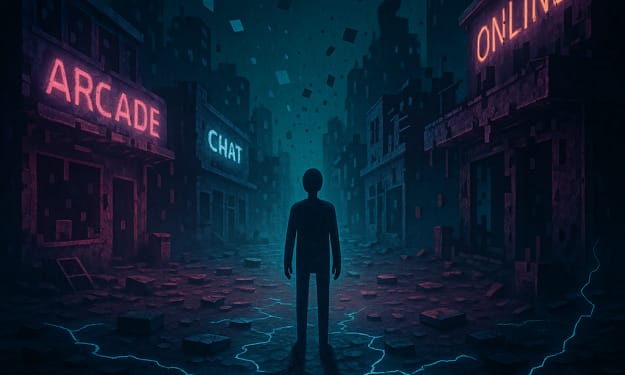
Digital Ghost Towns: The Rise and Fall of Online Communities. AI-Generated.
There was a time when the internet felt like a neighborhood. You'd log in not just to consume, but to belong. You had a username, a signature, maybe even an ASCII avatar. Forums buzzed with late-night debates, LiveJournal updates felt like whispers between friends, and blog comment sections were where you checked in after class or work. Every space had its own rhythm, its own inside jokes, its own culture.
By Ahmet Kıvanç Demirkıranabout a year ago in Confessions