Friendship
He Was My Brother — Until He Chose to Be a Stranger
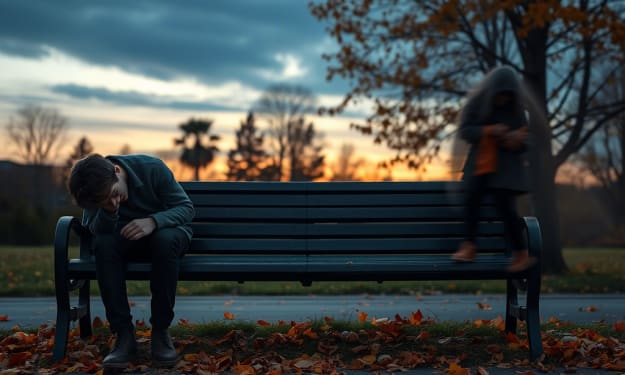
We were never just siblings. We were a team. At least, that’s what I told myself growing up. My older brother, Malik, had always been my protector. When our parents divorced, it was his voice that told me everything would be okay. When I cried myself to sleep, it was his hand on my back. When I didn’t fit in at school, it was him who walked me home, daring anyone to mess with me. We shared bunk beds, secrets, and a thousand little moments that stitched our childhood into something survivable. He was my brother. Until he chose to be a stranger. I say "chose" because that's what it felt like. It didn’t happen overnight, but it also didn’t take long. At first, it was just missed calls. Then unanswered texts. Excuses when it came to family gatherings. He said he was busy with work, overwhelmed with life, stressed. I understood — or tried to. We were adults now. Responsibilities pile up. But the silence deepened, and the space between us stretched too far to pretend it was normal. I remember the last time we spoke — really spoke. It was a year ago, after our father’s funeral. Malik showed up late, stayed in the back, and left without saying goodbye to anyone. I chased him to the parking lot. “Are you serious, Malik? You couldn’t even say something to Mom?” He wouldn’t look me in the eye. “I didn’t come for her. I came to pay my respects. That’s it.” “Respect?” I laughed bitterly. “You barely even spoke to Dad the last few years. Now you’re just… what, a ghost who shows up at gravesides?” He didn’t respond. He got in his car, and as the engine started, he finally said, “Some people are better off loving from a distance.” I stood there, stunned, as his car disappeared down the street. That was the last time I saw him. --- The thing about losing a sibling while they’re still alive is that you mourn in secret. No one sends flowers when your brother stops calling. No one comforts you when he erases you from his world. People ask, “How’s your brother?” and you lie. You say, “He’s doing well,” because saying “I don’t know who he is anymore” feels too heavy to explain. Our mother stopped asking about him months ago. It hurt too much. Malik had pulled away from her, too — maybe even more harshly than with me. She blamed herself for a while. Then she blamed Dad. Then she just stopped blaming, and started carrying the silence like a weight. I used to believe blood was thicker than anything — that no matter how far life pushed us, we'd always return to each other. But what happens when blood isn’t enough? What happens when love is not reciprocated, and memories become one-sided? --- I tried to hold on. I sent him birthday messages. No reply. I tagged him in an old photo — the two of us in matching Halloween costumes as kids. He untagged himself within the hour. I asked myself a thousand times: What did I do? Was it something I said? Did I fail him? Did I make him feel small or misunderstood? But the truth — the cruel, elusive truth — is that sometimes people choose to disappear for reasons that have nothing to do with you. Sometimes, their silence speaks more about their own pain than your relationship. And sometimes, you never get closure. Just echoes. --- This year, on his birthday, I didn’t text. I didn’t scroll through old photos or reread our last conversation. I didn’t cry. Instead, I sat on the porch and let the wind move through me. I looked up at the sky and whispered something I wish I had said to him before the silence became permanent: “I loved you the way only a sibling can. I still do. But I won’t chase someone who’s running away from everything, including me.” --- People don’t talk enough about sibling estrangement. It’s not always fights or drama that create distance. Sometimes it’s quiet. Sometimes it’s subtle. Sometimes the person you grew up with slowly fades into a version of themselves that doesn’t include you. And that’s what hurts the most — not the loss of the bond, but the loss of the person you believed would always be there. I’ve stopped waiting for Malik to come back. Maybe one day he’ll find his way home, or maybe he never will. Either way, I’ve made peace with the truth: He was my brother. Until he chose to be a stranger. --- If you’ve ever lost someone who’s still alive, you’re not alone. Sometimes letting go isn’t an act of giving up — it’s how we learn to survive. Thank you for reading this 🥰.
By Azmat Roman ✨about a year ago in Confessions
We Don’t Talk Anymore, But I Still Know Her Birthday by Heart
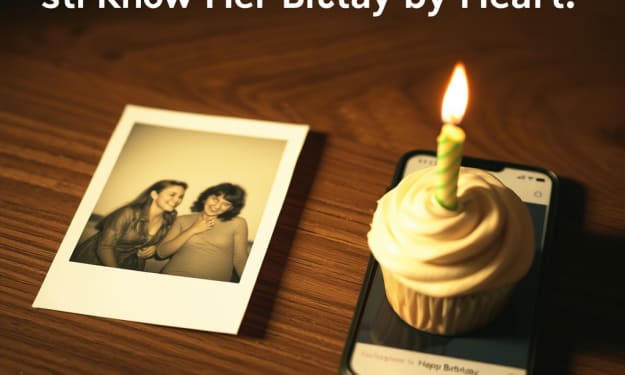
It’s strange how the mind holds on to things even when the heart is trying to let go. I haven’t spoken to her in over two years. No texts. No calls. Not even a passive-aggressive like on a social media post. She’s just… gone. A ghost in my story. But every July 14th, without fail, my brain sends a silent reminder: It’s her birthday today. And just like that, all the memories I’ve worked so hard to bury come flooding back. I remember the first time I celebrated it with her. We were both 19, broke college students who thought cupcakes and cheap wine counted as fine dining. I had made her a playlist, burned onto a CD, and we danced to it barefoot in my tiny apartment. She laughed the whole time, off-beat and out-of-tune, but never out of joy. That laugh—it’s still etched in my memory like a permanent watermark. We were never just friends, but we also never made it official. It was a complicated, unspoken kind of love, full of lingering glances, late-night confessions, and holding hands under the table. We tiptoed around the truth for so long that when the silence finally swallowed us, it was almost a relief. Almost. The thing is, we were both too proud to say we needed each other. Or maybe too scared. So when life pulled us in opposite directions—new cities, new jobs, new people—we didn’t resist. We didn’t fight for each other. We just… stopped talking. I’ve replayed that last conversation more times than I can count. It wasn’t even a fight. No screaming, no slammed doors. Just a slow drift, like watching a boat untie itself from the dock and float away while you stand there, pretending it’s fine. Pretending you didn’t want to swim after it. I’ve thought about reaching out. Believe me, I have. But every time my fingers hover over her name, I remember that we’re strangers now. Strangers with a past, sure—but still strangers. I wouldn’t even know what to say. “Hey, I still remember your birthday.” “Hope you’re doing well.” “I miss you.” What’s the point of opening a door you’re not sure the other person wants to walk through? Still, every July 14th, I think about what she might be doing. Is she celebrating with someone else now? Someone who brings her sunflowers because those were always her favorite? Someone who knows her laugh, her moods, the way she likes her coffee with too much cream and not enough sugar? I hope so. I really do. Because despite everything, I want her to be happy. That’s the twisted beauty of love, isn’t it? Even when it’s over—even when it’s broken—you still root for the person. Quietly. From a distance. Sometimes I wonder if she remembers my birthday too. Or if she deleted it from her calendar the moment we drifted apart. Maybe she has better boundaries than I do. Maybe she learned how to forget me. I haven’t. Not really. You don’t forget people like her. You just learn how to carry them differently. Less like a wound, more like a faded scar. A reminder of something that once was—and in some strange way, always will be. There’s a kind of love that doesn’t need maintenance to exist. It doesn’t grow, but it doesn’t die either. It just… lives quietly in the background, like a song you haven’t heard in years but still know all the words to when it plays. That’s what she is to me now. A quiet song. A silent birthday reminder. A memory that still knocks on the door once a year, just to say, “Hey, remember when?” And I do. Every year, I do. --- If you've ever remembered the birthday of someone you no longer speak to, you're not alone. Some people leave our lives, but never our hearts. 💔 Thank you for reading this 🥰 .
By Azmat Roman ✨about a year ago in Confessions
I Carried Everyone Until I Couldn’t Anymore
They came to me when they fell apart. Friends, family, coworkers—even strangers who barely knew me beyond surface-level pleasantries. Somehow, I’d become a magnet for other people’s pain, the go-to person when things got messy. I never asked for the role, but I never rejected it either. Saying “yes” to others felt like proof that I mattered. It gave me purpose. And besides, strong people didn’t need help, right?
By Nadeem Shah about a year ago in Confessions
Peer Support for Divorced Moms and Teen Girls
Divorce can feel like a quiet kind of loneliness, especially for mothers and their teenage daughters, both trying to cope with losses that change everything. For mothers, the marriage’s end can mean sudden solitude, bills that don’t add up, and the nagging belief that they didn’t hold it together. Daughters usually face a more internal storm: disappointment, sudden anger, and the painful sense that someone stepped out of the picture. While the feelings come from the same breakup, they land on different parts of daily life and can feel equally heavy. Finding circles of other moms and other teen girls lets both generations hear their own experience echoed back, so they know they aren’t the only ones carrying it.
By Stella Johnson Loveabout a year ago in Confessions
Do You Unintentionally Hurt Others?
Right now, I’ve just returned from a friend’s gathering. Sitting in my dedicated office chair, I light a stick of agarwood incense. The calming scent relaxes me as I gaze out the window at the island’s late twilight. My room is dimly lit — dull and sluggish, much like my current mood. I lean back in my chair, and waves of thoughts surge in like the tide.
By Cher Cheabout a year ago in Confessions
The Silence Between Words. AI-Generated.
Sana had always been quiet. Not because she lacked things to say, but because she believed most things didn’t need to be said out loud. She spoke when necessary, and when she did, her words were soft, measured, and deliberate. But to the world around her—especially in the noisy classroom and social world of college—her silence was often misread. She wasn't invisible, exactly. People noticed her, but not in the way she hoped. They whispered things behind her back when they thought she couldn’t hear. Some called her "the ghost," others said she was “too proud to talk,” and once, she overheard someone say, “She probably thinks she’s better than all of us.” None of it was true. Sana was just… quiet. In her second year of college, she was paired with a group of three classmates for a project in her Communication Studies class—an ironic twist she couldn’t ignore. There was Ayesha, the loud and confident leader; Bilal, the laid-back joker; and Mariam, the kind one who always tried to make everyone feel included. Sana sat silently as Ayesha assigned tasks. "I'll handle the presentation part," Ayesha said quickly. "Bilal, you’re good with visuals. Mariam, research and structure. Sana... maybe proofreading?" Sana nodded. Mariam glanced at her and smiled. “You okay with that?” “Yes,” Sana replied softly. That was all she said. As the days passed, the group would meet often, usually in the café or library. And each time, Sana listened more than she spoke. She paid attention to every detail, quietly finishing her assigned part and even doing a little extra to help Mariam when needed. But she rarely joined in the laughter or side conversations. She didn’t know how to jump into a conversation that had already taken off. Her silence made her feel safe. But one afternoon, as she arrived at the library earlier than the others, she overheard Mariam and Ayesha talking. “I feel like she doesn’t want to be here,” Ayesha whispered. “She just sits there with that blank face. Like she’s judging us.” “No, I don’t think that’s it,” Mariam replied. “Maybe she’s just shy.” “Or stuck up,” Ayesha muttered. “I mean, we’re trying. But she gives nothing back. It’s weird.” Sana froze behind the shelf, her heart sinking. So this is how they saw her. Later that day, Bilal joked during their meeting, “Hey, Sana, do you speak or just communicate through mysterious eye contact?” The others laughed. Sana forced a smile. It was easier to smile than explain. Easier to pretend it didn’t hurt. That night, she stared at the ceiling in her room. Why do they always assume the worst? Why does being quiet mean you’re broken, angry, or proud? She thought of the quote she once read: “When others can’t read us, they write their own story.” And maybe that was it. Her silence was an empty page, and everyone around her was writing their own version of her story. --- Weeks passed. The group finished their project and gave the final presentation. True to her promise, Sana had helped Mariam perfect the structure and had polished every word of the script. They got an A. But Sana was still "the quiet one." And the label didn’t go away. Until one day. It was raining—soft, steady rain that painted the windows in silver streaks. Sana was walking toward the bus stop when she saw Mariam sitting alone on a bench, crying. People walked past her. Some looked. None stopped. But Sana did. She sat beside her and didn’t say a word. Just sat. Mariam didn’t look up at first. But after a moment, she wiped her face and whispered, “Hey.” Sana gave a small nod, her eyes warm. “My mom’s sick,” Mariam said. “We just found out. It’s cancer.” Sana reached into her bag and pulled out a small notebook. She gently tore a page and scribbled something. Then she handed it to Mariam. It read: “You don’t need to say anything right now. I’ll sit here with you as long as you need.” Mariam looked at her, surprised. Then she began to cry again—this time not because she was alone, but because she wasn’t. They sat there for almost thirty minutes. No words. No judgment. Just quiet, shared presence. When Mariam stood to leave, she turned to Sana. “Thank you. For understanding… without even needing to speak.” Sana smiled, and for once, it felt understood. --- A few days later, Ayesha approached Sana in class. “Hey,” she said, shifting awkwardly. “I think… I owe you an apology. Mariam told me how much you helped her. And I realized… maybe we were wrong about you. I was wrong.” Sana looked at her and nodded. “It’s okay.” “No, it’s not,” Ayesha said. “We all assumed things. You were always there, doing the work, helping quietly. I guess we just didn’t know how to see it.” Sana didn’t say much. She didn’t need to. But something changed after that. Bit by bit, the way people saw her shifted. Not because she spoke louder or changed who she was, but because someone finally told the true story behind the silence. --- Epilogue Years later, Sana became a writer—ironic, perhaps, for someone who never spoke much. But her words found their voice on paper, where no one could interrupt, and where silence could be beautiful. She wrote essays, poems, and stories—many about the quiet ones. About how silence is often misunderstood. About how not every quiet person is sad, stuck up, or strange. Some are just listeners. Some are just thinkers. Some are just… being. And one day, she wrote these lines in a book that would reach thousands: > “Silence isn’t always emptiness. Sometimes, it’s presence. Sometimes, it’s care. But the world doesn’t like gaps—it fills them with stories. So if you ever meet a quiet person, ask them their story… Instead of writing it for them.”
By Asad Ullah khan about a year ago in Confessions
The Last Text I Never Sent
We met in the most unexpected way—on a delayed train. He sat beside me with a backpack covered in band patches and a crooked smile. He asked if I liked The Smiths. I said I didn’t know who that was. He laughed and said he’d make me a playlist.
By Express Laneabout a year ago in Confessions
Gaslighting Took Me
It didn’t happen all at once. There wasn’t a loud explosion, a screaming match, or a dramatic exit. No, the unraveling of who I was happened quietly, like a thread pulled from the hem of my identity. I didn’t see it then, but now I know the name for it—gaslighting. And it took me. Slowly, surely, and almost completely.
By Hamad Haiderabout a year ago in Confessions
The Cost of Being “The Strong One”
By Nadeem Shah “You’re so strong.” “You’ve got this.” “I don’t know how you do it all.” At first, those words feel like praise. Like you're doing something right. You’re dependable. Unshakeable. The go-to person when things fall apart. You become the listener, the fixer, the shoulder everyone cries on.
By Nadeem Shah about a year ago in Confessions