Friendship
How To Respond Calmly During Unexpected Relationship Challenges
Some of the untold issues in relationships may include sudden conflicts and financial strain as well as the unexpected occurrences in life or emotional problems. These are times when one can feel frustrated, fearful or disappointed. It is important to know that difficulties are the usual aspect of any relationship and this will help avoid a case of panic and over-reacting. It is important to society to understand that challenges are simply a chance to grow, and not a threat, and this is why they should be approached with a problem-solving attitude. Recognition of the emotional weight of the unexpected occurrence establishes a premise to act slowly, deliberately so that the relationship is not destroyed, which adds to a stronger bond in the long run.
By Emeri Adames11 months ago in Confessions
How To Create Deeper Connection With Your Romantic Partner
An intense relationship with a love interest is not merely in terms of physical attraction or common ground. It includes knowledge, compassion and emotional closeness. The feeling of being safe, trusted and belonging by the emotion connects to the relationship as it builds the relationship foundation. Couples can be more open to communication and overcome challenges as they pay attention to the development of the connection between them. Realizing what your partner feels, thinks, and needs are to enhance the relationship. Emotional intimacy enables both parties to experience sincere exposure, esteem and encouragement and the bond becomes stronger and satisfactory in the long-term.
By Emeri Adames11 months ago in Confessions
How To Know If Your Partner Truly Cares
It is imperative to know whether your partner is really concerned or not to be emotionally secure and happy in the long term. Real care is not just a talk, but it is all observable in repeated actions, being emotionally present and attentive to communication. When one has interest in the relationship, he/she will put time, effort and attention in the relationship. This affection manifests itself through small gestures which brings comfort and trust. It is knowing these signs that will make you realize whether your relationship is based on sincerity, or convenience. True care is the basis of emotional intimacy and develops an interconnection that is perceived to be sincere, respectful, and profoundly supportive.
By Hayley Kiyoko11 months ago in Confessions
i loved a married man
My name is Daniela and I want to tell you my story. I live in a small town called Brighton Bay, not far from New York City. It's quiet here with calm streets, cozy cafes, and the sound of waves always nearby. I'm 29 years old and I work as a receptionist at a small hotel near the beach. Life was simple. Some might say boring, but I liked it. I had a few close friends, a small apartment, and a routine that felt safe. I wasn't looking for love. After a few bad relationships in the past, I told myself that it was better to stay alone. But sometimes life brings someone into your world when you least expect it. That person was Michael. Michael came to the hotel for a business trip. He looked different from the usual guests, calm, polite, and a little tired. He had soft eyes, a gentle smile, and a quiet way of speaking. When he asked for a room, I helped him check in, and he thanked me in a way that felt personal. I noticed the way he looked at me. Not in a bad way, just kind. I smiled back without even meaning to. The next morning, he came down to the lobby and asked for directions around town. I told him where to get the best coffee, where the beach was nice and quiet, and which seafood restaurant locals liked best. He listened to me carefully. Really listened and I liked that. Most people don't. After that, we started talking more. He stayed for 2 weeks. Every evening when his work was done, he would come to the lobby and we would chat. Some days we walked along the beach. Other times we sat on a bench near the lighthouse. We talked about life, books, music, dreams. He told me about the stress of his job in the city. I told him about my quiet life here. I felt comfortable with him. I felt seen. One night, we were walking by the water. The stars were out and the breeze was soft. He turned to me and said, "Being with you feels like peace." Those words stayed in my heart. I think I started falling for him that night. When his two weeks were over, he left Brighton Bay, but we kept in touch. Every day he sent me messages. Every night we talked on the phone. We laughed. We shared stories. And I missed him more than I thought I would. A month later, he came back. This time, he didn't stay at the hotel. He rented a small house near the harbor and asked me to visit. We made dinner together. We listened to music and danced in the kitchen. It felt like we had been together for a long time. I felt lucky. But then one evening, something changed. We were sitting on the couch drinking tea and he looked serious. He took a breath and said, "Danielella, I need to tell you something." I looked at him. My heart started to beat faster. "I'm married," he said, looking at the floor. "I have two children." My body froze. I couldn't speak. My hands felt cold. I looked away. I didn't mean to hide it. He said, "I didn't expect to meet you, but my marriage is not good. We live in the same house, but it's not love anymore." I stay for the children. That's all. His voice was low. He sounded sad, but I couldn't say anything. My thoughts were all over the place. I stood up and walked outside. The air was cold and I could hear the ocean waves. I felt like crying. He followed me out. "I understand if you don't want to see me again," he said. I nodded and walked home. That night, I couldn't sleep. My head was full of questions. Why didn't he tell me before? Why did this happen to me? But I also remembered the way he looked at me, the way he spoke, the way he made me feel safe. I was confused. I wanted to be angry, but I missed him. The next day, he sent me a message. I'm sorry, it said, but I miss you. I didn't reply. For days, I felt lost. I couldn't focus at work. I kept checking my phone. My heart and my mind were fighting. I told myself to forget him, but I couldn't. A week later, I saw him again. We met near the beach. I told him I felt hurt, that I didn't like being kept in the dark. He said he understood. He didn't try to excuse it. He only said, "I care about you." And then I stayed. I know it's wrong. I know many people will say I made a bad choice. I know I became the other woman. But at that time I wanted to believe him. I wanted to believe this was temporary. That maybe one day he would leave his wife. That maybe he would choose me. So we continued in secret. He visited Brighton Bay once or twice a month. He stayed in that little house. I went there after work. We ate together. We talked. Sometimes we watched old movies or just sat in silence. It felt real, but also like a dream that could end any time. We never went out together. We never held hands in public. No photos, no dates, no future plans, just small moments in a quiet house. But in those moments, he made me feel special. He listened to me. He remembered the little things I said. He helped me cook, made me laugh, brought me books I mentioned once. He made me feel loved. Still deep inside I knew the truth. I was not his first choice. I was not part of his real life. I was something on the side, something easy without problems. And yet I didn't leave. Why? Because I loved how he made me feel. Because I believed him. Or maybe because I was afraid to be alone. Those quiet nights with him gave me something to hold on to. Even if it hurt, it was better than nothing. But slowly things started to change inside me. I stopped smiling the way I used to. I waited for his messages more than I should. I made my schedule around his visits. I said no to friends. I stayed home, always waiting for him to call. My world became smaller, just him and silence. Sometimes I stood on the beach and asked myself, "Is this love or am I just lost?" And I would tell myself, "Wait, maybe one day things will be different." But the questions didn't stop. They grew louder. The weeks passed and I stayed in that quiet world, waiting for Michael. I still loved him, but something inside me was changing. I started to feel tired, not just in my body, but in my heart. I was always waiting, waiting for a message, waiting for a visit, waiting for love that was only mine for a few hours at a time. Sometimes he came for a weekend. We stayed in the little house near the harbor. We talked, cooked, and held each other. But when he left, the house felt cold and empty. I looked around and saw only my things. He never left anything behind, no clothes, no photos, no sign that he had ever been there. It was like he lived two lives. And in one of them, I didn't exist. I tried to tell myself that love takes time. I believed he cared about me. Maybe he did. But he still went back to his wife, to his children, to the life where I did not belong. And I began to wonder, why do I let this happen? One night after he left, I sat by the window and watched the rainfall. I asked myself, "What am I doing with my life?" I loved someone who could not give me a full heart. I was always second. I had dreams, too. A home, a child, a man who would choose me every day. But instead, I had empty rooms and silent nights. I started to feel that I deserved more. But I was scared. I didn't want to lose him. I didn't want to feel lonely. Some part of me hoped he would change. That one day he would come to me and say, "I left. I'm here now." just for you. But that day never came. I spoke to my friend Nenah, the only one who knew the truth. I told her how I felt, tired, sad, confused. You deserve to be first, Dianiela. She said, "You should be with someone who's proud to love you, someone who walks with you in the daylight, not just hides with you in the dark." Her words stayed with me. I started to notice how much I had changed. I didn't laugh like I used to. I didn't go out. I always checked my phone. I had stopped doing things I loved. Reading by the sea, walking in the park, having dinner with friends. My world had become small, and I was the one who let it happen. One evening, Michael visited again. He smiled, brought flowers, kissed my forehead. He acted like everything was fine, but I was quiet. "What's wrong?" he asked. I don't know if I can keep doing this, I said. He looked surprised. Why now? Because I feel like I'm not living my own life, I said. I'm living in your shadow. I wait for your visits, your calls, your words, but I'm always waiting. I want more. I need more. He sat down and said nothing for a while. Then he said, "I love you, Dianiela. You know that. Then why don't you choose me?" I asked. He looked away. It's not that easy. I have children, a family. And what am I? I asked softly. just a secret. He didn't answer. That night, I cried again. Not because he was cruel. He wasn't. But because I finally saw the truth. He would never leave. Not for me. Not for anyone. After he left, I didn't message him. I didn't call. I needed time to think. I walked by the beach every morning before work. I let the wind touch my face. I watched the waves and thought about my life. What did I want? What made me happy? Slowly, I remembered the old me. The girl who loved long walks, coffee with friends, books by the fire. I missed her. I also thought about love. What does real love look like? Not just flowers and kisses, but someone who stands with you in the open. Someone who says, "You're mine." Without fear. I didn't have that. Not with Michael. I started writing in a notebook every night. Just thoughts and feelings. It helped me understand what I wanted. And every page I filled made me a little stronger. Michael still sent messages. I miss you. I'm thinking about you. Can I see you? But I didn't answer. Not right away. I needed time. One week later, he showed up at my door. I was surprised, but I let him in. I needed to see you, he said. You've been quiet. I've been thinking, I told him. He sat down. About us? Yes, I said about everything. We talked for a long time. I told him how I felt about waiting, about being second, about losing myself. I can't keep doing this. I said, "I love you. Maybe I always will, but I need a real life. I want to be with someone who can give me all of their heart, not just a part." He looked sad. I can't leave them, Dianiela. I've tried to imagine it. But I can't do that to my children. I nodded. I understood. But I also understood something else. This was the end. I hope you find peace, I said. I hope we both do. He stood up. He hugged me. I'm sorry, he whispered. Then he left. And that was the last time I saw him. That night, I cried again. But it felt different. The pain was real, but it was also clean, like a deep breath after holding it too long. The next morning, I walked down to the sea. I stood there for a long time just watching the waves. The sky was clear. The wind was soft. I felt something I hadn't felt in months. Calm. I knew healing would take time. But I also knew I had taken the first step. For the first time in a long time, I was not waiting for a message. I was not checking my phone. I was just standing there with myself and that was enough for now. Months passed after I said goodbye to Michael. At first, the days felt long and heavy. I missed him. I missed the way he smiled, the way he held me, the small things we used to share. Some mornings I wanted to call him. Some nights I cried in bed, holding my pillow close, remembering the sound of his voice. But slowly things began to change. I started spending more time with my friends again. Nah invited me for coffee every weekend. We talked and laughed. Sometimes we sat in silence, just enjoying each other's company. It felt good to be around people who loved me for me with no secrets, no lies. I also returned to the things I once enjoyed. I began reading again soft stories, quiet ones about love and hope. I walked on the beach every evening. I watched the sunset and listened to the sound of the waves. The sea always made me feel calm. It reminded me that life moves forward no matter what happens. I also started working on my goals. I took a small class at the community center. Something simple about writing stories. I didn't tell many people about it. I just wanted to try something for myself. Each week, I wrote a few pages about my thoughts and dreams. It felt good to write. It helped me heal. One evening after class, I was walking home when I stopped by a bookstore near the corner. I hadn't been there in a long time. Inside, I saw a man looking at travel books. He smiled when he saw me, and I smiled back. He looked familiar, but I couldn't remember where I had seen him before. He walked over and said, "Hi, you're in the writing class, right?" I nodded. "Yes, I am. I just joined last week." He said, "I'm David. We talked for a few minutes about the class, about books, about the cold weather. It was nothing special, but something about his voice made me feel at ease. The next week, he sat near me in class. After class, we walked together to the cafe across the street. We talked about simple things, family, work, favorite food. He was kind. He listened. And when I spoke, he looked into my eyes. I didn't feel nervous. I felt calm. We started meeting after class more often. Sometimes for coffee, sometimes just a short walk. He didn't ask me about my past. He didn't push. He was patient. One evening we sat near the beach on a wooden bench. The sky was orange and the air was cool. I looked at him and said, "Can I tell you something?" "Of course," he said. I was in a relationship before. It wasn't good. He was married. I waited for him for a long time. I loved him, but I was always second. I don't want that kind of love again. He was quiet for a moment. Then he said, "Thank you for telling me. I think you're brave and you deserve better." That night, I went home with a warm feeling in my chest. Not because I was falling in love, but because I felt understood. Weeks turned into months. David and I spent more time together. We went for walks, watched movies, and talked about our dreams. He never rushed me. He never asked for more than I could give. I started to smile more. I laughed without pain. I felt free. One day, I looked in the mirror and saw something I hadn't seen in a long time. Myself. Not the sad girl who waited for messages. Not the woman who cried alone at night, but Dianiela, strong, gentle, and alive. David became a part of my life slowly, like the sun rising after a long night. He didn't try to fix me. He just stood beside me. And in his quiet way, he showed me what real love can look like. One evening, we were sitting in the park watching children play. "Do you ever want a family?" I asked. Yes, he said one day with the right person. I smiled. Me, too. We didn't need to say more. I knew now that love doesn't have to hurt. It doesn't have to be hidden or painful. Love should feel safe. It should feel like coming home. Looking back, I don't regret my past. It taught me important lessons. I learned that love without respect is not enough. That waiting for someone who cannot choose you will only bring pain. That no one else can give you peace. You have to find it inside yourself. And now I have peace. I have hope. I have love not from someone who hides me but from someone who walks beside me. If someone asked me today, "Was it worth it?" I would say yes. Because through all the sadness, I found myself. And in finding myself, I open the door to a new kind of love, a better one, one I truly deserve. curve.
By nawab sagar11 months ago in Confessions
Understanding a client
One reason why AI will have a hard time taking over humans is that we humans have a hard time expressing what we really want. Even with a sophisticated catalog of words and good communication, it's still hard for us to clearly picture and translate into words what we really want to accomplish. Even when it's the case, even when we do know how to express these things, often times we come to realize that what we wanted, turned out to not be what we actually wanted in the end. It's something very mind-boggling to say the least. My guess is that AI will have to become better at understanding our gibberish or at the very least predicting what we really want, which isn’t really something far-fetched to do.
By real Jema11 months ago in Confessions
The Last Café Before Midnight. AI-Generated.
Rain didn’t usually scare anyone in the city. But that night, it seemed heavier—like the sky was trying to wash away something it couldn’t name. The streetlights blurred into long yellow streaks, and the wind carried the smell of wet asphalt and loneliness.
By shakir hamid11 months ago in Confessions
“I Didn’t Realize I Was Losing Myself Until It Was Too Late
I Didn’t Realize I Was Losing Myself Until It Was Too Late BY: Khan I used to believe that losing yourself was a dramatic event—something loud, obvious, impossible to miss. I thought it happened in a single moment, like a crack in a mirror. But the truth is quieter. Sometimes you don’t notice it happening at all. Sometimes it feels like nothing. Just small choices, tiny compromises, little silences… until one day you wake up and the person staring back at you isn’t you anymore. For me, it started with a simple desire: to be liked. I was always the kind of person who valued peace over confrontation. I blended into groups, adjusted my opinions depending on who I sat beside, and softened my voice so much that even I could barely hear myself. It didn’t feel like a big deal back then—it felt like survival, like a shortcut to acceptance. When people praised me for being “easy” or “chill,” it felt like love. So I kept giving them what they wanted. The first real shift happened when I met Arham. He was confident in ways I wasn’t. He knew what he wanted, what he believed, and where he belonged. I admired it. Maybe I also envied it. Slowly, without realizing, I began to orbit around his personality. His preferences became mine. His routines shaped my days. If he liked a certain movie, I loved it. If he disliked someone, I avoided them. If he thought my dream of becoming a writer was “cute but unrealistic,” I laughed and agreed—even though that dream had kept me alive for years. At first, it felt like partnership. Later, it became submission. But the strangest part? I didn’t notice I was disappearing. I thought this was what love looked like—adapting, compromising, bending. I didn’t understand that bending too much turns you into a shape you can’t even recognize. My friends did try to warn me. “Ubaid, you’re quieter these days.” “You don’t hang out anymore.” “You changed.” But I brushed everything off. I told myself they didn’t understand. I told myself love required sacrifice. I told myself I was happy. The lie was comfortable. Until it wasn’t. The breaking point arrived on a night that seemed ordinary. We were at a small gathering—just friends, music, laughter. Someone mentioned a writing competition and encouraged me to join. It was harmless, just a suggestion. But Arham scoffed loudly, right in front of everyone. “She won’t do it,” he said. “She drops things halfway. She’s not built for that kind of commitment.” People laughed. I smiled too. What else could I do? But something inside me cracked—quietly, invisibly. That laugh tasted bitter, like swallowing a version of myself that still wanted to fight back. Later that night, when everyone had left, I asked him gently, “Why did you say that?” He shrugged. “Because it’s true.” It wasn’t the insult that hurt the most. It was the realization that he believed it… and maybe I did too. I had let him define me for so long that his definition became my truth. That night, I wrote for the first time in months. My hands trembled; the words came out jagged, wounded. But they were mine. And they reminded me of a version of myself I had abandoned. In the days that followed, I tried to reclaim small pieces of me. I started reading again. I reconnected with old friends. I said “no” to things that didn’t feel right. But the more I found myself, the more I lost him. He didn’t like the new—actually, the original—me. He accused me of changing, of being distant, of becoming “difficult.” But I wasn’t difficult; I was simply alive again. I was breathing in a way that felt honest. And then came the moment I will never forget. We were sitting in a café. He looked at me, frustrated, confused, almost angry, and said, “I liked you better before.” It was such a simple sentence… and it broke me. Because the “before” he was talking about wasn’t me. It was the watered-down version of myself I had created to keep him comfortable. And suddenly, everything made sense: I didn’t lose him. I had lost myself. I walked away that day—quietly, without drama. It hurt, yes. But the freedom hurt less than the cage I had built around myself. Healing was not immediate. It wasn’t magical. Some days I felt powerful; others I felt empty. Rediscovery is slow. But each day I chose myself, even when it was hard. I realized something important along the way: losing yourself doesn’t happen in a single moment, but finding yourself does. It happens the moment you decide you deserve to exist fully—unfiltered, unapologetic, unedited. Today, I’m still learning how to take up space. How to speak without fear. How to follow my dreams without waiting for someone’s permission. I’m still healing, but I’m finally home—in my own skin, in my own truth. And maybe that’s the real lesson: you don’t notice you’re lost until the world becomes too quiet, too controlled, too small. But once you hear your own voice again, even faintly, you realize it was never too late to return. I didn’t realize I was losing myself until I finally found me.
By Khan 11 months ago in Confessions
My Mother-In-Law’s Final Confession: The Secret Son She Hid For 25 Years
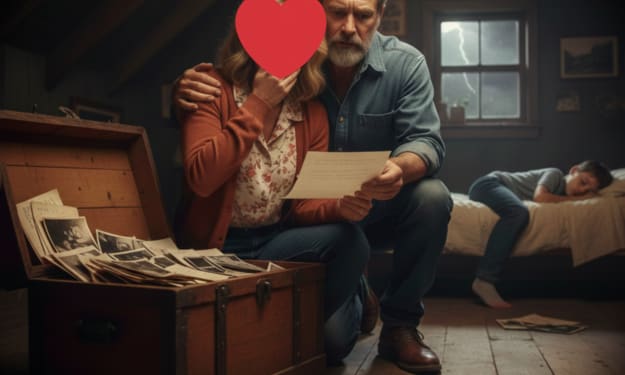
My Mother-In-Law’s Last Words Unlocked a Secret That Changed My Marriage Forever The Silence and the Last Breath Grief has a specific kind of quietness. It’s not just the absence of noise; it’s a heavy, insulating silence that wraps around a room, making even a whisper feel like a shout. That was the atmosphere in the hospital room the night Amelia, my mother-in-law, passed away. She had been battling a relentless illness for nearly a year, and we all knew this was the end. My husband, David, held her hand, his face a mask of controlled devastation. I stood beside him, trying to be the steady rock she had always been to me.
By The Insight Ledger 11 months ago in Confessions
My Best Friend Vanished for 12 Years — Then Returned With a Story No One Believed
Twelve years is a long time to carry silence inside your chest. Long enough for memories to blur, long enough for hope to become a habit instead of a belief. That’s what happened to me after Ahmed—my best friend since childhood—vanished without a trace one warm summer afternoon. I remember the day clearly, even now. We were fifteen, barefoot, running down the dusty path behind our old neighborhood like two kids with nothing to fear. Ahmed had that grin—half mischief, half brilliance—as if he could already see some secret future no one else could. Then evening came, the sky dimmed, and he simply never came home. The police filed reports. Families whispered theories. Some said he’d been kidnapped. Others claimed he’d run away. A few darker rumors floated in the air like poisoned dust. But no body was found, no clue uncovered, and slowly, as the years folded over each other, people moved on. I didn’t. I kept imagining him somewhere out there—alive, scared, trapped, hidden—waiting for someone to find him. But life pushes forward, whether you want it to or not. I grew up, graduated, lost people, gained people, learned how to pretend that old wounds weren’t still bleeding. His name remained a quiet ache in the back of my mind. Then, twelve years later, he walked through my door. It was late evening. I had just returned home from work, hands full of groceries, when I heard three gentle knocks—too soft to be a stranger, too familiar to be ignored. I opened the door expecting a neighbor. Instead, I saw a man I didn’t recognize at first. He had a thin frame, sunken cheeks, and eyes that had seen too much darkness. His hair was longer, his beard uneven, but something about the way he stood—the tilt of his shoulders, the hesitation in his gaze—pulled a thread inside me that I thought time had broken. “Do you know who I am?” he asked. The voice did it. A little deeper, a little cracked, but still him. The grocery bag fell out of my hands. “Ahmed?” He nodded once. No tears. No explanation. Just a quiet, exhausted “…I’m back.” For the first time in years, my brain couldn’t decide whether to scream, laugh, or collapse. I pulled him inside, sat him down, offered him water, food, anything. He barely touched it. His hands shook. Not from weakness, but from memory. “I know what everyone thinks,” he said, staring at the glass of water as if it held the answers. “But I didn’t run away. And I wasn’t kidnapped… not the way people imagine.” “What do you mean?” I asked. He took a long breath, the kind that tastes like old fear. “I wasn’t here,” he said. “Not in this… world.” I waited for a joke. A smile. Some sign he was messing with me. But his expression stayed painfully serious. “What are you talking about?” “Listen,” he said. “And believe whatever you can.” He told me his story in pieces, like broken glass being gently returned to its original shape. He said he remembered walking home that day—same afternoon we were playing—and then hearing something strange. A sort of humming, a vibration on the ground. Then a light. Too bright to be natural. Too silent to be normal. The next thing he remembered, he was somewhere he didn’t recognize. A place that looked like our world but wasn’t ours. Same sky, but wrong colors. Same trees, but taller, sharper, almost geometric in structure. The people—if they were people—moved strangely, spoke in sounds that felt like language but didn’t shape into words. He said he lived there—survived there—for years. Time worked differently. Some months felt like hours. Some days felt like entire seasons. He never saw a sun, yet there was always light. Never slept properly, yet never felt tired enough to collapse. When he asked how he returned, he looked at me with an expression I cannot forget. “I don’t know,” he whispered. “I just woke up in an abandoned field outside the city three days ago. Wearing the same clothes I went missing in. Not a scratch on me. Like twelve years didn’t pass for my body… but they did in my mind.” I didn’t know what to say. What do you tell someone who claims they spent twelve years in a world that shouldn’t exist? I believed him—but not because his story made sense. I believed him because of the pain in his voice, the emptiness in his eyes, and the haunting way he said my name. Trauma has many shapes. His felt real. When his family saw him again, they cried, hugged him, clung to him. But when he told them the truth—the version he had told me—they stepped back. His mother insisted he was confused. His father said stress was making him imagine things. The police asked routine questions, wrote reports, and dismissed the “other world” part entirely. Only I listened. Only I believed he believed it. Weeks passed. Ahmed stayed with me, trying to adjust to life that no longer felt like his. He couldn’t stand loud noises. He avoided bright lights. He flinched at shadows in ways that made me wonder what had followed him home—memory or something else. The real punch came when he showed me something he had brought back. I expected an object—a stone, a plant, anything physical. Instead, he showed me a scar. Not a natural scar. Not a wound. A symbol. Carved—not painfully, he insisted—into the skin of his forearm. It glowed faintly under darkness. Not like neon. Not like fire. More like heat without warmth. I touched it once. For a moment, the room vibrated. Or maybe I imagined it. But Ahmed’s face told me he felt it too. Since that day, I’ve wondered about everything. About reality, time, places that might exist between places, and how thin the walls of our world might be. People say he’s traumatized. They say he invented a fantasy to cope with twelve missing years. But some nights, when the house is quiet and the lights are low, that symbol on his arm glows on its own. Softly. Like a warning. Or a memory. Ahmed insists he doesn’t know if “they” will come back. He doesn't know if they ever meant to send him home… or if his return was a mistake. I don’t know what to believe. But I know this— My best friend disappeared for twelve years. He returned with a story that logic rejects… and a mark no doctor can explain. And sometimes, late at night, I feel the floor hum beneath my feet—just like he described. Some disappearances come home. Some never really leave.
By The Insight Ledger 11 months ago in Confessions
My Wife’s Accident Wasn’t an Accident
Grief makes time lose its shape. Days feel like one long blur, and nights stretch until they feel endless. After my wife’s accident, I lived in that fog — half awake, half ruined, trying to convince myself that life would make sense again someday. Everyone told me the same thing. “It was an accident.” “She was unlucky.” “It was nobody’s fault.” And for a while, I believed them. I wanted to believe them, because believing anything else meant opening a door I wasn’t ready to open. But the truth has a strange habit. It doesn’t knock. It waits. Then it steps forward when you least expect it. My wife, Alina, was the kind of person who never moved through the world quietly. She lit up rooms, interrupted silences, and had a way of pulling people out of their shells. Losing someone like her is not just losing a person — it’s losing the color from your life. The night she died, I was told it happened fast. A car, a blind turn, a rainy road. Standard tragedy. But three months later, something small cracked the story open. A box. A plain cardboard box left on our doorstep with no name, no address, no return label. Inside it was a single object — my wife’s phone, the one the police told me was “too damaged to recover.” Except it wasn’t damaged at all. It was perfectly intact, fully functional, and turned off. My hands shook as I powered it on. The moment the screen lit up, it buzzed — a cluster of missed calls and messages from the night she died. All of them came from the same contact: “Don’t Let Him Find Out.” No name. Just that. The messages themselves were worse. “He knows.” “Don’t go home.” “I’m on my way. Stay where you are.” The timestamps were within minutes of the accident. Every hair on my body rose at once. I didn’t understand any of it yet — only that someone, somewhere, knew something the official report didn’t mention. I went straight to her best friend, Sana. She looked at the phone and froze as if she’d seen a ghost. “Where did you get this?” she whispered. I told her. She didn’t believe me. “No one was supposed to see these.” That one sentence felt like someone pushed ice into my chest. I asked her who the messages were from. She said she didn’t know. Her voice trembled enough to prove she was lying. Over the next few days, Sana avoided me. So did my brother-in-law. So did three of Alina’s coworkers. Everyone close to her suddenly had a reason not to talk about that night. That’s when fear changed shape. It wasn’t fear of the accident anymore — it was fear of the meaning behind it. Something was being kept from me. Carefully. Intentionally. My next step was the hospital. I asked for the surveillance footage around the ER entrance that night. The receptionist hesitated but eventually agreed. In the video, an ambulance arrives. Paramedics rush Alina inside. But a few seconds later, another figure steps out of the ambulance. A man. He wasn’t wearing a uniform. He wasn’t staff. He looked around nervously, pulled up his hood, and left almost immediately. My heart hammered against my ribs. Alina wasn’t alone when she was brought in. Someone had been with her. Someone the hospital never mentioned. I paused the footage again and again, looking at his face. He stayed just long enough for the camera to catch the shape of his jaw, the angle of his shoulders. He looked familiar. Too familiar. But my mind refused to believe it. I took the footage to my wife’s brother. When he saw it, his face drained of color. “You need to stop,” he said quietly. “Let this go.” I pressed him harder than I ever had. Finally, with tears in his eyes, he gave in. “She wasn’t supposed to be on that road,” he said. “She was going to meet someone. Someone who called her that night.” I asked him who. For a long moment he didn’t speak. Then he said the last thing I ever expected to hear. “She was coming to meet you.” My stomach flipped. “That’s impossible,” I said. “I didn’t call her.” He shook his head. “You didn’t. But someone using your name did.” It felt like the floor fell away under me. That stranger in the video… That familiar face… The warnings on her phone… The silence from everyone around me… Everything pointed to one terrifying possibility — someone had impersonated me, lured her out, and made sure I never knew the real reason she was on that road. I went home and opened her phone again. This time, I checked the deleted call logs. One entry had been wiped clean — but the digital footprint remained. A number disguised under my contact. A fake version of me. The final message she received moments before the crash was short: “Come alone. No one can know.” My hands went numb. My wife wasn’t running from danger — she was running toward what she thought was me. She had trusted the voice she believed belonged to her husband. And someone used that trust to lead her into darkness. I don’t know who the man in the hospital video was. I don’t know who left the phone on my doorstep. I don’t know why the people closest to her stayed silent. Maybe they were afraid. Maybe they were protecting me. Or maybe they knew the truth was something no one should carry. But I do know one thing now — my wife’s accident wasn’t an accident. It was a message. And whoever sent it is still out there, waiting for me to understand what the message really means.
By The Insight Ledger 11 months ago in Confessions
The Phone Call I Was Never Supposed to Hear
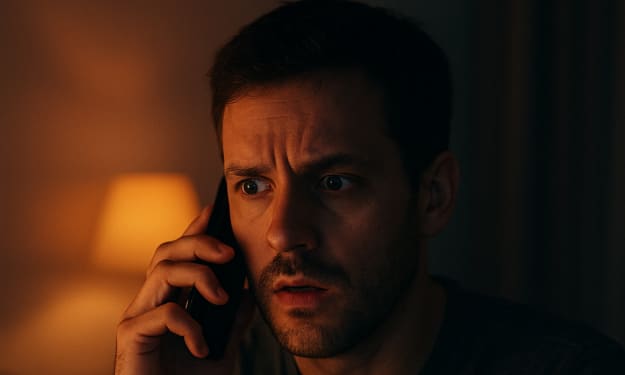
Some stories don’t begin with dramatic thunder or flashing danger. Some start quietly—like a phone ringing at a time it shouldn’t. Mine began on an ordinary Thursday night, with my wife asleep next to me and my phone vibrating against the nightstand. I wasn’t even supposed to hear it. If I hadn’t gotten up for a glass of water, if I hadn’t grabbed my phone to check the time, if I hadn’t accidentally swiped the screen instead of tapping it, I would’ve never heard the voice that changed everything. Life has a cruel sense of timing like that. When the call opened, I didn’t even know it was active. The screen was dark, the room silent. And then I heard a voice—low, unfamiliar, and too close. A man’s voice. He said my wife’s name. Slowly. Intimately. As if he had said it a thousand times before. I froze. I remember the exact way his tone shifted from confident to concerned. “Are you listening? … Hello?” I ended the call so fast the phone nearly slipped from my hand. My heart hammered against my ribs. I stared at the screen praying it was a glitch, a wrong number, a dream. Anything but what it sounded like. Before I could think, a message appeared. “Call me back when he’s asleep.” The room suddenly felt too small. Too dark. Too dangerous. My wife turned slightly in her sleep, a soft breath escaping her lips. She had no idea I was standing three feet away from her, shaking, staring at a message that could tear a marriage apart. I didn’t reply. I didn’t sleep. I sat in the living room with the phone on the table, staring at it like it might explode. Every minute felt like an hour. Every thought felt like poison. I tried to convince myself it was a mistake. A wrong number. A misunderstanding. But inside, something colder whispered: You already know the truth. At 7 a.m., when she woke up, she smiled at me like every morning—soft, warm, trusting. I couldn’t even form a full smile back. The message felt like a stain between us. As she made breakfast, her phone buzzed on the counter. Normally, I never touched it. Never even looked. But that day wasn’t normal. A new message popped up: Same name. Same number. Same man. My stomach twisted. I didn’t open it. I didn’t need to. The truth was already cracking through the surface. She saw me looking. Just for a second. And that one second changed her expression—like a cloud crossing the sun. A tiny flicker of fear. I had known her for ten years and had never seen that expression before. She grabbed the phone too quickly. “You okay?” she asked. I lied. “Yeah.” We ate in silence. For two days, I carried the secret like a burning coal in my chest. I watched her laugh, talk, move around the house like nothing was wrong. She even kissed me goodnight. I felt like a stranger living beside someone who had become a mystery overnight. But secrets don’t sit quietly. They scratch. They claw. They demand attention. On the third night, curiosity twisted into anger, and anger twisted into something worse: resolve. If she wasn’t going to tell me the truth, I would find it myself. She slept early. The room was dim. Her breathing was slow and steady. And when her phone lit up with another notification, I reached for it. My hands shook. There is something terrifying about crossing a boundary you never imagined crossing. But I crossed it anyway. I opened the message. “He doesn’t know anything. Don’t panic.” My chest tightened. Another message arrived a minute later. “You’re still coming tomorrow, right?” That was it. The quiet broke. My pulse roared in my ears. The room felt wrong. The air felt heavy. I placed her phone back and walked straight out of the bedroom before I said something irreversible. I sat in the living room again—just like the first night—and waited for morning. Maybe I wanted answers. Maybe I wanted courage. Maybe I wanted the truth to hurt less when it arrived. It didn’t. When she walked out for breakfast, I didn’t let her pretend. I didn’t pretend either. “We need to talk,” I said. Her face drained of color. For the first time in years, she looked at me like a stranger—trying to guess what I knew. She didn’t deny it. She didn’t lie. She just broke. The story that spilled out of her wasn’t the one I expected. It wasn’t an affair. It wasn’t romance. It wasn’t even emotional betrayal. It was fear. Real fear. She told me the calls were from a man who had been blackmailing her for weeks—someone who had stolen old pictures of her from before we met. Pictures she never intended anyone to see. Pictures from a past she had buried because it filled her with shame. She paid him once. He demanded more. She tried ignoring him. He threatened her. She panicked. She hid it from me because she felt guilty… and because she thought I’d see her differently. I didn’t believe her immediately. Trust doesn’t heal in a single conversation. But I looked at the messages again, the wording, the timing, the tone. Something about it aligned with fear more than romance. So I did the one thing grief, anger, and suspicion had blinded me to: I listened. I asked for the full story. By the time she finished, she wasn’t crying anymore. She just looked exhausted—as if carrying the secret had drained every last drop of strength from her. We contacted the police. Collected the messages. Reported the number. They confirmed similar cases. Same tactics. Same pressure. Same psychological traps. In the end, the truth wasn’t beautiful. It wasn’t clean. It wasn’t even easy to forgive. But it was real. And sometimes the truth—even a painful one—is better than the lies we imagine in its place. Today, the number doesn’t call anymore. The man doesn’t message. The threat is gone. But that night—the accidental call, the voice, the message that was never meant for my ears—that moment still lives in my memory like a blade with two edges. One edge cut me open. The other saved us both.
By AngelFace11 months ago in Confessions