Family
The Things I Never Said Out Loud — Until Now
I don’t remember the first time I stayed quiet when I wanted to speak. Maybe it was at five years old when I heard my parents fight through the wall, and I sat in bed with my hands over my ears, wondering if it was my fault.
By nawab sagarabout a year ago in Confessions
I Forgot His Voice. And Then One Night, I Heard It Again.
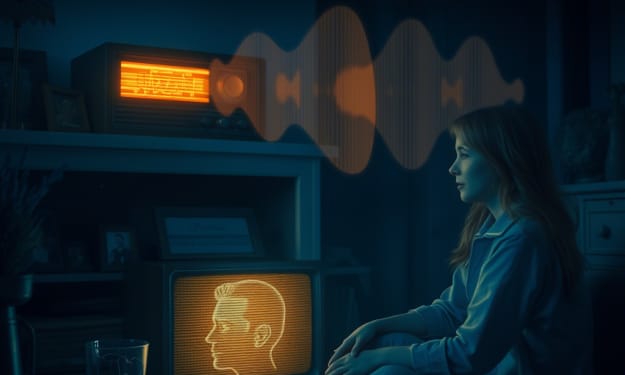
I used to think the sound of someone’s voice could never leave you. That even after death, it would echo somewhere in the back of your mind—gentle, stubborn, familiar. I thought memory was enough to preserve it. But I was wrong. My father died five years ago. Car accident. No warning, no final words. Just a knock at the door on a rainy Tuesday night and two police officers with faces that told me everything before they even spoke. At first, I clung to everything. His shirts still smelled like the cologne he used, so I’d wear them around the house. I kept the last voicemail he left me on repeat. He’d called to say he was proud of me. Nothing important, just a passing compliment after I got a small promotion at work. But his voice was steady, deep, warm—the kind of sound that made the world feel less chaotic. Over time, life happened. Grief softened into numbness. I moved apartments. My phone updated and erased old voicemails. I stopped noticing when I stopped thinking about him daily. I started forgetting small things—his favorite sandwich, the way he whistled while folding laundry, the way he cleared his throat before speaking when he was about to give advice. And then, one day, I realized I couldn’t remember his voice at all. I tried everything to bring it back. I asked relatives if they had videos. I even paid a sound technician to enhance a grainy family recording from Christmas ten years ago, but all I heard was static and laughter. I was angry. Angry at time. Angry at myself for forgetting. And angry at him for leaving me with silence. Months went by. I kept living, kept pretending that I was fine. That the silence didn’t bother me. Until one night. It was late—well past midnight. The kind of quiet where even the city seemed to hold its breath. I couldn’t sleep. Something felt off. I got out of bed, walked barefoot to the kitchen for a glass of water. As I passed the living room, I noticed the old radio. It wasn’t plugged in. It hadn’t worked in years. It belonged to my dad—one of those vintage sets from the '60s he loved. I kept it more as decoration than anything. But it was on. Soft static buzzed from its speaker, and then—clear as day—I heard it. His voice. "Hey, bug." My nickname. The one he always used. My knees went weak. I dropped the glass. Water spilled across the floor, but I didn’t care. I just stood there, shaking, as the sound continued. “Don’t forget to check the oil in your car. It’s overdue, I know you.” I sank to the floor. Tears streaming down my face. It wasn’t a recording I’d ever heard before. It was him. Talking like he always did, with a knowing smirk in his voice. “I saw you at your desk today,” he said. “You were frowning again. Try not to carry the whole world, okay? Let some of it go.” The voice faded. Static returned. And then—nothing. I didn’t sleep that night. The next morning, I checked the car. The oil was low. I was overdue. No one believed me, of course. My friends chalked it up to grief and insomnia. My therapist suggested it was a powerful hallucination—my subconscious finally giving me the closure I needed. Maybe they’re right. But I know what I heard. Since then, I’ve started talking to him again. Out loud, like he’s sitting in the room. I tell him about my day. I ask his opinion. I even catch myself laughing at things I know he would’ve found ridiculous. The voice didn’t come back. Not like that. Not through radios or dreams. But I remember it now. Not just the words, but the feeling. He’s not gone. Not really. Sometimes, memory doesn’t whisper. Sometimes, it waits. Waits for the right moment. The quiet night. The empty house. The broken radio. And then, when your heart is just soft enough to listen—it speaks.
By Azmat Roman ✨about a year ago in Confessions
Whispers from the Grave: My Mother-in-Law's Final Words Changed Everything
I never expected her to speak again. My mother-in-law, Gloria, had been battling cancer for months. The once-vibrant woman who had ruled her home with elegance and a touch of tyranny was now frail, ghostly pale, and tethered to machines in a hospice bed. Her eyes, once sharp and calculating, now fluttered open with a softness I had never seen. I didn’t love her. That sounds cruel, I know, but honesty has become my closest companion since that day. She never fully accepted me. To her, I wasn’t “wife material” for her only son, Adam. Too artistic. Too emotional. Too... unpredictable. She was a woman of order and tradition. I was a painter who once dyed my hair blue and forgot anniversaries. Oil and water, everyone said. Still, I was there in her final hours, not out of duty, but for Adam. He had stepped out to speak with the doctor when she suddenly gripped my hand. Her eyes met mine. Clear. Intentional. "Check the blue box," she whispered. Her voice was cracked like old glass. "In the attic. Behind the water heater." I leaned closer, unsure I heard right. "Blue box. Adam... he needs to know. You need to know." Then, her hand went limp. She was gone. --- Grief has a strange way of dulling urgency. It wasn't until after the funeral, after the guests had gone and the casseroles had cooled in our freezer, that her words came back to me. I didn’t tell Adam right away. Maybe part of me wanted a secret of my own. Or maybe I was afraid of what I might find. I climbed into the attic one rainy morning. The air was thick with dust and insulation. I shoved aside old luggage and plastic bins until I saw it: a weathered blue metal box, hidden exactly where she'd said. It was locked. Frustrated and trembling, I pried it open with a screwdriver. Inside, I found a stack of letters, a small velvet pouch, and a photograph that made my blood run cold. Adam... with another woman. Her face was angled, but familiar. She looked like me. No. Not like me—like us. And in the corner of the photo stood a girl, maybe eight or nine, with Adam’s smile. My hands shook as I opened the letters. The first was dated 10 years ago. The handwriting was Gloria’s. > “You promised you would tell her. Keeping this from your wife is not protecting her—it’s condemning her to love a half-truth.” More letters followed—pleas from Gloria to Adam. Begging him to come clean about “her.” About the daughter. I couldn’t read them all at once. I sobbed. I screamed. I felt the betrayal rise in my throat like bile. He had a child. With someone else. Before me, yes—but he never told me. And Gloria knew. All these years, she had hated me not just because I was different—but because I was unknowingly standing in the place of another woman. A woman who had borne his child. When I finally confronted Adam, he didn’t deny it. “She died in a car accident,” he said, eyes swollen. “Before we met. I was going to tell you. I just… didn’t know how. And Mom—she made me swear to raise Lily privately, with her help. That’s why we sent money. Why she always avoided trips.” “Lily?” I repeated. “Where is she?” “In Oregon. With her aunt. She’s fifteen now.” The shock turned to numbness. Then to anger. Then to something else—grief, perhaps—for a family I never knew I had. For a girl who could’ve been part of our lives. “You lied to me every day,” I said, voice flat. “I know,” he whispered. “And I’ve hated myself for it every day. But you deserved the truth. She was right to tell you.” That night, I couldn’t sleep. I wandered the house and stopped at our wedding photo. Smiling faces. A hollow truth beneath. But Gloria’s words echoed in my mind—not just a confession, but a gift. She could’ve died with the secret. Instead, she gave me the choice she once took from me: to decide, fully informed, whether to stay or walk away. --- It’s been six months. Lily came to visit us last month. She has her mother’s eyes and Adam’s wit. We talk often now. Slowly, painfully, our marriage is rebuilding. Honesty is our daily vow. Sometimes, the truth shatters the life you thought you had. But sometimes—just sometimes—it builds a stronger one from the ruins. Gloria was many things, but in her final moment, she gave me the one thing I never expected: clarity. And with that, the strength to begin again.
By Azmat Roman ✨about a year ago in Confessions
Lost Love Found: A Beautiful Second Chance Romance
Chapter 1: The Day Everything Changed Sophie and Daniel met when they were sixteen. They were neighbors who became best friends, sharing secrets, dreams, and first love. Everyone in town knew they were perfect for each other. They walked to school together, spent summers by the lake, and talked for hours under the stars.
By Waqar Khanabout a year ago in Confessions
Voices from Gaza: Life in a War Zone
Voices from Gaza: Life in a War Zone The sound of drones overhead has become as familiar as the call to prayer in Gaza. For many who live there, especially children, war is not an occasional event — it is a background noise, an uninvited guest in every home, every conversation, every dream. Behind every statistic, every news headline, there is a human being. A child who didn’t sleep. A mother who buried her son. A student who writes poetry by candlelight because the electricity is out again. These are the voices from Gaza — voices that demand to be heard not as numbers, but as people.
By Nazim Aliabout a year ago in Confessions
Some Days I Pretend He’s Just at a Friend’s House
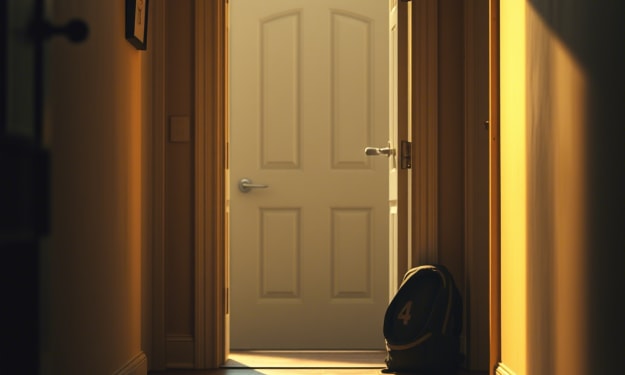
It’s been 431 days since I last saw my son. But some days, I pretend he’s just at a friend’s house. I imagine his laughter echoing in someone else’s living room, his sneakers kicked off by the door, his phone left charging on the kitchen counter. I tell myself he’s staying up late playing video games, eating pizza rolls straight from the oven, yelling strategies over a headset. I picture him rolling his eyes when I call to check in. “Mom, I’m fine,” he would say, dragging out the word with teenage disdain, “I’m just at Jason’s.” That lie—that beautiful lie—has become my survival. Because the truth is too cruel. Ethan was fourteen. One month from his fifteenth birthday. It was a rainy Thursday when the accident happened. One second he was pedaling his bike down Oakwood Street, late for soccer practice, and the next—just gone. The car, the driver, the silence. The kind of tragedy you read about but never expect to live through. I don’t remember the scream that escaped me when the officers told me. I only remember the silence afterward, how it pressed in on my ears, thick and choking like smoke. How the walls of our home, once loud with music and arguments and jokes, became graveyards of sound. His room is still the same. Blue walls. Posters of Messi and Marvel superheroes. A pile of laundry I never got to scold him for. I sit on the edge of his bed some nights and talk to the emptiness, telling him things like, “Don’t forget your jacket,” or, “I made your favorite pasta.” And when my voice breaks in the middle of a sentence, I pretend it’s because he interrupted me—just out of frame. I know what people think. I see it in their eyes when they visit. They tiptoe around his name like it’s a curse, afraid I’ll shatter if they say it too loudly. They ask if I’ve considered therapy. If I’ve “moved on.” As if grief has an expiration date. As if you can pack away a child’s memory into cardboard boxes and tuck them into a closet labeled PAST. But grief doesn’t ask permission. It takes up space. It sleeps in your bed, eats your meals, and whispers in your ear at night. It holds your hand when you’re alone and punches you in the chest when you hear a song he used to hum absentmindedly. Still, I manage. I go to work. I smile when I have to. I send Christmas cards with one less name. I’ve learned how to live around the missing piece—how to speak without crying, how to laugh without guilt. But some days, I fall apart. And on those days, I pretend he’s just at a friend’s house. It’s the little things that trick me—a jacket slung over a chair, a soccer ball in the garage, the way sunlight hits the corner of the hallway where he used to drop his backpack. I’ll find myself calling out, “Ethan, did you feed the dog?” before remembering that the dog passed away six months after him, as if it too couldn’t bear the weight of the silence. I’ve stopped correcting myself. Letting the illusion play out feels kinder than dragging my heart through the truth every hour. And maybe that’s okay. Maybe healing isn’t always about accepting loss. Maybe it’s about learning to love in the present tense, even when the person you love exists only in memory. Maybe it’s okay to pretend, as long as the pretending helps you breathe. Last week, I baked his favorite cookies. The house smelled like vanilla and cinnamon, like school bake sales and rainy afternoons. I set a few aside on a plate and placed them on the kitchen counter like I used to. For a moment, I imagined him bounding down the stairs, hair a mess, mouth open in a grin, grabbing two before I could say, “Just one!” And in that moment, the ache softened. The house didn’t feel so empty. Love has a long echo. It lingers in doorways, in the scent of old T-shirts, in the click of light switches. It survives, even when the person doesn’t. And so, I love him in the only way I can now—through memory, imagination, and the quiet lies I tell myself on hard days. Some days, I pretend he’s just at a friend’s house. And for a little while, I believe it.
By Azmat Roman ✨about a year ago in Confessions
People Think I’m Healing. I Just Got Better at Hiding It
I wake up before the sun rises. It’s quiet. Peaceful, almost. But inside me, it feels like a hurricane still roars, even after all this time. People say I look better now. They say it like it’s a compliment. “You seem so much happier lately.” “I’m glad to see you doing well again.” “You’ve really bounced back.” I nod. I smile. I thank them. But if they knew how much energy it takes just to pretend, they’d understand this isn’t healing—it’s hiding. And I’ve gotten really, really good at it. It started after I lost my brother. He was everything to me—my anchor, my mirror, my best friend. His death wasn't a slow, understandable decline. It was sudden. Violent. A car crash, and that was it. No goodbye. No closure. Just emptiness. In the beginning, people gave me space. They let me cry, fall apart, grieve loudly. It was acceptable. Expected, even. But grief has an expiration date in the eyes of the world. After a few months, people stopped asking how I was doing. And when they did ask, they wanted the short answer. So I started giving it to them. "I'm good, thanks for asking." "Yeah, taking it one day at a time." "Better now." Better now. What a lie. The truth is, I’ve mastered the art of existing while crumbling inside. I’ve learned to laugh at the right times, keep my posture straight, and reply to texts like nothing’s wrong. But it’s all a performance. A delicate balancing act where one wrong step might bring the whole thing crashing down. At work, I’m efficient, focused. I even got a promotion last month. My boss says I’m thriving. I suppose that’s what it looks like from the outside—emails answered, meetings led, deadlines met. But what she doesn’t see is me staying late just so I don’t have to go home. Or me crying silently in the restroom because a playlist shuffled into a song that reminds me of him. Socially, I’ve rebuilt. Sort of. I go to dinners, post pictures, laugh at jokes. People like me again. They invite me places because I seem fun again. Normal. But they don’t see me come home and sit in the dark for hours. They don’t hear the silence that follows me everywhere, like a shadow I can’t outrun. Everyone thinks I’ve healed. And maybe it’s easier for them to believe that. Maybe it’s easier for me, too. Because the alternative? The truth? It’s ugly. It’s inconvenient. It makes people uncomfortable. Nobody wants to hear that someone still feels broken after all this time. They want inspiration, a comeback story. They want the phoenix rising from the ashes—not the bird still crawling through them, wings burned and useless. So I fake it. I fake it because I’m tired of seeing people flinch when I tell the truth. I fake it because I don’t want to be a burden. I fake it because somewhere along the way, pretending started to feel safer than being honest. But here’s the thing about hiding pain: it doesn’t make it disappear. It just festers in the dark corners of your soul. It grows roots in your chest and wraps around your heart like ivy. You learn to live with it, but it never stops hurting. Sometimes, late at night, I wonder if this is just who I am now—someone who can’t let go, who can’t move on. But other times, I realize something else: I’m not weak for feeling this way. I’m not broken because I still miss him. I’m just human. And maybe that’s the real truth behind the lie: I’m not healed. But I’m still here. Still breathing. Still trying. Still showing up. And maybe, for now, that’s enough.
By Azmat Roman ✨about a year ago in Confessions
I Found His Toy Under the Couch. I Sat There for Hours.
I Found His Toy Under the Couch. I Sat There for Hours. It was supposed to be a normal Sunday afternoon. The kind where laundry hums in the background, the scent of coffee lingers in the air, and the house feels almost too quiet—comfortably so. But then I knelt to fetch the remote I’d dropped, and my hand touched something small and familiar beneath the couch. It was the red dinosaur. Not just any dinosaur—his dinosaur. The one with a bite mark on the tail and a missing eye. The one that roared when you pressed its belly, though now the sound was faint and glitchy. I hadn’t seen it in months. Maybe a year. Maybe longer. Time does that. It folds in on itself when grief becomes part of your every breath. I didn’t mean to sit down, not really. But I did. Right there on the floor, legs crossed like I was eight again. I turned the toy over in my hands, tracing its plastic ridges, feeling every scratch, every chip in the paint, and every memory flood in like water through a broken dam. --- He had named the dinosaur “Chompy.” Not very original, but endearingly him. He’d carried it everywhere—to the park, to preschool, even to bed, despite my protests that it was too hard and would hurt his face. He never cared. Chompy was his buddy. His partner in crime. The one who helped him roar at imaginary monsters and pretend the kitchen was a jungle. I remember the day we bought it—he was three, and the toy aisle was a battlefield of indecision. But when he saw Chompy, he grabbed it with both arms like he’d found treasure. He didn't even glance at the others. "This one," he had said, face serious. “He’s mine.” And he was. --- When he got sick, Chompy came with us to every doctor appointment. Every hospital stay. Every night spent in sterile white rooms under too-bright lights and too-quiet hallways. When the nurses couldn’t get him to sleep, they brought warm blankets, but only Chompy worked. It was during those months I began to understand the cruel shape of time. How it stretches endlessly when you’re waiting for results, yet sprints past you when you want more of it. We tried everything—treatments, diets, prayers, even silence, which we somehow hoped would change fate. But it didn’t. He was five when the world dimmed. Five. Too young to understand why he was hurting. Old enough to know he wouldn’t be going home. --- The house hasn’t been the same since. I boxed up most of his toys, gave away clothes, rearranged furniture like somehow shifting the layout would make the emptiness feel different. But some things stayed untouched—like the red dinosaur, which I assumed had been packed away, lost, or maybe taken by some quiet mercy of time. But it was here. Just under the couch. Waiting. Like he had hidden it for me. As I sat on the floor, the light through the window shifted from gold to blue, casting long shadows across the carpet. The hum of the fridge was the only sound. I pressed Chompy’s belly and heard the weak mechanical roar—a scratchy echo of a little boy's laugh. That’s when I broke. Not the kind of sobbing that you can wipe away with a tissue and a shaky breath. The kind that twists in your chest, guttural and silent, because you’re afraid if you make a sound, the walls might collapse with you. I sat there for hours. Holding that toy like it could bring him back. Like maybe, if I closed my eyes hard enough, I’d hear tiny footsteps down the hall, or his voice asking for juice or for me to read the dinosaur book again. But there was only the ticking clock, and the ache in my chest, and the weight of something I didn’t know I had buried so deep. --- They say grief gets lighter. That’s not true. You just get stronger, or better at pretending you’re okay. You learn to carry it like a stone in your pocket—small, but always there. Today, that stone felt like a boulder again. All because of a toy under the couch. Funny how grief doesn’t always come with anniversaries or birthdays. Sometimes it comes with dust and silence, plastic teeth, and a missing eye. And when it does, all you can do is sit with it. And remember.
By Azmat Roman ✨about a year ago in Confessions
Grief Doesn’t Have a Timeline. It Has a Voice.
The morning after the funeral, Nora sat in her father’s favorite armchair, still wearing the black dress from the day before. The silence in the house was no longer peaceful—it was a living thing, brushing against her like a cold breeze every time she dared to move. He was gone. And yet, he wasn’t. It had been a sudden heart attack. No warning. No goodbyes. Just a phone call at 3:27 a.m. that shattered her world. Now, the house they had shared for three years—since her divorce, since her restart—felt haunted not by ghosts, but by absence. She kept hearing his voice. Not in a supernatural sense. No whispering from the corners of rooms, no flickering lights. But his voice lived in the kitchen, in the way he used to say, “You always overcook the eggs, kiddo,” when she made breakfast. It echoed when she passed the coat rack, where his navy parka still hung. It laughed in her mind every time she passed the hallway mirror, remembering how he used to quip, “There she is—spitting image of your mother, God help us.” Nora tried everything to dull the ache. She joined a support group. She read books on grief and healing. She even tried going back to work, putting on her “functioning adult” mask and responding to emails like nothing had happened. But grief wasn’t linear. It didn’t respect schedules. It didn’t care that it had been a month, or six, or a year. It came in waves. It ambushed her in grocery store aisles, when she passed the brand of tea he liked. It gripped her throat when she saw fathers walking with daughters in the park. It roared to life when she sat alone in the living room, where his voice used to fill the air like music. One rainy Thursday, nearly ten months after his death, Nora found herself rummaging through the attic. She had no reason to be up there—she’d gone looking for distraction and ended up among old Christmas decorations and dust-covered boxes labeled in her dad’s handwriting. She opened one. Inside was a tape recorder. Next to it, a few cassettes labeled in marker: “Nora – Age 5” “Nora’s Birthday – 9” “College Send-Off” “Random Ramblings – Don’t Judge, Kid” Her hands shook as she placed the first tape into the recorder. She had no idea he’d kept these. The click of the play button echoed in the attic’s stillness. Then came the sound of his voice. “Alright, alright—this thing on? Testing, testing. Okay! Nora just turned five today. She insists she’s a ‘big girl’ now, and I’m not ready for that.” A child’s laughter—her own, high-pitched and joyous—filled the tape, followed by the unmistakable cadence of her father making up a ridiculous bedtime story about dragons that only ate jellybeans. Nora laughed through the tears. And for the first time in months, the tears felt like rain falling on dry earth. Over the next week, she listened to every tape. Each one was a time capsule. A moment preserved. A voice that had never really left. She learned things about him—about herself—that she’d never known. In one tape, he spoke directly to her, a message he’d left the year she went to college. “If you ever find this, Nora,” he said, his voice softer now, “I want you to know something. Life gets heavy. Sometimes too heavy. And if I’m not there someday—and I mean that in every way—just remember, grief is love that’s got nowhere to go. But it still matters. You still matter. Let the grief speak. Let it say what it needs. Just don’t let it silence you.” She wept then. Not the silent, controlled tears she’d grown used to, but the raw, unfiltered kind that left her breathless and aching. And when she caught her breath, she whispered into the attic air: “I hear you, Dad.” That night, she began recording her own voice. At first, it felt strange. But slowly, she started telling stories—memories of him, of her, of the life they shared. She talked about the day he taught her to ride a bike, the way he snuck extra marshmallows into her cocoa, the time they got lost on a road trip and discovered the best diner they’d ever been to. And she talked about the pain. The anger. The guilt of moving forward. Eventually, Nora began to share her recordings on a small podcast titled “Echoes of Dad.” At first, only a handful of people listened. But within months, messages began pouring in—strangers thanking her for giving a voice to their own silent grief. Because grief doesn’t follow rules. It doesn’t check a calendar. It lingers, and it waits, and it speaks in memories and moments. It doesn’t have a timeline. But it has a voice. And when we give it space to speak, we find our own voices again, too.
By Azmat Roman ✨about a year ago in Confessions
When Autumn Brought You Back
Chapter 1: The First Goodbye The last time Emily saw Noah, the park was on fire with autumn colors. Leaves drifted down like golden rain, covering the paths they had walked together since they were fifteen. They were eighteen now, standing under the same oak tree where they’d first kissed. But this time, they were saying goodbye.
By Waqar Khanabout a year ago in Confessions
The Secret Addiction I Hid for Years
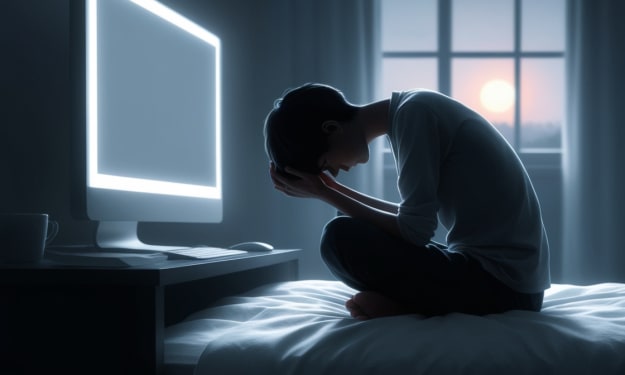
It’s strange how something can start small—harmless, even—and turn into a storm that quietly takes over your life. My secret addiction wasn’t to alcohol or drugs. There were no empty bottles rolling under the couch or strange white powders in the drawer. What I was addicted to hid behind a screen, behind silence, behind smiles I learned to fake with terrifying skill. For years, no one knew. That was part of the power it had over me.
By Muhammad Asimabout a year ago in Confessions
The Forgotten Letter . AI-Generated.
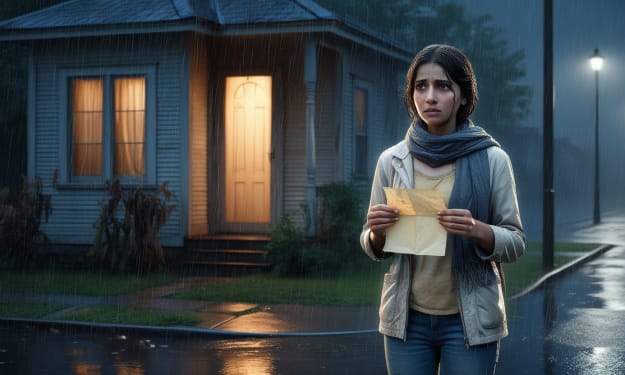
A faint knock echoed through the small apartment. Zara stirred from her thoughts, placing her half-finished cup of tea on the windowsill. Rain tapped steadily against the glass, matching the rhythm of her restless heart. It had been two weeks since she returned to Karachi after six long years in London. The city hadn't changed much—the same narrow streets, the smell of rain-soaked concrete, the familiar sounds of rickshaws and distant horns. But Zara had changed, and she wasn’t sure if the city—or her father—would accept that. A second knock came, firmer this time. She opened the door to find her old neighbor, Mrs. Khalid, standing in the dim hallway, holding a weathered envelope. “This came for you, beta,” the woman said with a faint smile. Her eyes lingered, curious but kind. Zara frowned, reaching for the envelope. It was yellowed with age, the corners soft and frayed. Her name was scrawled across the front in familiar, shaky handwriting. Her father’s. “Thank you,” she whispered, her voice dry with surprise. As the door closed, she stared at the envelope in her hands. She hadn’t seen or spoken to her father in years. Their last conversation echoed in her mind—the shouting, the slamming of doors, the bitterness that pushed her away. He had wanted her to stay, to follow the traditional path. Marriage, family, stability. But Zara wanted more—education, independence, the chance to see the world. She chased her dreams across continents… but left behind silence, regrets, and unanswered letters—until now. With trembling fingers, she opened the envelope. --- My Dearest Zara, I don’t know if this will reach you. I’m not even sure if you’ll want to open it. But I had to try. You know I’ve always been stubborn. Maybe I was wrong. Maybe I didn’t listen when I should have. I’ve seen your photos. Your aunt shows me everything. You looked so happy when you graduated… and when you got that job. I wish I had been there. I wish I had been proud out loud, not just quietly in my heart. The house feels empty now. Your mother’s garden is overgrown. Her favorite roses barely bloom. I’m not as strong as I once was, beta. I miss you. If you ever find your way back home… the door is open. No questions. No anger. Just me. Waiting. Love always, Baba --- Tears blurred the words as Zara pressed the letter to her chest. A thousand memories flooded her mind—the smell of her mother’s cooking, the sound of cricket matches on TV, her father’s quiet humming as he watered the plants. She had stayed away for too long. The silence between them, once thick with pride and pain, now felt fragile… breakable. The rain outside slowed to a drizzle. Grabbing her jacket and umbrella, she stepped out into the wet streets. Her father’s house was only ten minutes away—a short walk, but one that carried the weight of six years. The city felt alive despite the hour. Water pooled in the potholes, streetlights reflected off the pavement, and distant laughter floated from balconies. Every step pulled her closer to the memories—and the possibility of forgiveness. Finally, she reached the familiar gate. The small garden was untidy, plants drooping from neglect. But the house stood solid, weathered by time, stubborn like its owner. Before she could knock, the door creaked open. There he stood—older, frailer, his eyes wide with disbelief and hope. For a moment, neither of them spoke. “Zara?” His voice cracked. She nodded, fighting back tears. “I got your letter,” she whispered. A pause. Then, a smile—the same, soft smile that used to greet her after school. “Welcome home,” he whispered, opening the door wider. And with that, the years melted away. The past couldn’t be changed, but tonight, they had found their way back—one forgotten letter at a time. --- Call to Action: If this story touched your heart, please tap the ❤️, leave a comment, or share it with someone who needs a reminder: it's never too late to come home.
By FAZAL HAQabout a year ago in Confessions