Dating
The Illness That Changed My Perspective on Health and Happiness
Before I got sick, I thought I understood what it meant to live a healthy life. I exercised a few times a week, watched what I ate (more or less), and took pride in not missing a single workday in years. I measured health by physical energy and productivity. But that illusion shattered the day I was diagnosed with a chronic illness I never saw coming.
By Muhammad Jawadabout a year ago in Confessions
"An Unseen Journey of Emotions"
In a small town nestled between hills and lavender fields lived Ayaan, a gifted pianist who had lost his sight at the age of ten. Music became his world. With each keystroke, he painted emotions he could no longer see. His blindness sharpened his sensitivity, and he often said that while his eyes could not see beauty, his heart never missed it. Across town lived Meera, a painter with a quiet soul. Her life was filled with colors, but she had stopped painting portraits after a terrible heartbreak. She believed the eyes of a person carried too much truth, and truth had once shattered her. Instead, she painted landscapes, windows, the backs of people walking away. Their paths crossed at the town library during a charity event. Meera had volunteered to assist visually impaired visitors. When she offered to help Ayaan to the reading room, he smiled and said he preferred being led by voice. That first conversation was short but electric. Something about the way Ayaan listened made Meera speak more freely than she had in years. Something about Meera’s calm presence made Ayaan feel seen. Over the weeks, they kept meeting, sometimes at the library, sometimes in the park where Meera sketched. Ayaan would sit nearby, often playing a small keyboard he carried. He asked her to describe the sky, not with colors but with emotions. She would say it looked like waiting or sometimes hope. Ayaan would turn her words into music. In return, he asked her to paint what she imagined while listening. She began painting again, not with faces but with feelings. They grew close, connected not by looks but by the stories they created together. Ayaan never asked what Meera looked like. Meera never told him. He said her voice was enough. She said his silence between words spoke more than others’ declarations. One afternoon, Meera brought Ayaan to her studio. She had painted an entire wall based on his compositions. The canvas stretched endlessly, filled with swirls and chaos and peace. Ayaan ran his fingers over the textured paint. He stopped at one section and said it felt like falling in love. Meera turned away so he wouldn’t hear the tears in her breath. People in the town began to talk. Some admired their bond. Some whispered cruel things. How could love grow without eyes How could someone fall for someone they could not see But Ayaan and Meera remained untouched by judgment. Their love grew in spaces where sight had no place. One day Ayaan played a new piece for Meera. It was tender and incomplete. He said it was the beginning of a question. When she asked what question he smiled and said he would finish the melody when he found the answer. Meera hesitated. Her past had taught her not to trust beginnings. But Ayaan waited. He never rushed her. He said some songs took longer to find their rhythm. Months passed. Meera painted more freely than ever. Ayaan performed in cities but always came back to her. One day after a concert he returned with a small box. It held a pendant with a Braille inscription. It said found you. That evening Meera showed him a new painting. It was the first portrait she had painted in years. It was of him sitting at a piano with her beside him not looking at each other but clearly connected. He reached out touched the canvas and smiled. Then he sat at his piano and played the ending to his unfinished melody. It was soft rising and falling like a question finally answered. He said he loved her. Meera replied with a single word always. They never spoke of beauty. They never needed to. Their love lived in shared silences laughter dreams. It was not blind. It was simply free from appearances. Years later people would still talk about them. Some said it was a miracle. Others called it fate. But those who really listened knew the truth. Love had not needed eyes. It had only needed a voice a sound a feeling. And that had been more than enough.
By D A R Kabout a year ago in Confessions
How Losing My Job Helped Me Rebuild a Better Life
It’s strange how the worst moments in our lives can become the foundation for something better. At the time, it didn’t feel like a blessing in disguise—it felt like the world had collapsed beneath my feet. But looking back now, losing my job was the wake-up call I never knew I needed.
By Muhammad Jawadabout a year ago in Confessions
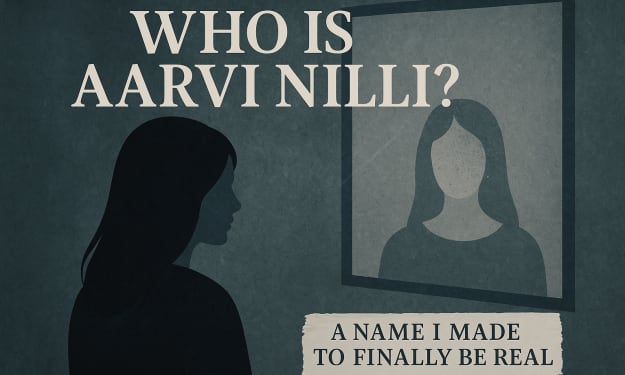
A Name I Borrowed To Be Myself
I am Aarvi. As you already read in the title, it's a fake name—a fake name I created to be myself. Because society and the people around me won't accept a girl who questions everything, who loves to raise her voice and say her thoughts out loud. If I try to be myself, all I get is criticism, disrespect, and becoming a joke. Why? I have been questioning all my life. People take a look at me and decide I am soft, innocent, and obedient. But no, I am not that. When people find out who I really am, all I can see is disappointment in them—looking down at me. So I learned to wear a mask, to look obedient and act kind when all I want to do is scream at them. I am scared that I will lose myself in the process of pleasing people. I want to raise my voice and say what I want one day. When I look in the mirror, I look weak to myself because no one is listening to what I want to say. My opinion doesn’t matter. I tried and learned in a very harsh way. Why is no one at least considering me? Am I that worthless? Am I wrong? Am I overthinking? I questioned myself constantly. But no, it’s not me who is wrong, worthless, or overthinking. It’s all the people around me who look at me and think I’m nothing. That’s why I created this fake name—to exist, really, at least in one place. This is Aarvi, who will appear in front of this world with her real voice, no filter, no sugarcoating. A version of myself where I don’t try to please someone. I’ll try, and I’ll find the people who will listen to my true voice and appreciate the real me as I am. Let me tell you a situation. Recently, I got a proposal from a man. He’s known me for a long time and confessed that he loves me. Said I’m a genuine, kind, beautiful girl. I immediately denied it, saying I’m not what you think. I am not kind all the time. I can be harsh. I state bold opinions. It’s not easy to be in a relationship with me because I hate it when people say what I have to do. I need a man who can stay when I am truly me. After saying everything, all I got from him was, “You’re overreacting.” He didn’t even acknowledge what I said. He carelessly ignored my words as if I was joking. Couldn’t he see the seriousness in my tone and eyes? That’s when I rejected him. And after all that, do you know what I had to hear from my own family? They said, “You rejected a man who is successful, who has money, over some cheap reasons. What, do you think you’re a queen? Can you find a man like him again?” But all I want is a man who will take my words seriously and listen to me with respect. I am not saying posting here won’t bring criticism or opinions about me. But it hurts less when it’s from someone I don’t know and who’s far away. Is it only me who is feeling like this? Are there people around this world who are constantly questioning themselves over others' opinions and constantly hiding—because they're scared of being judged, outcasted, or just trying to save their self-respect and sanity, or simply survive in a world that only wants to see you as what they thought you should be? I don’t know if this will reach anyone. But if it does, know this: Aarvi Nilli is not a mask. She’s the version of me who bleeds out loud.
By Aarvi nilliabout a year ago in Confessions
"Command the Crowd: How to Speak Confidently in Front of 1,000 People
Speaking in front of a large audience—1,000 people or more—is often considered one of the most intimidating challenges in public speaking. The sheer number of eyes watching you can send a jolt of nervous energy through even the most confident individuals. But with the right mindset, preparation, and delivery techniques, you can turn that fear into fuel and deliver a powerful performance that resonates with every person in the room. This article will guide you through the mental preparation, strategic planning, and delivery skills required to speak effectively and confidently in front of a large audience. --- 1. Reframe the Fear Fear of public speaking is natural—it's even got a name: glossophobia. The key is to reframe that fear as excitement. Physiologically, fear and excitement feel similar. Tell yourself: “I’m not nervous, I’m excited.” This simple mental trick can shift your mindset and boost your confidence. 2. Know Your Audience Before stepping on stage, understand who you’re speaking to. Are they professionals? Students? Entrepreneurs? Understanding their background, expectations, and interests allows you to tailor your message to their needs, making your speech more relatable and impactful. 3. Master Your Content You don’t need to memorize your entire speech word-for-word, but you should know your material inside and out. Structure your talk with a clear introduction, engaging body, and powerful conclusion. Use the “rule of three” for memorable points, and include real-life examples or anecdotes to add authenticity. 4. Craft a Powerful Opening You have less than 30 seconds to grab attention. Start with a bold statement, intriguing question, or compelling story. Avoid generic greetings. Hook your audience immediately so they’re eager to hear what comes next. 5. Use Body Language Wisely Your body speaks louder than your words. Maintain eye contact—not just with the front row, but scan the entire room. Use open gestures, stand tall, and move with purpose. Avoid pacing nervously or crossing your arms, which can signal discomfort. 6. Practice with Intention Don’t just read your speech—rehearse it aloud, on your feet, as if you’re already in front of 1,000 people. Practice in different environments. Record yourself. Pay attention to your tone, pace, and body language. Ask friends or mentors for feedback and fine-tune accordingly. 7. Leverage the Power of Pauses Silence is a powerful tool. Use pauses to emphasize key points, give your audience time to absorb your message, and to collect your own thoughts. It also makes you appear more confident and composed. 8. Engage, Don’t Just Present Make the experience interactive. Ask rhetorical questions, invite a show of hands, or share a relatable story that mirrors the audience's experience. The more they feel involved, the more they’ll remember. 9. Manage Your Voice Your voice should be varied—not monotone. Change your pitch, volume, and pace to match the energy of your message. Use vocal emphasis to highlight key phrases. Practice breathing deeply to maintain control and reduce vocal strain. 10. Use Visual Aids Thoughtfully Slides or visuals should complement your talk, not overwhelm it. Use large fonts, minimal text, and impactful images. Don’t read directly from your slides—talk about them instead. 11. Prepare for the Unexpected Tech glitches, tough questions, or an unresponsive crowd can throw you off. Prepare responses and develop composure. If a microphone fails, raise your voice. If someone interrupts, acknowledge them calmly and steer back on course. 12. Close with Impact End with a call to action, a memorable quote, or a thought-provoking idea. Make your closing words count—this is what people will remember most. 13. Get Feedback and Reflect After your speech, ask for feedback. What worked? What didn’t? Watch a recording if available. Every great speaker was once a beginner—improvement comes from self-awareness and consistent practice. --- Conclusion Speaking in front of 1,000 people isn’t about being perfect—it’s about being present, prepared, and passionate. When you connect with your audience, stay authentic, and deliver your message with conviction, you create a moment that people will remember long after the applause fades. Every great speaker once stood where you are now—unsure, nervous, and eager to improve. With time and effort, you too can command a crowd and deliver a speech that moves, motivates, and inspires.
By Fawad aliabout a year ago in Confessions
I Was the Wife Who Stayed Quiet — Until Silence Became My Strength
They always say marriage is about compromise, sacrifice, patience. I believed that. I lived it. I was the wife who made sure everything ran smoothly, who smiled in front of guests, who stood by her husband no matter what. Not because I was weak. But because I thought that’s what love was. He was charming when we married. Smart, successful, respected. I felt lucky. For a while, we were happy—or at least it seemed so. But slowly, the warmth began to fade. He wasn’t cruel. Not in the ways people usually expect. He didn’t yell or hit. But his absence, even when present, was deafening. He stopped seeing me. Stopped hearing me. Conversations became instructions. Eye contact became rare. I was the background noise in his life—the woman who managed the house, raised the kids, smiled at family functions, and never asked for anything. Except I did ask. I asked for time. For attention. For even the smallest sign that I still mattered. And each time, I got less. I noticed the late-night texts. The secretive calls. The change in the way he dressed. The way he looked at his phone, not at me. I wasn’t naive. I saw it all. But I said nothing. Not because I didn’t care. Because I wanted to hold my family together more than I wanted to hold my pride. So I stayed. I folded his clothes. I served his meals. I helped the kids with school. And every night, I lay awake wondering if silence would keep the walls from crumbling. But here’s what I learned: silence doesn’t protect you from pain. It just hides it. It delays it. It stretches it across years, until one day you wake up and realize you don’t recognize yourself anymore. That day came when my youngest daughter said, “Ammi, why are you always tired?” I didn’t have an answer. So I looked in the mirror. Not at the dark circles or the fading smile, but at the woman I had lost. The woman who once had dreams, opinions, a laugh that filled rooms. So I did something unexpected. I didn’t scream. I didn’t confront him. I didn’t pack my bags. I started healing. Quietly. I woke up an hour earlier every day and sat with a cup of tea—just for me. I picked up books again. I started journaling. I prayed, not just out of habit, but with intention. I started rebuilding myself in silence. He noticed. He asked, "Are you okay?" I looked at him and said, “I’m learning to be.” And that was true. For the first time in years, I was learning what it meant to exist outside someone else’s shadow. I didn’t need him to be less absent. I needed myself to be more present. Eventually, the silence between us became uncomfortable—for him. He asked more questions. Tried to reconnect. But I had changed. I was no longer the woman who would settle for crumbs of affection. I never shouted. I never begged. I simply stopped being invisible. To every woman who has swallowed her voice for the sake of peace—you are not weak. Your silence has meaning. But it doesn’t have to last forever. Sometimes, the strongest thing you can do is start showing up for yourself, even if no one else does. Strength doesn't always roar. Sometimes, it sits at the kitchen table at 6 a.m. in silence, sipping tea with steady hands. It shows up in soft resilience, in the quiet decision to reclaim your life. I stayed in the marriage, but I left the version of me that accepted being unseen. Now, I speak when I want to. I laugh without permission. I cry without shame. And when I look in the mirror, I see a woman who didn’t escape a storm. She became the calm within it. So no, I didn’t leave the house. I rebuilt myself inside it. And that, to me, is victory.
By Zia Udinabout a year ago in Confessions
His Mother’s Last Words Exposed the Husband I Never Really Knew
A Shocking Deathbed Confession That Unraveled a Decade of Lies I always thought I knew my husband. We were married for eleven years—more than a decade of shared coffee mugs, family dinners, and inside jokes. I thought we had something solid, built on trust and mutual understanding. That belief shattered the day his mother whispered her final words in my ear.
By MALIK Saadabout a year ago in Confessions
Fading Smiles
Maya Bennett had always believed in the good in people. Raised by a schoolteacher mother and a firefighter father, she'd been taught to treat everyone with kindness, assume positive intent, and believe that character spoke louder than charm. But as she entered her late twenties and began climbing the ranks in a competitive marketing firm in downtown Chicago, she started to realize the world wasn’t always as straightforward as she once believed.
By Gabriela Toneabout a year ago in Confessions
How Love and Mental Health Intersect Tips for Managing Relationship-Related Anxiety
Whether it's a romantic partnership, a marriage, or even a casual dating experience, the mental health challenges associated with love are real and should not be overlooked. It's essential to understand how romantic relationships impact our emotional well-being and how we can manage the anxiety that often accompanies these connections. In this article, we will explore the intricate relationship between love and mental health, offering tips on how to manage relationship-related anxiety, improve mental clarity, and build stronger, healthier connections.
By jessica turnerabout a year ago in Confessions
Was I Just A Phrase To You ?
One day you were my home; the next, you packed up and left. A few days ago, his mother called me faking her emotions that how she misses me. I realised that it was fake because she did not miss me for 2 months and all of a sudden she contacted me. There was this trap she prepared unknowingly for herself and her family, she told every single of her relatives about me being the future wife of her son. Recently, one of her relatives were staying at her house, they asked her about me and so, she called me to ask if I want to do a video call to show my face.
By Phoenixabout a year ago in Confessions
Why “Eco-Dating” Is Gaining Popularity Among Gen Z Singles. AI-Generated.
Eco-dating refers to forming romantic connections based on shared environmental values and sustainability practices. It’s more than just liking nature—it’s about prioritizing eco-conscious lifestyles in how couples meet, bond, and plan for the future. For many Gen Z singles, eco-dating isn’t a trend—it’s a non-negotiable. Whether it's choosing plant-based restaurants, swapping fast fashion for thrifted outfits, or biking to dates instead of driving, this form of dating signals alignment not just in chemistry but in ethics.
By Steve Waughabout a year ago in Confessions