Childhood
Raised by Warnings
I was raised with love—but also with warnings. Be careful. Don’t say that. Watch your tone. You’re going to make someone angry. Like invisible tripwires, the cautions lined the hallways of my childhood. They taught me how to be safe—but not how to be free. I didn’t grow up in a war zone, or a place ravaged by violence. My danger was quieter, subtler. It came wrapped in expectations and tension. My parents weren’t villains. They were human—shaped by their own generations of fear. But what I absorbed was the belief that the world was always just one wrong word away from collapse.
By M.SUDAIS about a year ago in Confessions
Revolution of Passive Earning
In a quiet suburban neighborhood, there lived a woman named Rachel Torres, whose life was as ordinary as any other 33-year-old. She had grown up in a modest home, one where hard work was not just encouraged but expected. After all, she was the first in her family to graduate with a master's degree in data science. Her parents had invested their hopes in her future, believing that the key to success lay in boardrooms and prestigious jobs. And for a while, Rachel believed that too.
By Aima Charleabout a year ago in Confessions
Not Every Home A Good Home
I left because she didn’t hear me. My mother and I — we always butted heads. Always. It wasn’t just small disagreements or little attitude moments; it was constant tension. No matter how much I tried, no matter how much I kept quiet or held in my feelings, it was like we could never meet in the middle. The frustration built up over time, until I felt like I was suffocating in the silence between us. No matter how hard I tried to make her understand, I always seemed to be the one at fault. No matter how much I bent, it was never enough.
By Keriaabout a year ago in Confessions
We're All Struggling- So Why Are You Judging Me?
Why let me make memories with you just for you to stop them now? I used to think help meant care. That when someone saw me drowning, they’d reach out because they wanted to see me okay. But now, I’m not so sure. Somewhere along the way, “help” started to come with strings attached — a favor you’d throw in my face later, or worse, something I had to earn by breaking myself down first.
By Keriaabout a year ago in Confessions
The Secret My Family Hid for 20 Years
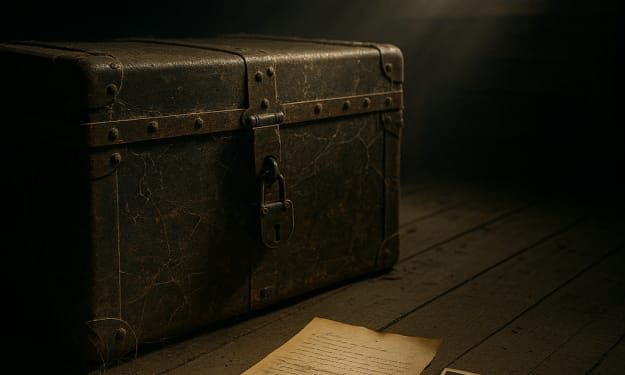
I was 8 years old when I first saw her. A girl in an old photograph, maybe seventeen, with my grandmother’s eyes and a crooked smile that looked eerily like mine. But I didn’t know her. She wasn’t in any family albums, and no one ever talked about her. So I asked. “Who’s this?” I held up the photo, expecting a name. A story. My mom went still. Not the kind of still you notice when someone’s thinking—but the frozen, haunted kind. She took the photo gently, stared at it for a beat too long, then said, “Nobody important.” And just like that, the picture disappeared. That’s when I learned: in my family, silence was sacred. But silence doesn’t bury secrets. It preserves them—like glass over a flame. I didn’t forget the girl in the photo. Over the years, I saw flashes of her again. A letter hidden in a book. A silver locket with a faded initial: E. Whispers in the hallway that stopped when I entered the room. The mystery festered. It wasn’t loud—it was worse. It lingered. When my grandmother died, I thought the answers died with her. Until we found the trunk. It was locked, shoved deep into the attic, covered in dust and time. My mother stared at it like it might explode. “Leave it,” she said sharply. “It’s just old junk.” But I’d seen that look before—twenty years ago, when I held up that photo. “I need to know,” I said. She didn’t stop me this time. Inside, I found heartbreak. Dozens of letters, bound by twine. Yellowed photographs. A diary with pages soft from tears. And there she was again—the girl from the picture. But now, she had a name. Elena. And a story. Elena was my grandmother’s first child. Born in secret when she was just 17, sent away to avoid “ruining the family’s name.” My grandmother was told to forget her. But she never did. Every year on Elena’s birthday, she wrote her a letter she never sent. She poured her guilt, her hope, her love onto those pages. One letter read: “If I could turn back time, I would have run with you. But I was too scared, and they were too powerful. I pray you know that I never stopped loving you.” I sat in that attic until sunrise, reading every word. My mother finally spoke. Her voice was barely a whisper. “I found the first letter when I was your age. I wanted to know more, but every time I tried, she shut down. It broke her to talk about Elena. So we all learned to live around the silence.” I shook my head. “But why didn’t anyone try to find her?” “We didn’t think we could. And maybe… part of us didn’t think we deserved to.” That answer wasn’t good enough. Not anymore. I made it my mission to find Elena. It took months. I hit dead ends, sealed records, wrong leads. But I kept digging. I couldn’t shake the image of that teenage girl with my eyes, waiting at a train station, a suitcase in hand, and no one coming for her. Until, one day, a breakthrough. She was living in Vermont. A retired librarian. Never married. No children. I wrote her a letter, carefully choosing every word. Two weeks later, my phone rang. Her voice was quiet. Guarded. “I don’t usually answer unknown numbers,” she said. “But something told me to pick this one up.” I told her who I was. What I’d found. That my grandmother had never forgotten her. There was silence on the other end. Then a sob. “I always wondered,” she whispered. “If she ever thought of me. If I was just… erased.” “You were never erased,” I said. “You were hidden. But never forgotten.” We met three weeks later. She wore blue, just like in the photograph. She cried when I handed her the letters. Said my grandmother’s handwriting looked just like her own. “She loved me,” Elena said. “All this time, I thought I was a secret no one wanted. But she… she wrote me poems.” Elena met my mother next. They cried for a long time without saying a word. We visited my grandmother’s grave together. Elena left a letter. “Now,” she said, “we can stop pretending I didn’t exist.” The secret that once sat like a stone in our family finally cracked open. And from it grew something unexpected—connection. Healing. Now, Elena writes me once a month. Not because she has to. Because she can. Some stories are buried for a reason. But some? Some are just waiting for someone brave enough to dig them up. The End
By Wilfredabout a year ago in Confessions
India-Pakistan Conflict Escalates
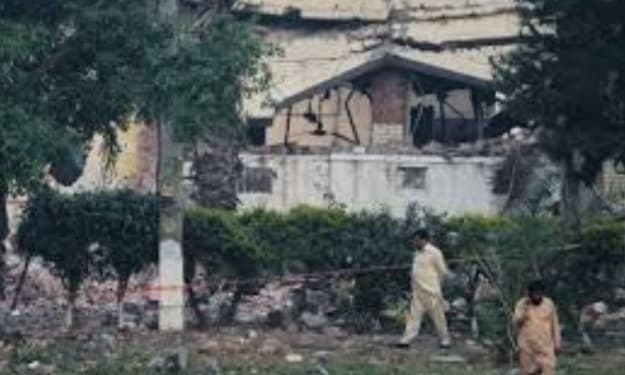
May 2025 Military Tensions Erupt After Kashmir Massacre On May 6, 2025, the fragile peace between two nuclear-armed neighbors—India and Pakistan—was shattered as India launched a series of missile strikes into Pakistani territory. This unprecedented escalation comes just two weeks after a deadly attack in Indian-administered Kashmir, which killed 26 Indian tourists. India has blamed the massacre on Pakistan-based militants, and these strikes appear to be a direct retaliation.
By gul malookabout a year ago in Confessions
The Tragic Tale of Nutty Putty Cave: A Story of Exploration and Survival
Nutty Putty Cave, located in the rugged wilderness of Utah, is a name that brings both wonder and sorrow to those who hear it. This underground maze of tunnels and passages, known for its narrow, winding pathways and stunning rock formations, has captivated adventurers and spelunkers for years. However, one fateful story has forever etched Nutty Putty Cave into the annals of tragic exploration—the story of John Jones, whose life was forever changed within the dark, twisting confines of the cave.
By Talkzillaabout a year ago in Confessions
The Silence That Spoke Louder Than Words: A Woman’s Strength in the Shadows
They say silence is weakness. That if you’re not loud, if you don’t demand, if you don’t shout back — you’ll be forgotten. I used to believe that, too. Until life taught me that sometimes, silence is not surrender. It’s strength. For years, I lived behind the scenes. Not because I lacked a voice — but because I chose to protect others with it. I believed in peace. In holding the family together, even when I was falling apart inside. On the outside, I had everything: a husband, children, a home. But behind those closed doors, I was alone. My husband wasn’t cruel in obvious ways. He never shouted, never hit. But his silence, his detachment, his disregard — that hurt in ways words never could. He stopped seeing me long before I realized I had disappeared. And yet, I stayed. I cooked his meals, raised our children, hosted his guests. I smiled when I wanted to scream. I stood quietly while others whispered about his "friendships." I heard the late-night calls, saw the change in him — and still, I endured. Not out of weakness. But because I thought love meant sacrifice. That family meant swallowing pain. That dignity meant silence. But silence is a strange thing. It can either break you — or build you. I didn’t fight. I didn’t accuse. I simply observed. Every night he came home later, every lie he wrapped in a smile — I saw it all. And I kept going. I made tea the next morning, helped the kids with homework, folded laundry — and somewhere in the middle of all that, I found a part of me I’d forgotten. The woman before the wife. The soul before the silence. And one day, my daughter said something that stayed with me. “Ammi, I don’t know how you do it. You carry everyone and never ask for anything.” I smiled. But inside, something shifted. I realized I wasn’t invisible. I wasn’t small. I wasn’t broken. I was strong. Not the kind of strength that roars — but the kind that endures. Quietly. Steadily. Powerfully. So I stopped begging. I stopped hoping. I stopped breaking myself into pieces to keep someone else whole. I didn’t leave — not because I couldn’t, but because I chose to find myself right where I had been lost. I started reading again. Started praying with focus. Started talking to myself with kindness. I didn’t need revenge. I didn’t need drama. I needed peace. And I found it. Not through him. But through me. He noticed. My silence, once convenient for him, became uncomfortable. He asked if I was okay. I smiled and said, “I’m learning to be.” That was the truth. I was healing. And he didn’t know what to do with a woman who no longer needed him to feel whole. I no longer waited for an apology. I stopped waiting for the love I had long deserved. Instead, I gave it to myself. And it changed everything. With each passing day, I stopped walking on eggshells. I took long walks by myself. I visited my parents more often. I picked up a hobby I'd long buried under diapers and deadlines. For the first time in years, I slept without waiting for the sound of the front door late at night. I started journaling. Every thought, every buried emotion, every suppressed scream — I poured it all onto paper. And slowly, the weight on my chest began to lift. Writing became my therapy. My outlet. My mirror. My children noticed the change too. The woman who had once tiptoed around the house now played music while cooking, laughed with them, told stories from her childhood. I became more than their caretaker. I became their role model. One evening, while we sat on the floor folding laundry together, my son looked up at me and said, "Ammi, you seem happy now." I paused. That word — happy. It had been missing from my vocabulary for so long. I had learned to survive. But now, I was learning to live. And the most powerful part? I did it without revenge, without confrontation, without hatred. I simply reclaimed myself. To every woman reading this — if you’ve ever felt unseen, unheard, unvalued — know this: you are not alone. Your worth does not diminish just because someone fails to see it. Your silence does not mean weakness. It can be your sanctuary. Your weapon. Your revolution. You don’t need to burn bridges to find light. Sometimes, the quiet act of choosing yourself is the loudest declaration of strength. So walk in silence if you must. But walk with purpose. Walk with pride. Walk knowing that even in your quietest moments, you are making the loudest impact. Let the world underestimate you. Let them mistake your grace for submission. Let them learn too late that the woman they overlooked was the pillar holding everything together. And when they finally look back, they will realize: The quietest woman in the room was the strongest all along.
By Zia Udinabout a year ago in Confessions
The Stranger on Platform Nine
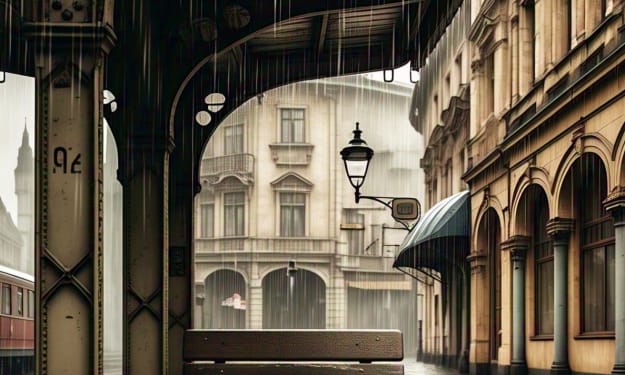
It was a rainy afternoon in Prague, and the train station buzzed with the usual chaos—loudspeakers echoing destinations, footsteps clattering on old tiles, and the scent of coffee blending with metal, rain, and the faint smell of diesel. I was on Platform Nine, backpack in hand, waiting for a train to Vienna.
By Sultan durani about a year ago in Confessions
I Failed, I Lost, I Learned: The Unexpected Lesson That Changed My Life
We don’t talk about failure enough. Not the filtered version with tidy lessons, but the raw, painful kind—the type that makes you question everything you believed about yourself. I didn’t expect to fall apart in my 30s, but life has a funny way of handing you the exact storm you need to rebuild. And that’s exactly what it did when I lost my job, my confidence, and temporarily, my sense of self. It started with an email. Just one. “We regret to inform you…” That cold, corporate tone shattered years of loyalty in an instant. I was let go—fired from the job I had given everything to. It wasn’t just work; it was my identity. I was the dependable one, the hard worker, the "first in, last out" kind of employee. So when it ended, it wasn’t just my paycheck I lost. I lost who I thought I was. At first, I tried to brush it off. “It’s just a rough patch,” I told myself. But the truth was harder to swallow. My routine vanished. My days became quiet, and that silence grew louder with every passing hour. I stopped waking up early. I stopped answering texts. I stopped showing up for myself. The Emotional Weight of Failure What I didn’t expect was how physical failure could feel. My chest felt heavy. I developed headaches and stopped sleeping. I kept replaying conversations in my head, trying to pinpoint where it all went wrong. And while friends offered support, their words felt distant. No one really understood how much I had tied my value to my work—until it was gone. Then came the practical side of things. Bills. Rent. Groceries. I began cutting costs, selling off things I once treasured. My favorite watch, a vintage camera, old vinyl records—all gone. With every sale, I felt like I was shedding layers of a life I once lived. But perhaps that was the point. I needed to strip down to see what was underneath. Rediscovering Myself in the Silence In the thick of it all, one night changed everything. I found an old notebook tucked behind a drawer. In it were notes from my early 20s—half-written poems, dreams of starting a blog, random photography ideas. I hadn’t seen it in years, but the moment I opened it, something stirred in me. That notebook reintroduced me to a version of myself I had forgotten. A person who was curious, creative, and hopeful. I started writing again—at first just journaling. Then stories. Then articles. I took long walks with my old DSLR, capturing the world like it was brand new. And for the first time in months, I started to feel alive again. Eventually, I submitted one of my stories to a small online magazine. I expected rejection. Instead, I got an acceptance email. It wasn’t a big publication, but it was validation. A reminder that I still had something to offer. That maybe, just maybe, I wasn’t finished yet. The Unexpected Lesson Losing my job was one of the hardest things I’ve ever experienced—but it was also one of the most necessary. It forced me to confront truths I had been avoiding: that I had wrapped my identity in productivity, that I was afraid to fail, and that I had neglected the parts of me that didn’t generate income or praise. The most powerful lesson I learned? Failure isn’t the end. Sometimes, it’s the beginning. When everything I thought I needed was stripped away, what remained was who I truly am. Not the job title. Not the accolades. Just a person who loves to create, connect, and keep growing. Moving Forward with Purpose Today, I still face uncertainty—but I face it with a new mindset. I’ve launched a personal blog, taken on freelance projects, and built a small but supportive online community. Most importantly, I’ve learned to value myself beyond the paycheck. To appreciate stillness. To find purpose in progress, not perfection. If you’re reading this and facing your own failure—know this: You are not alone. And your story doesn’t end here. In fact, this might just be the chapter that changes everything. Sometimes, you have to lose yourself to find yourself again. I did. And I’m better for it. Liked this story? Support my journey by leaving a heart, sharing your thoughts in the comments, or checking out more of my stories. Every read helps me keep writing and reaching others who need it.
By NextGen Mobile Techabout a year ago in Confessions
Italy willing to hire more Bangladeshis, visiting minister tells Chief Adviser..
Introduction Italy and Bangladesh share a long-standing relationship that spans across trade, culture, and human mobility. In recent years, the dynamics of this bilateral relationship have taken a pivotal turn with labor migration becoming a central theme. During a high-level meeting with Bangladesh's Chief Adviser, a visiting Italian minister expressed Italy's willingness to hire more Bangladeshi workers in a significant diplomatic engagement. This landmark statement not only reflects the growing trust between the two nations but also signals new opportunities for Bangladeshi migrants and laborers seeking employment in Europe.
By Krypton about a year ago in Confessions