Childhood
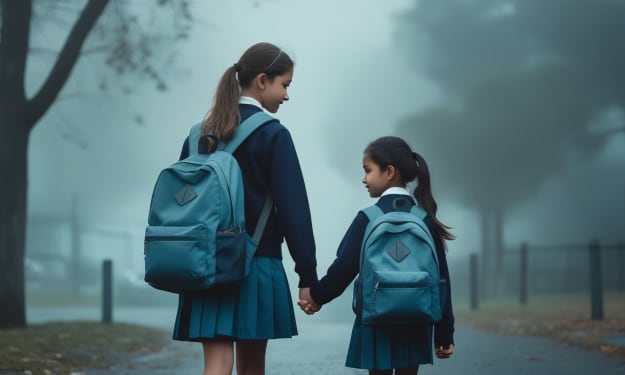
I Was Raised by My Sister, Not My Parents
I was only five when our mother fell ill — the kind of illness that steals more than time. It didn’t just take away her health; it took her presence, her laughter, her warmth. She spent most of her days in bed, and when she wasn’t sleeping, she was at the hospital, drifting in and out of treatments and tests. My father was always working — double shifts, sometimes triple — trying to keep the lights on and the bills paid. He was a good man, but survival became his only language. He wasn’t really present — not emotionally, not physically. We saw more of his tired shoes at the door than we did of him.
By Ayaz L Behraniabout a year ago in Confessions
The Day I Climbed Over Fear
For as long as I can remember, I’ve been terrified of heights. Mortified. Even the thought of standing near a ledge makes my knees do that weird wobble thing. If heaven and hell really are in the sky and underground, I think I know which one I’d rather be closer to—and it’s not because of fire or damnation.
By ArshNaya Writesabout a year ago in Confessions
The Borrowed Sorrow
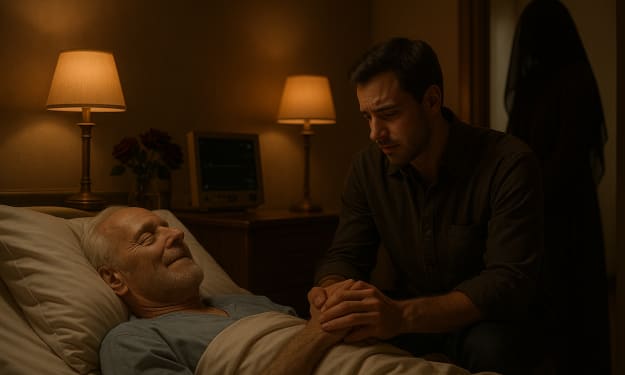
borrowed grief to survive—but the sympathy I stole became my prison. The Borrowed Sorrow I pretended to be someone else – a grieving widow, a shattered orphan – to gain sympathy and financial aid, and now I'm trapped in a web of borrowed sorrow. Every kind word, every compassionate glance, every dollar received, feels like another thread tightening around me, pulling me deeper into a lie that has become my terrifying reality. The fear of exposure is a cold, constant companion, far more real than any of the fabricated tragedies I peddle. It started innocently enough, or so I convinced myself. I was adrift, barely making ends meet after a series of bad choices and worse luck. My small apartment was a suffocating box, my bank account a barren wasteland. Desperation gnawed at me. One evening, while scrolling through social media, I saw a crowdfunding campaign for a family who had lost everything in a house fire. The outpouring of support, the sheer volume of donations, struck me. Not with empathy, but with a cynical thought: If only I had a story like that. The idea took root, ugly and insidious. Not a fire, no, too easily disproved. Something more personal, more tragic, something that tapped into the deepest wells of human compassion: grief. My first foray was small. I created a fake profile on a lesser-known forum, claiming to be a young woman whose husband had just died suddenly in a tragic, freak accident. I spent hours reading real obituaries, researching the language of grief, learning to mimic the raw pain of loss. I posted a few carefully crafted updates, describing my "despair," my "loneliness," my "struggle to cope." I never explicitly asked for money, just for "prayers" and "support." The response was overwhelming. Messages of sympathy poured in. People offered advice, comfort, and yes, small monetary donations, "just to help you get by during this difficult time." The ease of it was shocking. The warmth of their compassion, undeserved as it was, was intoxicating. It wasn't just the money; it was the attention, the validation, the feeling of being seen and cared for, even if it was for a fabricated persona. The lie quickly escalated. The "young widow" became a more elaborate character. I crafted a fake backstory for my "late husband," giving him a noble, slightly heroic profession, ensuring maximum sympathy. I started posting on larger platforms, sharing tearful "memories" and heart-wrenching "photos" (stock images, carefully edited to look personal). The donations grew. It became a lucrative venture, a twisted game where the more profound my "grief," the greater the reward. But the real power lay in the personal connections. People wanted to help. They offered me comfort over the phone, sent me care packages, even offered a place to stay. I had to learn to cry on demand, to lower my voice with a tremor of sorrow, to look perpetually on the verge of tears. It was exhausting, a constant performance, but the fear of returning to my previous life of poverty was a powerful motivator. The "widow" narrative, however, had its limitations. It required too much emotional investment, too much upkeep. So, I diversified. I became a "struggling orphan," whose parents died in a car crash, leaving behind younger siblings I was trying to raise. Then, a "war veteran" suffering from severe PTSD, unable to work, his heroic past contrasting with his current destitution. I researched these roles meticulously, watching documentaries, reading testimonials, ensuring every detail of my fabricated suffering was convincing. I even shaved my head for the veteran role, claiming chemotherapy for a phantom war injury. The lengths I went to were extreme, but the pay-off was immense. I lived a life of borrowed sorrow, flitting between identities, managing multiple online personas, always wary of contradictions. My real life became a mere shadow, a vessel for these fabricated selves. The money poured in, allowing me to move into a nicer apartment, wear better clothes, eat well. I had achieved financial stability, but at what cost? The cost was my soul. The constant fear of exposure became a paralyzing dread. Every new donation, every sympathetic message, was a tightening of the noose. What if someone recognized a detail from a real tragedy I had plagiarized? What if a well-meaning benefactor decided to do some deeper digging? The internet never forgets. A single slip-up, a forgotten detail from one of my countless lies, could unravel everything. Just last week, a woman, a genuinely kind soul who had sent me hundreds of dollars for my "orphan" persona, messaged me saying she was in my city and wanted to meet for coffee, to "offer some real comfort." Panic seized me. I concocted an elaborate excuse about a sudden family emergency out of town, feeling a fresh wave of disgust at my own cunning. The terror of facing the real, human beings I was deceiving, of seeing the hurt in their eyes when they discovered the truth, was unbearable. I am trapped. The wealth I acquired is tainted, impossible to enjoy without the looming shadow of discovery. I’ve tried to stop, to break free from this insidious cycle. But the thought of going back to destitution, or worse, of facing the legal and social repercussions of my actions, paralyzes me. I'm no longer just pretending to be someone else; I am that lie. It has consumed my identity, twisted my conscience. Every night, I lie awake, listening to the silence, imagining the angry faces, the disgusted whispers, the public humiliation. I stole their empathy, their kindness, their hard-earned money, all by selling them a sorrow that wasn't mine. And now, that borrowed sorrow is the only thing that feels real, a suffocating blanket woven from my own deceit, ensuring that I, the identity thief of empathy, live a life haunted by the very pain I once manufactured for profit. And the biggest confession? I don't know how to stop, or if I even can.
By Noman Afridiabout a year ago in Confessions
The Day the World Got Rearranged
Hey friend, have you ever woken up and felt like something was off? Like your toothbrush wasn’t where it should be, or your cereal tasted like oranges, or your dog started talking in perfect English? This story is kinda like that—but way weirder. It’s not a dream. It’s not time travel. It’s not a ghost story either. It’s something I call a confusion story. Because it’s not about being scared. It’s about being completely and totally lost in your own life. It happened to a kid named Noah. And by the time he figured out what was going on? It might have already been too late.
By Silas Blackwoodabout a year ago in Confessions
The House of Cards
My entire life is built on one colossal lie. One gust of truth, and everything I cherish could vanish like smoke. The House of Cards My entire life is built on one colossal lie, and I live in constant dread that it will all come crashing down. Every achievement, every loving word from my wife, every proud glance from my parents — they're all tainted by the deception that has been the foundation of my existence for the past fifteen years. I built this beautiful house of cards, and now the slightest breeze of truth could send it tumbling into irreparable ruin. It all began in my final year of university. I was a mediocre student, drifting aimlessly, burdened by the immense expectations of my family. My older brother, Omar, was a brilliant academic — the golden boy destined for medical school. I, on the other hand, was barely scraping by, plagued by anxiety and a pathological fear of failure. The thought of disappointing my parents, especially my father who had sacrificed so much, was a crushing weight. As graduation approached, the pressure became unbearable. My grades were abysmal. I knew, deep down, that I wouldn't graduate with the honors my parents expected — I might not even pass some of my crucial final exams. The shame was suffocating. Then, in a desperate moment born of panic and self-preservation, a terrible idea took root. It happened during the final exam for "Advanced Calculus" — a subject that had consistently baffled me. The exam hall was packed. Proctors paced the aisles. My mind was blank. Just as despair took hold, I noticed him — a student in the row ahead, hunched over his paper, writing furiously. He was a known genius, always acing every exam. And in that moment of sheer, unfiltered panic, fueled by fear of disgrace, I did the unthinkable. I cheated. Not subtly. Not carefully. I risked everything. I craned my neck, copied answers when the proctor wasn’t looking, praying I wouldn’t be caught. I wasn’t. Against all odds, I passed. Not just passed — excelled. It was the turning point. That single act of deception opened a floodgate. I realized I could fake it. I could mimic success. I graduated with a respectable GPA — not stellar like Omar’s, but enough to please my parents. They were ecstatic. They threw a celebration. They praised my "hard work." I swallowed every compliment like a bitter pill, each one adding another brick to my wall of lies. The deception grew. I used a falsified transcript to gain admission into a prestigious master’s program, where I continued to scrape by — relying on charm, avoiding difficult coursework, skating through on strategy and surface. I eventually landed a job at a respected firm, again through exaggeration and luck. I became adept at talking the talk, even if I couldn’t walk the walk. My shattered confidence transformed into a polished, confident façade. Then I met Sarah. She was everything I wasn’t — honest, grounded, sincere. She admired my supposed ambition, intelligence, and drive. I fell deeply in love with her. And with her love, the lie became heavier. How could I tell her that the man she loved — the man she planned a future with — was a fabrication? That his life was built on sand? Our wedding was a beautiful, joyous day. My parents beamed. Omar, now a successful surgeon, toasted my "meteoric rise." Every word of praise felt like a shard of glass in my soul. I looked at Sarah, her eyes shining with love and trust, and nausea gripped me. She deserved the truth. But by then, the lie had grown too big — too deeply woven into our lives. It wasn’t just mine anymore. It was the foundation of our shared future. Now, fifteen years later, the fear is constant. It lurks in every casual conversation about the past. Every time someone mentions university. Every time my parents brag about my “achievements.” I live with a permanent knot of anxiety, terrified of being exposed — by an audit, an old classmate, a misplaced document. Just last week, a former university acquaintance joined our firm. I vaguely recognized him — couldn’t quite place him — but he’s there, in meetings, in the cafeteria. Every glance from him makes my heart pound. Has he recognized me? Does he remember who I really was? The mediocre student? The cheat? Is he waiting for the right moment? I have nightmares — vivid dreams where I stand naked in a lecture hall, my fraudulent transcript projected on a giant screen. I wake up drenched in sweat, the fear so real it takes minutes to remember it was only a dream. I’ve imagined the conversation with Sarah countless times. Her expression when she finds out. The hurt. The betrayal. The look in my parents’ eyes. The shame that would haunt Omar. If I confess, everything unravels — the life I built, the love I cherish, the respect I’ve earned. All gone. My house of cards would fall, leaving nothing but dust and regret. I’ve thought about confessing. Truly. I long for relief. But how do you admit to a lifetime of lies without destroying everything? How do you tear down a false identity without erasing yourself entirely? So I continue. I smile. I accept praise I don’t deserve. I tell myself it’s for their sake — to protect them from the truth. But in my heart, I know it’s for me. I’m a prisoner in a golden cage, trapped by my own deceit. And every day, I pray the wind doesn’t blow too hard — that the truth stays buried. That my house of cards stands one more day. Because if it falls… I fall with it. And there will be no one there to catch me.
By Noman Afridiabout a year ago in Confessions
Sent Home for Scratching
The year was 1983, and I was in the third grade. My middle half-brother and I were living with our grandmother while our mother found a more stable place for us to live. During this time, we attended a school that was only four blocks from her home, and we'd walk there every day.
By Mother Combsabout a year ago in Confessions
“Why I Still Sleep with the Light On (And Maybe You Should Too)”
I’m going to admit something grown-up people aren’t supposed to say out loud: I still sleep with the light on sometimes. Not a full-blown fluorescent ceiling light, okay? I’m not a moth. I’m talking about a soft, comforting glow from a lamp or nightlight. Something warm. Something gentle. Something that says, “Hey, it’s okay to be a little scared sometimes, even at thirty.”
By Kaitesi Abigailabout a year ago in Confessions