Bad habits
Discovering My Passion for Painting at 40
It’s funny how life often throws unexpected gifts when you least expect them. For me, the gift came at the age of 40, a milestone that is supposed to be a marker of adulthood, responsibility, and perhaps the beginning of a midlife crisis. But for me, it was something more profound—a journey of self-discovery and rediscovery.
By Muhammad Jawadabout a year ago in Confessions
When Love Faded: How I Reclaimed My Identity After a Breakup
When people talk about heartbreak, they often describe it as an explosion—loud, sudden, and devastating. But for me, it was more like a slow unraveling. A quiet pulling apart that started long before the actual goodbye. I didn’t notice it at first. Or maybe I didn’t want to. But eventually, I looked in the mirror and saw someone I barely recognized—a woman who had slowly disappeared inside a relationship that no longer reflected her.
By Muhammad Jawadabout a year ago in Confessions
The Illness That Changed My Perspective on Health and Happiness
Before I got sick, I thought I understood what it meant to live a healthy life. I exercised a few times a week, watched what I ate (more or less), and took pride in not missing a single workday in years. I measured health by physical energy and productivity. But that illusion shattered the day I was diagnosed with a chronic illness I never saw coming.
By Muhammad Jawadabout a year ago in Confessions
How Losing My Job Helped Me Rebuild a Better Life
It’s strange how the worst moments in our lives can become the foundation for something better. At the time, it didn’t feel like a blessing in disguise—it felt like the world had collapsed beneath my feet. But looking back now, losing my job was the wake-up call I never knew I needed.
By Muhammad Jawadabout a year ago in Confessions
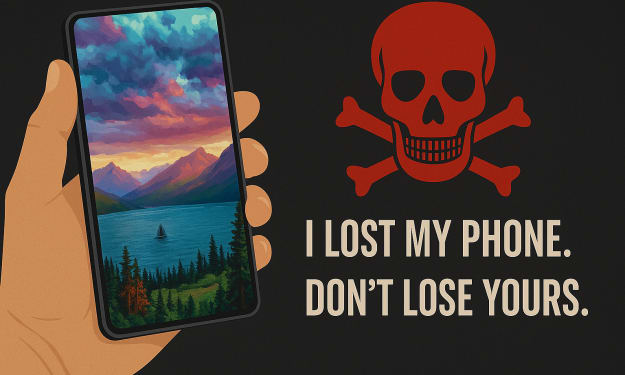
I Lose My Phone, Don't Lose Yours
It was a regular Tuesday morning — the kind that doesn't hint at chaos. I grabbed my bag, locked the door, plugged in my earphones, and stepped out for my daily commute. The train station was crowded as usual, people lost in their own worlds, eyes glued to their phones. I was one of them. Scrolling, texting, checking emails — all in the span of a few minutes. I didn’t realize that those few minutes were enough to change my whole day… maybe more.
By USAMA KHANabout a year ago in Confessions
A Wrong Number Changed My Life: The Unexpected Friendship That Gave Me Hope
We often think our lives are shaped by big moments—graduations, weddings, job offers. But sometimes, it’s the smallest, most random events that change everything. For me, it was a wrong number.
By Muhammad about a year ago in Confessions
The Last Letter I Never Sent
Introduction: Words Left Unspoken There are things we carry within us—words never said, apologies never made, and letters never sent. They fester quietly like unshed tears, waiting for a moment that never comes. This is a story of one such letter—a silent witness to a lifetime of regret, and ultimately, redemption. Chapter 1: A Sunday Like Any Other The sun filtered softly through the lace curtains, casting golden patterns across the floor of my old apartment. The clock ticked steadily, and the world outside carried on. But inside, I sat at my desk, staring at a worn-out envelope with no address. I had written her name on it years ago—just her name. No stamp. No destination. Just a beginning to what was never finished. She was my sister. My only sibling. And we hadn’t spoken in almost three decades. Chapter 2: The Rift We were close once. As children, she was my shadow—I the protector, she the dreamer. We climbed trees together, built forts out of blankets, and promised we’d never be apart. But life, as it always does, changed everything. It started with small things. Disagreements over our parents’ care. Clashing values. Then one day, a fight exploded over something I no longer even remember. Voices were raised, doors slammed, and silence began. That silence stretched from days to weeks, weeks to years. I convinced myself it was her fault. That I was right. That reaching out would be weakness. But late at night, when the world was quiet and my defenses down, I would write her letters—unsent, unfinished. Therapy on paper. Chapter 3: The Call I Missed The phone rang one winter evening. I let it go to voicemail. I was tired. Busy. Distracted. But her name flashed on the screen for the first time in years. That alone should’ve meant something. It did, but I ignored it. A week later, I got a call from a cousin. She was gone. A car accident. Quick. Brutal. Final. I didn’t cry at first. Just sat there, the silence screaming in my ears. Later, I found myself tearing through drawers, looking for those letters. Pages of love and sorrow, apologies never read. I held them like fragments of a broken mirror, each reflecting what could have been. Chapter 4: Guilt’s Quiet Echo Grief is not loud. It's not always tears or screams. Sometimes, it's just the weight of a chair across from you that no one fills. It’s hearing a song and realizing you don’t have anyone to call and say, “Remember this?” Her absence became a haunting presence. At family gatherings, I found myself setting an extra plate, only to remove it before anyone noticed. At her funeral, I wanted to read one of my letters—but I couldn’t. It felt like too little, too late. So I buried them with her. Chapter 5: Redemption at the River Years passed. I visited the riverbank where we used to play. There, I found a girl with her younger brother throwing stones. They laughed in the same way we once had. I sat on a bench and finally pulled out one last letter I had written recently. It read: “I’m sorry. For the silence. For the pride. For not calling when you needed me. I remember your laugh, your kindness, your fierce love. And though the world never got to read your story in full, I carry it within me. I’ll tell it for you, in every way I can.” I folded the letter, placed it in a bottle, and threw it into the river. It felt like releasing a ghost. Chapter 6: A Letter to the Living I began writing again—but this time to the living. I reached out to my mother, my old friends, even coworkers I had grown distant from. Every “I’m sorry” felt like lifting a stone from my chest. Every “I love you” became a bridge. I spoke at grief support groups, shared my story online, and found that I was not alone. So many others had letters they’d never sent. Guilt they couldn’t name. But together, we learned something powerful: it is never too late to change the ending of a story. Chapter 7: Closure is a Choice Closure isn’t something that happens to you. It’s a choice—a decision to forgive yourself, to write the letter, to have the conversation, to let go even when there is no reply. I now keep a journal titled “The Letters I Did Send.” Every page is a promise to never again let silence take the place of love. Conclusion: Send the Letter If you're reading this, perhaps you too have a letter you've never sent. Maybe it's buried in a drawer, or just in your heart. I urge you—send it. Or at least write it. Even if the person is gone, even if the moment has passed, it matters. Because in the end, the words we never say echo louder than any spoken. And sometimes, just sometimes, putting them on paper is the beginning of healing. Don’t wait for regret to teach you the value of a voice. Write the letter. Send it. Before it’s too late.
By Sohail Abbasabout a year ago in Confessions
The Lonely Corner. AI-Generated.
In a bustling city filled with faces, noise, and life, there was a quiet little café tucked in a narrow alley, far from the constant hum of the world. In this café, a woman named Sara sat every day in the same corner, her eyes distant, her mind wandering through endless thoughts. Sara was a writer, but not in the conventional sense. She didn’t write for fame or fortune. She wrote because she needed to, because her heart couldn’t rest unless it poured out its feelings onto paper. Yet, despite all her words, she felt utterly alone. Surrounded by people, she never truly felt connected to anyone. The noise around her felt like a distant echo, an empty sound that only added to the emptiness she felt inside. " — the words echoed in her mind, for it was in this very lonely corner where she sat each day, sipping coffee, lost in her thoughts. The corner became her world, a space where she could observe life from a distance, but never truly engage with it. She would watch others laugh, share their lives, and yet, she always felt like an outsider. Sara often wondered why she felt this way. Why did it seem like no one truly understood her? Why did it feel like her heart was always reaching out for something, but never quite finding it? One day, as the rain drizzled softly outside the café windows, a man entered, his coat drenched from the downpour. He shook off the rain and made his way to the counter. His eyes scanned the room, and for a moment, they paused on Sara. He hesitated for a moment but then walked over to her. "Is this seat taken?" he asked, his voice soft but sincere. Sara looked up, surprised by the interruption. She had become so accustomed to her solitude that she hadn’t noticed him walk in. "No, you can sit here," she replied with a quiet nod. The man smiled and sat down across from her. For a moment, there was silence, the kind that felt comfortable yet slightly awkward, as if neither of them knew how to start a conversation. But then, the man spoke. "I’ve seen you here every day," he said gently. "You always sit in this corner, as if it’s the only place you belong." Sara looked at him, startled by his observation. She hadn’t realized that anyone noticed her routine, her solitude. "Yes, it feels like... this corner is where I can be myself, without anyone asking questions," she said quietly. The man nodded, his expression understanding. "Sometimes, we find places where we can hide, places where no one can disturb us. But the truth is, even in the loneliest corner, we need to share our story, to be seen, to be heard." Sara felt a strange warmth spread inside her. She hadn’t realized how much she needed someone to understand. She had been so focused on her own loneliness that she forgot that there might be others out there who felt the same way. "You know," the man continued, "everyone has a story to tell. We all have our struggles, our joys, our fears. But the hardest part is finding someone who is willing to listen." Sara smiled softly. "I’ve been afraid of sharing my story. What if no one cares? What if I’m just... invisible?" The man reached into his bag and pulled out a notebook. "I used to think the same," he said, opening it to a blank page. "But you know what? Writing it down helps. Telling your story, no matter how small it seems, gives it life. It makes you real." Sara looked at him, her heart swelling with emotion. For the first time in a long time, she felt like someone understood. "Maybe... maybe it's time I started telling my story." And so, that day, as the rain continued to fall outside, Sara began to write. She wrote not for anyone else, but for herself. She poured her heart onto the pages, sharing her fears, her hopes, her dreams — her own story. From that day forward, Sara no longer felt completely alone. She realized that even in the loneliest corner, there was always someone willing to listen, even if it was just herself. And as she shared her story, she discovered that sometimes, the most important person to understand you... is you.
By Akhter khanabout a year ago in Confessions
"Command the Crowd: How to Speak Confidently in Front of 1,000 People
Speaking in front of a large audience—1,000 people or more—is often considered one of the most intimidating challenges in public speaking. The sheer number of eyes watching you can send a jolt of nervous energy through even the most confident individuals. But with the right mindset, preparation, and delivery techniques, you can turn that fear into fuel and deliver a powerful performance that resonates with every person in the room. This article will guide you through the mental preparation, strategic planning, and delivery skills required to speak effectively and confidently in front of a large audience. --- 1. Reframe the Fear Fear of public speaking is natural—it's even got a name: glossophobia. The key is to reframe that fear as excitement. Physiologically, fear and excitement feel similar. Tell yourself: “I’m not nervous, I’m excited.” This simple mental trick can shift your mindset and boost your confidence. 2. Know Your Audience Before stepping on stage, understand who you’re speaking to. Are they professionals? Students? Entrepreneurs? Understanding their background, expectations, and interests allows you to tailor your message to their needs, making your speech more relatable and impactful. 3. Master Your Content You don’t need to memorize your entire speech word-for-word, but you should know your material inside and out. Structure your talk with a clear introduction, engaging body, and powerful conclusion. Use the “rule of three” for memorable points, and include real-life examples or anecdotes to add authenticity. 4. Craft a Powerful Opening You have less than 30 seconds to grab attention. Start with a bold statement, intriguing question, or compelling story. Avoid generic greetings. Hook your audience immediately so they’re eager to hear what comes next. 5. Use Body Language Wisely Your body speaks louder than your words. Maintain eye contact—not just with the front row, but scan the entire room. Use open gestures, stand tall, and move with purpose. Avoid pacing nervously or crossing your arms, which can signal discomfort. 6. Practice with Intention Don’t just read your speech—rehearse it aloud, on your feet, as if you’re already in front of 1,000 people. Practice in different environments. Record yourself. Pay attention to your tone, pace, and body language. Ask friends or mentors for feedback and fine-tune accordingly. 7. Leverage the Power of Pauses Silence is a powerful tool. Use pauses to emphasize key points, give your audience time to absorb your message, and to collect your own thoughts. It also makes you appear more confident and composed. 8. Engage, Don’t Just Present Make the experience interactive. Ask rhetorical questions, invite a show of hands, or share a relatable story that mirrors the audience's experience. The more they feel involved, the more they’ll remember. 9. Manage Your Voice Your voice should be varied—not monotone. Change your pitch, volume, and pace to match the energy of your message. Use vocal emphasis to highlight key phrases. Practice breathing deeply to maintain control and reduce vocal strain. 10. Use Visual Aids Thoughtfully Slides or visuals should complement your talk, not overwhelm it. Use large fonts, minimal text, and impactful images. Don’t read directly from your slides—talk about them instead. 11. Prepare for the Unexpected Tech glitches, tough questions, or an unresponsive crowd can throw you off. Prepare responses and develop composure. If a microphone fails, raise your voice. If someone interrupts, acknowledge them calmly and steer back on course. 12. Close with Impact End with a call to action, a memorable quote, or a thought-provoking idea. Make your closing words count—this is what people will remember most. 13. Get Feedback and Reflect After your speech, ask for feedback. What worked? What didn’t? Watch a recording if available. Every great speaker was once a beginner—improvement comes from self-awareness and consistent practice. --- Conclusion Speaking in front of 1,000 people isn’t about being perfect—it’s about being present, prepared, and passionate. When you connect with your audience, stay authentic, and deliver your message with conviction, you create a moment that people will remember long after the applause fades. Every great speaker once stood where you are now—unsure, nervous, and eager to improve. With time and effort, you too can command a crowd and deliver a speech that moves, motivates, and inspires.
By Fawad aliabout a year ago in Confessions
The Weight of the Wind
Elias woke up to a sky the color of tin. Clouds swirled above his apartment like thoughts he couldn’t tame. The coffee machine blinked at him with passive aggression, and his inbox was already groaning with unread emails—subject lines like small threats: *"URGENT"*, *"Need by noon"*, *"Following up again…"*
By Gabriela Toneabout a year ago in Confessions
The City of Lost Dreams
In the mystical realm of Somnium, where the fabric of reality was woven from the threads of human dreams, the City of Lost Dreams stood as a testament to the ephemeral nature of hope. This was a place where the forgotten aspirations, shattered desires, and lost passions of humanity converged, taking on lives of their own.
By zahid hussainabout a year ago in Confessions
Fading Smiles
Maya Bennett had always believed in the good in people. Raised by a schoolteacher mother and a firefighter father, she'd been taught to treat everyone with kindness, assume positive intent, and believe that character spoke louder than charm. But as she entered her late twenties and began climbing the ranks in a competitive marketing firm in downtown Chicago, she started to realize the world wasn’t always as straightforward as she once believed.
By Gabriela Toneabout a year ago in Confessions