Bad habits
Blank Ink
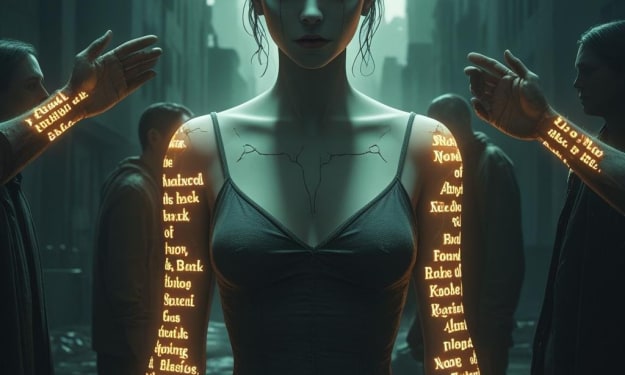
In the city of Namera, tattoos told the truth. At midnight on every person’s 18th birthday, a black-inked phrase appeared on their inner forearm. Always in the same place. Always in the same font. Always fatal. "FIRE." "FALLING." "HEART ATTACK." "MURDER." There were no exceptions. Until Lena Hale. She turned eighteen on a stormy Thursday. Her mother cried at her bedside, clutching her hand as the clock ticked down to midnight. Her father waited near the door, silent and pale. Lena tried to be brave. This was tradition. Fate. Truth. But when the clock struck twelve, and the flash of pain passed, Lena looked down... And saw nothing. No mark. No ink. Just smooth, unbroken skin. At first, her parents thought it was a delay. Maybe the process was late. Maybe it would show up by morning. It didn’t. Then came the visits—to tattoo specialists, to government clerks, to Fatewatch officials. Needles poked. Scanners buzzed. Bureaucrats mumbled. Always the same answer: “She’s Blank.” Blank meant uncertainty. Blank meant danger. Blank meant fear. No one had been Blank before. Not in over a hundred years of recorded cases. Some people treated her like a glitch. Others whispered about curses, rebellion, apocalypse. Her friends stopped texting. Neighbors avoided eye contact. The news called her The Girl Without a Death. It was worse than being doomed. It was being unpredictable. For a while, Lena hid. She stayed inside, wore long sleeves, tried not to be noticed. But she felt the tension everywhere. The guards outside her home. The stares from strangers. The growing worry in her parents’ eyes. Then came the letter. “The Department of Fate requests your cooperation in voluntary research.” She didn’t want to go. But her parents urged her. "If they can figure it out," her father said, "maybe you’ll be safe." Maybe. The facility was cold and clean, full of white walls and quiet hallways. They ran tests for hours—scans, bloodwork, psychological exams. She sat through them silently. Until Dr. Ren entered. He was older, calm, and kind in a way that felt practiced. “You’re not a glitch, Lena,” he said, placing a file in front of her. “You’re something else.” She stared at him. “What am I?” He smiled—almost sadly. “A variable.” He explained that the tattoos weren’t predictions. They were assignments—fate imposed by algorithms perfected over generations. The moment you turned 18, your life's path became locked in. The ink only revealed what had already been set. But Lena... had no assignment. “No one chose how you die,” Ren said softly. “Which means no one chose how you live.” She was free. Truly, completely free. When she left the facility, reporters swarmed her. Everyone wanted a comment. A theory. A headline. She gave them none. She walked home silently. Then, that night, she packed a bag. And left. Lena traveled. Changed her name. Moved between cities and villages. Met people who didn’t know her face or story. For the first time, she saw how fear shaped lives—how the ink chained people to caution. Some were reckless, thinking they knew the limit of their lives. Others were paralyzed by waiting. But Lena danced on rooftops. Swam in storms. Loved without fear of time running out. And in her freedom, she inspired others. Rumors began spreading of people rejecting their tattoos. Burning them. Covering them with art. Choosing instead to live unwritten. Years later, when Lena was older, a girl stopped her on the edge of a mountain trail. “I’ve seen you before,” the girl said. “You’re the one with no ink.” Lena smiled. “I used to be.” She rolled up her sleeve. There, in graceful script, a fresh tattoo read: “YOU DECIDE.” The girl stared. “Is that real?” Lena looked up at the sunrise, warm on her face. “As real as anything else.” And with that, she stepped forward into the mist.
By Rizwan about a year ago in Confessions
The Day I Felt Guilty
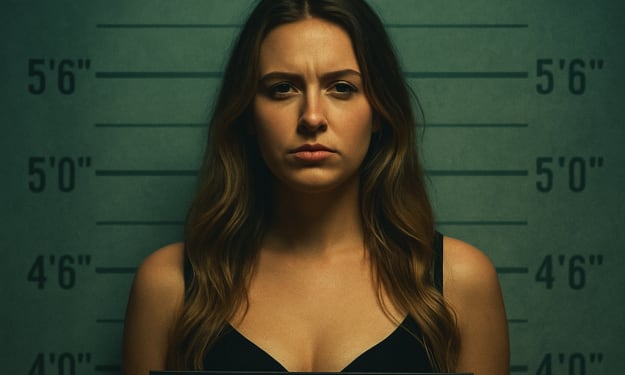
Life is full of ups and downs—friendships, relationships, mistakes. And through all of it, I had never truly felt guilt in its deepest form. Like most people, I apologized when I was wrong, and moved on. Some mistakes fade with time, others become lessons. But then, there are mistakes that don’t leave you—they stay with you, remind you, shape you.
By Naaikeabout a year ago in Confessions
Forgiveness is not Forgetting the Pain
The scent of brine and ozone filled Elara’s lungs, a familiar comfort that had been hers since childhood. She stood on the cliff edge, the North Sea churning below, its endless roar a constant reminder of both peace and turbulence. It had been twenty years since the accident, twenty years since the waves had stolen her brother, Liam, and left her with a scar that no passage of time, no amount of forgiveness, could truly erase.
By millyanneabout a year ago in Confessions
Word of the Day: Schadenfreude
Have you ever found yourself secretly smiling when someone else trips, makes an error, or experiences an inconvenience? Whether it was someone at work, in celebrity media coverage, or even someone close to you who got their own back? Unfortunately this feeling often unsaid is quite common, yet rarely spoken aloud. In German there's even a special word that perfectly captures it: Schadenfreude
By Robert Brownabout a year ago in Confessions
moon-coloured glasses
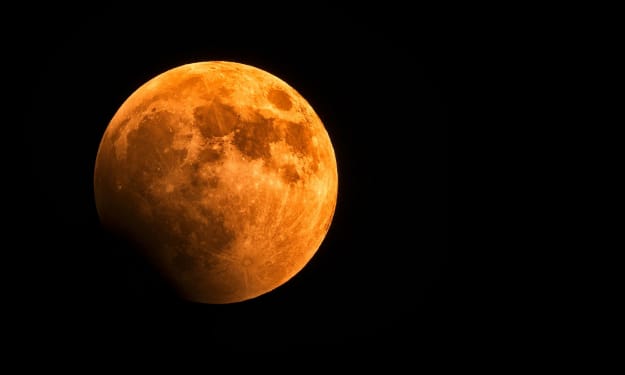
People like to talk about rose-coloured glasses, as if that’s the only kind of distortion that matters. As if optimism is the most dangerous drug. The sweet little delusion, the blur of affection that makes everything look kinder. You love, so you overlook. You believe, so you don’t question. Red flags turn pastel. You’re naive, and you’re hopeful.
By nicoabout a year ago in Confessions
I Lied About My Age for 3 Years—And He Still Chose to Believe Me
I didn’t mean to lie, at first. It wasn’t premeditated. It was one of those little things that slip out and hang in the air longer than you expect them to. We were at a bar, I was with a friend, he was sitting alone, and we started talking. I was 29. I told him I was 25.
By Noman Khan about a year ago in Confessions
The Upstairs Virtuoso's Shadow
Charles lived above. Apartment 3B. He was a man of strong passions. He played the violin. Played it well, with a fierce concentration. He grew things. Green things. His balcony was a small, dense jungle. Ferns cascaded over the edges. Vines gripped the railings like determined fingers. He kept birds too. Finches, perhaps. Bright flashes of movement. He trained them. They answered his low whistle with sharp, clear trills. To Charles, it was a life lived fully. Sound. Leaf. Song. Good.
By Heydoabout a year ago in Confessions
She Got One Wish—and Used It to Destroy the World
Arielle was invisible. Not literally—but as close as someone could get. No family. No close friends. Her co-workers barely remembered her name. Her neighbors didn’t make eye contact. She passed through life like a shadow, and eventually, she stopped trying to be seen. So, when the man in the alley offered her a wish, she assumed it was a scam. Or a breakdown. Maybe even a joke played by the universe. But his eyes glowed—not with malice, but with something older, deeper. Something real. “One wish,” he said. “No tricks. No consequences you don’t choose. Say it, and it’s done.” She laughed in his face and walked away. But he didn’t disappear. She saw him on the street corner the next day. Then at the bus stop. Then, standing under her window as it rained. He never spoke again. Just waited. Three days passed before she approached him again. Her voice was flat. “Anything?” He nodded. She looked past him, as if expecting to wake up. “Even if it changes everything?” “That’s what wishes are for.” She thought long and hard. And when the words came, they came quietly—like a blade sliding from its sheath. “I wish,” she said, “for the truth to be known. All of it. By everyone. Everywhere. All at once.” The man’s expression didn’t change. “Are you sure?” Arielle met his glowing eyes. “Yes.” And just like that, it was done. --- At first, the world didn’t notice. Then the cracks appeared. Emails surfaced. Classified files became public. Whispered conversations turned into viral clips, with perfect audio. Every hidden act, every lie, every secret: exposed. World leaders collapsed under the weight of their own deception. CEOs were arrested or vanished overnight. Criminals turned themselves in, compelled by unbearable guilt. Even saints were stripped of their halos. Every person on Earth suddenly knew the truth—not just about the world, but about themselves. Every shameful thought. Every suppressed desire. Every betrayal. There were no more secrets. No more filters. Some people went mad. Others went violent. --- Riots erupted within 48 hours. Civil wars sparked across nations. Religious institutions crumbled. The economy imploded when markets saw what corporations had hidden for decades. But that was just the beginning. Marriages shattered. Parents disowned children. Neighbors turned on each other. Suicide rates spiked. Entire cities burned. In a matter of days, humanity realized it had never been built on trust—but on illusion. The polite lies that kept people civil. The white lies that smoothed over rough edges. The hidden sins that went unspoken for the sake of peace. Now, all of it was gone. --- And Arielle watched. She wasn’t immune to the wish. She knew the truth about herself, too. Every selfish moment. Every petty cruelty. The bitterness she’d buried. The times she could’ve saved someone, spoken up, reached out—but didn’t. She saw how invisible she had become because she had chosen it. Chosen safety over connection. Isolation over pain. She wasn’t a victim of the world—she had opted out of it. And still, she didn’t regret the wish. Because finally, the mask was off. Everywhere. --- On the 15th day, nuclear warheads launched. Not out of greed. But panic. The world’s last moments weren’t filmed, but they were understood—by everyone left. The sky turned red. The oceans boiled. The truth had set humanity free. Free to destroy itself. --- Arielle stood in the ashes, alone. The stranger was there again, untouched, unchanged. “You did this,” he said—not with blame, but observation. She nodded. “Why?” Arielle looked out over the ruins. “Because I wanted everyone to feel it. What I felt. To see how fake everything was. I was tired of pretending. Of watching people lie to each other. To themselves.” He said nothing. She turned to him. “You offered me a wish. You didn’t say it had to be beautiful.” “That’s true,” he admitted. “But was this the world you wanted?” “No,” she whispered. “But it was the truth.” --- Silence fell again. And then, a thought. “I didn’t wish for the truth to be understood,” she said slowly. “Only known. Maybe that’s why it hurt so much.” “Would you undo it, if you could?” She hesitated. Her face hardened. “No,” she said. “Maybe the world deserved to end this way. Maybe this was mercy.” He tilted his head. “Or maybe it was revenge.” She didn’t respond. Arielle stood alone as the last wind howled through what remained of cities, temples, monuments, and dreams. The last human who had chosen to burn it all down—not for power, but for something more dangerous: Clarity. --- Tags: #SpeculativeFiction #Dystopian #Apocalyptic #PhilosophicalFiction #DarkFantasy #Truth #WishGoneWrong #ShortStory #ViralFiction #EndOfTheWorld Suggested Communities: Fiction, Futurism, The Swamp, Horror, Confessions Cover Image Prompt (for AI or stock selection): A lone woman standing in a post-apocalyptic landscape, surrounded by collapsed buildings and glowing symbols in the sky that resemble ancient script or computer code, with a quiet expression—neither proud nor sad—just resolute.
By Zeeshan Khanabout a year ago in Confessions