
Ronaldo Is 41 Years Old and Still Everyone's Problem
The Portuguese legend arrives at his sixth World Cup carrying the weight of an entire career — and the question nobody dares to answer.

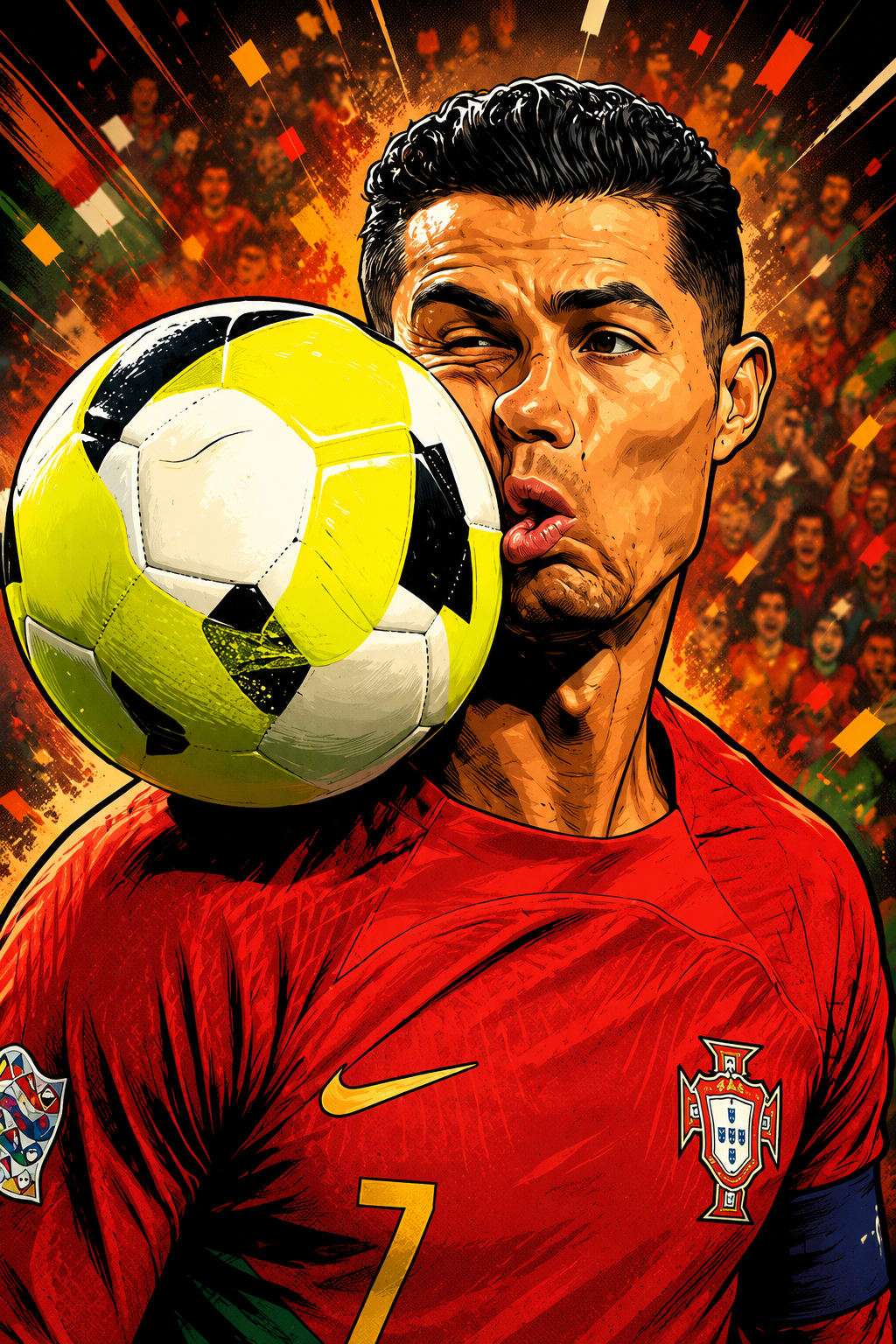
I remember the day a friend told me Cristiano Ronaldo was finished. It was the summer of 2022, after the Qatar World Cup, when Portugal benched him against Switzerland and won anyway. "You saw it," my friend said, with the satisfaction of someone who had been waiting years for that moment. "End of an era."
That same friend just had to watch Ronaldo, at 41 years old, show up on Portugal's official roster for the 2026 World Cup.
He didn't age. He simply decided not to.
A Man Who Doesn't Understand the Rules of Time
There is something deeply unsettling about Cristiano Ronaldo. Not his talent — that was always obvious — but his relationship with biology. At an age when most footballers have been retired for five years or sitting behind a punditry desk, he is still running, still scoring, still generating arguments.
This past season he scored over thirty goals for Al-Nassr. He helped Portugal win the UEFA Nations League in 2025, netting in the final against Spain. And then, during the qualifying campaign for this very World Cup, he added five more goals to make sure his country would be heading to North America.
Five goals. In qualifying. At forty years old.
When asked how he felt, he answered with the calm of someone who has never doubted himself for a single second: "I feel very good at this moment. I still feel quick and sharp. I'm enjoying my game."
He didn't say it to convince anyone. He said it because, in his world, that is simply the truth.
The Uncomfortable Debate
But there is a conversation Portugal has never quite managed to resolve — and it arrives at this World Cup without a clear answer.
What is Ronaldo's role?
That apparently simple question hides years of tension, controversial matches, and coaching decisions that made front pages. At Qatar 2022, Fernando Santos sat him on the bench against Switzerland and Portugal won 6-1. Many read that result as a verdict. The golden generation — Bruno Fernandes, Bernardo Silva, Rafael Leão — didn't need Ronaldo to win.
Roberto Martínez, the current manager, has been more diplomatic. "We manage the Cristiano Ronaldo who plays for the national team, not the iconic figure," he said recently. And he added something that sounds almost like a statement of principle: "Age is only a number."
What's interesting is that nobody in Portugal is debating whether Ronaldo should be in the squad. The argument is a different one — subtler, and more honest: how much should he actually play?
Because there is something the statistics don't quite capture, something anyone who has watched him in recent tournaments has felt in their gut: Ronaldo is no longer the same player who dazzled at Real Madrid. He is still lethal inside the box. Still a predator when the ball lands at his feet. But carrying a match for ninety minutes, driving play from midfield, absorbing relentless pressure — that is no longer him.
And Portugal, with the quality it possesses, could win this World Cup. The question is whether it can do so with Ronaldo or in spite of him.
What CR7 Represents, Beyond the Goal
This is where the conversation gets complicated, because Ronaldo is not just a center forward. He never was.
There are players who play football, and there are players who are football for millions of people. Ronaldo belongs to that second group, and that weight does not disappear when he arrives at a World Cup. It amplifies.
In 2016, in the Euro final against France, Ronaldo injured his knee in the first half and spent the rest of the match on the touchline — standing, wearing a brace, directing his teammates as if he were the manager. Portugal won. And the image of Ronaldo crying on the pitch as his teammates lifted the trophy was, for millions of Portuguese people, the most important moment of their sporting lives.
Not because he scored the goal. But because he was there, even when he couldn't play. Because that match was too big to walk away from.
That is what travels with him to North America. Not just the 143 international goals — an all-time record in men's football. Not just the 226 caps. But everything he represents to the people who grew up watching him.
And that weight, at a World Cup, can be either an advantage or a trap.
The Last Dance
Ronaldo has been clear about it: this is his final World Cup. "Definitely, yes, because I will be 41 years old," he said. "When I say soon, I really mean soon. I have given everything to football."
There is something strangely melancholic about that sentence, coming from someone who never seemed afraid of anything. As if, for the first time, he is acknowledging that there are things willpower and discipline cannot stop.
But even in this farewell, Ronaldo cannot help being Ronaldo. He is not coming to this World Cup to say goodbye and pose for pictures. He is coming to win. To claim the one title that has always been missing — the World Cup he never lifted, the one Messi won in Qatar 2022, making that eternal debate a little harder to brush aside.
If Portugal goes deep, if Ronaldo scores when it matters most, the story will feel incomplete without that chapter. And he knows it.
Luis Figo, who watched Ronaldo emerge back when he himself was Portugal's star, said something that doesn't sound like courtesy but like genuine conviction: "He could be a starter. Decisive. Cristiano is an example for the whole world in terms of availability and professionalism. He will always score goals, I think even at 40, even at 42."
Why We Keep Watching
My friend — the one who called the end of the era in 2022 — watched Portugal win the Nations League last year. When Ronaldo headed in the final goal, I called him. Not to gloat. Just to hear the silence.
He didn't say anything for a few seconds.
"Alright," he finally admitted. "The guy is a freak of nature."
That is exactly what he is. An anomaly. A case study that breaks every model, that challenges everything we think we know about time, about wear, about when a career is supposed to end.
Maybe at this World Cup Ronaldo plays twenty minutes a game. Maybe he is the first one in front of the cameras when Portugal lose, carrying the blame the way he always has. Maybe he scores the goal that sends his country to the final, and everything else becomes background noise.
We don't know. And that — that uncertainty, that possibility that something extraordinary might still happen — is exactly why we keep watching.
Football needs people who don't know when to quit. And Ronaldo, at least in that regard, has never let us down.
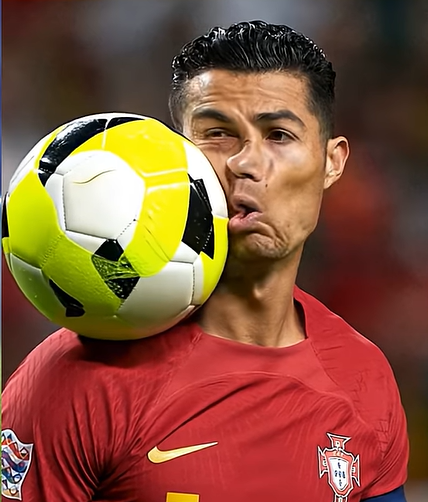
World Cup 2026 — United States, Canada and Mexico. The biggest stage for the final act of the longest career.
About the Creator
ELIAS PULIDO
Storyteller by necessity. The best stories don't live in headlines — they live in the details nobody notices. I write about people, ideas, and the moments when the world shifts direction. Sometimes without anyone realizing it.
Enjoyed the story? Support the Creator.
Subscribe for free to receive all their stories in your feed.
Comments
There are no comments for this story
Be the first to respond and start the conversation.