
Why did they make thick porridge for the disaster victims in ancient times instead of just rice?
Interesting discussions on Chinese topics

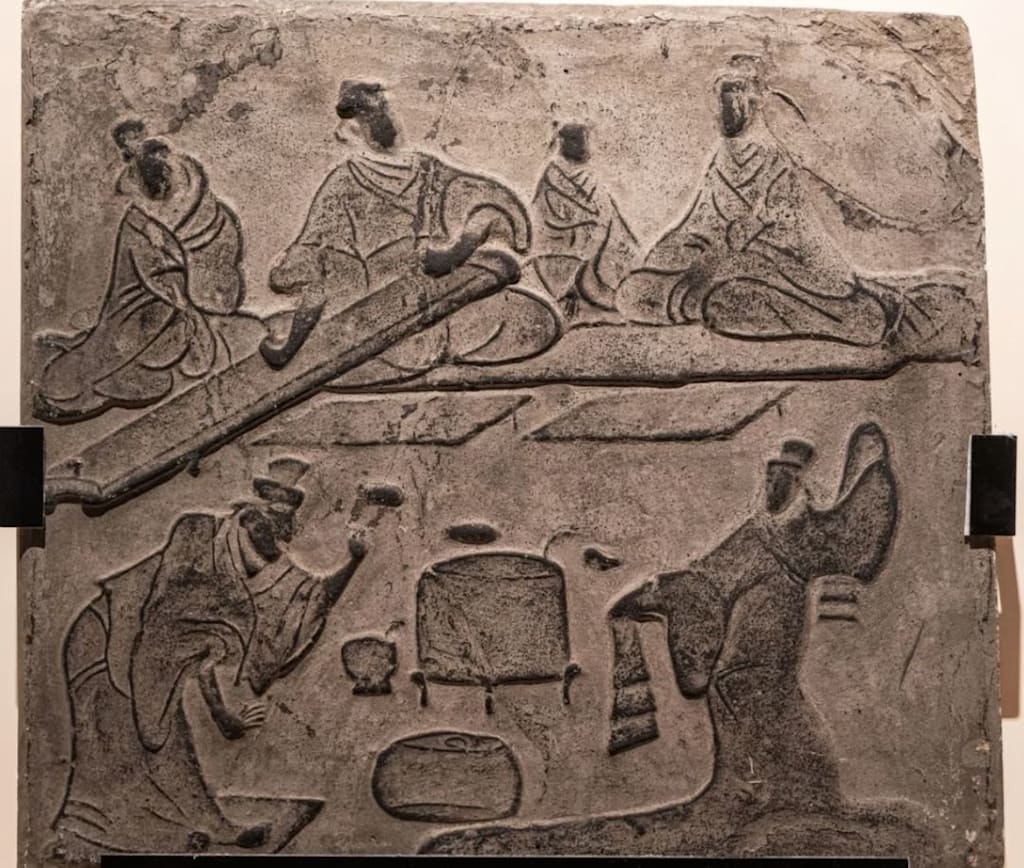
Cooking porridge (or “providing porridge”) is one of the oldest and most widespread relief measures in Chinese history. The reasons are as follows: It is the most efficient and has the widest coverage: Porridge is a liquid food. With the same amount of grain, when cooked into porridge, it can provide more people with food and enable more people to survive temporarily. The phrase “cooking with rice” is the most economical distribution method in times of extreme food shortage. Saving food: The victims of disasters are physically weak and it is difficult for them to digest dry food. However, liquid porridge is easier to absorb and can make the most of the limited food resources. When the government or local officials open their granaries to release food, if they simply distribute rice, the quantity is limited and it may lead to looting. Cooking and distributing porridge in a centralized manner can ensure fairness (at least in form). It is convenient for management and preventing fraud: Cooking porridge uniformly in a fixed porridge factory (relief site) makes it easier for the government to supervise and prevents the food from being repeatedly deducted at each level during distribution. Many capable officials in times of disaster relief would personally supervise the ratio of rice and water at the porridge factory to prevent the handlers from cooking it too thin. Caring for the weak: For the elderly, the weak, the sick, and the disabled, or those with missing teeth, porridge is the only food they can swallow. Food variety: The main ingredients are coarse grains, with rice and wheat as secondary. Regional differences: In rice-producing areas in the south, the relief food may be mainly rice; but in the north, it is more common to have millet (sorghum), wheat, beans, and even mixed porridge made from coarse grains (such as sorghum, bran, etc.). TV dramas usually only show white rice porridge, which is an artistic simplification. The quality of the food: The food used for disaster relief is often the old grain in the government granary or even the grain that is about to spoil or has spoiled. These grains are yellow in color and have poor taste, far from being comparable to new rice. In extremely severe famines, even these are not available, and “糠粥” (a mixture of rice bran and a small amount of grain) or even “substitute foods” such as tree bark and grass roots may be used to satisfy hunger. The consistency of the porridge: It is the key to survival. The consistency of the porridge directly affects the lives of the disaster victims. There is a famous standard in history, called “If a chopstick can stand upright in the porridge, it means the porridge is thick enough to save lives.” This means that if the chopstick can stand upright in the porridge, it indicates that the porridge is thick enough to sustain life. If it is as thin as water, the chopstick will fall over, and it will not be able to satisfy hunger.
About the Creator
Enjoyed the story? Support the Creator.
Subscribe for free to receive all their stories in your feed.
Comments
There are no comments for this story
Be the first to respond and start the conversation.