
the lost dialogues of Philosophocles - 3
Agonistes - little by little



If you missed Agonistes Part One and two, you may wish to read them by clicking the links below:
the lost dialogue of Philosophocles
the lost dialogue of Philosophocles - 2
...
Agonistes Part Three - (Little by Little)
Philosophocles - Agonistes! Good fellow, you came early. Most fortunate timing. The sculptor Polykleitos will arrive soon to select one of our fine stone blocks for his next great work.
Agonistes - What splendid fortune. I saw his statue of the Amazon when I visited Ephesus. The gift of the gods must lie within his hands.
Quarry man - Come quickly, Philosophocles, Polykleitos's model has arrived. He will measure and mark a stone this day!
Go. I will quickly follow.
The gift of the gods to Polykleitos, my good Agonistes, is mathematics. This, as with any good philosopher, lies within his capacious mind.
I do not understand. When I have viewed artists at work they have always used their hands to draw, carve or shape the clay. Do they use mathematics unseen as they work?
Polykleitos formulated an artistic canon that uses mathematics to achieve symmetry in his sculptures. He applies the Pythagorean theorem so that all parts of the body in his sculptures create balance in the eyes of all who witness them. For example, the canon ensures that the head is neither too large or small in relation to its body, the arms are proportionate to the torso just as the finger's length to the size of the hands and so on. You will see him take measurements as he draws on the stone and the carvers here at the quarry will cut the rough shape under his close direction.
He uses geometry?
Let me give you an example. How do you think he determines the ideal length of each finger on the hand?
Does he not measure his own hand or the hand of a model?
An excellent assumption, Agonistes. If his goal was to replicate the figure of a man, he could simply take several lengths of cord to determine lengths of statue's hands in relation to his arms, measure the circumference of his chest and abdomen, carefully take his height etc. to faithfully recreate his model. But what if he wished to carve Apollo or Aphrodite? How could he use a man or woman model to create the statue of a god or goddess without committing blasphemy?
I see your point, Philosophocles. But unless the gods appear to him how might he copy their sacred images?
That is why he created the canon; to use mathematics with which the gods created and govern all things to realize the ideal form or inspiration for humankind since we are but poor reflections of the gods themselves. Polykeitos has often said, Perfection comes about little by little through many numbers.
But I still do not understand how it is done save for measuring the gods themselves.
Do you know how to calculate the length of the diagonal, Agonistes?
Of course. If I add the squares of two sides, they equal the diagonal squared. The square root of that number, therefore, is the length of the diagonal.
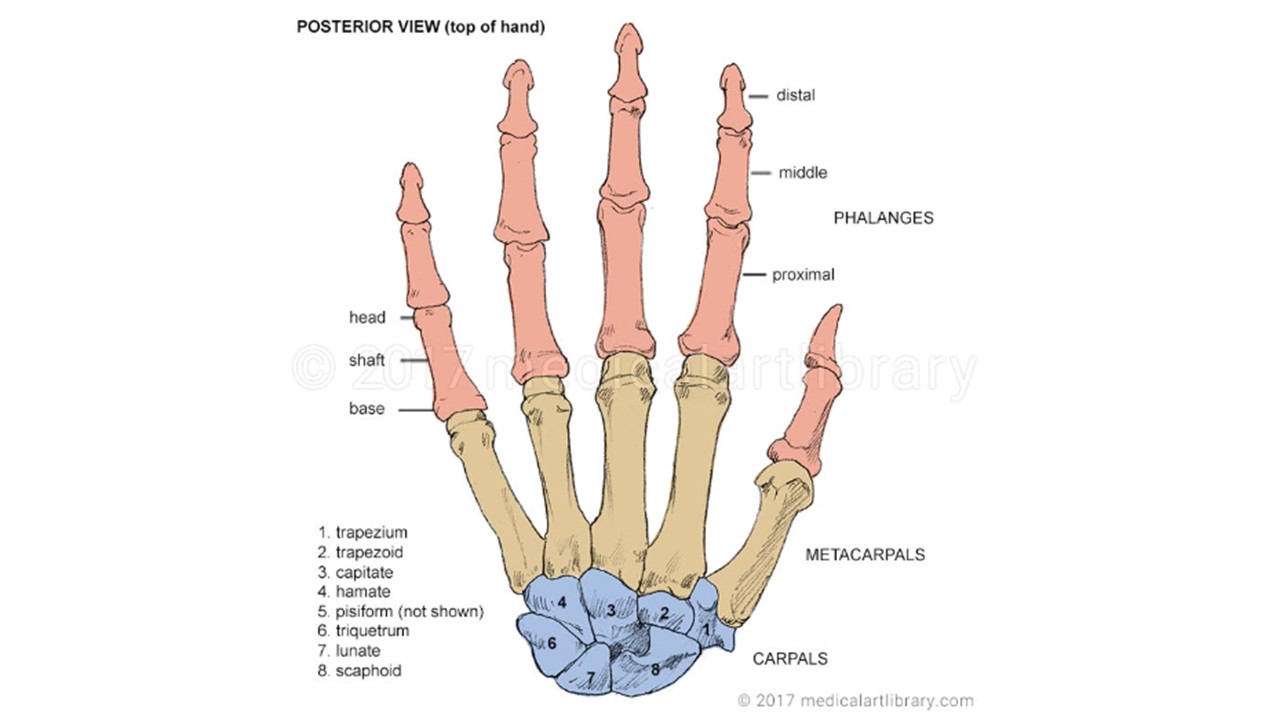
Very good! Now imagine the length of the distal phalange of the little finger is the same as each side of the square. By calculating the diagonal of the square Polykeitos can determine the length of the middle phalange. Using the middle phalange as the side of the square he does the same again to determine the length of the Proximal phalange. Now he has the measurements to replicate the ideal for carving the god's pinky.
But he has done all this work to determine the length of each joint in the smallest part of the god's anatomy! Must he do this for every joint and sinew, every arm, leg and torso and for the nipples as well as the pudendum for every statue he carves?
He only needs to determine the correct measurements for every part of the divine anatomy once. Then he records these measurements using knots in a cord.
But I must apologize, Agonistes. I see the model enters the quarry even now. I must ensure that my fellow quarry men are careful not damage it. I will return soon and escort you to the stones that he will inspect that you may see his process for yourself.
...
End Notes...
1) Polykleitos was an ancient Greek sculptor active in the 5th century BCE. He is considered one of the most important sculptors of classical antiquity and greatly influenced both the Greek and Roman sculptors who followed.
2) Artistic canon - Ancient Greek Κανών (Kanon) measuring rod, standard. Many numbers - Polykleitos created a theory of ideal human proportions (now lost to the world), meaning a statue should be composed of clearly delineated parts all related to one another by mathematical formulas to create balance in the eyes of the beholders. Its main principle is expressed by the Greek word symmetria and the Hippocratic principles of isonomia (equilibrium) and rhythmos. Philosophocles likely included this in his Agonistes dialogue to highlight his emphasis of balance achieved through both physical and intellectual labors. At the very heart of his philosophy, the artisan laborer practices and exemplifies both the physical and intellectual pursuits of the ideal.
3) Distal, middle and proximal phalanges (see diagram below from the Medical Art Library):
About the Creator
John Cox
Where would you like to travel? Who would you like to meet? No ticket required, a surprise at every destination guaranteed. Strap on your time travel goggles and bring a compass. It's sometimes bumpy in my imagination, so hold on tight!
Enjoyed the story? Support the Creator.
Subscribe for free to receive all their stories in your feed. You could also become a paid subscriber, letting them know you appreciate their work.
Comments
There are no comments for this story
Be the first to respond and start the conversation.