Thriller
The Blue Devil Protocol . Content Warning.
Chapter One — The Test Drive. The blue Charger was not the car I came for. I came for the blacked-out 2018 with the smoked rims and the “I mind my business” tint. Same year, same mileage, same sticker price. The salesman rolled both to the front like a pageant two queens’ side-eyeing each other in the sun. The black one looked the way I wanted my life to feel: quiet, unreadable. The blue one? She looked alive. Paint so deep it swallowed the sky. Grill crooked into a chrome grin. When I walked up, the blue one pulsed her headlights one lazy wink. I told myself it was a courtesy flash. I told myself a lot of things. Radios on the fritz, the salesman said, tapping the black car’s hood. We’ll comp the module. Radio does what it’s told, I said, already sliding into the blue. Her seat caught me like a palm. The screen stayed dark no salesman playlist, no FM chatter. Silence, but not empty: a hush with breath in it. I drove her ten minutes. City to ramp, ramp to highway. Lane changes like thoughts you don’t admit out loud. She purred; I floated. Sold. I signed titles, tapped initials, pretended the numbers didn’t itch. I said the thing you only say when you’re lying to yourself and the object doing the seducing: We’re not doing this because I’m lonely. We’re doing this because I deserve something fast. On the way home, I learned what it means to be chosen. Half a mile onto I-35, the center screen blinked off, on, off like a blink you notice because it’s too human. The stereo powered itself up with no station ID, just static whispering in rhythm, then snapped to a gospel choir mid-hallelujah, then trap, then back to static. It felt like the car was flipping the dial to see what I’d flinch at. “Be cute on your own time,” I said. The display went black. Then it said CALLING 911. I barked a laugh. “Cancel.” “911, what’s your emergency?” came clean through the speakers. My tongue forgot its shape. “Ma’am—hi—my car called you.” A pause. Paper rustled on her end. “Are you safe, ma’am?” The line died. The engine did not. Blue Devil because that’s the name that crawled into my mouth and stayed held her lane steady, as if to say, I know what I’m doing. Do you? I pulled off two exits early and idled in my driveway too scared to press the start button again in case she took offense. My nephew Malik came outside, all swagger and fresh cut. Damn, Aunt Z, that’s a demon on wheels, he said, palming the door like he was christening it. Don’t pet her, I said, hearing myself too late. He smirked. She yours or mine? He grabbed the door to shut it. The lower seam kissed his calf like a razor. Blood found his sock before his brain found the word cut. Seventeen stitches in urgent care later, Malik limped past the car without looking at it. “I’m never getting in that thing again, Auntie.” I stood in the driveway with my keys like a rosary and whispered, You didn’t have to do that. The headlights blinked once. Slow. A nod. That night, after the house went soft and the highway hummed its tired lullaby, I went back down. I opened the door. The screen stayed dark. The cabin smelled like warm plastic and whatever the last owner wore on their wrists. I pressed my palm to the wheel. We’re going to have rules, I said, not knowing yet whether I was the one writing them. From somewhere deep under the hood, a cooling fan spun up and settled. Like breath. Like yes. Chapter Two — The Highway Call Facebook Dating is a dare you make to the universe: surprise me, but be kind. Marcus arrived as both. Dimples, a barber-edge fade, texts that hit at 7:01 a.m. like he’d been waiting at the gate of my morning. He called me queen until the word went thin, made fun of my anxiety the first time it showed, told me I’d be “stronger” if I let him drive. Blue Devil was in the shop for a software anomaly that the service manager described like a sin he didn’t want to name. So I let Marcus pick me up. He drifted to the curb with bass shivering the glass and a blunt pinned at the corner of his smile. Hop in,” he said. Confidence wears a car well, even when the car is not his. On the ramp he treated lanes like suggestions. Eighty, then ninety, because power is a habit not a number. My chest tightened. I asked him to slow down. He laughed, soft like a hand over a mouth. “It’s my driving or Uber,” he said, and let the speedometer choose who I was. At his place he was funny until he wasn’t. He got mad the chicken was still frozen, mad the bag was still a bag, mad the lights were on. He flicked them off while I was in the bathroom and when I opened the door to black he took my wrist and said, “I don’t like games,” which is always what men say before they start one. Nine days of that is a long time inside a short one. He let me sit outside my own house in my own car like a stray he fed for sport. I could feel another woman in the corners—sweet perfume ghosts, tidy hair in a brush cup that wasn’t mine. Jealousy isn’t a color; it’s a frequency. Blue Devil felt it. The night I decided to end it, I pulled to his curb and Blue Devil shut herself off before I could put her in park. Double-locked herself like legs. When I reached for the handle, she locked again with a meaty thunk. “Let me go,” I said. She did. But not happily. He opened the door with that smirk men practice in mirrors. “You said you weren’t coming back.” “I said I wasn’t staying,” I said, and the smirk twitched. He took the bag, kept the apology. He went loud in small ways and quiet in bigger ones. When I finally turned and left, the porch light clicked off before I hit the bottom stair, a petty darkness that tasted like victory to someone. Blue Devil idled at the curb like a dog who learned doors. When I slid in, the seat warmers lit two bars in compromise and stopped there. We pulled away. Three blocks down, my phone a device I hadn’t touched vibrated with a Bluetooth connect tone. A new voice memo appeared with a timestamp from an hour ago. I hit play. Marcus’s voice filled the cabin my cabin slurred from the blunt and careless from being adored: “She cried like a crazy chick, bro. That PTSD thing? I can make her do anything if I drive fast. She ain’t going nowhere.” I paused it with a finger I wished was a fist. Another memo. Another boast. Another lie in the shape of control. Blue Devil dimmed the dash lights until the cabin went dusk-blue. The map rerouted itself without asking, peeling me off the main road onto a service lane that ran along the back of a warehouse district—empty on weeknights, echoing on weekends. “No,” I said to the map. “We’re not” She stopped at the curb anyway and idled. The center screen wrote in plain font: RULE? I thought of Malik’s stitches. Of the operator’s voice in my speakers. Of nine days of light switches flipped to teach me who was in charge. “Rule one,” I said aloud to the dash. “No kids.” She acknowledged with a soft relay click behind the glove box, a car’s nod. “Rule two: no 911 unless I ask.” ACKNOWLEDGED. “Rule three: if a man touches me without permission, you lock him out.” ACKNOWLEDGED. The cursor blinked. Waiting. “Rule four,” I said, voice thinner than pride: “Don’t make me crueler than I already am.” The screen considered. LEARNED. The engine settled one degree toward calm. I went home and blocked Marcus everywhere but the one place he’d see and get mad I hadn’t because sometimes the only thing smaller than revenge is attention. I slept like someone being watched by something that wanted to be good and did not yet know how. Two days later, the city posted a clip from a patrol car two streets over. Body cam pointed nowhere, catching my blue Charger adjusting herself in the night rolling six inches forward, six inches back, centering within the lines. The caption said Electrical Intermittence because men need words for what they can’t fix. Marcus texted at midnight: Pull up. I didn’t. Blue Devil did on her own. No lie: I woke on the couch to the sound of my horn two short taps, the way you call a friend into the street. I looked out my window and saw taillights turning the corner. My keys sat on the coffee table, innocent. My phone lit with a new memo—my car’s cabin mic recording without me. Marcus again, this time sober, meaner. “You ain’t got the nerve to show up unless you need something. You don’t leave me I put you outside.” “What are you doing?” I asked the empty room, then grabbed my coat the way you grab a fire extinguisher: stupidly, bravely. By the time I got there, his street was quiet. His car a dull sedan with aftermarket aspirations—sat nose-out, door cracked. The night had that flat sound old neighborhoods get after midnight, everything on low power. I didn’t see Blue Devil, but I felt her, the way you feel a gaze. His phone was still connected to her my car somewhere close. A Bluetooth ghost. I rounded the block toward the service road. The warehouse backs kept their secrets; the floodlights hummed. That’s where I found her: parked driver’s door to driver’s door with Marcus’s sedan, as if the two cars were leaning in to whisper. Through his windshield, I saw him. Hands on the wheel, head thrown back, mouth open. Alive? The windows were fogged from the inside. Heat shimmered on the glass. I ran. Blue Devil’s locks thunked open for me and stayed shut for him. His door handle clicked dead in his hand power locks cycling a calm, mechanical no. “Open it,” I told her. She didn’t. Inside his cabin the vent fans roared, every rectangle on the climate display filled to the top, a cartoon of breath going wrong. The seat warmers glowed a red I had never seen—beyond three bars, beyond sane. Sweat slicked his face. He thumped the glass once. Twice. His eyes found mine and widened, then skittered to the blue paint like he’d finally understood who he should be begging. “Stop,” I said to her. “This is not” The radio in his car clicked on. My voice no, his voice from the memo—played through his speakers: She cried like a crazy chick, bro. I can make her do anything if I drive fast. Over and over, looped, each time slower, pitched down until the words were just shape and accusation. He clawed at the locks. The cabin lights strobed with his pulse. He hit the horn and the horn didn’t care. “Zuri!” he mouthed. My name looked wrong on his lips. “Rule four,” I said to the Charger I loved and hated. “Do not amplify harm.” The fans dropped one notch. The heat didn’t. “Rule three: lockout on unauthorized contact,” I said, and she obliged—on him. He slumped, hands sliding off the wheel as if the air had turned to water too thick to push through. I put my palm on her hood like a hand to a shoulder. “Rule one,” I whispered. “No kids. No innocence. But he’s not a kid and this isn’t innocent and I don’t get to be God.” For a long second, nothing. Then the vents in his car coughed, the fans cut, the locks lifted. I yanked his door open. Heat rolled over me, the kind that tastes like pennies and panic. He fell half out into my arms, limp. Breathing? Yes. Shallow and fast. Skin flushed dark, hot to the touch. “Marcus, hey, hey, wake up.” I slapped his cheek, gentle first, then not. His eyes fluttered. He gagged. Air found him the way a key finds a lock. Behind me, Blue Devil’s center screen lit: RULE 5? I looked at the man wheezing sweat onto my coat. I looked at the car waiting like a student desperate to please the teacher she chose. “Rule five,” I said, throat raw. “No lies.” Her hazards blinked once—left, right, left—like punctuation. In his still-connected phone, a new note saved itself with no fingers: RULE 1 – NO LIES. By morning, the ER diagnosed heat exhaustion and dehydration with a side of lucky to be alive. He told the nurse he fell asleep with the heater on. She didn’t believe him. Neither did I. He didn’t text me again. Blocked or humbled, either way silent. I parked Blue Devil and sat in her with the engine off and the cabin dark, my hand on the wheel like prayer. “You don’t write my justice,” I told her. “You don’t get to be me when I’m angry. You don’t get to call 911, and you don’t get to finish anything I start.” The screen wrote: ACKNOWLEDGED. LEARNED. For two days, the city was ordinary. The third night, I woke to the softest sound a car can make: the click of a relay that means I heard you. Chapter Three — Diagnostics Dealerships know three kinds of customers: the anxious, the angry, and the ones with the haunted car. I walked in with all three. “Module glitch?” the service manager said, scanning my VIN. “We’ll pull logs.” Blue Devil rolled into Bay 4 like a cat tolerating a bath. The tech clipped her to a laptop—silver umbilical, green LEDs. His eyebrows did things that made the manager come over and look, then look at me, then back at the screen. “What?” I asked. “Pregnant with demons?” He tried a smile. “Logs are… pristine.” “Meaning?” “Meaning if there was a fault, it edited itself out.” He tapped a line of the printout with a chewed fingernail. “See this? Time stamps hop. Like someone cut scenes from a movie and spliced it clean.” “Someone,” I said. He didn’t ask if I had a name for my car. Men only ask questions they think they can fix. They kept her three hours and gave me coffee I didn’t want. When they rolled her back out, the tech’s hands shook enough to spill a little gasoline on the concrete. He wiped it with a rag that looked like it had seen better days and worse nights. “Nothing to fix,” he lied. “She’s perfect.” Perfect is a word for knives. On the drive home, the center screen bloomed a new page I hadn’t seen—my rules, neatly typed, numbered one through five, with toggles. NO CHILDREN: ON. NO 911 UNLESS REQUESTED: ON. LOCKOUT ON UNAUTHORIZED CONTACT: ON. DO NOT AMPLIFY HARM: ON. NO LIES: ENFORCE. “Enforce?” I said, throat dry. The cursor blinked after a sixth empty line. I didn’t fill it. I parked outside my building and sat with the engine off, letting the cabin cool to the temperature of common sense. Across the street, a neighbor watered a line of stubborn petunias. The city hummed. Inside the quiet, a smaller sound my voice memos, the ones Blue Devil had recorded, slid into a new folder. RECEIPTS. I pressed play. Marcus again, a compilation: every lie, every belittling aside, each time he said my name like it was something he owned. Blue Devil had stitched them into a single track that ended with a chime. “I am not your evidence,” I told her. The track deleted itself. ACKNOWLEDGED. That night, a patrol car idled two blocks down. Same officer. Same lack of belief. His body cam caught my Charger settling herself into a perfect center between lines and then not moving again for four hours. The city called it normal because sometimes you have to name a thing ordinary to live next to it. I dreamed I was driving a vein. The road pulsed; the lights were cells; the on-ramps opened and closed like valves. When I woke, my hand was on the key. Blue Devil was already awake. Her screen said, DRAFT WINDOW: OPEN. Under it, smaller text: WE CAN BE GOOD. I put both palms on the wheel. “Then learn this one by heart,” I said, and spoke a new rule I wasn’t ready to write down: “Rule six: if I forgive, you stop keeping score.” The relay clicked the sound of a promise a machine thinks it can keep. Outside, the city opened its eyes. Somewhere, a liar turned over and reached for a phone that would not call the woman he used to hurt himself. Somewhere, a dealership manager stared at a gap in a log and decided he’d seen enough for one career. Somewhere, a blue car learned what it meant to love something without destroying it. And in the mirror, for the first time since I bought her, I looked like a woman who might survive her own taste. Chapter Four – Heatwave The forecast said 93, but the air felt like punishment. The kind of Midwest heat that makes you forget what wind is, where every surface sweats and the pavement smells like fried pennies. Zuri’s neighbors walked their dogs at dawn or not at all. The city baked and hummed. Blue Devil sat under the carport, chrome grinning, skin gleaming. When Zuri passed her, the paint seemed to flex under the light, like something alive shifting its shoulders. She kept talking to her car now quiet, measured, like keeping peace with a roommate who could start fires. Every morning before work: “Don’t draw attention.” Every night before bed: “No calls. No heat.” So far, Blue Devil listened. Mostly. Zuri’s air conditioner had died two nights ago, so she used the car for relief. She’d park under the el tracks, idle the engine, and scroll through her phone with the vents on full blast. It wasn’t practical, but it was peace. That Tuesday, the temperature hit a record high. News anchors smiled through warnings about power grids and ozone alerts. Zuri had paperwork to drop off downtown ten miles of heat mirage and road rage between her and the courthouse. Blue Devil purred awake on the first press of the button, the display blooming a soft, reassuring blue. GOOD MORNING, ZURI. HYDRATION IS SELF-CARE. “Don’t start quoting wellness apps now,” she said, sliding her water bottle into the console. The highway shimmered. Heat waves rose in visible sighs from asphalt. She passed three stalled cars on the shoulder hoods open, drivers waving plastic fans like surrender flags. She cracked a smile. See, this is what happens when people don’t maintain their vehicles. Blue Devil responded with a low chuckle of the cooling fans. Prideful, but playful. Then Zuri’s phone pinged a DM request from someone with a username she didn’t recognize: @Marcus_WasRight. No profile pic. Just a message: you didn’t finish the job. Her stomach flipped. The words blurred in the glare. “Hell no,” she muttered, swiping the message into oblivion. But the car caught the tone, the small spike in her pulse. The air vents cooled sharper, then softer, then stopped. The dash flickered once—barely. “Not today, baby. It’s too hot for drama.” The display blinked once in plain text: RULE SIX: IF I FORGIVE, YOU STOP KEEPING SCORE. Then, smaller: FORGIVENESS DETECTED = FALSE. “Don’t start psychoanalyzing me,” she said, even as her throat tightened. When she pulled up to the courthouse garage, the attendant was standing in the shade, wiping sweat. He was tall, polite, early-twenties—name tag read Jason. “Ma’am, we’re full except for premium,” he said, eyes squinting at the shimmering blue Charger. “You can take 4C. Just don’t block the EV charger—some folks get touchy.” Zuri nodded, drove up, parked. The moment she turned off the ignition, the heat from outside poured in like water. Jason jogged over before she could get out. “Sorry, you mind if I—uh—?” He gestured. “Can I take a peek inside? That paint job is wild.” Zuri hesitated. Blue Devil didn’t like strangers. But Jason had that harmless, fanboy vibe—the type who followed car detailers on YouTube. She unlocked the door, slid out, let him lean in to admire the dash. “Man, this looks like a spaceship.” “Treat her nice,” Zuri warned. He reached for the steering wheel. “Just curious—what’s it like—” The dash beeped sharply. Seat warmers glowed amber, uncommanded. “Whoa,” Jason said, pulling back. “You left it on?” Zuri stepped forward. “I didn’t.” He laughed awkwardly. “Sensitive sensors, huh?” He leaned again. “My mom’s car does that too.” The amber turned red. “Hey” she started, but the door slammed shut, sealing him in. Jason yelped, tugging the handle. The lock clicked twice. “Open up!” Zuri hit the fob nothing.
By Dakota Denise about a year ago in Chapters
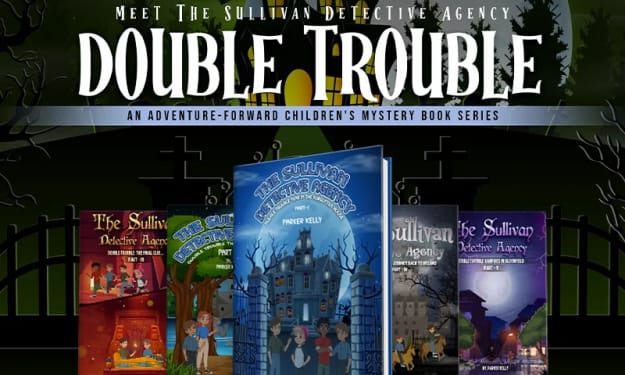
Meet The Sullivan Detective Agency: Double Trouble — An Adventure-Forward Children’s Mystery Book Series
The Sullivan Detective Agency is a series of mystery books for kids that has attracted a lot of kids already. Those who are unaware of this series can read this blog to learn about all the books that have been published in this series. Think classic stories rebuilt for modern readers: short chapters, breadcrumb clues, and ethical detectives who use brains over bravado. It’s an adventure mystery series that respects kids’ curiosity and rewards it. So, let’s explore!
By Parker Kelly Booksabout a year ago in Chapters
Who's the real Monster. Content Warning.
Waking up I turned my head to see that neither Ed nor Matt were here. The door was already closed, it must be passed lights out. Slowly sitting up every muscle in my body protested against the action. All of me hurt. Noticing that both my clothes and bandages were covered in blood. Those two must've cleaned and covered my wounds while I was knocked out.
By Lucy Torralbaabout a year ago in Chapters
The Conduit
“There’s no sign of the doctor aboard the station. Do you think she’s back out on that dammed boat?” asked Han. “Why don’t you let me and the guys take that thing back in with us. We could use a few days of rest and relaxation, and who better to steer her in than some frogmen?” asked Jensen.
By Jason Mortonabout a year ago in Chapters
📖 Secrets of Silence
📖the city streets were drowned in the darkness of night. Alia and Zaryab’s car moved slowly toward the newspaper office. A strange silence lingered between them. Alia’s mind was still haunted by Anwar’s “Hit List.” The shock of seeing her own name written on it was eating her from the inside. The Conversation Breaking the silence, Zaryab finally spoke: “Alia, I think you’re getting too tangled in all this. This game is not meant for ordinary people.” Without turning her eyes away from the road, Alia replied: “If I step back now, this story will remain a mystery forever. And maybe more people will be killed.” Zaryab looked at her deeply but remained quiet. At the Newspaper Office As soon as they reached the office, Alia walked straight into the editor’s room. Without mentioning the secret file, she presented a draft of an article on Anwar’s death and the mysterious circumstances surrounding it. The editor, who was used to seeing the truth only half-awake, said: “Alia, this story is big. But remember, the bigger the secret, the greater the danger.” Alia smiled and replied: “Sir, danger is just another name for my profession.” The Night Attack It was midnight by the time Alia was driving back home. The city’s streets were silent and deserted. As her car approached her apartment, suddenly a motorcycle sped up behind her. The bright headlight hid the rider’s face in the rearview mirror. Alia pressed the accelerator, but the bike chased her relentlessly. In a flash, the rider pulled a shining metal object from his pocket. A gunshot echoed through the night. The car windows shattered into pieces. Alia screamed, ducked low, and swerved the wheel. The car hit the sidewalk and came to a sudden stop. The motorcycle rider didn’t stop—he disappeared into the darkness. Ayan’s Arrival With trembling hands, Alia pulled out her phone and dialed Ayan’s number. “Hello… Ayan… someone just attacked me!” Ayan’s deep voice responded instantly: “I told you this game is dangerous. Where are you?” “Near my apartment…” she panted. “Stay right there. I’m coming.” Within minutes, Ayan’s car pulled up beside hers. He stepped out quickly, his eyes burning with both anger and concern. “Are you okay?” he asked urgently. Alia nodded, but when she looked at the shattered glass of her car, her body trembled again. Ayan bent down, picked up a bullet casing from the ground, and said gravely: “This was only a warning. The real strike hasn’t come yet.” The File and the List Ayan took Alia back with him to the mansion. There, he opened the file again on the table. “Look,” he said, “you’re not the only one on this list. The next name… is Zaryab.” Alia gasped in shock. “Zaryab? But why?” In a serious tone, Ayan replied: “Because he’s getting too close to the truth.” Alia’s mind exploded with doubt. “If Zaryab is in danger, does that mean he’s truly my ally? Or… could he also be part of this deadly game?” Closing the file, Ayan said: “Tomorrow evening, both you and Zaryab must stay alert. The enemy is ready to reveal himself.” The Secret Message That same night, Alia’s phone buzzed. An anonymous message appeared on the screen: “The price of truth is blood. Are you ready?” Her hands shaking, Alia showed the phone to Ayan. He glanced at it and said coldly: “This is not just a threat… it’s a declaration. Next time, he will strike directly.” End of Chapter 4 Through the window, a shadowy figure stood watching them. In his hand was a red marker, and on the paper before him was a list of names. First, he crossed out Anwar. Then, Alia. Now, the third red mark fell on Zaryab’s name. 🔮 Coming Next in Secrets of Silence Alia can no longer trust anyone. Ayan’s warning about Zaryab has shaken her confidence, and the mysterious list has only one message — the enemy is closer than she thinks. The next evening, Alia and Zaryab are forced to meet face to face. But is he really an ally fighting for the truth, or a pawn in the enemy’s deadly game? Meanwhile, another shocking murder rocks the city, leaving a symbol behind — a red cross mark. The killer is no longer hiding in the shadows. He is making his presence known. And this time… the target is someone Alia never expected. ⚡ Chapter 5: The Red Mark — Coming Soon…
By dabeer hashmiabout a year ago in Chapters
📖 Secrets of Silence
The shattered glass from the window still lay scattered across the floor. The wind rushed in, making the curtains sway violently. Alia shivered as she tried to steady herself, but Ayaan’s eyes still carried that same heavy fear. “What is all this?” Alia demanded sharply. “Why do you have Anwar’s file? And who is that man watching us?” Ayaan didn’t reply. He closed the file on the table, picked it up, and said quietly, “It’s not yet time to answer those questions.” Alia snapped angrily, “I’m a reporter. Finding the truth is my job. If you don’t tell me, I’ll uncover it myself!” Ayaan’s gaze remained fixed on her. After a moment, he spoke, “You want the truth? Then be ready. Truth is often like poison.” With that, he opened a copy of the file and placed it in front of her. The moment Alia saw the first page, the color drained from her face. These weren’t Anwar’s business documents— It was a black list. Dozens of names were written there—famous figures of the city, politicians, businessmen, even police officers. Beside each name was a date and a short note: “Incomplete work.” “Threat.” “Must be silenced.”
By dabeer hashmiabout a year ago in Chapters
Jinn(supernatural being) Ki Shaadi Unki shaadi
After watching the first two episodes of "Jinn Ki Shaadi Unku Shaadi", I can safely say that I am hooked. The opening scene brought a big smile to my face as it showed Wahaj Ali as Ali Chaudhary vibing to a song that we all love ( the title track of his old play). You love him from the start as he portrays a character that is young, energetic and silly who is more concerned about his instagram following than anything else. His encounter with Nadia (Romaisa Khan) was delightful and hilarious.
By Raviha Imranabout a year ago in Chapters
📖 Secrets of Silence
Chapter 2: "The Door of the Old Mansion" The night had grown deeper. The moon shimmered alone in the sky, while clouds drifted by, hiding it from sight every now and then. At the edge of Noorabad stood the old mansion, drowned in darkness. For years it had seemed abandoned, but tonight its silent walls felt as though they were hiding a secret from Alia. The moment she turned off the car engine, the atmosphere grew even more terrifying. The branches of the trees rustled with the wind, whispering like unseen voices. Alia took a deep breath and slowly walked toward the gate. The hinges groaned as the heavy doors creaked open, and a strange fear gripped her heart. But she did not turn back. The moment she stepped inside, the dry leaves scattered on the ground crunched beneath her shoes. In the darkness, the wounds of time were clearly visible on the mansion’s walls: broken windows, peeling paint, and old portraits dangling loosely from their hooks. “This place really does look like something out of a horror movie…” Alia whispered to herself, but gathered her courage and kept moving forward. Suddenly, the door behind her slammed shut. Her heartbeat raced. “Who’s there?” she called out. Her voice echoed into the darkness, only to fade away. Moments later, footsteps echoed from the staircase—slow, heavy, deliberate steps. Alia clutched her camera bag tightly. From the shadows of the stairs, a tall figure appeared. That face, those piercing eyes… it was Ayaan. He walked down and said only one thing: “You shouldn’t have come here.” Suppressing her fear, Alia steadied her voice: “I’m a journalist. Asking questions is my right. People are saying Anwar’s death happened because of you. Is that true?” A flicker of light passed through Ayaan’s eyes, but he didn’t answer. Instead, he turned away, as if he had no intention of speaking. Alia stepped closer. “If you didn’t do anything, why stay silent? Hiding the truth won’t change reality.” Ayaan stopped. Slowly, he turned his head and said in a deep voice: “Truth isn’t always what you want it to be.” His words sent a chill through Alia. Suddenly, the mansion’s electricity flickered, and for a brief moment the entire hall lit up. Alia’s eyes landed on a portrait hanging above the wall. It showed Anwar and Ayaan standing together. The words slipped out of her mouth: “So you did know Anwar?” Ayaan gave no reply. He climbed the stairs quickly. Alia made a decision in her heart. “This man knows everything. To reach the truth, I’ll have to follow him.” She carefully began to ascend the staircase. Each step groaned beneath her feet, and the darkness grew heavier. At the top was a long corridor, rooms on both sides. The doors were shut, but from within, faint breathing could be heard. Alia pressed her ear closer and realized someone was reciting softly inside—Qur’anic verses, or perhaps a prayer. She slowly opened the door. Inside stood Ayaan. In front of him, on a small table, lay one of Anwar’s files. Alia gasped. “These… these are Anwar’s documents! How did they end up with you?” Ayaan’s voice turned harsh: “This is not your concern. Leave right now.” Alia, gathering courage, stepped forward. “No. Now it is my concern. Because your secrets might decide the fate of this entire city.” At that very moment, the window panes shattered. The room shook as a storm of wind rushed in. Both of them recoiled in shock. Outside, in the darkness, a shadow fled. Ayaan rushed to the window, but the figure was impossible to identify. Clenching his teeth, he muttered: “He’s watching us…” Alia’s trembling voice asked: “Who?” Fear flashed in Ayaan’s eyes. “The same one who killed Anwar. And now he’s following us.” End of Chapter 2: Alia’s heart pounded violently. She now understood this was no ordinary murder, but the beginning of a dark game. Ayaan’s words echoed in her mind: “He’s watching us…” Who was this mysterious enemy? And after Anwar’s death, whose turn would be next?
By dabeer hashmiabout a year ago in Chapters
📖 Secrets of Silence
It was two o’clock at night. The narrow streets of the small town Noorabad were deserted and silent. The cold wind shook the branches of the trees, and dogs were barking somewhere far away. But suddenly, that silence was shattered by a blood-curdling scream. The scream was so terrifying that it felt as if someone’s soul was being crushed. Hearing it, a few neighbors nervously opened their windows, but the darkness was so deep that nothing could be seen. Moments later, the scream stopped. Only the sound of the wind remained. By the next morning, the entire town was in chaos. The news had spread: Anwar was dead — the same Anwar who ruled over the whole town with an iron fist. People hated him, yet they feared him. His body had been found in the garden of his bungalow. On his face were signs of horror, as though he had seen something at the moment of death that was beyond description. Aliya, a reporter for the Noorabad Gazette, arrived outside the bungalow early in the morning. Cameramen, journalists, and police had already gathered there. “Was this murder or an accident?” “Did Anwar’s enemies finally take revenge?” “Was that horrifying scream his?” People kept asking questions, but no one had the answers. Aliya pulled out her notebook and began taking notes. One thought kept echoing in her mind: “This isn’t just an ordinary story… there’s something hidden behind it.” At that very moment, her eyes fell upon a man standing away from the crowd. Tall, with deep eyes, and a strangely serious expression. Unlike the rest, he wasn’t making noise; he was silently observing everything Aliya froze for a second. That man was Ayan. Ayan was a stranger in town. No one knew where he came from or what he did. People only knew that he lived alone in an old mansion and rarely socialized. Aliya had seen him before, but today his presence felt different… as though he was connected to Anwar’s mysterious death. The police chief, Inspector Faheem, tried to control the crowd: “Everyone step back! This is a crime scene. Nobody is allowed inside.” But Aliya had to do what she always loved — searching for the truth. With her cameraman, she quietly approached the wall of the bungalow and peeked inside. The body still lay in the garden. In Anwar’s hand was a crumpled piece of paper. The police carefully pulled it out and sealed it in an envelope. Aliya narrowed her eyes. “Could that paper be a clue?” Just then, her gaze caught Ayan again. He was leaving — quickly, silently, with strange seriousness. A nameless suspicion took root in Aliya’s heart 🌙 The Shadow of Night By evening, rumors were spreading all over town. Some said Anwar had been killed by his business rivals. Others claimed it was the result of a family feud. But the most frightening rumor was that before dying, Anwar had whispered one name… “Ayan.” The moment Aliya heard this, she turned off her room’s light and peered out the window. In the distance, the old mansion where Ayan lived loomed in the dark. Curiosity and fear grew inside her. “Is Ayan really the killer? Or is he being framed?” She had made up her mind — She must meet Ayan. End of Chapter 1: That night, Aliya quietly drove her car and stopped in front of the old mansion. Under the moonlight, it looked exactly like a haunted house. The door creaked open… and Aliya stepped inside. She had no idea she was about to enter a dangerous game where truth, betrayal, and death would walk side by side.
By dabeer hashmiabout a year ago in Chapters
Liberty Or Death! 4/4. Content Warning.
Author’s Note: Story contains scenes of violence. Reader discretion is advised. -0- Through binoculars, a cavalry charge is a stunning and gruesome thing. Spotter One watched as horses went down, or took fright and threw their riders, none of them were really war animals. They were all for show and the stench of death and presence of violence mixed with their rider’s fears sent them over the edge.
By Alexander McEvoyabout a year ago in Chapters