Politics
The Pulse of Power
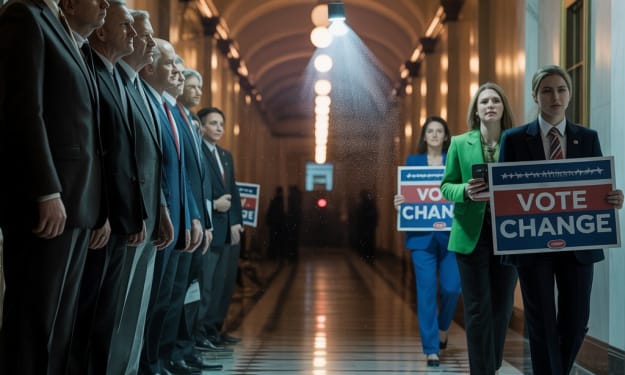
Chapter 1: A House Built on Deals Representative Malcolm Raines had spent 34 years on Capitol Hill. The son of a steelworker from Ohio, he rose through the ranks not on charisma, but on calculation. He knew how to count votes, call favors, and cut deals behind closed doors. Some called him a master tactician. Others, a dinosaur.
By AFTAB KHANabout a year ago in Chapters
“Big, Beautiful Bill” Passed by Congress: What’s Really in It?
Former U.S. President Donald Trump often used dramatic language to describe his legislative efforts. One of the most famous examples was his reference to a “big, beautiful bill” — a phrase he used for several pieces of legislation he advocated while in office (2017–2021). This article dives into the key components of what Trump called his “big, beautiful bill,” why it mattered, what it included, and how it impacted America. For searchability, we focus on keywords like Trump tax cuts, Tax Cuts and Jobs Act, Trump legislation, big beautiful bill meaning, Trump economic policy, 2017 tax reform, and more. Although he sometimes used this phrase loosely, the most notable “big, beautiful bill” that actually passed Congress was the Tax Cuts and Jobs Act (TCJA) of 2017. Let’s break it down step by step. What Was Trump’s “Big, Beautiful Bill”? When Donald Trump became president in January 2017, he promised to deliver the largest tax reform in U.S. history. He repeatedly called his tax proposal “a big, beautiful tax cut for the American people.” By December 2017, the Republican-controlled Congress passed the Tax Cuts and Jobs Act, which Trump signed into law on December 22, 2017. This was the biggest overhaul of the U.S. tax code since 1986. Why Did Trump Want This Bill? Trump campaigned on the promise of boosting the economy, creating jobs, and lowering taxes for the middle class and businesses. Here are the goals his administration outlined for the bill: ✅ Stimulate economic growth by cutting corporate taxes. ✅ Increase take-home pay for workers by lowering individual tax rates. ✅ Encourage U.S. companies to bring jobs and profits back from overseas. ✅ Simplify the tax code by reducing deductions and loopholes. ✅ Attract foreign investment into the U.S. This bill became a signature achievement of his presidency. Key Features of the Tax Cuts and Jobs Act (TCJA) Let’s explore what was actually inside the “big, beautiful bill,” explained simply. 1. Lower Corporate Tax Rate Keyword: corporate tax cut One of the biggest changes was the reduction of the corporate income tax rate from 35% to 21%, starting in 2018. Why? Trump argued that U.S. corporations were moving jobs and profits overseas because America had one of the highest corporate tax rates among developed countries. Lowering it, he claimed, would make U.S. companies more competitive globally. 2. Lower Individual Income Tax Rates Keyword: individual tax cuts, middle-class tax relief The bill lowered tax rates for most individual income brackets. For example: The top tax rate dropped from 39.6% to 37%. The 15% bracket dropped to 12%. The standard deduction almost doubled (from $6,350 to $12,000 for individuals). The child tax credit increased from $1,000 to $2,000 per child. However, these individual tax cuts are set to expire after 2025, unless Congress renews them. 3. Eliminated the Obamacare Individual Mandate Keyword: repeal of Obamacare penalty The bill removed the penalty for not having health insurance, effectively gutting the individual mandate under the Affordable Care Act (ACA). Trump celebrated this as ending a key part of “Obamacare,” although the rest of the ACA remained intact. 4. Pass-Through Business Deduction Keyword: small business tax deduction For small businesses and partnerships (like LLCs and S-corporations), the bill created a 20% deduction on “pass-through” income. This aimed to help small business owners keep more of their earnings. 5. Repatriation of Overseas Profits Keyword: bringing money back to America, repatriation tax American companies holding trillions of dollars overseas were allowed to bring that money back to the U.S. at a reduced tax rate — 15.5% on cash and 8% on non-cash assets. The idea was to incentivize companies to invest that money at home. 6. Limitations on State and Local Tax (SALT) Deduction Keyword: SALT cap The bill capped the deduction for state and local taxes at $10,000. This mainly affected high-tax states like New York, California, and New Jersey. 7. Estate Tax (Death Tax) Changes Keyword: estate tax exemption The estate tax exemption (amount of inheritance free from tax) doubled — from about $5.5 million to over $11 million per person. 8. Bonus Depreciation Keyword: immediate expensing, business investment Businesses were allowed to immediately deduct 100% of the cost of certain investments (like equipment and machinery) rather than spreading the deduction over several years. This was meant to spur investment. Who Benefited Most From the “Big, Beautiful Bill”? Critics and supporters had very different views about who gained from the TCJA. ✅ Corporations saw huge tax savings thanks to the 21% rate. ✅ Wealthy individuals benefited from the lowered top rate and estate tax relief. ✅ Many middle-class families saw modest tax cuts — but temporary. ✅ Small businesses got the 20% pass-through deduction. However, the benefits were uneven, and the Congressional Budget Office (CBO) projected it would add about $1.9 trillion to the federal deficit over 10 years. Economic Impact of the TCJA Short-term Boost In 2018, GDP growth accelerated to around 2.9%, and unemployment dropped to a historic low of 3.5%. Many companies announced bonuses, wage hikes, and new investments. Stock Market Gains The stock market surged after the bill passed, reflecting investor optimism about lower taxes and higher profits. Long-term Concerns Economists warned that much of the growth was temporary and fueled by government borrowing. Federal deficits widened, and wealth inequality increased. Criticism of the “Big, Beautiful Bill” Although Trump celebrated the bill as a “Christmas gift to the American people,” it faced heavy criticism from Democrats and even some conservatives. 🚩 Critics argued it favored the wealthy and corporations over working-class families. 🚩 Some complained it worsened the federal debt and deficit. 🚩 The SALT deduction cap angered taxpayers in blue states. 🚩 Many of the middle-class cuts were temporary, expiring in 2025. Trump’s Other “Big, Beautiful” Proposals While the TCJA was the major law Trump labeled as his “big, beautiful bill,” he also used similar language for other initiatives — though not all passed: Border Security and Wall Funding: He described a proposed immigration bill funding his border wall as “big and beautiful,” but it failed in Congress. Healthcare Reform: He also promised a “big, beautiful healthcare plan” to replace Obamacare, but no such comprehensive bill passed. How Does This Bill Affect You Today? If you’re a U.S. taxpayer, you may still feel the impact of the TCJA: Lower corporate tax rates remain in place. Individual tax cuts are still active (until 2025). The SALT cap and estate tax changes are still in effect. Businesses can still claim immediate depreciation for investments. However, unless Congress acts, many of the individual benefits will expire after 2025. Key Takeaways Here’s a summary of what was in Trump’s “big, beautiful bill” — the Tax Cuts and Jobs Act of 2017: Feature What It Did Who Benefited Lower corporate tax 35% → 21% Corporations Lower individual tax New brackets, higher standard deduction Middle & upper class Repealed ACA mandate No penalty for no insurance All taxpayers Pass-through deduction 20% for small businesses Entrepreneurs Repatriation tax Lower rate on foreign profits Multinational corporations SALT cap Max $10k deduction None (many in blue states lost) Estate tax Higher exemption Wealthy families Bonus depreciation Immediate investment write-off Businesses Final Thoughts: Was It Really “Big” and “Beautiful”? Whether you agree with Trump’s description of the TCJA as “big and beautiful” depends on your perspective. Supporters argue it spurred the economy, created jobs, and simplified taxes. Critics argue it favored the wealthy, increased inequality, and ballooned the deficit. But what is certain is that this law remains a landmark in U.S. tax policy — and one of Trump’s defining accomplishments in office. Related Search Keywords: Trump tax cuts explained Tax Cuts and Jobs Act details What was Trump’s big beautiful bill? How did Trump change taxes? Trump tax reform impact TCJA 2017 summary Corporate tax rate under Trump Middle class tax relief Trump SALT cap explained Trump economic policies By understanding the key elements and consequences of the TCJA, you can better evaluate its impact on the economy, your taxes, and the political debate about fairness and fiscal responsibility.
By Dipayan Biswasabout a year ago in Chapters
Senator Thom Tillis Declines Reelection Bid Following Trump-Aligned Pressure
In a surprising yet increasingly common shift within the Republican Party, North Carolina Senator Thom Tillis announced he will not seek reelection in 2026, citing a rapidly changing political landscape and mounting pressure from pro-Trump factions within the GOP. Tillis, a two-term senator known for his willingness to work across the aisle, becomes one of the most high-profile moderate Republicans to step aside as the party continues to evolve under the enduring influence of former President Donald Trump. A Career Defined by Balance Thom Tillis, who began his Senate tenure in 2015 after serving as Speaker of the North Carolina House of Representatives, built a political identity around pragmatic conservatism. He supported lower taxes and limited government, but often strayed from party orthodoxy when he believed national interest or constitutional principles were at stake. During his tenure, Tillis supported bipartisan initiatives on immigration, infrastructure, and gun safety. Notably, he worked with Democrats to pass legislation strengthening background checks and providing red flag laws—a move that earned him criticism from the Republican base but praise from moderates and independents. In many ways, Tillis represented an increasingly rare breed: a Republican who tried to serve as a bridge between establishment conservatives and a more populist, Trump-aligned base. The Trump Factor However, the Republican Party of 2025 is not the same one that Tillis entered a decade ago. With Donald Trump continuing to assert control over the GOP’s ideological direction and its endorsement machinery, figures like Tillis have found themselves increasingly isolated. Tillis drew ire from Trump and his supporters for his stance on several key issues. He supported the certification of the 2020 election results, criticized Trump’s handling of the January 6 Capitol riot, and voted in favor of a bipartisan infrastructure bill championed by the Biden administration. These decisions led to repeated threats of a primary challenge backed by Trump-aligned candidates. In early 2025, speculation intensified after reports emerged that Trump’s team was actively recruiting a primary opponent for Tillis. The senator’s moderate record, once seen as a strength in purple states like North Carolina, was now a liability in a party leaning hard right. Faced with the likelihood of a bruising primary and the possibility of being unseated by a Trump-endorsed challenger, Tillis made the decision to step aside. Tillis’s Statement In a statement released from his Raleigh office, Tillis said: > “Serving the people of North Carolina has been the honor of my life. But public service must be about the work, not about the political survival of the individual. I believe I can do more for my state and country by stepping aside and helping foster the next generation of leadership.” He also alluded to the internal tensions within the party: > “The Republican Party is at a crossroads. I’ve always believed in principles rooted in limited government, personal responsibility, and constitutional integrity. I hope we can one day rediscover the unity that comes from shared purpose rather than personal loyalty.” Though he did not directly mention Donald Trump, the subtext was clear: Tillis sees the party moving in a direction that leaves little room for ideological dissent or independent thinking. Republican Reaction: Division on Display The response from the GOP was mixed. Establishment Republicans, such as Senate Minority Leader Mitch McConnell, praised Tillis’s record and his “commitment to thoughtful governance.” McConnell called Tillis “a man of courage and reason during an increasingly polarizing era.” Trump and his allies, however, celebrated the decision as a victory for the “America First” movement. Trump posted on Truth Social: > “Thom Tillis was NEVER MAGA. He voted for gun control, refused to stand strong on the border, and betrayed us on January 6. The people of North Carolina deserve better—and now they’ll get it!” Several pro-Trump Republicans echoed the sentiment, describing Tillis’s departure as “the start of a party realignment.” North Carolina Lieutenant Governor Mark Robinson, a likely frontrunner for the GOP nomination, said the state needed “warriors, not compromisers.” Democratic Response: A Window of Opportunity Democrats, meanwhile, view Tillis’s retirement as a significant opportunity in their quest to retake the Senate. North Carolina has been trending purple for several years, with increasingly competitive races at both state and federal levels. While Tillis managed to win reelection in 2020 by a narrow margin, the next GOP nominee may not have the same appeal among moderates and independents. State Attorney General Josh Stein and former Chief Justice Cheri Beasley are among the Democrats considered potential contenders. If the GOP nominates a far-right candidate, Democrats could see an opening similar to Georgia’s Senate races in recent cycles. “The exit of someone like Thom Tillis underscores the civil war happening inside the Republican Party,” said Sen. Chris Murphy (D-CT). “It also gives us a shot to win a seat that’s been tough in recent years.” Broader Implications: A Party in Flux Tillis’s decision to leave reflects a broader trend within the Republican Party—one where moderate and traditional conservatives are increasingly marginalized. Over the past two years, other lawmakers like Sen. Lisa Murkowski (R-AK), Sen. Susan Collins (R-ME), and even former House Speaker Kevin McCarthy have either faced primary threats, stepped down, or struggled to maintain influence. The GOP appears to be solidifying around a set of principles—namely loyalty to Trump, hardline immigration policies, election skepticism, and culture war rhetoric—that leaves little space for centrists or dealmakers. This consolidation may help unify the party’s base, but risks alienating independent voters in key swing states. Tillis’s departure also raises questions about how many other Republicans may choose to exit rather than fight costly intraparty battles. If the party continues down its current path, the Senate GOP of the future may look very different—more ideologically rigid, more confrontational, and far more aligned with Trump. What’s Next for Tillis? Though retiring from the Senate, Tillis is unlikely to fade completely from public life. He has deep ties to the legal and policy communities and is considered a possible candidate for a future think tank role, board position, or even a moderate conservative media platform. Some insiders suggest he may help launch a centrist political advocacy group aimed at restoring traditional conservatism or promoting electoral reform. His retirement statement hinted at such ambitions, noting he would “remain engaged in the work of good governance from outside the walls of Congress.” A Closing Chapter in a Changing Era Thom Tillis’s decision not to seek reelection marks more than the end of a Senate career—it signals the waning influence of the center-right in today’s GOP. His exit underscores a party still grappling with the long-term implications of Donald Trump’s dominance, and a political culture increasingly defined by loyalty tests rather than legislative results. As North Carolina prepares for a pivotal 2026 Senate race, the eyes of the nation will be watching—not just to see who wins, but to understand what kind of Republican Party will emerge from the battle.
By Dipayan Biswasabout a year ago in Chapters
Mentally Incompetent and Alone: Detainees Now Fight Without Help
In an immigration detention center in Georgia, 32-year-old Luis sits silently in his cell, staring blankly at the wall. Diagnosed with schizophrenia before his arrest, Luis hasn’t seen a mental health specialist in over a month. He doesn’t understand why he's being detained, doesn’t know the next step in his legal process, and most crucially—he doesn’t have a lawyer. Like thousands of others in U.S. immigration custody, he is mentally incompetent and utterly alone. As the immigration system becomes more complex and overcrowded, one of the most overlooked and tragic groups within it are the mentally ill detainees—non-citizens who are often incapable of understanding or participating in their own legal proceedings. With no constitutional right to government-appointed counsel in immigration court, many face the threat of deportation, confinement, or indefinite limbo without ever fully understanding why. A Hidden Crisis Behind Bars In 2011, the U.S. Department of Justice estimated that at least 15% of immigration detainees have a serious mental health condition. Today, advocacy groups estimate that number may be even higher, fueled by the trauma of migration, poor detention conditions, and limited access to psychiatric care. Diagnoses range from PTSD and bipolar disorder to cognitive disabilities and schizophrenia. For detainees like Luis, immigration proceedings—often conducted in English, under immense pressure, and with little legal aid—can feel like a maze of confusion. Many are unable to assist in their own defense, communicate with a judge, or even articulate why they left their home country. And yet, unless they are lucky enough to be in a jurisdiction that mandates legal support, they must represent themselves in court. “The system is simply not designed to accommodate people with severe mental illnesses,” says Sara Klein, an immigration attorney and mental health advocate. “It assumes a level of understanding and engagement that mentally incompetent detainees cannot provide.” A Patchwork of Protections While criminal defendants in the United States have the right to a court-appointed attorney if they cannot afford one, immigration proceedings are classified as civil, not criminal. This legal technicality means that even the most vulnerable immigrants—those with severe mental illnesses—do not automatically receive a lawyer, unless they can pay for one or are granted help through rare pro bono programs. Some progress has been made. In 2013, the Franco-Gonzalez v. Holder case led a California federal court to rule that certain mentally incompetent detainees in Western states must be provided legal representation. That decision led to the creation of the National Qualified Representative Program (NQRP), which provides legal aid to detainees in select states. But the program is not nationwide. Most of the country’s detention centers fall outside this protection. In places like Texas, Louisiana, and Georgia—where many large-scale detention centers are located—mentally ill detainees are routinely forced to navigate the legal system alone. “The Franco ruling was a beacon of hope,” says Klein, “but its limited scope means countless people in other states are left behind.” Stories from the Inside Advocates and journalists have documented harrowing accounts of mentally ill detainees in ICE custody: A man with a traumatic brain injury was detained for over a year in Arizona. He had no lawyer, and during hearings, repeatedly answered questions with unrelated words or silence. A transgender woman with bipolar disorder in a California facility was placed in solitary confinement for weeks. Her medication was stopped without explanation. She missed her hearing because she was too disoriented to attend. A young Haitian asylum-seeker with schizophrenia was deported without ever having a chance to explain that he fled political violence. He had no legal representation and was unable to describe his symptoms in court. These cases are not outliers—they are symptoms of a system-wide failure to account for mental health in immigration enforcement. Medical Neglect as a Legal Barrier Even beyond the courtroom, conditions in detention centers often worsen existing mental illness. The use of solitary confinement, lack of access to psychiatric medications, and language barriers all contribute to deteriorating health. In some cases, detainees are medicated without proper evaluations; in others, they go months without necessary treatment. “These centers are not equipped to deal with mental health,” says Dr. Amina Rahim, a psychiatrist who has consulted for ICE facilities. “There’s a revolving door of providers, limited oversight, and high turnover. Patients fall through the cracks every day.” According to a 2021 report by the ACLU, ICE has no uniform policy for screening and treating mental illness. This leaves each facility to create its own protocol—if any. In many detention centers, mental health screenings are minimal and usually occur only once, upon arrival. Worse still, when detainees do exhibit signs of severe illness, they are often punished rather than treated. Solitary confinement remains a common tool used against individuals having mental health crises, despite growing evidence that isolation can exacerbate psychiatric conditions. Legal Limbo and Indefinite Detention Another consequence of mental incompetency is the risk of indefinite detention. If a detainee cannot be deported (due to statelessness or unstable conditions in their home country), but is also deemed unfit to appear in court, they may remain in ICE custody for months—or even years. “There is no safeguard to prevent someone from being forgotten,” says Klein. “Without legal representation, they become invisible.” Some detainees are eventually released, often without treatment plans, housing, or access to care. Others are deported in violation of international human rights norms that prohibit removing individuals with severe mental illness to countries where they face inhumane conditions or abuse. A Call for National Standards Human rights groups and legal scholars argue that the U.S. needs federal-level reform to protect mentally incompetent detainees. They advocate for: 1. A nationwide right to counsel for all immigration detainees with diagnosed mental illness. 2. Uniform mental health screening and treatment protocols in all ICE facilities. 3. Limits on solitary confinement, especially for detainees with psychiatric conditions. 4. Alternative-to-detention programs, such as community-based mental health supervision. Several bills introduced in Congress have aimed to address these gaps, but progress has been slow. Meanwhile, advocates continue to press the Department of Homeland Security (DHS) and Immigration and Customs Enforcement (ICE) to implement internal reforms, including expanding the NQRP and improving medical oversight. “There is no moral justification for allowing mentally incompetent people to face deportation alone,” says Dr. Rahim. “It’s not just legally flawed—it’s inhumane.” The Human Cost At its core, this issue is about dignity. The United States prides itself on due process and equal protection, yet for many detainees with mental illness, these principles remain out of reach. Luis, still detained and still unrepresented, may eventually be deported—without ever understanding the charges against him, the rights he never knew he had, or the country he’s being sent back to. His story is one of thousands. As legal systems debate, and politicians delay, the human cost continues to rise. The question remains: In a system that already pushes the vulnerable to the margins, who will speak for those who can’t speak for themselves?
By Dipayan Biswasabout a year ago in Chapters
The Secret Drawer
Growing up, there was one rule in our house I never dared to break: Don’t touch the drawer in Dad’s study. It was an ordinary drawer in an old wooden desk — scratched, dusty, the handle barely hanging on. But to me, it might as well have been a vault. Dad’s tone made it clear — that drawer was off-limits. So, I didn’t ask. I didn’t sneak. I obeyed. For years. Until curiosity outweighed fear. It was a Saturday. Dad was fixing the car, Mom was out shopping, and I was cleaning the study as part of my chores. The drawer seemed to hum with quiet temptation. My hands shook as I reached for it, expecting alarms to go off, expecting my dad to burst in, furious. But nothing happened. The drawer wasn’t locked. It slid open with a tired creak — revealing a stack of letters, old photographs, and a small, faded box. At first, it looked harmless. But then I saw the photo on top — a woman smiling, holding a baby. My breath caught. The woman wasn’t my mom. The baby wasn’t me. I sat down, sifting through letters written in Dad’s handwriting, dated years before I was born. Letters full of apologies, promises, regrets — addressed to someone named Evelyn. My heart raced as puzzle pieces fell into place. I dug deeper, finding birth certificates, hospital bills, legal documents. Dad had another family. A son. A woman he loved before my mom. My chest tightened. My head spun with questions. Why didn’t I know? Who were they? What happened? The sound of Dad’s footsteps snapped me back to reality. I shoved the drawer shut, heart pounding, mind reeling. That evening, I couldn’t eat. I couldn’t speak. My world felt… different. Shattered. Days passed before I confronted him. I found him in the study, staring at the same drawer like it held ghosts. “I opened it,” I admitted, voice barely steady. His shoulders sagged. His eyes, usually sharp and controlled, softened with sadness. “I always wondered when you would,” he whispered. He explained everything. How he fell in love young. How they had a son — my half-brother. How tragedy struck — an accident, a bitter separation, a lifetime of buried pain. “I kept it all hidden, thinking I could erase the past,” he confessed. “But I’ve learned… the past doesn’t stay buried.” We talked for hours. About mistakes. Regrets. Secrets that fester in silence. I cried — for the brother I never met, for the father I thought I knew, for the child version of me who lived in a house of hidden truths. It took time, but I forgave him. And I reached out. Months later, I met my half-brother. We shared awkward smiles, cautious words, the weight of years between us. It wasn’t perfect. But it was real. That drawer isn’t forbidden anymore. It’s a reminder — that the truth, no matter how heavy, is better than living behind locked doors.
By Straylightabout a year ago in Chapters