Interlude
Corruption, Power, and Global Security Concerns
China’s Military Under Scrutiny: Corruption, Power, and Global Security Concerns China’s military, known as the People’s Liberation Army (PLA), is facing increased attention after reports of investigations into senior officials. According to international media, including reports discussed by security analysts, China has placed high-ranking military figures under investigation as part of its long-running anti-corruption campaign. While China describes these actions as internal discipline, the developments have raised questions about stability, command control, and global security.
By Wings of Time 8 months ago in Chapters
Brass Ring Interlude 3: One Less Orphan
The 25th Annual Overton Orphans Ball had been going well. The LED thermometer tracking donations was almost full. The dance floor was full and the champagne flowed enough to maintain a healthy buzz. Of course there was enough wheeling and dealing for those who continued to work even when they should be playing.
By Jamais Jochim9 months ago in Chapters
New Year Countdown: Meaning, Traditions, and Why It Matters
New Year Countdown: Meaning, Traditions, and Why It Matters The New Year countdown is one of the most widely shared and emotionally powerful moments celebrated across the world. As the final seconds of the old year tick away, millions of people gather in homes, public squares, and online streams to count down together, welcoming a fresh start. This simple act of counting numbers has grown into a global tradition filled with excitement, hope, reflection, and unity. Understanding the New Year countdown helps explain why it remains such an important part of modern culture. At its core, the New Year countdown is the act of counting the final seconds before midnight on December 31, marking the beginning of a new calendar year. The countdown usually starts from ten seconds and ends exactly at midnight, when people cheer, celebrate, and exchange greetings. Fireworks, music, hugs, and celebrations often follow immediately. While it may seem like a small ritual, it carries deep emotional and symbolic meaning. One of the most common questions people ask is why the New Year countdown is so important. The answer lies in human psychology and tradition. The countdown represents closure and renewal at the same time. As the numbers decrease, people mentally let go of the past year, including its challenges, mistakes, and memories. When the clock strikes midnight, it symbolizes a clean slate and a chance to begin again. This feeling of renewal is why so many people feel emotional during the countdown, even if they are celebrating in simple ways. Another popular question is where the New Year countdown tradition began. While ancient civilizations celebrated the start of new years in different ways, the modern countdown is closely tied to the use of mechanical clocks and public timekeeping. As clocks became more common, people began gathering to mark the exact moment of the new year. Over time, cities turned the countdown into large public events, using music, lights, and visual displays to bring people together. Many people also search for information about famous New Year countdown celebrations. One of the most well known takes place in New York City, where a large illuminated ball drops as the countdown reaches zero. Similar events happen in cities around the world, each adding its own cultural style. Some places focus on fireworks, others on music concerts, and some emphasize traditional rituals or prayers. Despite these differences, the countdown itself remains the shared moment that unites everyone. Another common question is what people usually do during the New Year countdown. Traditions vary widely, but there are some shared behaviors. Many people watch the countdown on television or online, especially if they cannot attend a public event. Others host parties, prepare special meals, or gather with family and friends. Kissing at midnight is a popular custom in many cultures, symbolizing love and good luck for the year ahead. Making noise with cheers, horns, or music is also common, as it represents joy and celebration. People also frequently ask about New Year resolutions and how they relate to the countdown. The countdown often acts as the emotional trigger for setting goals and intentions. As midnight approaches, many individuals reflect on the past year and think about what they want to change or improve. The moment the new year begins feels like the perfect time to commit to healthier habits, personal growth, or new ambitions. This connection between the countdown and resolutions strengthens the idea of a fresh beginning. Another important question is why people feel hopeful during the New Year countdown. Hope comes from the belief that time itself offers a new opportunity. Even though life does not magically change at midnight, the shared belief in a new beginning creates motivation and optimism. Celebrating the countdown with others also reinforces a sense of belonging and shared experience, which can be emotionally uplifting. In recent years, many people have asked whether the New Year countdown has changed because of technology. The answer is yes. Live broadcasts, social media, and global streaming have transformed the countdown into a worldwide event. People can now watch celebrations from different countries and time zones, making the experience more connected than ever. Online countdowns and virtual gatherings have also become popular, especially for those who cannot celebrate in person. In conclusion, the New Year countdown is much more than counting numbers before midnight. It is a powerful ritual that represents endings, beginnings, hope, and unity. By bringing people together at the same moment, it creates a shared sense of time and purpose. Whether celebrated in a crowded city square or quietly at home, the New Year countdown continues to be a meaningful tradition that helps people close one chapter of their lives and open another with optimism and anticipation.
By America today 9 months ago in Chapters
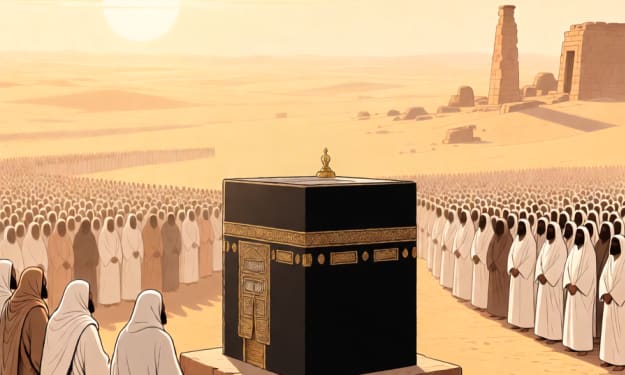
Chapter 9: The Final Sermon (Farewell Hajj)
The Final Sermon (Farewell Hajj) In the year 632 CE, Prophet Muhammad ﷺ knew that his mission was coming to its completion. After more than twenty years of struggle, patience, guidance, and sacrifice, Islam had spread across Arabia. Tribes that once fought endlessly were now united by faith. Justice had replaced chaos, and mercy had replaced revenge.
By Wings of Time 9 months ago in Chapters
Chapter 8: The Peaceful Conquest of Makkah (630 CE)
The Peaceful Conquest of Makkah (630 CE) For nearly twenty years, the city of Makkah had been a place of pain for the early Muslims. It was where they were mocked, tortured, boycotted, and forced to leave their homes. Families were divided, livelihoods were destroyed, and many suffered simply for believing in one God. Even after migration to Madinah, the threat from Makkah never fully disappeared.
By Wings of Time 9 months ago in Chapters
Chapter 7: The Treaty of Hudaybiyyah
Chapter 7: The Treaty of Hudaybiyyah Several years after migrating to Madinah, the Prophet Muhammad ﷺ and his followers still longed for Makkah. It was their birthplace, the city of the Ka‘bah, and the center of their faith. Though they had been forced to leave, their love for Makkah never faded. In the sixth year after Hijrah, the Prophet ﷺ had a dream that Muslims would enter Makkah peacefully to perform Umrah, the lesser pilgrimage.
By Wings of Time 9 months ago in Chapters
Chapter 6: The Early Battles and Self-Defense
The Early Battles and Self-Defense After migrating to Madinah, the Muslim community finally found safety—but peace did not come immediately. The Quraysh of Makkah were furious. They had lost control over the Prophet Muhammad ﷺ and his followers, and they feared that Islam would grow stronger outside their reach. Even though the Muslims had left their homes, property, and wealth behind, the hostility did not end.
By Wings of Time 9 months ago in Chapters
Chapter 5: Building the First Islamic Society in Madinah
Building the First Islamic Society in Madinah After the migration (Hijrah), Prophet Muhammad ﷺ and the early Muslims arrived in Madinah, a city very different from Makkah. Unlike Makkah, Madinah had many tribes, different religions, and long-standing conflicts. The city needed peace, order, and unity. What happened next was not only the beginning of an Islamic state, but also one of the most important social transformations in history.
By Wings of Time 10 months ago in Chapters