History
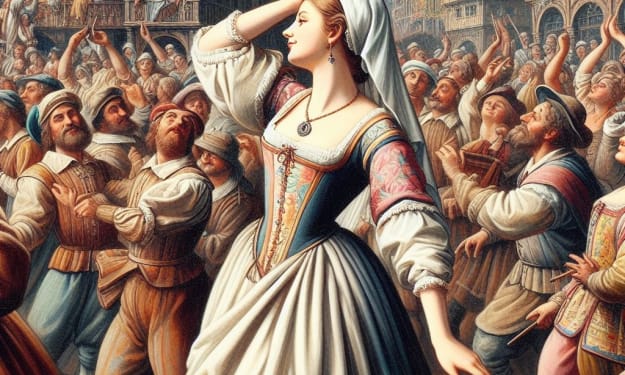
The Medieval Mystery: The Unexplained Dancing Plague of 1518
A Day Unlike Any Other Imagine a beautiful summer day in Strasbourg (present-day France) in July 1518. Suddenly, a woman named Frau Troffea bursts onto the street and begins dancing uncontrollably. No music, no celebration, just a series of frantic twists and turns. The onlookers are stunned. But things get even stranger.
By Mbuh Harmony Neba3 years ago in Chapters
Eid al-Fitr: A Celebration of Unity, Generosity, and Renewal
Eid al-Fitr, commonly known as Eid, is one of the most significant and joyous festivals celebrated by Muslims worldwide. It marks the end of Ramadan, the Islamic holy month of fasting, and is a time for spiritual reflection, gratitude, and communal bonding. This festive occasion holds deep cultural, religious, and social significance, uniting people from diverse backgrounds in the spirit of generosity, compassion, and love.
By Afeef Khan3 years ago in Chapters
Why is Utah so weird?
Mormons. Answer: Mormons made Utah odd. A century and a half of Mormon voting majority in an isolated, insular state made Utah unique in the nation. The red-rock deserts of Nevada and Arizona, the deep-red politics of Idaho and Wyoming, the glitzy ski towns of Colorado and Wyoming, and the ruggedly independent, outdoors-loving culture of the mountain west region make Utah seem like the intuitive average of its neighbors. But it has certain things its neighbors don't. The area has drive-thru soda businesses.
By Violet Muthoni3 years ago in Chapters
Pages of sympathy: the human library chronicles.
In the heart of Denmark, nestled amidst the quaint streets of Copenhagen, there existed a library unlike any other. Its shelves weren't lined with books filled with fictional tales or historical accounts; instead, they held something far more precious: human stories.The Human Library of Denmark was a sanctuary of empathy, where people could check out "human books" to engage in personal conversations and gain new perspectives. Each "book" was a living, breathing individual with a unique story to tell, and visitors could borrow them for a designated period, sitting down together for a genuine exchange of experiences.Among the shelves, there was the "Refugee," who had traversed treacherous lands in search of safety and belonging. Their story was one of resilience in the face of adversity, of rebuilding a life from the fragments of a shattered past. As visitors listened intently, they couldn't help but feel a newfound appreciation for the privileges they often took for granted.Next to the "Refugee" sat the "Activist," a beacon of passion and dedication. They shared tales of protests and advocacy, of fighting for causes close to their heart. Through their words, listeners were inspired to become agents of change in their own communities, to stand up for what they believed in and make a difference in the world.Further down the aisle, there was the "LGBTQ+ Advocate," whose journey was one of self-discovery and acceptance. Their narrative spoke of overcoming discrimination and prejudice, of embracing identity with courage and pride. For those struggling with their own identity, the conversation was a source of comfort and reassurance, a reminder that they were not alone.In a cozy corner of the library, the "Mental Health Advocate" shared their experiences with anxiety and depression. Their story was raw and vulnerable, yet filled with hope and resilience. As they spoke, a sense of understanding and compassion filled the room, breaking down the stigma surrounding mental illness and fostering a community of support.Among the diverse array of human books, there was also the "Homeless," the "Single Parent," the "Cancer Survivor," each offering a unique perspective on life's challenges and triumphs. Through these intimate conversations, visitors gained a deeper understanding of the human experience, forging connections that transcended societal boundaries.But the Human Library was not just a place for borrowing books; it was a platform for dialogue and connection. In addition to one-on-one conversations, the library hosted workshops, panel discussions, and community events, bringing people from all walks of life together in pursuit of empathy and understanding.One particularly memorable event was the "Living Library Festival," where the shelves came to life with an eclectic cast of human books. Visitors roamed the aisles, browsing the titles and engaging in lively discussions with the diverse array of storytellers. Laughter echoed through the halls as strangers became friends, united by the shared experience of human connection.As word of the Human Library spread, its impact rippled far beyond the borders of Denmark. Similar libraries began to spring up in cities around the world, each one a testament to the power of empathy and storytelling. From New York to Tokyo, people embraced the concept, eager to bridge divides and foster understanding in their own communities.In an age marked by division and discord, the Human Library stood as a beacon of hope, reminding us of the common humanity that binds us together. In its hallowed halls, strangers became allies, ignorance gave way to enlightenment, and empathy flourished like never before. And as the pages of each human book were turned, new chapters of compassion and connection were written, shaping a brighter future for generations to come.
By Eric anexis 3 years ago in Chapters
Beginning today 4/5/2024...I shall be highlighting works by exceptional Black authors on this platform. Chapter 1.
Winner of the True Colors Challenge 3 years ago. Karlton A. Armistad is Andrew Little. Here, pseudonyms abound. My life as a flow of colors - First place winner.
By Novel Allen3 years ago in Chapters
"Fool's Day Follies
Chapter 1: Origins and History April Fool’s Day, celebrated on April 1st each year, has murky origins shrouded in mystery and folklore. Some trace its roots back to ancient Rome, where the festival of Hilaria was celebrated at the end of March, while others point to the adoption of the Gregorian calendar in the 16th century as the catalyst for the modern observance of April Fool’s Day. Regardless of its beginnings, the day has evolved into a global phenomenon, uniting people across cultures in the spirit of playful deception. Chapter 2: Traditions and Customs From harmless pranks to elaborate hoaxes, April Fool’s Day is marked by a wide array of traditions and customs. In France, it is customary to tape a paper fish to someone’s back as a symbol of being an “April fish,” while in Scotland, the festivities extend to a two-day event known as “Hunt the Gowk,” where individuals are sent on fool’s errands. Across the globe, people eagerly anticipate the opportunity to unleash their creative mischief and revel in the joy of laughter. Chapter 3: The Psychology of Pranks What drives us to play pranks on one another? The psychology of April Fool’s Day offers valuable insights into human behavior and social dynamics. From the thrill of surprise to the satisfaction of outwitting others, pranking taps into fundamental aspects of our psyche, providing an outlet for creativity and camaraderie. Yet, amidst the laughter, lies a delicate balance between humor and harm, reminding us of the importance of empathy and respect in our interactions with others. Chapter 4: Lessons Learned Beyond the laughter and levity, April Fool’s Day imparts valuable lessons that resonate long after the last prank has been played. It teaches us the importance of humility, as even the most cunning pranksters can find themselves on the receiving end of a well-executed joke. It underscores the power of laughter as a force for connection and joy, bridging gaps and fostering bonds between friends and strangers alike. And perhaps most importantly, it reminds us to approach life with a sense of curiosity and wonder, embracing the unexpected twists and turns with an open heart and a playful spirit. Chapter 5: The Evolution of April Fool’s Day As society evolves, so too does the celebration of April Fool’s Day. In the age of social media and digital communication, pranks have taken on new forms, with viral hoaxes and elaborate ruses spreading rapidly across the globe. Yet, amidst the ever-changing landscape, the essence of April Fool’s Day remains unchanged – a day dedicated to laughter, camaraderie, and the joy of the unexpected. Epilogue April Fool’s Day is more than just a day of pranks and practical jokes; it is a celebration of the human spirit, a testament to our innate creativity, and a reminder of the importance of laughter in our lives. So, as you go forth into the world, may you approach each day with a playful heart and a mischievous twinkle in your eye, for in the game of life, every day is an opportunity to embrace the unexpected and revel in the joy of being alive.Despite the occasional groan-inducing prank gone awry, April Fool's Day fosters a sense of camaraderie and joy as individuals come together to revel in the spirit of mischief. It's a day where laughter reigns supreme, bonds are strengthened through shared experiences, and the mundane is momentarily transformed into the extraordinary. Whether it's a clever joke, a harmless prank, or a witty quip, April Fool's Day reminds us to embrace the lighter side of life and celebrate the joy of playful deception.
By Odo Pamela 3 years ago in Chapters
"Unveiling the End Times: A Closer Look at Four Prophetic Trends Shaping Our World". Content Warning.
As we traverse through the contemporary world, we are constantly witnessing the manifestation of prophecies from scriptures. With the year 2024 rapidly approaching, the significance of these prophecies becomes increasingly evident, as they intertwine with the fabric of our society. This narrative delves into four major trends that are shaping our world today, each of which seems to align with biblical prophecies.
By Dreamweaver3 years ago in Chapters
Why Are Red HEIFERS important
Red heifers hold significance in Judaism due to their association with purity rituals, particularly in the context of the Temple in Jerusalem. According to Jewish tradition, the ashes of a red heifer were required for the purification of individuals who had come into contact with a dead body. This ritual purification was essential for those who wished to participate in certain religious activities or enter sacred areas.
By Azmat Ullah 3 years ago in Chapters
Colliding in the Fog: The Tenerife Airport Disaster
On March 27, 1977, the world witnessed one of the deadliest aviation disasters in history at the Los Rodeos Airport (now Tenerife North Airport) in Tenerife, one of Spain's Canary Islands. The collision between two Boeing 747 aircraft, operated by Pan American World Airways (Pan Am) and KLM Royal Dutch Airlines, resulted in the loss of 583 lives. This catastrophic event, known as the Tenerife Airport Disaster, serves as a poignant reminder of the critical importance of effective communication, meticulous planning, and situational awareness in aviation.
By Afeef Khan3 years ago in Chapters