History
Sushila Karki Becomes Nepal’s First Female PM as Political Crisis Deepens
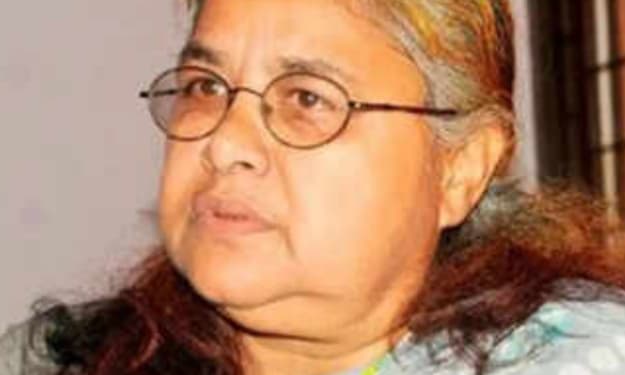
Newly Elected Prime Minister Sushila Karki Takes Oath Amid Political Uncertainty Newly elected Prime Minister Sushila Karki has taken the oath of office and secrecy from the President. Amid rising uncertainty, President Ram Chandra Paudel appointed Karki as Prime Minister in line with the demand of the protesting Gen Z Party. Suresh Chandra Chalise, the President’s Foreign Affairs Advisor, said: "The President has appointed Sushila Karki as Prime Minister based on the spirit of the Constitution." Having already made history as Nepal’s first female Chief Justice, Karki has now become the first woman to serve as Prime Minister. The swearing-in ceremony was attended by senior leaders, dignitaries, and officials, though several key figures from major parties were absent, reportedly under military protection. Dissolution of the House of Representatives and Elections The protesting party had demanded the dissolution of the House of Representatives. When asked, Presidential Press Advisor Kiran Pokhrel said: "The President will move forward in consultation with the Council of Ministers." Advisor Chalise confirmed that dissolution was part of the agreement but did not elaborate further, saying the step was taken to manage the “uncomfortable and unusual” political situation. According to reports, the Council of Ministers will recommend dissolving the House in its upcoming meeting. Preparations are also underway to declare a state of emergency and announce election dates. It is believed that President Paudel’s actions may resolve the leadership vacuum and related confusion. However, some observers note that how Gen Z leaders and political parties react, and what decisions the new government makes, will shape Nepal’s political future. Reactions from CPN-UML Leaders of the CPN-UML, who were forced out of power, expressed dissatisfaction with the alleged agreement to dissolve parliament. UML General Secretary Shankar Pokhrel wrote on Facebook: "It is ironic that those who once called the dissolution of parliament unconstitutional when a majority Prime Minister did it are now moving toward dissolution themselves. We must remain vigilant and cautious." Party MP Surya Thapa called the day a “Black Day.” Reports indicate that some leaders, after consulting the President, proposed forming a new government that would extend the House’s life as much as possible. Others argued instead for prioritizing the constitutional framework for government formation. Meanwhile, leaders of the CPN-Maoist Center reportedly held a virtual meeting and condemned the appointment. Both parties’ leaders are said to be under military protection. International Reactions India, the UK, Japan, and the United Nations reacted Friday night to the appointment of former Chief Justice Sushila Karki as Prime Minister. The reactions came after the sudden ouster of the previous government by the Gen Z Movement and the dissolution of the House of Representatives. The new government has announced February 21 as the date for parliamentary elections. Indian Prime Minister Narendra Modi, in posts on social media in Nepali, Hindi, and English, congratulated the new Prime Minister: "Heartfelt congratulations to Madam Sushila Karki on assuming office as the Prime Minister of Nepal’s interim government. India is fully committed to peace, development, and prosperity for our brothers and sisters in Nepal." At the swearing-in ceremony at Sheetal Niwas on Friday evening, ambassadors from the U.S., China, India, and other countries were present. Indian Ambassador Naveen Srivastava, U.S. Ambassador Dean Thompson, and Chinese Ambassador Chen Song congratulated the new Prime Minister. The British Embassy in Kathmandu called Karki’s appointment as interim PM an “important step” following the tragic deaths, injuries, and destruction caused in recent days. "As Nepal’s oldest friend, the UK is committed to supporting the country’s aspirations for a responsive and inclusive government," the embassy stated. Japan expressed strong hope for a peaceful and democratic transition in Nepal. "We welcome the appointment of Madam Sushila Karki as interim Prime Minister by President Ram Chandra Paudel, and see it as an important step toward change," read Japan’s statement, adding that it will continue supporting Nepal’s development and prosperity. United Nations Response UN Resident Coordinator in Kathmandu, Hanaa Singer-Hamdy, said in a statement: "At this critical moment, the UN stands with the people of Nepal for peace, justice, transparency, accountability, and development." She praised President Ram Chandra Paudel, Army Chief Ashok Raj Sigdel, and Gen Z youth leaders for their role in making the transition possible, while also honoring those who lost their lives during the movement. She expressed best wishes for the new Prime Minister, acknowledging the heavy responsibility she assumes at such a sensitive time. The UN reiterated its commitment to supporting Nepal’s stability, human rights, and sustainable development for the well-being of its people.
By Real contentabout a year ago in Chapters
It is surprising that the Israeli Prime Minister mentioned Pakistan twice while justifying the attack on Qatar.
It is surprising that the Israeli Prime Minister mentioned Pakistan twice while justifying the attack on Qatar. A video message from Israeli Prime Minister Benjamin Netanyahu — posted on social media over the past few hours — is being widely discussed. He released the message on the occasion of the 24th anniversary of the 9/11 attacks in the U.S., and used that context to justify Israel’s strike in Qatar. In the roughly two-minute statement, Netanyahu also referred to Pakistan and Osama bin Laden. Justifying the strike on Qatar, Netanyahu said that the United States had pursued Al Qaeda and killed Osama bin Laden in Pakistan. He warned Qatar and other countries not to shelter extremists, or Israel would continue to carry out such strikes abroad. It should be recalled that Osama bin Laden was killed on 2 May 2011 in an operation carried out by U.S. Navy SEALs in Abbottabad, Pakistan. Israel carried out an attack on Hamas senior leaders in Doha, Qatar, on Tuesday. What did Netanyahu say in his message? In the video message released by the Israeli Prime Minister’s Office on 10 September, Netanyahu began by referring to 11 September: “Tomorrow is 11 September. We remember 11 September. On that day Islamist terrorists carried out the worst brutal attack on American soil since the founding of the United States.” He went on: “We (Israel) also had our 11 September. We remember 7 October. On that day Islamist terrorists carried out the worst brutal act against Jews since the Holocaust.” Continuing, the Israeli prime minister said: “What did the United States do after 11 September? It vowed to capture those terrorists responsible for this heinous crime, wherever they may be. Two weeks later the UN Security Council passed a resolution saying governments cannot shelter terrorists.” Justifying Tuesday’s strike in Qatar, Netanyahu said: “Yesterday we acted on that principle. We did in Qatar what shelters terrorists, finances Hamas, and gives terrorist leaders magnificent palaces. Qatar gives them everything.” Netanyahu further said: “So we did what the United States did — it pursued Al Qaeda terrorists in Afghanistan and then killed Osama bin Laden in Pakistan.” Addressing the strong international reaction to the Qatar strike, the Israeli prime minister said: “Now many countries are condemning Israel. They should be ashamed. After the killing of Osama bin Laden by the United States, what did they do? Did they say ‘oh dear, Afghanistan or Pakistan has been wronged’? No — they applauded. These countries should stick to the same principles and praise Israel for upholding them.” Netanyahu warned Qatar and other countries that harbor terrorists, saying: “I tell Qatar and all countries that shelter terrorists: either expel them or bring them to justice, because if you do not, we will.” “A deplorable attempt to justify its crime”: Qatar Qatar’s Ministry of Foreign Affairs condemned Netanyahu’s comparison of the Doha strike to the U.S. pursuit of Al Qaeda, saying the Israeli prime minister’s statement was not only an attempt to justify Israel’s cowardly attack but also a shameful effort to justify future violations of state sovereignty. The statement said Netanyahu is fully aware that Hamas’s office in Qatar is hosted as part of Qatar’s mediation efforts at the request of both the U.S. and Israel. Qatar’s foreign ministry said that Netanyahu’s allegation that Qatar secretly sheltered a Hamas delegation is a deplorable attempt to justify a crime that the whole world has condemned. The ministry added that Netanyahu tried to justify the Doha attack by comparing it to the U.S. pursuit of Al Qaeda after 9/11. It also noted that Al Qaeda never had a negotiating delegation with whom the U.S. was seeking regional peace with international backing. Qatar said that despite attempts to tarnish its reputation, it continues to act as a neutral international partner for regional and global security and stability. The statement added that Qatar will take all necessary steps to defend its sovereignty and territory. Pakistan is not Qatar, and Israel is not the U.S. Netanyahu mentioned Pakistan twice in his message, prompting many social media users to comment. User Mansoor Ahmed Qureshi wrote that Netanyahu is warning Qatar to “hand over the terrorists to us or we will act.” He added that it is surprising Netanyahu mentioned Pakistan twice while justifying the Doha strike. Another user wrote, Pakistan is not Qatar and Israel is not the U.S. One user commented that “it is not right to appropriate 9/11 and use it to justify a terroristic attack on another country. The Taliban are terrorists, but the U.S. negotiated with the Taliban in Qatar; the U.S. did not attack Taliban delegations in Qatar.
By Real contentabout a year ago in Chapters
Kyiv Government Building Hit for First Time as Russia Launches Record 800 Missile and Drone Strikes Across Ukraine
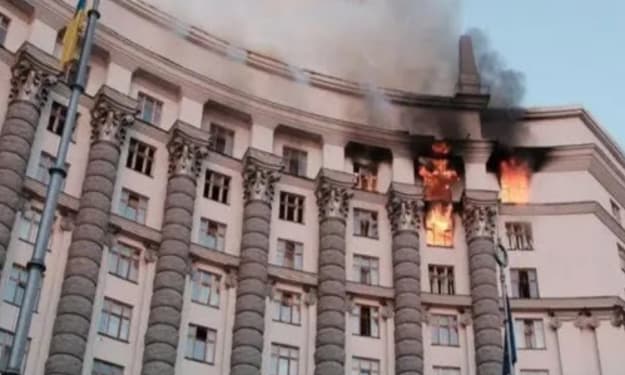
vernment Building Hit for First Time as Russia Launches Record 800 Missile and Drone Strikes Across Ukraine Ukrainian Prime Minister Yulia Svyrydenko has said that for the first time during the war with Russia, Kyiv’s central government building has been targeted. Yulia Svyrydenko stated that the roof and upper floors of the building were badly damaged, and a fire broke out as a result of the strike. Nationwide attacks killed at least four people, including a child and a young woman who died when a nine-story residential building in Kyiv’s Sviatoshynskyi district was hit. Ukraine’s Air Force claimed that in the latest overnight assault, Russia launched a record number of drones and missiles, with the total exceeding 800. According to the Air Force, nine missiles and 56 drones hit 37 sites, with debris damage reported at eight of them. President Volodymyr Zelenskyy said that the strikes also caused destruction in the cities of Zaporizhzhia, Kryvyi Rih, and Odesa, as well as in the regions of Sumy and Chernihiv. On social media, Zelenskyy wrote: “Such killings now, when genuine diplomacy could have started long ago, are a deliberate crime and an attempt to prolong the war.” He urged world leaders to show a clear political will to stop these attacks. The Russian Ministry of Defense claimed it had struck Ukraine’s military and industrial facilities and transport infrastructure, damaging arms and equipment depots. The government building in Kyiv that was hit is also known as the Cabinet of Ministers building, as it houses the offices of key Ukrainian ministers. Although details on Sunday were unclear, Kyiv Mayor Vitali Klitschko suggested that during the interception of a drone, it may have accidentally crashed into the Cabinet building. He wrote on Telegram: “A fire broke out in a government building in the Pechersk district, possibly as a result of downing a UAV.” This marks a new and significant turn in Russia’s war on Ukraine. Until now, no government building had been struck in central Kyiv, which has been heavily fortified since the beginning of the war. The incident is likely to cause fear and concern among the population. It is also a symbolic strike, showing that Russian President Vladimir Putin’s statements about being ready for peace are merely a façade. He is not stopping; instead, Russia is intensifying its attacks. On Sunday morning, people saw smoke rising into the sky from just behind Independence Square. Later, a video posted on social media showed two Russian cruise missiles moving at high speed, followed by another powerful explosion. In Kyiv, a residential building strike shattered the windows of Valentyna’s home, and glass rained down on her. At the time of the attack, Valentyna and her husband were sleeping. “At least we’re alive,” she said. One of her young neighbors and the neighbor’s child were killed. Neighbors said the family had only recently moved into the apartment, and the woman’s husband was severely injured and hospitalized. Ukrainian footballer Heorhiy Sudakov’s Kyiv apartment was also damaged in a Russian drone strike. The 23-year-old player wrote on Instagram that his wife and child were inside during the attack. Sudakov is currently away on an international tour but posted photos and videos after the strike. It remains unclear whether his family was injured. Kyiv officials reported that in the Sviatoshynskyi and Darnytskyi districts, several multi-story residential buildings were directly hit and partially destroyed. In other parts of Ukraine, such as the city of Zaporizhzhia, 17 people were injured in a strike. According to regional head Ivan Fedorov, multiple homes, buildings, and a nursery were damaged. Fedorov added that in the village of Novopavlivka outside the city, a Russian glide bomb killed one woman and left another person missing. According to President Zelenskyy, one person was killed in Safonivka in the Sumy region, and another was killed in the Chernihiv region. Russia also struck a central Ukrainian city, which is Zelenskyy’s hometown. Three infrastructure sites were damaged there. Air raid sirens sounded throughout the night across the country. Ukraine also launched retaliatory strikes. Russia’s Ministry of Defense said its air defenses intercepted or destroyed 69 Ukrainian drones over several Russian regions. Vyacheslav Gladkov, governor of the Belgorod region, reported on Sunday that at least three civilians were killed and buildings destroyed. Robert Brovdi, commander of Ukraine’s unmanned aerial forces, said Ukrainian drones targeted a major Russian oil pipeline, striking a pumping station in the Bryansk region. Earlier this week, Putin rejected proposals for the deployment of Western forces in Ukraine immediately after any ceasefire. British Prime Minister Keir Starmer condemned Sunday’s strikes, saying they showed that “Putin believes he can act with impunity” and that he is “not serious about peace.” French President Emmanuel Macron said that 26 of Ukraine’s allies have formally pledged to deploy forces by land, sea, or air once the war ends, in order to provide security. He gave no further details. Putin warned that any troops deployed in Ukraine would be considered “legitimate targets.”
By Real contentabout a year ago in Chapters
Political Turmoil in France: Macron’s Hunt for a New Prime Minister. Content Warning. AI-Generated.
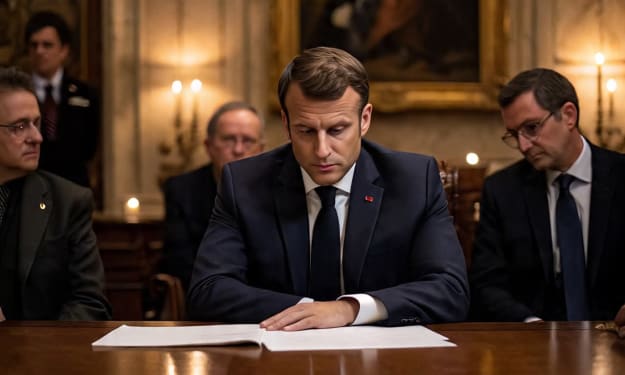
France has entered yet another phase of political instability after Prime Minister François Bayrou was forced to resign on September 8, 2025, following a devastating defeat in a confidence vote. The vote, which saw 364 lawmakers reject his government compared to just 194 in support, reflects the deep divisions in France’s National Assembly and raises urgent questions about the future of President Emmanuel Macron’s second term.
By Abdullah Bachaabout a year ago in Chapters
Norway’s Labour Party Secures a Narrow but Historic Victory
Norway’s Labour Party Secures a Narrow but Historic Victory Norway has just witnessed a significant political event: the Labour Party, led by Prime Minister Jonas Gahr Støre, has claimed victory in the general election. While the margin was narrow, the win is symbolically and politically important, as it secures Støre’s mandate to continue leading the country at a time when Norway is grappling with critical debates over taxation, economic policy, and the future of its welfare model.
By Abdullah Bachaabout a year ago in Chapters
Title: Will India–US Relations Recover? Trump, Modi and the Oil-Tariff
Will India–US Relations Recover? Trump, Modi and the Oil-Tariff US President Donald Trump has described relations between the United States and India as “very special” and said that he and Indian Prime Minister Narendra Modi “will always remain friends” and that “there is nothing to worry about.” Prime Minister Narendra Modi has praised Trump’s statement. He said that he sincerely values President Trump’s sentiments and fully supports him. In a post on social media platform X, he wrote: “I appreciate President Trump’s feelings and his positive thoughts about our relationship. India and the United States have a highly positive, comprehensive, and globally strategic partnership based on understanding.” On social media, users are sharing interesting comments on this U-turn, but many Indian users are also criticizing both Trump and Modi. Earlier, Trump had said that it seems “we have lost India and Russia to China.” When asked to respond to Trump’s remarks, Indian Ministry of External Affairs spokesperson Randhir Jaiswal said: “I have nothing to say on this.” Apart from Trump, his trade adviser Peter Navarro has also once again targeted India. Navarro said that India does not accept the truth and twists the matter. India’s Ministry of External Affairs has called Navarro’s statements misleading. Will India–US relations be the same as before? Trump was asked: “Are you ready to restart relations with India at this time?” In response, Trump said: “I will always remain Modi’s friend. He is a great prime minister. I will always remain a friend, but I don’t like what he is doing right now. However, India and the United States have very special relations, there is nothing to worry about. Sometimes such situations happen.” When asked who he held responsible for India falling into China’s hands, Trump said: “I don’t think we’ve lost them. I am disappointed that India is buying Russian oil, and I have imposed a 50% tariff to make that clear to them. But I get along well with Modi.” Asked about ongoing trade agreements with India and other countries, Trump said: “Negotiations are going very well. Other countries are also doing well. We are doing well with everyone.” Analysts say that President Trump is an “unpredictable” personality. He can change his stance at any time. Navtej Sarna, who served as India’s ambassador to the US, said that Donald Trump was an unpredictable leader in his first term, and this approach has only intensified in his second. Sarna said that President Trump is running the presidency in a completely different way. All of his advisers have become loyal to him. No one is ready to advise him. Washington-based journalist and author Seema Sirohi says that policies in the United States are being made by only one person—Donald Trump. Policies are not being made bottom-up but top-down. Sarna said that the trust both countries built over 20–25 years has now weakened significantly. President Trump attacked the Indian economy and bilateral ties without any solid reason. Sarna said: “President Trump has attacked this relationship, the Indian economy, and our ties.” Seema Sirohi said: Those who worked to improve this relationship over the past 25 years say that President Trump is destroying it entirely. There is also resentment in India over America’s behavior. In many places, demands have been raised that if the US imposes a 50% tariff, India should also retaliate. But Sarna considers this an emotional reaction. Sarna said: “In my view, retaliatory action would be somewhat emotional. Our long-term interest is to preserve as much as possible of the progress, benefits, and cooperation we have had with the United States.” He also said that India should not be so dependent on any one country that when a problem arises, it turns into a crisis for us. Seema Sirohi said that if Prime Minister Modi and President Trump talk on the phone, things could either get worse or improve. According to her: if you want to change President Trump’s thinking, you will have to work in unconventional ways. Navarro and Howard Lutnick’s criticism of India Late Friday night, Peter Navarro posted about India on his X account. He wrote: “India’s high tariff rates hurt American jobs. India buys oil from Russia only to make profits, and this money goes into Russia’s war machine. Ukrainians and Russians are being killed in this. American taxpayers have to spend more money. India does not accept the truth and only spins stories.” Peter Navarro, one of President Donald Trump’s most trusted advisers, has recently been taking an aggressive stance in his remarks about India and Modi. Earlier, Navarro had called the Russia–Ukraine conflict “Modi’s war.” On August 29, he wrote on X that the revenue from Russian oil goes to India’s politically connected energy traders and directly into Putin’s war fund. US Treasury Secretary Howard Lutnick has said that India will have to choose between the United States and Russia. In an interview, Lutnick said that before the Russia–Ukraine war, India bought only 2% of its oil from Russia, but after the war this figure rose to 40%. According to him, India must decide where it stands. If it does not stop importing Russian oil, leave BRICS, and support the US and the dollar, it will face a 50% tariff. Lutnick also said that India will soon apologize and come to the negotiating table with President Trump. America’s stance on BRICS has been aggressive. In July 2025, after the BRICS summit in Brazil, Trump declared BRICS to be anti-American and threatened to impose an additional 10% tariff on its member countries. What did the Finance Minister and the Ministry of External Affairs say? Finance Minister Nirmala Sitharaman reacted strongly to Peter Navarro’s statement about “Brahmins making profits.” In an interview with a news channel, Sitharaman said that the statement about “Brahmins making profits” is exactly like the British policy of “divide and rule.” Sitharaman said that India will continue to buy oil from Russia because India’s oil purchases are based on economic and commercial reasons. On Navarro’s remarks, MEA spokesperson Randhir Jaiswal said: “We have seen Peter Navarro’s false and misleading statements, and we categorically reject them.” The Ministry of External Affairs said that India will continue talks with the United States on trade matters. Social media reactions A user named Surbhi called the situation shameful, writing: “Modi is quick to respond to praise, but stays silent on the nation’s humiliation. “Modi has not said a word about the 42 times Trump has humiliated our nation’s integrity... but upon hearing his own praise, he immediately responded to Trump.” She further wrote: “What exactly is Modi thanking Trump for? For the 50% tariffs on India, or for the insults and putting India on par with Pakistan?” A user named Ankit Mainak wrote: “In the morning, he says we’ve lost India to China. At night, he says we haven’t lost India but will still impose 50% tariffs. Donald Trump is the American version of Modi.” A user named Advait Kala wrote: “Trump extended a hand to India late. While Prime Minister Modi accepted it graciously, the trust is broken. Now the next step is rebuilding relations, in which India seems more neutral than before. There was a time when these relations looked very promising.” Many users wrote that Modi did not respond directly but simply shared the ANI bullet points praising him.
By Real contentabout a year ago in Chapters
World War 3:and the Collapse of Global Economy
World War 3 and the Collapse of Global Economy Wars are never confined to battlefields. They ripple into homes, cities, and the very foundations of society. If World War 3 were to erupt, the destruction would not stop at bombs and missiles. The collapse of the global economy could be just as devastating—leaving nations powerless, trade frozen, and everyday survival tied to what little people could hold in their hands.
By Wings of Time about a year ago in Chapters
Afghan Defense Minister Mullah Yaqoob: Pakistan’s Security Weakness, ISIS Defeated, and Calls for Balanced Ties With U.S., China, and Russia
Afghanistan’s Defense Minister Mullah Yaqoob has claimed that Pakistan’s “security institutions are weak, and to cover this weakness they put blame on Afghanistan.” Mullah Yaqoob is the eldest son of Taliban co-founder Mullah Omar, and in the past he also served as head of the Taliban’s Military Commission. The minister further stated: “Tehreek-e-Taliban Pakistan (TTP) and the Baloch (separatists) conduct their operations inside Pakistan. They attack big cities hundreds of kilometers away from the Durand Line.” He said this in response to a question regarding Pakistan’s repeated allegations that the banned TTP and the Baloch Liberation Army (BLA) use Afghan soil to launch attacks inside Pakistan. Mullah Yaqoob asked: “If they (TTP, Baloch insurgents) are entering from Afghanistan and traveling hundreds of kilometers inside Pakistan, then why aren’t they being stopped there? Whether it is a car bomb, target killing, or blast—it should be prevented within Pakistan. In my opinion, this exposes the weakness of their security institutions, and to hide that weakness, they blame Afghanistan.” Pakistan’s Position Pakistan has repeatedly warned Taliban authorities in Afghanistan that TTP and other banned groups use Afghan territory for militant activities. Pakistan has also claimed in the past that it provided evidence of this to Afghan authorities. Earlier this year, Pakistan’s military claimed to have killed 104 alleged militants in two separate incidents while they were trying to cross from Afghanistan into Pakistan. Mullah Yaqoob: "We Don’t Want Bad Relations With Pakistan" The Taliban defense minister emphasized that exchanging accusations and propaganda is not the solution. Instead, “reality should be acknowledged, cooperation should be increased, and a good plan should be made to resolve these issues.” He clarified that the Taliban government does not want strained ties with Pakistan, because neither country benefits from hostility. “The unfortunate reality is that relations between Afghanistan and Pakistan are not as normal as they should be, and I am not happy with this situation,” Yaqoob said. Do ISIS and Al-Qaeda Still Exist in Afghanistan? When asked about concerns from several countries that ISIS (so-called Islamic State) remains active in Afghanistan and capable of launching large-scale attacks, Mullah Yaqoob replied: “That may be their claim, created for their own purposes. In my opinion, they cannot provide any evidence or justification for this. Thank God, ISIS has been eliminated from Afghanistan.” He added: “Not only those groups that were a threat to Afghanistan, but also those groups that could use Afghanistan to threaten other countries—such groups no longer exist here.” He insisted: “I can say with full confidence that not a single inch of Afghan soil is under the control of any group that could pose a threat to Afghanistan or to anyone else.” On being asked whether any branch of Al-Qaeda still exists in Afghanistan, Mullah Yaqoob replied: “When America invaded Afghanistan and its forces entered, the relationship between the Islamic Emirate (Afghanistan) and Al-Qaeda ended. Those individuals who were from the Middle East went back. We have no information of their presence in Afghanistan now.” According to him, under the Doha Agreement with the U.S., the Taliban had committed not to allow Al-Qaeda or any other group to use Afghan territory. “We are implementing this agreement, and the Americans also have not been able to provide any evidence that in the last four years Afghan soil was used against them or their allies.” Although Yaqoob denies Al-Qaeda’s presence, in 2022 the U.S. claimed to have killed Al-Qaeda leader Ayman al-Zawahiri in Kabul. Commenting on this, he said: “America made this claim (about killing al-Zawahiri in Kabul), but we (the Afghan authorities) have not confirmed it. We had announced that we are investigating. I am not a member of the investigation team, and I have no information about it.” He added: “Any country that feels Afghanistan could be a threat to them should come and talk to us. I am confident we can reassure them and clarify the situation. In my view, if some countries stop campaigning against us and do not obstruct our work, we can independently prevent any threat—whether to Afghanistan or from Afghanistan to another country. Foreign interference only strengthens such groups because they start seeing themselves as fighting for an ideology. We are confident we can fully ensure Afghanistan’s security, and we assure every country that they need not fear any threat from Afghan soil. We Want Relations With the U.S. Similar to China and Russia Responding to a question about the overall security situation since the Taliban returned to power, Mullah Yaqoob said: “Security in Afghanistan is very satisfactory. Personally, I am very confident about it. If you compare Afghanistan’s security with that of regional countries, I think you would give Afghanistan high marks. Sometimes incidents happen, but such incidents also occur in countries that claim to have the strongest security. To me, these are not major security issues. Overall, the situation here is satisfactory.” He revealed that Afghanistan’s army currently has about 150,000 personnel, and over time it will be strengthened and expanded further. On whether Afghanistan now stands aligned with China and Russia, Yaqoob said: “Our policy is to maintain balance among major powers. We should not ally with one bloc in such a way that we appear against another bloc. That is our policy. But in the current situation, since China and Russia want relations with us, we cannot refuse. We are an independent country and can maintain relations with any state. We also want the same kind of relations with the United States as we have with China and Russia—but this depends on their (the U.S.) actions.
By Real contentabout a year ago in Chapters
Karachi Chronicles Chapter 3
Playing on a number of high quality grounds was one of the most appealing aspects of this tour. Combined with the unique nature of Pakistani pitches, this was definitely the experience of a lifetime material. Including our warm up matches, we played across five different fields. Some more than a century old, and all with unique characteristics.
By S. J. Leahyabout a year ago in Chapters
Savage New Canaan: Top 10 Rare Koi Breeds He Loves
Koi ponds are more than tranquil backyard features — they are living art. Savage of New Canaan, Connecticut, koi collecting combines patience, passion, and a keen eye for rare beauty. His fascination with these ornamental fish reflects both a collector’s mindset and an appreciation for the heritage behind every breed. Here are ten rare koi varieties that Michael Savage admires most.
By Mike Savage New Canaanabout a year ago in Chapters