History
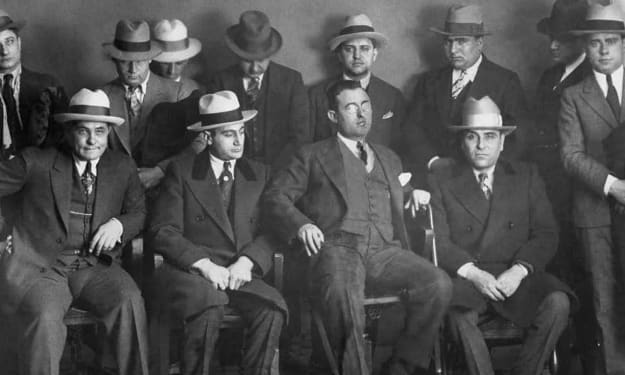
The Origins of the Italian Mafia
The Italian Mafia’s roots in the United States trace back to the late 19th and early 20th centuries, when waves of Italian immigrants sought new opportunities in America. Many were fleeing poverty and oppression in southern Italy and Sicily, but they faced significant prejudice, economic hardship, and limited access to resources in their new country. Within this environment, elements of the Italian criminal organizations, particularly the Sicilian Mafia, found fertile ground to establish themselves in American cities. Over time, this criminal network evolved into one of the most notorious organized crime groups in U.S. history, profoundly shaping American society and culture.
By Gustavo Woltmannabout a year ago in Chapters
WW2 - Torture
World War II saw immense human suffering, and torture was widely used by some regimes to extract information, suppress dissent, and intimidate populations. These methods were employed in various places, including prisoner-of-war camps, concentration camps, interrogation facilities, and occupied territories. Here, we’ll explore the most commonly reported methods, used particularly by the Nazi regime in Europe, Japanese forces in East Asia, and some Allied forces as well.
By Gus Woltmannabout a year ago in Chapters
Karachi Chronicles Chapter 11
As visiting international cricketers, we were kept under a high level of security. This meant we weren’t able to freely cruise the streets in our downtime. Although our main focus was playing cricket and recovering, the thought of being confined to the hotel complex was an interesting situation. Working with our conditions, our gracious hosts made sure we still got to attend multiple functions and rub shoulders with a host of influential people.
By S. J. Leahyabout a year ago in Chapters
The First Car
The story of the first car is a fascinating tale of innovation and ambition that revolutionized transportation and paved the way for modern society. The invention of the first car can be credited to German engineer Karl Benz, who, in 1885, designed and built the world’s first automobile powered by an internal combustion engine. This vehicle, known as the Benz Patent-Motorwagen, is widely considered the first practical automobile and marks a major milestone in automotive history.
By Gustavo Woltmannabout a year ago in Chapters
The Morse Code
The development of Morse code in the early 19th century represented a breakthrough in long-distance communication. Created by American inventor Samuel Morse and his colleagues, this system allowed messages to be transmitted over long distances using a series of dots and dashes. It became a vital tool for communication, particularly in the telegraph age, and remains a key part of both historical and modern communication technologies.
By Gus Woltmannabout a year ago in Chapters
The Adventures of Tom Sawyer AUDIO BOOK — CHAPTER 1–6
Mark Twain’s The Adventures of Tom Sawyer, first published in 1876, is one of the most beloved novels in American literature. Set in the fictional town of St. Petersburg, Missouri — based on Twain’s own childhood hometown of Hannibal — the book captures the lively spirit, mischief, and coming-of-age journey of its young protagonist, Tom Sawyer. With humor, adventure, and sharp social observation, Twain gives readers a timeless portrait of youth on the Mississippi River in the mid-19th century.
By History Seekerabout a year ago in Chapters
David Crockett, Scout AUDIO BOOK CHAPTER 1–5
David “Davy” Crockett (1786–1836) is one of the most famous folk heroes in American history. Often remembered by the nickname “King of the Wild Frontier,” Crockett’s life combined fact and legend. He was a skilled scout, soldier, and frontiersman whose adventurous spirit captured the imagination of his contemporaries and later generations. From his early life on the Tennessee frontier to his dramatic death at the Alamo, Crockett became a symbol of rugged independence and American courage.
By History Seekerabout a year ago in Chapters
I Love Muhammad” Banner Sparks FIR, Protests and Arrests in Kanpur in India
In India’s largest state, Uttar Pradesh, a dispute that began in Kanpur over putting up a banner during Eid Milad-un-Nabi (the birthday of Prophet Muhammad) is escalating. The banner carried the words “I Love Muhammad.” The filing of an FIR (First Information Report) over the incident has led to protests by Muslims not only in Uttar Pradesh but also in several other Indian cities. During protests in multiple cities, several demonstrators were accused of clashing with police and creating disturbances. Cases have been filed against many of them, and several arrests have been made. In Uttarakhand’s Kashipur, protests against the initial FIR turned into clashes with police, leading to the arrest of eight people. In Uttar Pradesh’s Unnao district, five people were arrested after protesting against the same issue. Some Muslim organizations have alleged that the police are targeting Muslims for expressing their religious freedom. However, Kanpur police now claim that the initial FIR was not lodged for putting up the “I Love Muhammad” banner but rather for setting up a tent for the Eid procession outside the designated spot allocated by the administration. Similarly, Uttar Pradesh government spokesperson Rakesh Tripathi rejected the accusations from Muslim groups, saying, “No one is being targeted on the basis of faith.” What Happened in Kanpur? Kanpur police officer Dinesh Tripathi said in a statement: “The Eid Milad-un-Nabi procession was supposed to begin from its traditional spot in Rawatpur police station limits. But local Muslims erected a tent and displayed an ‘I Love Muhammad’ banner outside the designated spot. This sparked objections from another community (non-Muslims). Eventually, by mutual agreement, the banner was removed and placed at the official location. He claimed the FIR was not about writing “I Love Muhammad” but about erecting a tent outside the permitted area and tearing each other’s posters during the procession. The FIR alleges that the Muslim community attempted to “start a new tradition” by putting up the banner, which read “I Love Muhammad,” and that another community opposed it. The FIR, filed on behalf of police officers present during the procession, also alleged that posters belonging to the non-Muslim community were torn down. The case was filed under sections 196 and 299 of the Indian Penal Code, relating to promoting enmity and spreading hatred between communities. The organizers of the Eid Milad-un-Nabi procession were among those named in the FIR. Kanpur police said that no arrests were made immediately after this initial FIR. According to local journalist Abhishek Sharma, the banner dispute occurred on September 4, the procession was held peacefully the next day, but the FIR was filed six days later, on September 10. Following this, AIMIM president and MP Asaduddin Owaisi tagged Kanpur Police on September 15, writing: “‘I Love Muhammad’ — Kanpur Police, this is not a crime. If it is, then I accept any punishment for it.” He added, “I would sacrifice a million lives for Prophet Muhammad.” Protests and Arrests in Other Cities After the Kanpur FIR, several women staged a protest in Lucknow outside the state assembly carrying “I Love Muhammad” banners. The protest was led by Samajwadi Party leader and poet Munawwar Rana’s daughter, Samia Rana. Samia said that many young people who wanted to join were stopped by police on the way. “We women reached the assembly in one vehicle and registered our protest. Police then removed us from there too.” She alleged that many young people who joined the protest were kept in illegal detention for hours. Lucknow police have not yet responded to this claim. Samia said: “When inflammatory speeches are made against Muslims, no FIR is filed. But when Muslims express their constitutional right to show their religious beliefs, FIRs are registered. These are attempts to suppress Muslim religious expression and emotions, which will not be tolerated.” In Unnao, a protest march against the FIR was taken out, after which police filed a case and arrested five people. During this, clashes also broke out between protesters and police. Videos circulating on social media showed women and children carrying banners and chanting slogans in Unnao’s Ganga Ghat area. Unnao Additional SP (North) Akhilesh Singh said: “Section 163 has been imposed in Unnao; no procession or protest can be held without permission. An unauthorized procession was taken out in Ganga Ghat. When police intervened, some women and children obstructed official work. Five people were detained and arrested after a case was registered. Further investigation is ongoing.” He added that the situation is now under control and police patrols are in place. Meanwhile, UP minister Dharm Pal Singh stated: “No one will be allowed to break the law. Action has been taken swiftly. Several people have been arrested, and further investigations will lead to more action.” Violence and FIR in Kashipur In Kashipur, Uttarakhand, Muslims held a procession last Sunday evening carrying “I Love Muhammad” banners. Clashes broke out with police during the protest. Local journalist Abu Bakar reported that police registered cases afterward and arrested several people. He said one police officer was injured in the clashes. Police used baton charges to disperse the protesters. According to SSP Manikant Mishra: “Nearly 400 people held an unauthorized protest in Kashipur, even attacking a police vehicle. Seven people were arrested and 10 detained. Similarly, a case was registered in Uttar Pradesh’s Kaisarganj area as well. At Aligarh Muslim University, former student union president Faizul Hasan said: “We organized a peaceful march against the initial FIR. No slogans were raised, no laws were broken. Later, we learned that cases were filed against us. He has now petitioned the Allahabad High Court to quash the FIR. Faizul Hasan said: “Muslims love Prophet Muhammad. We are being targeted for expressing our love for the Messenger.” Allegations of Discrimination Against Muslims Human rights activists argue that Muslims are being deliberately targeted by inflating minor incidents and provoking religious sentiments. Nadeem Khan of United Against Hate said: “We’ve received reports of police action against Muslims in several places. We don’t yet have confirmed numbers of FIRs and arrests.” He added: “Muslims are angry and upset over what happened in Kanpur. But this is not the first such incident. During Ramadan, cases were filed in Moradabad for offering prayers at home, and some were stopped from praying on rooftops. Now an FIR has been filed over a Prophet’s poster. It seems Muslims are being singled out, and their emotions deliberately provoked.” On the Kanpur incident, Nadeem Khan said: The ‘I Love Muhammad’ banners were torn down. Muslims filed complaints, but no action was taken against the culprits. Instead, cases were filed against the Muslims themselves. He said they would challenge this in court as part of their constitutional rights. Kanpur police have not responded to his allegations. Congress MP Imran Pratapgarhi asked: “If expressing love for Prophet Muhammad is grounds for FIRs, then will cases be filed against India’s 300 million Muslims? Every Muslim loves the Prophet more than their own life.” He advised Muslim youth not to hold rallies or processions without permission, as this could put them in legal trouble. On multiple FIRs, he said it appeared the administration intends to target Muslims, so people should express their feelings carefully. “We Won’t Allow the Atmosphere to Be Disturbed” Rejecting allegations of discrimination, UP BJP spokesperson Rakesh Tripathi said: “The government does not act on the basis of religion. Whoever breaks the law will face action.” He added that some groups were trying to politicize the issue and disturb peace. Tripathi said: “No one should be targeted for their faith. No one has any objection to religious slogans. But if a slogan crosses legal boundaries, action will be taken. Posters, banners, or slogans must be placed only in designated spots. Violations will face legal action. This is being turned into an issue to provoke public emotions, which is not right.” Wider Protests The Kanpur incident on Eid Milad-un-Nabi has triggered protests not only in Uttar Pradesh but also in other states like Uttarakhand, Madhya Pradesh, and Gujarat. On social media, Muslims are posting pictures under the hashtag #ILoveMuhammad, with many changing their profile pictures to the banner image. Jawaharlal Nehru University professor Vivek Kumar said: While it cannot be said that Muslims are being targeted as part of any central policy or campaign, small incidents and their responses do indicate that minorities are feeling a sense of marginalization.
By Real contentabout a year ago in Chapters