Food
A poor farmer named Raghav
In the calm, beautiful town of Tulsipur, there carried on with an unfortunate rancher named Raghav. Life had never been simple for Raghav. He acquired a little, rough land parcel from his dad and battled to earn barely enough to get by. Notwithstanding his resolute endeavors, the harvests were pitiful, and his family frequently hit the sack with void stomachs.
By shohagweb072 years ago in Chapters
**Title:** Fermentation: Pioneering Sustainable Food Solutions
Fermentation, an ancient practice deeply ingrained in human civilization, evokes images of pungent kimchi, rising bread dough, and the effervescence of beer. These age-old techniques, driven by microscopic organisms such as bacteria and fungi, transcend mere culinary traditions; they now represent a frontier in food technology poised to address global food challenges.
By Jawad Iftekhar Arko2 years ago in Chapters
Global Orange Juice Crisis Fueled by Disease and Climate Change. AI-Generated.
Brazil's Orange Juice Crisis: A Bitter Reality Imagine a world where your breakfast is devoid of the refreshing taste of orange juice, or your favorite cocktail is missing its citrusy punch. This unsettling scenario is becoming a possibility as Brazil, the world’s leading supplier of oranges for juice production, faces a severe crisis. A relentless disease known as citrus greening is ravaging the orange groves, turning the fruit bitter and eventually killing the trees. Adding to this agricultural disaster, Brazil is also grappling with the adverse effects of climate change and severe weather, further straining its orange production capabilities. This South American nation, which supplies 70% of the world's oranges for the juice industry, is in dire straits, and the global orange juice market is feeling the impact. Orange juice manufacturers are now resorting to blending other fruits, such as apples, grapes, and mangoes, to meet the insatiable demand. Our final report delves into the challenges faced by Brazilian juice makers as they navigate this crisis.
By Inie Hermedalla2 years ago in Chapters
Food Expiration Dates: Myths and Realities Uncovered
How much food in your fridge will you discard before it ever makes it to the table? Leftover hamburger buns from last summer's picnic? Milk that's past its sell-by date? Carrots that have lost their crunch? Countries worldwide waste massive amounts of food each year, and the United States is one of the worst offenders. Approximately 37% of U.S. food waste comes from households, with about 20% of that waste due to confusion over date labels. However, most of this food is still safe to eat. So what do these dates really tell us?
By Joseph Villarito Canete2 years ago in Chapters
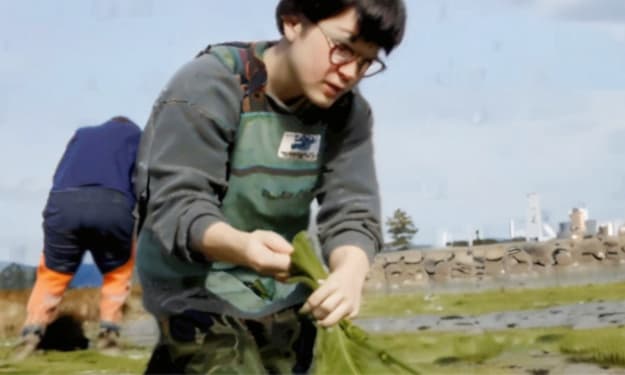
**Korea’s Mossy Seaweed: The Journey of Gamtae from Mudflats to Michelin Stars**
Pulling mossy green threads by hand, washed by hours of labor, and dried meticulously, Korea’s gamtae seaweed has found its way from the coastal wetlands of Seosan to the plates of Michelin-starred chefs around the world. Ju-hyeon Song, the entrepreneur behind Badasoop, has turned this rare seaweed into a global sensation. But how did she do it, and why is gamtae so expensive? The journey begins in Garorim Bay on South Korea's western shore. Unlike more commonly known seaweeds like nori, which can be farmed, gamtae grows only in the wild on mudflats. These coastal wetlands form when ocean tides deposit sediment and mud. Harvesting gamtae is a delicate process, as using any method other than hand-picking could destroy the plant's roots, impacting future supplies. The seaweed can only be gathered from December to March when the sea is coldest, ensuring it doesn't spoil from high temperatures. Ju-hyeon and her team work tirelessly during these months, often spending six hours a day collecting gamtae from the mudflats. The seaweed’s delicate bright green strands have a more refined texture compared to the dark green, coarser nori. This meticulous harvesting process is just one reason for gamtae’s high cost. The unpredictable nature of wild harvesting, influenced by changing sea temperatures, adds another layer of complexity. To supplement her harvests, Ju-hyeon buys gamtae from local fishermen. Despite these challenges, she has managed to create a thriving business, transforming gamtae into a sought-after delicacy. Once harvested, the gamtae undergoes a critical washing process to remove mud, debris, and tiny critters that could affect its taste. In the past, this was done entirely by hand, but modern washing machines now clean 100 kilograms in under ten minutes. This is one of the many improvements Ju-hyeon made to the traditional methods she learned from her father, Cheol-su Song. Inspired by his ideas, Ju-hyeon and her team continue to use these refined techniques at Badasoop. The workers at Badasoop use a method called harrowing to shape the gamtae into paper-thin sheets. This involves submerging the seaweed in fresh water and molding it onto bamboo mats. While it might look simple, mastering this technique can take up to three years. After shaping, the sheets are pressed to remove excess water and then dried. Badasoop sells the gamtae sheets either raw or roasted briefly at 230 degrees Celsius. They produce about 3,500 sheets daily and export roughly 500,000 sheets annually. Getting gamtae beyond Seosan required educating people about it. Ju-hyeon focused on the high-end market, sending samples to Michelin-starred chefs and writing articles about its unique taste and texture. Her hard work paid off, and soon, chefs worldwide were inquiring about gamtae. One such chef is Chris Cipollone, the owner of Francie in Brooklyn, New York. He describes gamtae as having a robust aroma, similar to an oceanic white truffle. For the past ten years, Chris has used gamtae in his dishes, including a signature pasta, conchiglie, which incorporates the seaweed into the dough, enhancing its umami flavor. Chris believes that gamtae’s unique flavor is worth the price. An eight-sheet pack of gamtae costs $16, whereas fifty sheets of nori can be bought for the same price. Despite this, the demand for gamtae continues to grow. Badasoop now supplies high-end restaurants in Taiwan, Hong Kong, Singapore, Dubai, Belgium, France, and Germany. This growing demand has caused raw gamtae prices to rise, but it has also brought benefits. The new market for gamtae is helping local communities in Seosan, providing economic opportunities and preserving traditional harvesting methods. Ju-hyeon Song’s journey with gamtae is a testament to the power of dedication and innovation. By transforming a local delicacy into a global sensation, she has shown that even the most humble of ingredients can achieve greatness. As gamtae continues to win over chefs and food enthusiasts worldwide, its future looks as bright as its vibrant green strands.
By Rabiul Molla2 years ago in Chapters
Uncovering the Mysteries of Interior Lighting
Lighting plays a pivotal role in shaping the atmosphere and functionality of any room. Beyond mere illumination, room lighting encompasses a blend of technology, design, and psychological effects that influence our daily lives. Here are 10 secrets about room lighting that illuminate its importance and impact:
By Beauty Lovery2 years ago in Chapters
Disclosing ten financial secrets
Money, beyond its role as a medium of exchange, holds deep-rooted secrets that span history, psychology, and economics. These aspects shape its complexities and influence in society. Here are 10 intriguing secrets about money that shed light on its evolution and impact:
By Beauty Lovery2 years ago in Chapters
Disclosing Ten TV Secrets
Television (TV) technology has evolved significantly since its inception, revolutionizing how we consume entertainment, news, and information. Beyond their role as entertainment hubs, TVs have incorporated cutting-edge technologies that enhance picture quality, connectivity, and user experience. Let's delve into 10 secrets about TVs that highlight their technological advancements and cultural impact.
By Beauty Lovery2 years ago in Chapters