Business
Businesswoman Chapter 250
Entrepreneur Paul positioned himself. Like a racecar driver in his seat, engaged in completing laps, he immersed himself in his work. Also like that racecar driver, he had prepared and could understand legalese like a driver who could integrate and shift gears.
By Skyler Saundersabout a year ago in Chapters
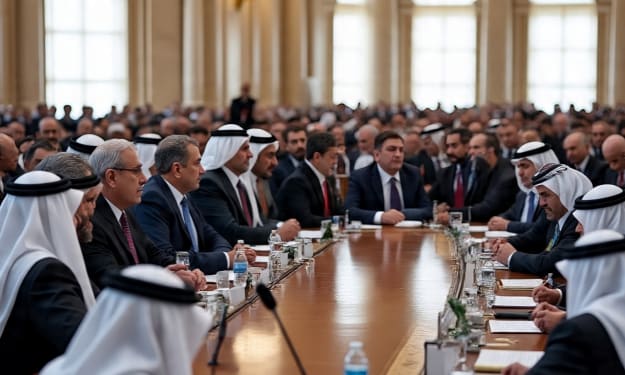
Qatar hosts emergency Arab-Islamic Summit after Israeli strike in Doha
Almost a week after the Israeli strike on Hamas leaders in Doha, Qatar is hosting an emergency Arab-Islamic summit on Monday. As part of preparations for the summit, a foreign ministers’ meeting will be held on Sunday, followed by the gathering of heads of state on Monday. Observers say Qatar has a historic opportunity to move beyond mere condemnations of Israeli actions and shape a joint narrative. Some experts argue that everyone is now looking toward Qatar and other regional countries to see what options they put forward against Israel. Jaber Al-Harami, editor-in-chief of the Qatari newspaper Al-Sharq, says many expectations are attached to this summit, and if no practical steps are taken against Israel, the meeting will prove meaningless. He added that the conference should not remain limited to condemnations, but rather show the world that a new regional mindset is emerging to confront Israel’s challenge. He noted that after the Israeli attack, Arab nationalism has re-emerged and is being perceived not only as an assault on Qatar but on all Arab nations. Al-Harami further said that even Israel’s allies within the Organization of Islamic Cooperation did not refrain from condemning it, which is why this Arab summit could help strengthen the anti-Israel narrative at the international level. Arab States Must Seize the Historic Opportunity Al-Harami emphasized that Arab and Islamic countries must seize this “historic opportunity,” otherwise they may never get it again. During the summit, discussions will be held on a draft resolution concerning last Tuesday’s Israeli attack, which will be finalized at the Arab and Islamic foreign ministers’ meeting on Sunday. Qatari Foreign Ministry spokesperson Majed Al-Ansari stressed in a statement that convening this Arab-Islamic summit carries multiple meanings and implications, as it reflects Arab and Islamic solidarity with Qatar. He said the summit would serve as a unified voice against “Israel’s cowardly and aggressive actions.” Lebanese author and political researcher Mahmoud Alloush believes that since the October 7, 2023 attack, Israel has become a major threat to regional peace and security. This fact is also clear to Arab states. Therefore, he said, they need to formulate a collective policy that enables them to exert pressure on Israel. He expressed hope that the summit would produce a strong political stance, showing solidarity with Qatar and condemning Israel. However, he stressed that a collective narrative alone would not be enough to face the challenges posed by Israel. According to him, there are many measures Arab and Islamic states can take to send Israel a “strong message.” He suggested that countries maintaining diplomatic and economic ties with Israel could signal a review of those relations. Alloush argued that the region stands at an important historical turning point, requiring decisive action to confront the challenges posed by Israel. Arabs Have Options Al-Harami emphasized that Arabs do have options, but they require genuine determination. He said Arab states could assert their importance by reassessing their political and economic relations with Israel and by exerting pressure on its Western allies and partners. He highlighted that Gulf states supply 40 percent of the world’s oil needs, which gives them special leverage. Al-Harami also suggested that a strategy to “tighten the noose” on Israel through international courts and organizations could be effective. On the question of whether Qatar might abandon its mediation role between Hamas and Israel, Al-Harami said this was a permanent element of Qatar’s policy and constitution. He noted that rather than ending mediation, Doha would continue its diplomatic efforts to bring an end to the war in Gaza and facilitate humanitarian aid delivery. The Doha summit will take place following a meeting in Washington between Qatari Prime Minister Sheikh Mohammed bin Abdulrahman bin Jassim Al-Thani, U.S. President Donald Trump, and several senior administration officials. That meeting was described as “positive,” with discussions covering Doha’s future role as a mediator in the region as well as defense cooperation between Qatar and the United States.
By Real contentabout a year ago in Chapters
Businesswoman Chapter 249
Bees always fascinated Lisa. The way they constructed entire ecosystems and could create worlds where there existed none. She felt like the queen bee, now. Instead of mating with drones, she engaged in business deals with investors. The site remained untouched by advertisements, still.
By Skyler Saundersabout a year ago in Chapters
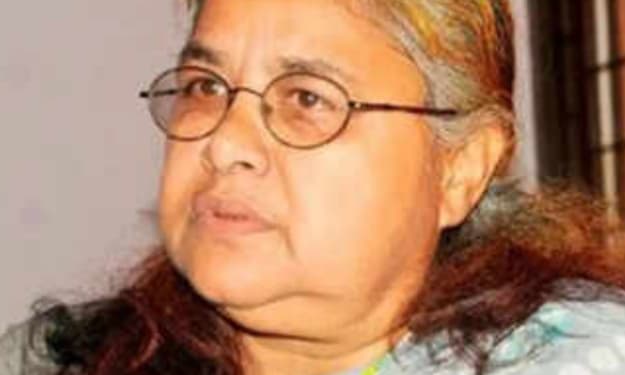
Sushila Karki Becomes Nepal’s First Female PM as Political Crisis Deepens
Newly Elected Prime Minister Sushila Karki Takes Oath Amid Political Uncertainty Newly elected Prime Minister Sushila Karki has taken the oath of office and secrecy from the President. Amid rising uncertainty, President Ram Chandra Paudel appointed Karki as Prime Minister in line with the demand of the protesting Gen Z Party. Suresh Chandra Chalise, the President’s Foreign Affairs Advisor, said: "The President has appointed Sushila Karki as Prime Minister based on the spirit of the Constitution." Having already made history as Nepal’s first female Chief Justice, Karki has now become the first woman to serve as Prime Minister. The swearing-in ceremony was attended by senior leaders, dignitaries, and officials, though several key figures from major parties were absent, reportedly under military protection. Dissolution of the House of Representatives and Elections The protesting party had demanded the dissolution of the House of Representatives. When asked, Presidential Press Advisor Kiran Pokhrel said: "The President will move forward in consultation with the Council of Ministers." Advisor Chalise confirmed that dissolution was part of the agreement but did not elaborate further, saying the step was taken to manage the “uncomfortable and unusual” political situation. According to reports, the Council of Ministers will recommend dissolving the House in its upcoming meeting. Preparations are also underway to declare a state of emergency and announce election dates. It is believed that President Paudel’s actions may resolve the leadership vacuum and related confusion. However, some observers note that how Gen Z leaders and political parties react, and what decisions the new government makes, will shape Nepal’s political future. Reactions from CPN-UML Leaders of the CPN-UML, who were forced out of power, expressed dissatisfaction with the alleged agreement to dissolve parliament. UML General Secretary Shankar Pokhrel wrote on Facebook: "It is ironic that those who once called the dissolution of parliament unconstitutional when a majority Prime Minister did it are now moving toward dissolution themselves. We must remain vigilant and cautious." Party MP Surya Thapa called the day a “Black Day.” Reports indicate that some leaders, after consulting the President, proposed forming a new government that would extend the House’s life as much as possible. Others argued instead for prioritizing the constitutional framework for government formation. Meanwhile, leaders of the CPN-Maoist Center reportedly held a virtual meeting and condemned the appointment. Both parties’ leaders are said to be under military protection. International Reactions India, the UK, Japan, and the United Nations reacted Friday night to the appointment of former Chief Justice Sushila Karki as Prime Minister. The reactions came after the sudden ouster of the previous government by the Gen Z Movement and the dissolution of the House of Representatives. The new government has announced February 21 as the date for parliamentary elections. Indian Prime Minister Narendra Modi, in posts on social media in Nepali, Hindi, and English, congratulated the new Prime Minister: "Heartfelt congratulations to Madam Sushila Karki on assuming office as the Prime Minister of Nepal’s interim government. India is fully committed to peace, development, and prosperity for our brothers and sisters in Nepal." At the swearing-in ceremony at Sheetal Niwas on Friday evening, ambassadors from the U.S., China, India, and other countries were present. Indian Ambassador Naveen Srivastava, U.S. Ambassador Dean Thompson, and Chinese Ambassador Chen Song congratulated the new Prime Minister. The British Embassy in Kathmandu called Karki’s appointment as interim PM an “important step” following the tragic deaths, injuries, and destruction caused in recent days. "As Nepal’s oldest friend, the UK is committed to supporting the country’s aspirations for a responsive and inclusive government," the embassy stated. Japan expressed strong hope for a peaceful and democratic transition in Nepal. "We welcome the appointment of Madam Sushila Karki as interim Prime Minister by President Ram Chandra Paudel, and see it as an important step toward change," read Japan’s statement, adding that it will continue supporting Nepal’s development and prosperity. United Nations Response UN Resident Coordinator in Kathmandu, Hanaa Singer-Hamdy, said in a statement: "At this critical moment, the UN stands with the people of Nepal for peace, justice, transparency, accountability, and development." She praised President Ram Chandra Paudel, Army Chief Ashok Raj Sigdel, and Gen Z youth leaders for their role in making the transition possible, while also honoring those who lost their lives during the movement. She expressed best wishes for the new Prime Minister, acknowledging the heavy responsibility she assumes at such a sensitive time. The UN reiterated its commitment to supporting Nepal’s stability, human rights, and sustainable development for the well-being of its people.
By Real contentabout a year ago in Chapters
Businesswoman Chapter 247
Cash in hand, Loreen greeted her landscaper, her domestic engineer, her chef, and her grounds manager. “You all deserve this,” Loreen smiled and returned to her desk. Smiles plastered the faces of her illegal workers. They went home knowing of their worth.
By Skyler Saundersabout a year ago in Chapters
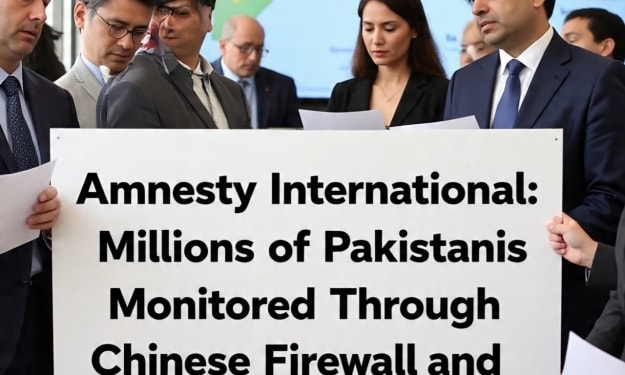
Amnesty International: Millions of Pakistanis Monitored Through Chinese Firewall and Phone-Tapping Syste
Amnesty International: Millions of Pakistanis Monitored Through Chinese Firewall and Phone-Tapping Syste Human rights organization Amnesty International has said in a report that “millions of citizens in Pakistan are being monitored through a Chinese-made firewall and phone-tapping system.” Amnesty’s latest report also claims that “Pakistan is running this surveillance and censorship system with the help of Chinese, European, and North American companies. Through it, critical content and dissenting voices on social media can be censored, which is a major example of state surveillance.” So far, the Government of Pakistan has not issued a response to this report, while Amnesty International says that the government has not replied to any of its letters on the matter. However, after a court hearing last year, on 21 August, at a Senate Standing Committee on Information Technology session, the Chairman of the Pakistan Telecommunication Authority (PTA), Major General (R) Hafeez ur Rehman, admitted that “the federal government has ordered the installation of the firewall, and the PTA is implementing it. What Amnesty International’s report claims Amnesty’s recent report states: Through the Lawful Intercept Management System (LIMS), at least 4 million mobile phones can be tapped simultaneously. Meanwhile, the Web Management System 2.0 firewall used to filter and censor internet content can block 2 million internet sessions at one time. It should be recalled that news of China’s firewall being used in Pakistan had circulated last year as well, when there were widespread complaints about severe internet slowdowns. During a court hearing on this issue, it was also revealed that telecom companies in Pakistan provide user data to intelligence agencies under a specific system called the Lawful Intercept Management System. According to the European Telecommunications Standards Institute, “lawful interception” means allowing the government access to private communications such as telephone calls or email messages. Surveillance Technology & International Supply Chain Amnesty’s report says that investigations reveal how Pakistani authorities obtained advanced surveillance and censorship tools through a secret global supply chain of foreign companies—particularly the new firewall known as the Web Monitoring System (WMS 2.0). According to the report: The WMS firewall was initially based on technology provided by the Canadian company Sandvine. After Sandvine was dissolved in 2023, new technology from Gauge Networks (China), Niagara Networks (USA), and hardware/software from Thales (France) were used to build a new version of the firewall. The report says: “Pakistan’s WMS operates like mass surveillance watchtowers and constantly spies on ordinary citizens.” Amnesty International’s Secretary General, Agnes Callamard, said: “Pakistan’s Web Monitoring System and Lawful Intercept Management System continuously track the lives of ordinary citizens. In Pakistan, your texts, emails, calls, and internet access are all being monitored. But people have no idea they are under constant surveillance. This grim reality is extremely dangerous because it operates in the shadows, severely restricting freedom of expression and access to information.” She added: “It has been proven that the system lacks transparency, oversight, and accountability.” Expert Opinions The report also mentions that fictional names were used for the surveillance technologies, making it hard to get accurate information about them. IT experts explained that: The term Lawful Interception Management System (LIMS) was given, but once Chinese technology replaced Canadian systems, the new version was simply called Web Management System 2.0, though its function as a firewall remained unchanged. Nighat Dad, Executive Director of the Digital Rights Foundation, said Amnesty’s report confirms long-standing fears. She said: “It has become clear that our system lacks transparency, oversight, and accountability, as this technology was used for political purposes—such as arresting activists who participated in protests.” She added that: “The LIMS technology is even more concerning. Although it is labeled as ‘lawful,’ in reality, it is entirely unlawful. There should be restrictions on the purchase and sale of such surveillance technologies.” Farieha Aziz, co-founder of the digital rights group Bolo Bhi, said Amnesty’s report verifies last year’s suspicions that a firewall has indeed been installed to restrict internet access in the country. According to her: The Lawful Intercept Management System was already exposed. This system is an example of what is also called “surveillance capitalism.” She added: “It has now been confirmed that this technology was purchased from foreign countries and installed here. There is ongoing debate that the sale of such technologies should be banned, as they pose serious threats to human rights. The way they are sold to governments and then used directly harms privacy and freedom of expression, because it means you are being listened to and your sources are no longer protected.” She also pointed out: “Concerns remain because not only is there targeted surveillance, but there is also mass surveillance in Pakistan. Through the firewall, authorities decide what content people can and cannot access. We saw how internet loading slowed down, then people turned to VPNs for access, but eventually VPNs were also blocked.” According to her, the report also reveals which companies sold their hardware and software to Pakistan for this surveillance system.
By Real contentabout a year ago in Chapters
Businesswoman Chapter 245
Whizzing by, the e-bikes looked like wasps from an aerial view. The riders appeared as helmeted flying creatures on wheels. Loreen observed all of this. She owned a percentage of Vendabikes which dispensed from vending machines. She stood next to the CEO Trenton Court. She wore a gray business suit and green pumps. He wore a dark brown suit and a peach tie and towered a full foot and a half above her.
By Skyler Saundersabout a year ago in Chapters
Title: Will India–US Relations Recover? Trump, Modi and the Oil-Tariff
Will India–US Relations Recover? Trump, Modi and the Oil-Tariff US President Donald Trump has described relations between the United States and India as “very special” and said that he and Indian Prime Minister Narendra Modi “will always remain friends” and that “there is nothing to worry about.” Prime Minister Narendra Modi has praised Trump’s statement. He said that he sincerely values President Trump’s sentiments and fully supports him. In a post on social media platform X, he wrote: “I appreciate President Trump’s feelings and his positive thoughts about our relationship. India and the United States have a highly positive, comprehensive, and globally strategic partnership based on understanding.” On social media, users are sharing interesting comments on this U-turn, but many Indian users are also criticizing both Trump and Modi. Earlier, Trump had said that it seems “we have lost India and Russia to China.” When asked to respond to Trump’s remarks, Indian Ministry of External Affairs spokesperson Randhir Jaiswal said: “I have nothing to say on this.” Apart from Trump, his trade adviser Peter Navarro has also once again targeted India. Navarro said that India does not accept the truth and twists the matter. India’s Ministry of External Affairs has called Navarro’s statements misleading. Will India–US relations be the same as before? Trump was asked: “Are you ready to restart relations with India at this time?” In response, Trump said: “I will always remain Modi’s friend. He is a great prime minister. I will always remain a friend, but I don’t like what he is doing right now. However, India and the United States have very special relations, there is nothing to worry about. Sometimes such situations happen.” When asked who he held responsible for India falling into China’s hands, Trump said: “I don’t think we’ve lost them. I am disappointed that India is buying Russian oil, and I have imposed a 50% tariff to make that clear to them. But I get along well with Modi.” Asked about ongoing trade agreements with India and other countries, Trump said: “Negotiations are going very well. Other countries are also doing well. We are doing well with everyone.” Analysts say that President Trump is an “unpredictable” personality. He can change his stance at any time. Navtej Sarna, who served as India’s ambassador to the US, said that Donald Trump was an unpredictable leader in his first term, and this approach has only intensified in his second. Sarna said that President Trump is running the presidency in a completely different way. All of his advisers have become loyal to him. No one is ready to advise him. Washington-based journalist and author Seema Sirohi says that policies in the United States are being made by only one person—Donald Trump. Policies are not being made bottom-up but top-down. Sarna said that the trust both countries built over 20–25 years has now weakened significantly. President Trump attacked the Indian economy and bilateral ties without any solid reason. Sarna said: “President Trump has attacked this relationship, the Indian economy, and our ties.” Seema Sirohi said: Those who worked to improve this relationship over the past 25 years say that President Trump is destroying it entirely. There is also resentment in India over America’s behavior. In many places, demands have been raised that if the US imposes a 50% tariff, India should also retaliate. But Sarna considers this an emotional reaction. Sarna said: “In my view, retaliatory action would be somewhat emotional. Our long-term interest is to preserve as much as possible of the progress, benefits, and cooperation we have had with the United States.” He also said that India should not be so dependent on any one country that when a problem arises, it turns into a crisis for us. Seema Sirohi said that if Prime Minister Modi and President Trump talk on the phone, things could either get worse or improve. According to her: if you want to change President Trump’s thinking, you will have to work in unconventional ways. Navarro and Howard Lutnick’s criticism of India Late Friday night, Peter Navarro posted about India on his X account. He wrote: “India’s high tariff rates hurt American jobs. India buys oil from Russia only to make profits, and this money goes into Russia’s war machine. Ukrainians and Russians are being killed in this. American taxpayers have to spend more money. India does not accept the truth and only spins stories.” Peter Navarro, one of President Donald Trump’s most trusted advisers, has recently been taking an aggressive stance in his remarks about India and Modi. Earlier, Navarro had called the Russia–Ukraine conflict “Modi’s war.” On August 29, he wrote on X that the revenue from Russian oil goes to India’s politically connected energy traders and directly into Putin’s war fund. US Treasury Secretary Howard Lutnick has said that India will have to choose between the United States and Russia. In an interview, Lutnick said that before the Russia–Ukraine war, India bought only 2% of its oil from Russia, but after the war this figure rose to 40%. According to him, India must decide where it stands. If it does not stop importing Russian oil, leave BRICS, and support the US and the dollar, it will face a 50% tariff. Lutnick also said that India will soon apologize and come to the negotiating table with President Trump. America’s stance on BRICS has been aggressive. In July 2025, after the BRICS summit in Brazil, Trump declared BRICS to be anti-American and threatened to impose an additional 10% tariff on its member countries. What did the Finance Minister and the Ministry of External Affairs say? Finance Minister Nirmala Sitharaman reacted strongly to Peter Navarro’s statement about “Brahmins making profits.” In an interview with a news channel, Sitharaman said that the statement about “Brahmins making profits” is exactly like the British policy of “divide and rule.” Sitharaman said that India will continue to buy oil from Russia because India’s oil purchases are based on economic and commercial reasons. On Navarro’s remarks, MEA spokesperson Randhir Jaiswal said: “We have seen Peter Navarro’s false and misleading statements, and we categorically reject them.” The Ministry of External Affairs said that India will continue talks with the United States on trade matters. Social media reactions A user named Surbhi called the situation shameful, writing: “Modi is quick to respond to praise, but stays silent on the nation’s humiliation. “Modi has not said a word about the 42 times Trump has humiliated our nation’s integrity... but upon hearing his own praise, he immediately responded to Trump.” She further wrote: “What exactly is Modi thanking Trump for? For the 50% tariffs on India, or for the insults and putting India on par with Pakistan?” A user named Ankit Mainak wrote: “In the morning, he says we’ve lost India to China. At night, he says we haven’t lost India but will still impose 50% tariffs. Donald Trump is the American version of Modi.” A user named Advait Kala wrote: “Trump extended a hand to India late. While Prime Minister Modi accepted it graciously, the trust is broken. Now the next step is rebuilding relations, in which India seems more neutral than before. There was a time when these relations looked very promising.” Many users wrote that Modi did not respond directly but simply shared the ANI bullet points praising him.
By Real contentabout a year ago in Chapters