Adventure
Ashes of the Drowned Part 5. Top Story - April 2025.
The compass spun faster now. Not wildly, but with purpose—always tilting toward the east, even when Elira turned it in her hands or pressed it to stillness. The spiral engraved beneath the glass glowed faintly with a tide-washed blue, and every so often, it pulsed like it was syncing to a heartbeat that wasn’t hers.
By Richard Bailey2 years ago in Chapters
The Conduit: Chapter 9
Early in the morning, as Max rolled around beneath a sheet, enjoying a visit from the astral plane visitor haunting his dreams, he jumped out of bed as the buzzer at his door alerted him someone was there. Max got up, slid into a pair of pants, and hurried across his private quarters yelling, “I’m coming.” As Max opened the door, the look on Jensen's face told him something was wrong.
By Jason Morton2 years ago in Chapters
Never Open That Door - The Strange and Slightly Creepy, Mr Underfield
This is part III of this story. So far: Abused by her boyfriend and thrown out of her home, Gabby found solace in a motel run by Mrs Montgomery. She was a motherly, kind person. Her son, a police detective, helps Gabby find a new place to stay. Today, she meets her new landlord, the strange and slightly creepy Mr. Underfield.
By Calvin London2 years ago in Chapters
The Security Dilemma: Challenges in Khyber Pakhtunkhwa
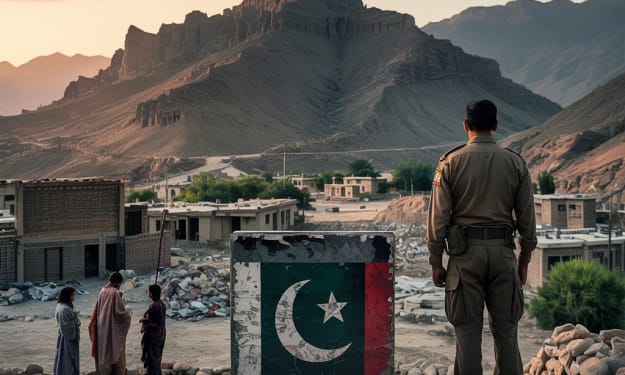
Khyber Pakhtunkhwa (KP), once known as the frontier province, has been at the epicenter of Pakistan's battle with militancy, extremism, and insurgency. The region’s security challenges are not just a matter of political discourse but have profound implications for the future of Pakistan itself. With its proximity to Afghanistan, the porous border, and a long history of regional and ethnic complexities, Khyber Pakhtunkhwa’s security dilemma is a microcosm of the larger global struggle against terrorism and extremism. In the face of rising threats, the province's security apparatus and governmental response have been tested time and again, grappling with shifting alliances, militant groups, and an ever-evolving security landscape. This article delves into the ongoing security challenges of Khyber Pakhtunkhwa, exploring the root causes, the multifaceted nature of the threat, and the responses from both state and society. As Pakistan seeks stability and peace in its troubled regions, KP’s trajectory will play a crucial role in determining the nation’s future. Historical Context and Emergence of the Security Crisis To understand the present security challenges of Khyber Pakhtunkhwa, one must look at its history—a history intertwined with tribal traditions, insurgency, and external geopolitical influences. Located in the north-western corner of Pakistan, KP has long been a site of regional instability. Its proximity to Afghanistan has exposed the province to the ripple effects of the Afghan conflict, the Soviet invasion, and the subsequent rise of the Taliban regime in the 1990s. During the War on Terror, Pakistan became a key ally of the United States, which further intensified the security situation in KP. The influx of refugees from Afghanistan, along with the influx of militant groups operating on both sides of the border, turned Khyber Pakhtunkhwa into a volatile region, fraught with militancy. The Pakistani Taliban (TTP), Al-Qaeda, and various other extremist groups used the province as a launching pad for their operations, creating a devastating ripple effect on the lives of the local population. The years 2007–2014 saw a dramatic rise in violence in the province, with bombings, suicide attacks, and targeted killings becoming a regular occurrence. The security forces, though increasingly well-equipped, faced enormous challenges in controlling these insurgencies. The military’s response, though effective in certain instances, failed to completely restore peace due to the asymmetric nature of the conflict. The Nature of Threats Facing Khyber Pakhtunkhwa The security threats in Khyber Pakhtunkhwa are not monolithic but rather multi-dimensional, encompassing a range of issues that complicate the state's ability to effectively address them. The first, and perhaps most pressing, is the ongoing insurgency by the Tehrik-i-Taliban Pakistan (TTP) and its splinter factions. These groups have long operated out of the rugged terrain of the province’s tribal areas, where the state’s writ has been historically weak. The porous border with Afghanistan remains a significant challenge, providing militants with safe havens to regroup, reorganize, and strike deep inside Pakistani territory. Despite various efforts to strengthen border security, the region’s mountainous terrain and the inability to fully seal off the border have allowed insurgents to maintain a continuous presence. The second major threat comes from the rise of local militias and sectarian violence. KP’s diverse ethnic and religious makeup has often been a source of tension, and the rise of sectarian violence between Sunni and Shia groups, alongside ethnic clashes between Pashtuns, Hindko-speaking people, and others, has added a complex layer to the province’s security crisis. The State’s Response: A Shifting Approach The response of the Pakistani state to these threats has evolved over time. Initially, the state’s approach to militancy in Khyber Pakhtunkhwa and its tribal areas was somewhat fragmented and reactionary. The military-led operations, while crucial in dismantling militant strongholds, have often been criticized for their lack of focus on long-term peace-building measures. Operations such as Zarb-e-Azb (2014) and Radd-ul-Fasaad (2017) were instrumental in breaking the back of the insurgency in many areas. However, these military campaigns were primarily aimed at defeating the physical infrastructure of militancy, leaving behind the broader issue of governance and societal integration. Since then, the approach has been one of engagement and reform, with a focus on increasing civilian control and development in previously neglected areas. The merger of the Federally Administered Tribal Areas (FATA) with Khyber Pakhtunkhwa in 2018 was a landmark move, designed to bring these tribal areas into the mainstream of Pakistan’s legal and political system. The hope was that improved governance, infrastructure development, and education would provide an antidote to militancy, but these efforts are still in their early stages and face considerable obstacles. Moreover, Khyber Pakhtunkhwa’s provincial government, under leaders like Imran Khan, has focused on rebuilding the region’s institutions, addressing corruption, and improving the security apparatus. However, the state’s inability to fully control the region’s numerous factions, coupled with ongoing foreign influence and the region’s economic struggles, continues to undermine these efforts. The Role of Local Communities and Civil Society While the state plays a critical role in addressing security challenges, the resilience of Khyber Pakhtunkhwa’s local communities is equally crucial. The Pashtun population in the region has endured decades of conflict and displacement, and despite the adversity, it has remained an essential partner in the fight against extremism. Local communities, traditional elders, and civil society organizations in Khyber Pakhtunkhwa have been at the forefront of advocating for peace. The role of Pashtun social movements, such as the Pashtun Tahafuz Movement (PTM), has brought global attention to the region’s security situation, calling for an end to the militarization of Pashtun areas and for the rehabilitation of those affected by the conflict. These grassroots efforts, combined with the state’s initiatives, could offer a more holistic solution to the region’s problems. However, their success hinges on overcoming the deep-rooted mistrust between the local population and the state, particularly in areas like North Waziristan and South Waziristan, where memories of military operations still loom large. Economic and Humanitarian Impact The security crisis in Khyber Pakhtunkhwa has had a devastating effect on the province’s economy. Years of militancy, military operations, and displacement have led to widespread poverty, unemployment, and a lack of basic services such as healthcare and education. The population in many areas of the province remains vulnerable to extremism, as the lack of economic opportunities leaves them susceptible to recruitment by militant groups. Humanitarian challenges continue to mount, with millions of people displaced by violence. The refugee crisis has created additional burdens on the province’s already strained infrastructure, and the continued conflict has made it difficult to rebuild communities or attract investment. A Path to Peace: What Lies Ahead? The road to peace in Khyber Pakhtunkhwa is fraught with challenges, but it is not insurmountable. The provincial government, in collaboration with the federal government, must continue its efforts to rebuild the region’s infrastructure, improve education and healthcare, and provide economic opportunities for its people. On the security front, the state must adopt a more comprehensive approach, integrating military action with political solutions. Negotiations with local insurgents, along with a stronger focus on de-radicalization programs, may offer a way forward. Furthermore, cross-border cooperation with Afghanistan, especially in controlling the movement of militants, is essential. In conclusion, Khyber Pakhtunkhwa’s security challenges are a reflection of both local and global dynamics. The province’s future hinges on the ability of its people, its leaders, and its security forces to work together to confront the multifaceted threats that have plagued it for decades. While the path to peace may be long and fraught with setbacks, the hope remains that Khyber Pakhtunkhwa will emerge from the shadows of conflict to reclaim its rightful place as a peaceful, prosperous region of Pakistan. Thanks for reading 🙏
By Umair Ali Shah 2 years ago in Chapters
Ashes of the Drowned Part 4
The rain hadn't stopped in two days. Not the usual kind of storm either—it moved wrong, spiraling in waves over land, creeping up riverbanks and flooding low valleys in hours. Villages inland were seeing tides roll through their streets, saltwater in their wells. Birds vanished from the skies. Fish leapt from empty air.
By Richard Bailey2 years ago in Chapters
Harvard's lawyers in the dispute
Harvard University has enlisted two high-profile attorneys, Robert Hur and William Burck, to represent it in a legal dispute with the Trump administration over the freezing of $2.2 billion in grants and $60 million in contracts. This action is part of the administration's broader effort to pressure elite universities into adopting campus reforms aligned with its political agenda.
By Md Faruk Ali2 years ago in Chapters
The Conduit: Chapter 8
A launch departed the Oceanic Station below the gangway where Carter was running laps. He looked to the ocean, watching the boat as it roared to life, speeding away across the slight chop of the warm Pacific waters. Carter wondered where the doctor was going off to at such an early time of day, but as a senior member of the staff, she had clearances he didn’t possess. She could take a launch without going through Commander Shepherd’s office, or at least that’s what he thought. He didn’t know anything about the pleasure craft anchored a mile from the station.
By Jason Morton2 years ago in Chapters
A Silent Province, A Wounded Heart: The Crisis of Balochistan and the State's Responsibility
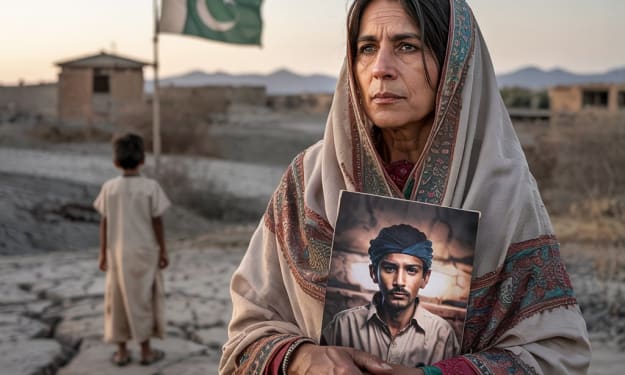
Introduction In the southwest corner of Pakistan lies Balochistan, the largest yet most neglected province of the country. Spread over nearly 44% of the national territory, its deserts, mountains, and coastlines hold not just natural resources but stories of pain, deprivation, resistance, and resilience. From Quetta to Gwadar, from Khuzdar to Turbat, the air is thick with silent screams — of mothers who have lost sons, of families without water and electricity, and of soldiers fighting in the shadows of a long-festering conflict. While the rest of the country debates politics and progress, Balochistan remains caught in a cycle of conflict, underdevelopment, and mistrust. This article is an attempt to explore the reality on the ground — the people’s suffering, the state’s failures, the burden on security institutions, and the lingering hope for a better tomorrow. --- The People’s Pain: Life Without Basics For most Balochistanis, life is a daily struggle — not just against poverty, but against being forgotten. Access to clean drinking water is a luxury in many districts. Cities like Gwadar, despite international attention under the China-Pakistan Economic Corridor (CPEC), face severe water shortages. Hospitals are few and far between. In rural areas, people often travel hours — even days — to reach a medical facility, only to find no doctors, no medicine, and no electricity. Education, a fundamental right, is out of reach for a majority. According to reports, nearly 70% of children in Balochistan are out of school. The literacy rate remains the lowest among all provinces. Roads are broken or non-existent, and where infrastructure does exist, it often serves the needs of the powerful — not the people. Electricity is another ghost that occasionally flickers in and out. Entire villages live in darkness for 18 to 20 hours a day. Small businesses suffer, students can’t study, and hospitals can't function. The people of Balochistan are not just poor — they are deprived, systemically and historically. --- The Psychological Toll: Alienation and Anger Neglect breeds anger, and anger left unheard festers into alienation. For decades, the people of Balochistan have felt abandoned by the central government. They see their resources — gas, copper, gold, and now the deep sea port of Gwadar — being extracted and exported, while their own children die of curable diseases. They ask: "What has Pakistan given us in return?" This sense of marginalization has created space for separatist ideologies and armed movements. While the majority of Baloch still believe in peaceful resistance and dialogue, others have picked up arms, seeing no other way to be heard. The result is a province caught in a low-intensity war that rarely makes it to national headlines but leaves a heavy toll on lives and trust. --- Security Forces: Frontline Without Applause It is impossible to speak about Balochistan without acknowledging the sacrifices of Pakistan’s security forces. FC, Army, and police personnel are deployed in some of the harshest and most dangerous terrains in the country. They are often the first to respond to terror attacks, ambushes, and bomb blasts. Every month, soldiers die in remote mountain passes. Every year, families of uniformed men bury their loved ones, often in silence. The burden on these institutions is immense — to maintain peace, protect CPEC routes, guard international borders with Iran and Afghanistan, and prevent smuggling and terrorism — all with limited resources and constant criticism. Yet, their presence is often viewed with suspicion by the local population. Checkposts, raids, and counter-terror operations have, at times, alienated civilians. There’s a need for empathy on both sides — for people to recognize the sacrifices of these forces, and for the forces to approach the population not just as potential threats, but as fellow citizens. --- The Missing Persons Tragedy One of the most haunting aspects of the Balochistan crisis is the issue of missing persons. Thousands of families claim that their loved ones have been taken without due process — often suspected of links to separatist groups. Their cries have echoed in Quetta's press clubs and Islamabad's D-Chowk. Each name is a story; each face, a universe of grief. While the state argues that many of these individuals are involved in armed militancy, the absence of legal proceedings fuels distrust. Forced disappearances are not just a human rights violation — they are a political wound that bleeds into the next generation. The road to peace cannot be paved with silence and shadows. --- The Political Class: Between Power and Paralysis Balochistan’s political leadership has often been accused of being more loyal to Islamabad’s power corridors than to their own constituencies. Corruption, mismanagement, and opportunism have plagued governance for decades. Even when funds are allocated, they are rarely used for public welfare. Development budgets vanish into ghost projects or sit unused. Chief ministers come and go — often after deals made in drawing rooms rather than through democratic demand. This instability weakens provincial institutions and leaves the bureaucracy directionless. Without genuine, empowered, and accountable leadership, no province can thrive — and Balochistan is no exception. --- CPEC and Gwadar: Promise or Paradox? CPEC was hailed as a game-changer for Pakistan, and Gwadar was to be its crown jewel. Billions were invested in roads, pipelines, and a deep-sea port. Yet, for the average Gwadari, life has changed very little. Protests erupt over water scarcity, unemployment, and fishing rights. The Haq Do Tehreek (Give Us Our Rights Movement) is a manifestation of this local frustration — peaceful, persistent, and deeply telling. The question many ask is: Who benefits from CPEC? If the people of Gwadar are not employed, not empowered, and not consulted, then what development are we talking about? Real progress is not in concrete and cranes, but in classrooms, clinics, and clean water. --- Natural Resources: Rich Land, Poor People Balochistan is home to vast reserves of natural gas, gold (Reko Diq), and copper. For decades, the rest of Pakistan has lit stoves with gas extracted from Sui, yet Sui itself remains in darkness. This paradox — of wealth underground and poverty above — defines the Baloch experience. Reko Diq, one of the world's largest untapped gold and copper reserves, is now back in the spotlight with new agreements being signed. But locals fear that once again, they will see the dust of trucks, not the color of prosperity. Unless resource extraction directly benefits local communities — with jobs, royalties, and environmental protections — it will only deepen resentment. --- Women and Children: The Silent Victims In conflict zones, it is often women and children who suffer the most. In Balochistan, maternal mortality is among the highest in the country. Basic gynecological care is unavailable in many districts. Women walk miles for water, carry the burden of family survival, and endure the pain of loss in silence. Children grow up in fear and hunger. Malnutrition rates are alarming. In some areas, young boys are recruited — willingly or through pressure — into armed groups. Girls drop out of school due to cultural constraints, insecurity, or simple lack of access. The next generation is growing up angry, anxious, and uncertain. --- The Media Blackout and National Apathy One of the greatest tragedies of Balochistan is how little the rest of Pakistan knows or cares. Media coverage is sporadic and often censored. Journalists are threatened, attacked, or restricted. Stories from Kech, Awaran, or Panjgur rarely make it to primetime. This information blackout allows myths to grow, pain to deepen, and solutions to remain distant. A democratic society must hear all its voices — especially the ones that are crying out. The silence around Balochistan is not just dangerous — it is criminal. --- What Must Be Done: Toward Healing and Hope Healing Balochistan is not impossible. But it requires courage — political, moral, and institutional. The state must: Acknowledge past mistakes honestly and publicly. End enforced disappearances and ensure justice for all — including militants and security personnel. Prioritize development that benefits locals — not just investors. Empower Balochistan’s youth through education, skill-building, and representation. Reform the political structure to reward competence, not compliance. Strengthen civilian institutions to reduce overreliance on security solutions. Dialogue is not weakness — it is the only way forward. Development is not a favor — it is a right. Justice is not optional — it is foundational. --- Conclusion: Listening to the Wounded Heart Balochistan is not a colony; it is Pakistan. Its people are not enemies; they are citizens. Its resources are not just assets; they are responsibilities. Every drop of water denied, every school left unopened, every body buried in silence — all of it shapes the nation’s future. The wounds of Balochistan are deep, but not incurable. They require more than words — they require will. Pakistan must choose: continue the cycle of silence and suffering, or finally embrace the courage to listen, to heal, and to act. Thanks for reading 📖 ---
By Umair Ali Shah 2 years ago in Chapters