
A Showcase of Museums of Ancient China——战国·错银铜匕
This is actually a spoon from the Chu people 2,000 years ago—way fancier than what we use today.
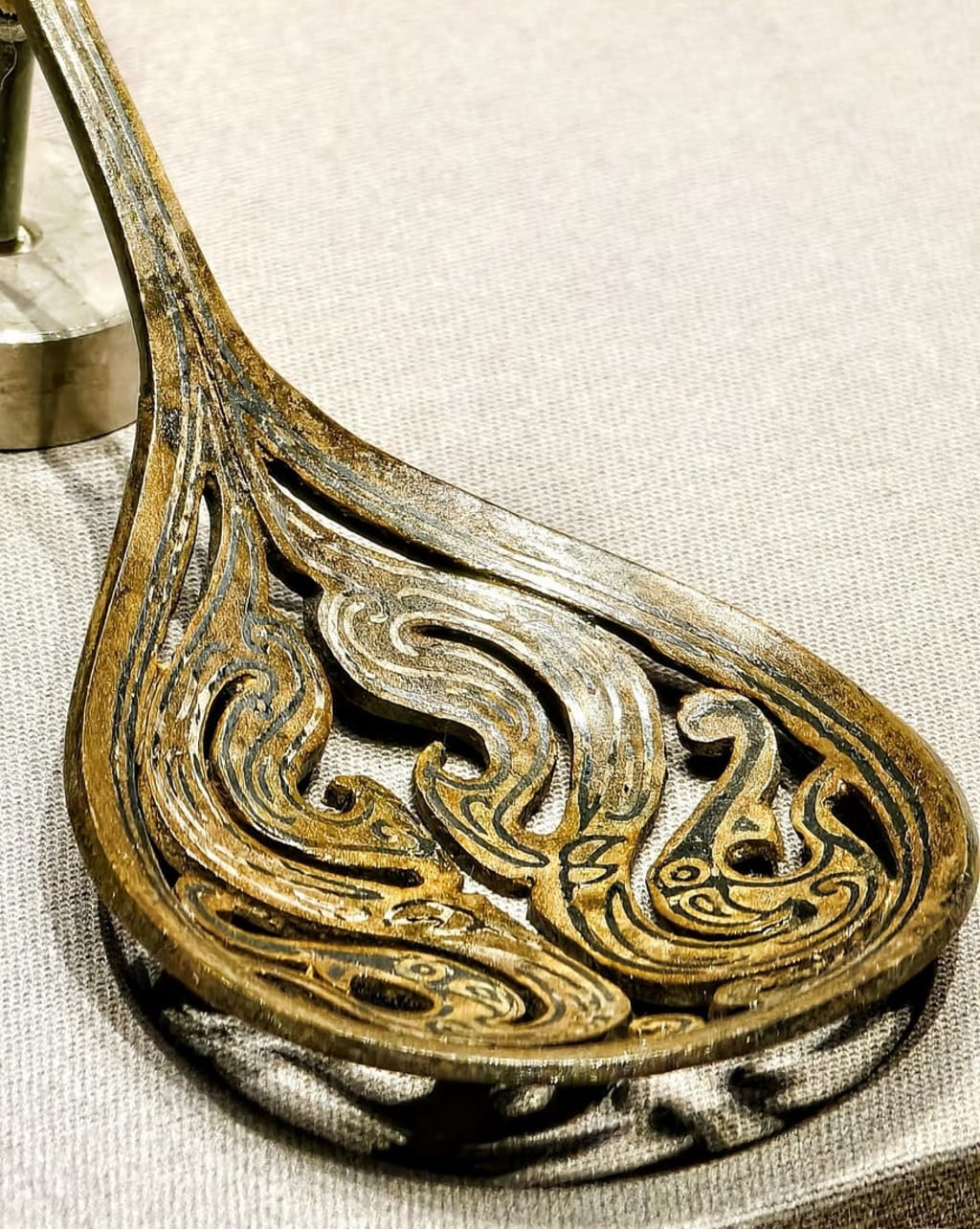
This bronze utensil was photographed at the 'Seeing China: Pre-Qin Silk Treasury Special Exhibition' in the Jingzhou Museum. It was unearthed in 1982 from Tomb No. 1 at Mashan, Hubei, a Warring States period tomb famous for its large collection of intact silk textiles. But this 2,000-year-old Chu spoon is just as exquisite. As a practical item from ancient daily life, it’s much more refined than what we use now.
It’s about 21.8 cm long, cast in bronze with silver inlay decoration. The term 'bi' here doesn’t mean dagger—it was an ancient eating utensil that eventually evolved into the modern spoon. Silver inlay involves embedding silver threads into patterns or inscriptions on the object. It’s a complicated process using precious material. The different shine of silver and bronze complements each other, making the designs and inscriptions particularly elegant. The decorative lines are sharp, and the artistic imagery really comes to life.
This is a cultural relic with huge historical and artistic value. It showcases the peak of Warring States gold and silver inlay craftsmanship and is a key artifact for understanding the social life, customs, and craftsmanship of the time.
About the Creator
Enjoyed the story? Support the Creator.
Subscribe for free to receive all their stories in your feed.
Comments
There are no comments for this story
Be the first to respond and start the conversation.