
When online book shops sell books That Say Almost Nothing
P.s I like book shops and like amazon, and other online book sellers, I just do not get this quirk that is allowed.
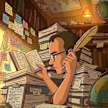

I love books. And I love local bookshops, chain book shops, and online book sellers such as the brilliant Amazon eBay and Barnes & Noble, blurb and more.
I love obscure books, amateur indeed I celebrate Amazon for the great books we can have bought from there. I understand there are criticisms of it, but there are advantages to it on a customer basis. But I have here a criticism of online book sellers and allowing the selling of certain kinds of book.
I love e books, eccentric books, badly written books and books whose authors clearly cared deeply about a subject, even if the writing is not perfect.
What I struggle to understand is something else entirely: books that seem to exist purely to occupy space and sales.
Recently, I bought a travel guide about a city I wanted to learn more about. I expected local details, neighbourhoods, specific attractions, practical advice, interesting history and perhaps some personal insights.
Instead, it felt like listening to a contestant on the BBC radio game show Just a Minute trying desperately to keep talking without saying anything.
The book wandered around endlessly in circles.
"You will need a phone."
"You may wish to carry identification."
"Many travellers enjoy local food."
"Public transport can be useful."
Page after page seemed to consist of statements so generic that they could apply to almost any city on Earth.
I learned almost nothing about the city itself.
The Difference Between Bad and Empty
This is an important distinction.
A bad book can still have value.
Suppose somebody spends years researching a topic they love and then produces a thousand-page monster full of mistakes, odd opinions and clumsy writing.
Fine.
That should absolutely be allowed.
In fact, some of the most interesting books ever written are highly flawed works driven by obsession and enthusiasm.
You can feel the author's presence.
You can disagree with them.
You can criticise them.
But at least there is a real person trying to communicate something.
What concerns me is the rise of what might be called empty books.
Books that seem less interested in informing the reader than in imitating the appearance of information.
The Book Equivalent of Packaging Material
Imagine ordering a cake and receiving a beautifully decorated cardboard box containing another cardboard box.
Technically, something was delivered.
But not the thing you actually wanted.
That is how some modern travel books feel.
The cover promises a guide to a specific destination.
The title suggests local knowledge.
The description implies expertise.
Yet inside there is often little more than generic travel advice that could have been written about Paris, Tokyo, Rio de Janeiro or Birmingham with only a few names changed.
The book resembles a guidebook in the same way that a stage set resembles a building.
From a distance it looks convincing.
Up close there is nothing behind the façade.
Did Anyone Read This Before Selling It?
What puzzles me is not that such books exist.
People have always produced low-quality material.
What puzzles me is that Amazon, a company famous for customer obsession and ruthless efficiency, appears willing to stock them.
Amazon revolutionised shopping.
It made it easier to find obscure books than at any time in human history.
It enabled independent authors to reach readers directly.
That is a remarkable achievement.
Which makes it all the more surprising when books that offer so little value seem able to pass through the system.
Surely there must be some point at which a book is so generic that it ceases to fulfil its stated purpose.
Is AI Making the Problem Worse?
Many readers suspect artificial intelligence is contributing to this trend.
Perhaps.
But I think the deeper issue is not whether a human or a machine wrote the text.
The real problem is whether anyone had anything worth saying.
I should add that I am actually very positive about AI. It is a remarkable tool for improving grammar, organising information and helping people communicate ideas more clearly. Indeed, AI helped improve the grammar and structure of this very article.
A passionate author using AI as a tool can still produce something useful.
A knowledgeable traveller using AI to organise notes might create an excellent guide.
Conversely, a human can produce complete drivel without any technological assistance whatsoever.
The crucial point is that AI can help express an idea, but it cannot create one. It can improve a manuscript, but it cannot manufacture genuine knowledge, experience or passion where none exists.
Most importantly, it cannot rescue a vacuous aim.
The issue is not the method.
The issue is the content.
Does the book contain knowledge?
Does it contain insight?
Does it contain details that could only come from genuine familiarity with the subject?
Or is it merely rearranging obvious statements until enough pages exist to justify a price tag?
A Guidebook Should Guide
The greatest travel books make readers feel they have already started the journey.
They contain specific recommendations.
Specific stories.
Specific warnings.
Specific observations.
After reading them, you remember things.
By contrast, some modern guides leave no lasting impression because they say almost nothing concrete.
They are all scaffolding and no building.
All packaging and no product.
All words and no information.
Readers Deserve Better
I am not arguing for censorship.
People should be free to publish poor books.
People should be free to publish eccentric books.
People should be free to publish books that only ten people in the world will ever enjoy.
The solution is not stricter control of ideas.
The solution is better quality signals.
Because there is a world of difference between a book that is bad because its author failed, and a book that feels as though nobody seriously tried in the first place.
One is a creative effort that missed the mark.
The other is simply pretending to be a book.
The fault is not with the technology. The fault lies with the lack of substance behind it. AI can help somebody say something better, but it cannot make an empty book worth reading.
And when a reader buys a guide to a specific city, they should receive knowledge about that city, not 200 pages of literary equivalent of "um", "er", and "you may find it useful to own a phone."
There is a difference between a bad book and an empty book. A bad book has failed to say something worth hearing. An empty book was never trying to say anything in the first place, and no amount of artificial intelligence can change that.
PSI used AI to help write this article, co-pilot it helped my grammar.
About the Creator
Lewis Smith
The Paradigm Glitch Hunter. Account aim is investigative insights into current popular & academic theories, using immersive systemising, to do 1st principles, & nuance pinpointing, structural deconstruction & reconstruction. & fun stories.
Enjoyed the story? Support the Creator.
Subscribe for free to receive all their stories in your feed.
Comments
There are no comments for this story
Be the first to respond and start the conversation.