
The False Prince
Who is He, and Why Do We Need Him?

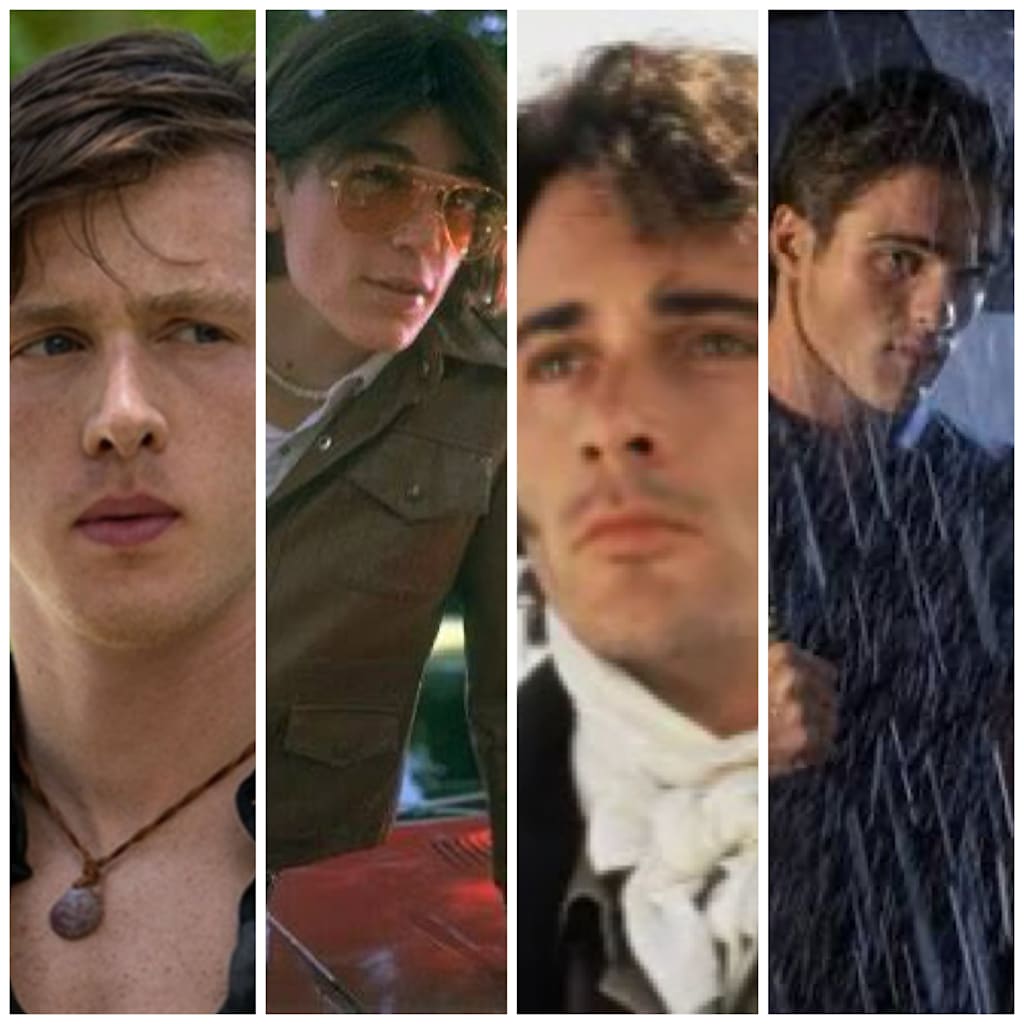
You can spot him from a mile away, but only if you’ve lived a life that left you in his wake.
I blame social media for sending me down this rabbit hole. Some critic claimed that Where the Crawdads Sing would be a better required reading option than To Kill a Mockingbird, and I couldn’t let it go.
Three hundred pages and a Hulu subscription later, I’m still snarling at my television. The story was incredible, but To Kill a Mockingbird tackles systemic racism and moral courage through a child’s lens in a specific historical context. Where the Crawdads Sing is more of a blend of coming-of-age, nature, and a murder mystery with themes of isolation and survival. Both have strong social commentary and serve a purpose, but they’re approaching very different moral landscapes.
Literary comparisons aside, what stuck with me most was the character of Chase Andrews. The cad, the charming manipulator, the f***boy… the False Prince. He’s Trip Fontaine and Willoughby. He’s even Euphoria’s Nate Jacobs to some extent. We all know men like Chase Andrews. Some of us still bear their scars some twenty years later.
The novel’s love scene in particular made my stomach churn. Without diving too much into personal trauma, let’s just say I understood Kya’s disappointment and feelings of betrayal.
(SPOILERS) It came as absolutely no surprise that she ultimately took him out. Because of course she did.
Am I salty? No. Honestly. We all have roles to play in the lives of others. Some of which are not commendable. I’m guilty, too. But when I look back at the story of my own life, of my own Chase, he will always be THAT GUY. Which is… a little sad. In another world, he could’ve been my closest friend.
I wish the False Prince was not a necessity for character growth. His trope works because it works so well. My concern is that, if we’re not careful, cautionary tales will start to look like cause and effect.
We’ve gotten better in calling him out, warning each other about him, maybe even making a joke at his expense. Still, despite so much progress in storytelling, in living, the False Prince archetype lingers, surprisingly static, yet with a modern wardrobe.
Stay with me, here…
Our Damsel in Distress has evolved into the self-rescuing heroine. One-dimensional Villains now often have complex motives or even redemption arcs. Mentor Figures are no longer all-knowing sages, but flawed, learning guides. Even the romantic Hero, once stoic or idealized, shows vulnerability and emotional growth.
These characters have adapted over time with cultural shifts, offering more dimension, nuance, or agency. They’re real. Meanwhile, the False Prince remains a relic, shiny on the outside, hollow underneath.
Admittedly, the writer in me is curious of a False Prince’s origins and what stories would be like without him. Imagine: Growth might come from internal journeys, friendships, or facing external challenges that don’t involve the loss of innocence. Relationships could be built on mutual respect from the start, and tension could come from learning to trust. We’d still have emotional arcs, but they’d be rooted in different kinds of conflict and triumph. Who knows what sort of narratives would come from that!
In other words, does the catalyst for one’s growth always have to come at a set price?
I can’t answer that question.
Perhaps that’s why the False Prince survives as literature’s most reliable accelerant. He breaks hearts, steals carnal treasures, ignites plot, and sends otherwise ordinary characters hurtling toward transformation.
We may have outgrown the corsets, fainting couches, and love triangles (okay, maybe not that last one), but apparently we’re still dragging this guy along.
For now, at least. Ugh.
Until then, if anyone needs me, I’ll be hanging out with Scout Finch.
About the Creator
Laura Roodenburg
Author. Believer. Educator. INFJ. Texan.
Instagram & X: @Laura.Roodenburg
Enjoyed the story? Support the Creator.
Subscribe for free to receive all their stories in your feed. You could also become a paid subscriber, letting them know you appreciate their work.
Comments
There are no comments for this story
Be the first to respond and start the conversation.