Theme
Career Adaptability Tips & Future-Proofing Strategies: Lessons from a Life-Altering Book
Intro In a world that's constantly evolving, grappling with the idea of the future can sometimes feel like trying to hold water in your hands - it's slippery, unpredictable, and elusive. My perspective on the future underwent a profound transformation after diving into a book that was nothing short of life-altering.
By Francis Labour3 years ago in BookClub
The Rules of Dating My Best Friend's Sister
In the vast expanse of literature, books have served as portals to alternate realities, windows into the human psyche, and vessels of timeless wisdom. From ancient scrolls to modern e-books, the written word has held a profound significance in shaping cultures, igniting imaginations, and connecting individuals across continents and centuries. However, amidst the digital revolution and the rapid evolution of reading habits, one might wonder: What is the enduring allure of books in an age dominated by screens and bytes?
By Hoàng Văn Thịnh 3 years ago in BookClub
14 Day Object Writing Challenge
My friend who has a master's degree in poetry told me that I have a lyricist in me. That was good news as I don’t think I am a poet, and I am much better at rhyme and storytelling. So, a lyricist sounds like something I can work with.
By Denise E Lindquist3 years ago in BookClub
The SledgeWomanHammer
Chapter 1: The Encounter The night was dark and still as Helen ran through the eerie forest, her heart pounding in her chest. She could hear the echoes of her own panicked breaths mingling with the rustling of the leaves. The only thought in her mind was the desperate need to escape the terror that pursued her.
By Victor Robinson II3 years ago in BookClub
Grapes of Wrath Review
In Chapters 1-3 of “The Grapes of Wrath” where the Joad family begins their journey to California in hope for a better life is a very intriguing scene. The author John Steinbeck exposes the desperate conditions under which the migratory farm families of America, along with focusing on the hardships and migration from Oklahoma to California of the Joad family during the Great Depression of the 1930s. Set during the Great Depression, the novel focuses on the Joads, a poor family of tenant farmers driven from their Oklahoma home by drought, economic hardship, agricultural industry changes, and bank foreclosures forcing tenant farmers out of work. Due to their nearly hopeless situation, and in part because they are trapped in the Dust Bowl, the Joads set out for California on the "mother road", along with thousands of other "Okies" seeking jobs, land, dignity, and a future.
By Kylecovey Smith3 years ago in BookClub
The Last Ruler of Jammu and Kashmir. Content Warning.
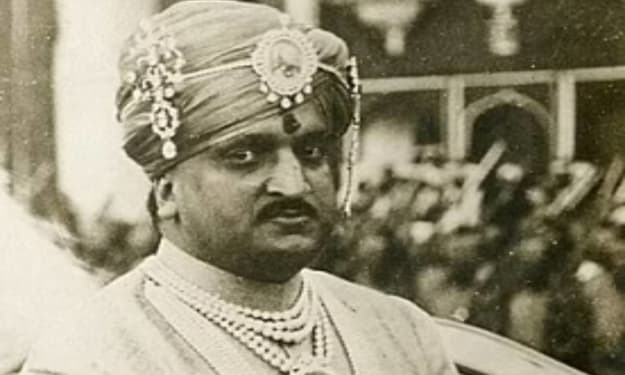
Maharaja Sir Hari Singh GCSI GCIE GCVO, born in September 1895, occupies a significant place in the annals of Jammu and Kashmir's history. As the last ruling Maharaja of the princely state, his reign was characterized by both opulence and tumult, culminating in the pivotal decision of accession to the Dominion of India. Let's embark on a comprehensive exploration of the life, legacy, and controversies surrounding this enigmatic figure. Early Life and Education: Hari Singh was born into the esteemed royal family of Jammu and Kashmir, the son of Raja Amar Singh and Bhotiali Chib, at the majestic Amar Mahal Palace in Jammu. His birth in 1895 marked the emergence of a future ruler, as he was designated the heir presumptive to the throne due to the absence of a direct successor. His early years were steeped in privilege and tradition, with an upbringing that reflected the grandeur of his lineage. In 1903, Hari Singh's journey into the corridors of power began as he served as a page of honor to Lord Curzon during the grand Delhi Durbar, a spectacle of imperial grandeur. Subsequently, his educational pursuits led him to Mayo College in Ajmer, where he embarked on a journey of intellectual and personal growth. However, tragedy struck in 1909 with the demise of his father, prompting the British authorities to take a keen interest in his education, appointing Major H. K. Brar as his guardian. Rise to Power: The trajectory of Hari Singh's life took a decisive turn in 1923 following the passing of his uncle, heralding his ascension to the throne of Jammu and Kashmir. His coronation in 1926 at the majestic Mubarak Mandi Palace in Jammu was a spectacle of extravagance, symbolized by the adornment of jewels valued at an astonishing twenty million dollars. However, amidst the pomp and ceremony, challenges loomed on the horizon, foreshadowing the turbulent years that lay ahead. Controversial Rule: The tenure of Maharaja Hari Singh was fraught with challenges and controversies that left an indelible mark on his legacy. Rebellion reared its head in various regions, most notably in Poonch and Gilgit-Baltistan, challenging the stability of his rule. Furthermore, accusations of complicity in the 1947 Jammu massacres tarnished his reputation, casting a shadow over his governance. Despite these tumultuous times, Hari Singh's reign was not devoid of progress. He implemented reforms aimed at modernization, including initiatives to promote education, combat child marriage, and foster social inclusivity. Accession to India: The watershed moment in Hari Singh's reign arrived in 1947 with the dawn of Indian independence. Faced with escalating tensions and external threats, particularly from Pakistan-backed tribal forces, Singh found himself at a crossroads. In October 1947, he made the fateful decision to accede to the Dominion of India, signing the Instrument of Accession. This pivotal moment not only altered the course of Jammu and Kashmir's history but also set the stage for future conflicts and geopolitical dynamics in the region. Legacy and Commemorations: Following the abolition of monarchy in 1952, Maharaja Hari Singh's life took a poignant turn as he retreated from the corridors of power to spend his remaining years in Bombay. His death in 1961 marked the end of an era, but his legacy endured through various commemorations and tributes across Jammu and Kashmir. Parks, statues, and public holidays stand as tangible reminders of his enduring influence, sparking conversations about his complex legacy and the broader historical narrative of the region. Conclusion: Maharaja Hari Singh's reign encapsulates a tumultuous chapter in the history of Jammu and Kashmir, characterized by opulence, controversy, and political upheaval. While his rule was marred by challenges and criticisms, his contributions to the region's development and his pivotal role in shaping its destiny cannot be understated. As the last ruling Maharaja of Jammu and Kashmir, his legacy continues to resonate, prompting reflection on the complexities of governance, identity, and historical legacy in the region. In essence, Maharaja Hari Singh's life and times serve as a poignant reminder of the intricate tapestry of history that defines Jammu and Kashmir's identity. Through commemorative efforts and ongoing discussions about his legacy, his influence endures, underscoring the enduring impact of his rule on the socio-political landscape of the region.
By Avhishek Agarwal3 years ago in BookClub