Nonfiction
Pocahontas
The Jamestown colony’s records mention her real name: Amonute, daughter of Chief Powhatan. She was known for speaking to the river as if it were alive. Settlers mocked it — until the river began changing course overnight, drowning their camps and uncovering bones they hadn’t buried properly.
By GoldenSpeech11 months ago in BookClub
Wake up!. Content Warning.
You start opening your eyes, it's hard they seem stuck like your brain and body are not awkening together, but you know the day is starting, you have to get out of the bed, body is hurting from all the seizure activity happening in your sleep, nocturnal epileptic seizures and taking that Emgency medication last night because of the clustered seizures you really did not want to do but knew if you did not things could go very bad..
By Cryptic Edwards12 months ago in BookClub
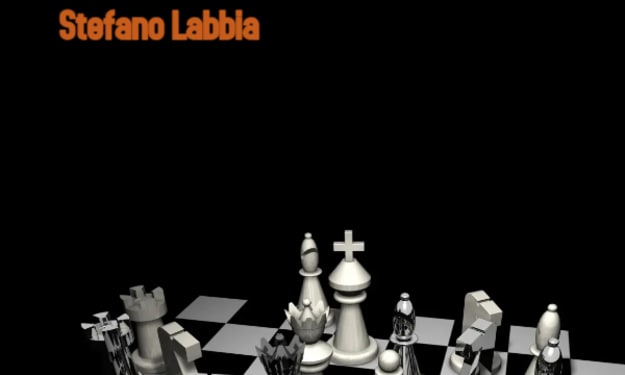
"Men": The Acclaimed Play by Stefano Labbia is Finally Released in English.
There is a profound resonance when a piece of art transcends its original language, moving across borders not just of geography, but of soul. It signifies that the core of the message, the essential human truth within the narrative, is potent enough to reach us all, no matter where we call home. Today, we are witnessing this powerful moment with the English edition release of the theatrical work, Men. This isn't just a translation; it is an invitation. An invitation to look closer, to listen harder, and to feel the sometimes-uncomfortable reality that the playwright, Stefano Labbia, places so deftly right before us. We live in a time saturated with information, where the daily newscycle often feels like a relentless tide. We see stories of brokenness and hurt, stories of profound violence that seem to resist any easy explanation. When we encounter this suffering, this deep, pervasive wound in the fabric of human interaction—violence that respects no age, no gender, no social bracket—a natural question arises: where does the responsibility lie? Who is to blame for this escalating crisis? The genius of this dramatic endeavor, Men, lies precisely in its refusal to offer simple, clean answers. It does not descend into legalistic arguments or didactic moralizing. Instead, it holds up a mirror to the fractured nature of human accountability. When the characters speak, their voices are not merely parts of a play; they are echoes of the conversations we are having in our own minds, at our dinner tables, and within our communities. One moment, we are convinced of one party’s fault, only to hear the thunderous, equally valid counter-claim from the other. This dynamic tension, this ping-pong of perspective, is crucial. It forces us to acknowledge that blame is not a static concept; it shifts, it mutates, and it is intrinsically linked to the viewpoint of the person speaking. What Labbia has managed to accomplish is nothing short of extraordinary. He takes experiences that begin on the page, in the realm of fiction, and meticulously, patiently, allows them to gain weight and substance. Scene by scene, the imaginary transforms into the palpable. The dialogue gains the chilling clarity of a breaking news alert, the undeniable weight of a front-page headline. It is a slow, methodical build, creating a sense of inevitability that is both mesmerizing and deeply troubling. This process culminates in a moment of intense emotional impact. The story reaches a point where it ceases to be something we observe from a safe distance and becomes, instead, a direct, visceral experience. It hits the spectator—or the reader—with the forceful clarity of a trained boxer's blow. Not a mere graze, but a profound impact aimed directly at the emotional core, leaving us momentarily breathless and irrevocably changed. The playwright, with his Italian and Brazilian roots, demonstrates a rare, invaluable gift: true versatility. For him, the medium of expression—whether stage, screen, or written page—is secondary. The primary concern is the relentless power of the imagery he crafts and the ferocious honesty embedded in his language. He is a masterful storyteller for our era, possessing the ability to communicate deep, often uncomfortable, truths without ever resorting to the superficial or the reductive. This English language version is a necessary and timely cultural event. It enables us to grapple with a difficult subject matter in a way that respects the complexity of the pain involved. It provides a unique space for reflection, a moment to pause and consider the origins of conflict and the challenging paths toward understanding. To engage with this work is to commit to a more nuanced conversation about what we owe one another, and what it truly means to be accountable for the hurt we inflict and experience. It’s important that we meet this piece of writing where it is: a powerful, unwavering testimony. The act of acquiring this play is not simply a literary purchase; it is an investment in human dialogue. It is a way of saying that the conversation about violence, responsibility, and the messy, beautiful, devastating reality of being alive and connected to others, is one we are finally ready to have. This piece, now available on bookshelves and online worldwide, calls us toward a shared moment of reckoning. We should answer that call.
By Ria Bassettabout a year ago in BookClub
The Quiet Conflict: Why We Set Good Books Down
We've all been there. That moment when you hold a new book, heavy with promise, the scent of the pages like a fresh start. You commit. You dive in. And then, somewhere between the introduction and the rising action, something shifts. The momentum stalls. You find yourself glancing at the clock, your eyes tracking the lines but your mind floating somewhere between the grocery list and that email you forgot to send. Eventually, quietly, almost shamefully, you place the book face-down on the nightstand, where it becomes not a window to another world, but a gentle reproof. We often think of ourselves as dedicated readers, the kind who finish what we start. And yet, this happens. It's a universal experience, and it’s not a failure of character, but a collision of expectation and reality. Understanding these disconnects isn't about blaming the book or yourself; it's about honoring the precious commodity of your time and your personal connection to storytelling. When the Map Misleads the Traveler
By Ria Bassettabout a year ago in BookClub
A Hard Fall and Good Bounce
Poetry, for me, has always been a way of gathering fragments—the daily objects, passing moods, and uneasy questions that won’t stay quiet. A poem begins with a small detail, then grows into something larger, a landscape where memory and imagination blur.
By Brian D'Ambrosio about a year ago in BookClub
In-Sight Publishing Announces Noesis: The Journal of the Mega Society (November 2014–June 2025) Release
British Columbia, CANADA, September 2025 /www.in-sightpublishing.com/ -- In-Sight Publishing announced the release of Noesis: The Journal of the Mega Society (November 2014–June 2025) by Scott Douglas Jacobsen, a comprehensive 524-page collection of contributions to the Mega Society's official journal spanning more than ten years. The first edition was released on September 2, 2025: https://in-sightpublishing.com/books/.
By Scott Douglas Jacobsenabout a year ago in BookClub
The Bookclub That Existed Only Online
M Mehran It started with a single comment on a forum: “Anyone want to read together? I’m tired of finishing books alone.” I typed a quick reply before I could overthink: “Yes. Count me in.” That was the night our online bookclub was born. --- Chapter One: Strangers Behind Screens There were seven of us at the beginning. We lived in different countries, different time zones, different lives. One member was in Canada, another in India, another in South Africa. I joined from my small apartment in Germany. We met on video calls, faces pixelated and voices sometimes lagging. At first, it felt awkward. We were strangers trying to build something out of text on a page and flickering Wi-Fi. But then someone cracked a joke about falling asleep mid-chapter, and suddenly we were laughing together, oceans apart. The distance didn’t matter. The books were our bridge. --- Chapter Two: Pages and Confessions Every month, we voted on a book. Our first pick was Educated by Tara Westover. Reading her story of resilience cracked something open in us. On the call that followed, one member admitted she hadn’t spoken to her family in years. Another confessed he’d grown up in a strict household where books were forbidden. We didn’t judge. We listened. The conversation drifted from the memoir to our own memories, proof that books don’t just tell stories—they unlock them. That became our rhythm. A novel about grief turned into a night of sharing who we had lost. A fantasy about courage led us to list the things we were too scared to try. A poetry collection inspired one of us to read her own verses aloud, her voice trembling through the microphone. --- Chapter Three: The Loneliness Cure For me, the bookclub was more than entertainment—it was survival. I had just moved to a new city where I knew no one. My days were quiet, filled with work and silence. Nights were lonelier. But every other Saturday, I logged on to see six familiar squares on my screen. They’d wave, tease me about my messy bookshelf, and ask about my week. I started to realize I wasn’t just reading with them—I was belonging with them. We celebrated small victories together: job interviews, birthdays, even one member’s new puppy. And when someone’s camera was off because they were crying, we didn’t pry. We just read an extra passage out loud, so they didn’t have to carry the silence alone. --- Chapter Four: A Test of Distance Not everything was easy. Time zones were a constant headache. Internet glitches froze faces mid-laugh. Once, a heated disagreement over a political memoir nearly ended the group. But instead of breaking, we adapted. We learned patience when someone’s audio lagged. We gave space when emotions flared. We remembered that behind every glitch was a real person, holding their copy of the book, showing up even when life was heavy. Slowly, I realized we weren’t just readers—we were a team. --- Chapter Five: The Surprise After a year of reading together, someone proposed the impossible: “What if we meet in real life?” At first, it sounded like a fantasy. Flights were expensive. Visas were tricky. Schedules were messy. But one member in France offered: “Come here. My town is small but beautiful. We can make it work.” Months later, five of us actually did. I’ll never forget stepping off the train, scanning the crowd, and recognizing faces I’d only seen through a screen. It was surreal—like characters from a book stepping out into reality. That week, we ate croissants, explored cobblestone streets, and stayed up late reading under the stars. The conversations flowed just like they had online, only now with hugs and shared meals. It felt like proof: stories can pull strangers into family. --- The Last Chapter—For Now The online bookclub is still alive today. Some members drifted away, new ones joined, and our group chat is a patchwork of quotes, memes, and reminders to “finish chapter 12 before Saturday!” But the heart remains the same: seven strangers, bound not by geography, but by stories. When people ask why I love books so much, I think of them. I think of how words on a page built bridges across continents, how a video call cured loneliness, how a simple “Want to read together?” became one of the most important chapters of my life. And maybe that’s the magic of bookclubs. They remind us that no matter where we are—in a park, in a café, or behind a glowing screen—we’re never really reading alone.
By Muhammad Mehranabout a year ago in BookClub
The Bookclub That Never Agreed
M Mehran Most bookclubs bond over shared taste. Ours bonded over the exact opposite. We never agreed on anything—not the genre, not the author, not even the definition of a “good book.” And strangely enough, that was the secret that kept us together. --- Chapter One: Chaos at the Library It all began at the public library. A flyer taped to the bulletin board read: “Looking for a bookclub? Join us this Saturday. All opinions welcome.” “All opinions welcome” should’ve been the warning. When I showed up, the room looked like a mismatched cast of a sitcom. There was Clara, who devoured romance novels like candy. Daniel, a crime-thriller addict with a permanent frown. Marcy, who only read self-help and swore fiction was a waste of time. And then there was me—someone who lived in the world of magical realism and got defensive when anyone called it “confusing.” The first book we tackled was To Kill a Mockingbird. Within ten minutes, Daniel was arguing it was overrated, Clara was insisting it was “perfectly heartbreaking,” and Marcy was questioning what real-life productivity lessons it could possibly teach. I braced for disaster. But then something surprising happened: no one left. --- Chapter Two: The Joy of Disagreement Week after week, we clashed. When we read a sci-fi novel, Clara rolled her eyes at the lack of romance. When we read a romance, Daniel muttered, “predictable.” When we attempted a philosophy text, Marcy lit up while the rest of us struggled. And yet, every argument revealed something new. Daniel, the crime buff, once shocked us by admitting a romance novel reminded him of his late wife. Clara surprised herself by enjoying a detective mystery because, as she put it, “the detective was basically in love with the truth.” Even Marcy softened toward fiction after one too many passionate speeches from the rest of us. We didn’t agree—but we learned. --- Chapter Three: Life Between the Lines Somewhere along the way, the disagreements spilled beyond books. Daniel confessed he was lonely since retirement. Clara admitted she joined the club because she was new in town. Marcy surprised us all when she revealed her self-help obsession came from trying to rebuild her life after a messy divorce. Books were just the excuse. What we were really doing was reading each other. Once, after a heated debate over The Great Gatsby, we ended up sharing our own “green lights”—dreams we chased or abandoned. Clara wanted to open a bakery. Daniel regretted never traveling abroad. Marcy said she wished she had started painting again. I admitted I’d always wanted to write a novel. That night, we left the library not with answers, but with the rare comfort of knowing our contradictions made us human. --- Chapter Four: A Turning Point Then came the night we nearly fell apart. We had chosen a controversial modern novel, and the discussion got heated—too heated. Voices rose, someone slammed their book shut, and Clara left early in tears. The rest of us sat in awkward silence. I thought it was over. That the club had finally broken under the weight of its own stubbornness. But the next week, Clara walked in carrying a tray of cookies. “If we’re going to argue,” she said, “we might as well do it with snacks.” We all burst out laughing. Just like that, the tension dissolved. It wasn’t about winning debates—it was about belonging, even when we clashed. Especially when we clashed. --- Chapter Five: Beyond the Bookshelves The club is still going, years later. We’ve read hundreds of books. We’ve disagreed on 90% of them. But we’ve also celebrated birthdays, mourned losses, cheered on Clara when she finally opened her bakery, and toasted Marcy when she exhibited her paintings for the first time. Even Daniel surprised us by joining Clara’s book launch party last year. He brought flowers and grumbled, “It’s still predictable,” but the twinkle in his eye said otherwise. I’m still working on my novel, and every week they ask about it, half-mocking, half-encouraging. --- The Last Page What I’ve learned from the Bookclub That Never Agreed is this: harmony isn’t the only way to build connection. Sometimes it’s the friction, the sparks of different perspectives, that bind people together. We didn’t need to love the same books. We just needed to respect that every story—on the page or in a person—was worth hearing. So if you ever stumble into a bookclub where everyone argues, don’t walk away. Pull up a chair. Because disagreement doesn’t have to divide. Sometimes, it’s the very thing that writes people into your life. And maybe that’s the greatest story of all.
By Muhammad Mehranabout a year ago in BookClub