Fiction
Shine, Girl!
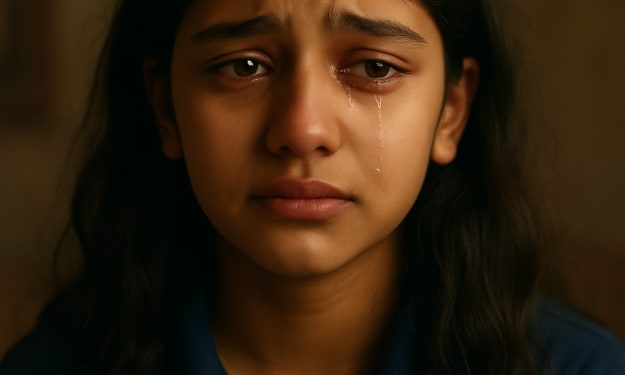
There was a time when she believed she could do anything. As a little girl, she would stand on rooftops and talk to the stars. She dreamed of singing in front of thousands, of writing books that made people cry, of dancing barefoot in the rain without anyone telling her to come inside. She was wild, curious, and full of light. But life, as it often does, began to whisper otherwise. “You’re too loud.” “Girls don’t act like that.” “No one wants to hear your opinions.” “You’re too sensitive.” “You’ll never make it.” At first, she ignored it. She laughed it off. She tried to stay brave. But slowly, unknowingly, she began to shrink. She lowered her voice. She stopped sharing her ideas. She second-guessed every choice. The mirror no longer reflected the free girl who once talked to the stars. Instead, it showed someone tired—tired of pretending, of pleasing, of surviving. She did everything right, just like they said. Got the grades. Smiled at strangers. Sat quietly in meetings. But something was missing. Her light. It didn’t leave all at once. It faded. Like the last bit of sunlight at the end of a long day. But light, even when faint, never dies. --- One day, after yet another exhausting day at work, she came home, dropped her bag, and sat on the floor. She didn’t cry. She didn’t move. She just stared at the ceiling, wondering when she last felt alive. That’s when she found it. An old box buried under her bed—full of childhood drawings, poems, and dreams. One paper stood out. In her younger handwriting, it said: > “One day, I’ll be the reason someone else doesn’t give up.” That line hit her like thunder. Was that still possible? Could she still become the girl she once believed she could be? The answer didn’t come in a lightning bolt. It came in small steps. That night, she wrote her first poem in years. The next day, she wore her favorite yellow dress—the one she stopped wearing because it was "too bright." A week later, she posted a video online of her singing—her voice shaky, but her soul steady. For every step forward, there were voices pulling her back. “She’s doing too much.” “She thinks she’s something special.” “She’ll embarrass herself.” But this time, she didn’t listen. Because something had changed. She no longer needed permission to shine. --- It wasn’t easy. Healing never is. She had to fight every old fear. Face every past failure. She had to let go of people who once felt like home but only brought her pain. And most importantly, she had to believe—again and again—that she was worthy. Worthy of being seen. Worthy of being heard. Worthy of being herself. With every story she wrote, every dance she danced, every truth she spoke—her light grew. It wasn't loud or flashy. It was soft, warm, and real. People began to notice. Not everyone liked it. But that was okay. She wasn't shining for them. She was shining for her. One evening, she walked past a little girl on the street. The girl looked at her and whispered to her mother, “She looks like magic.” She smiled. Because once upon a time, she used to believe in magic too. --- Now, she no longer hides her laughter. She no longer dims her voice to fit in. She no longer apologizes for her dreams. She speaks, and people listen. She creates, and people feel. She shines, and others remember that they can shine too. --- Final Words: To every girl who’s ever been told she’s too much— Too loud. Too emotional. Too ambitious. Too confident. Let them say what they will. You are not too much. You are enough. You are powerful. You are light. And the world needs light more than ever. So shine, girl. Shine like fire. Shine like dawn. Shine like the you that was never meant to be hidden. Because when you shine, You give others permission to do the same.
By Farhat ullahabout a year ago in BookClub
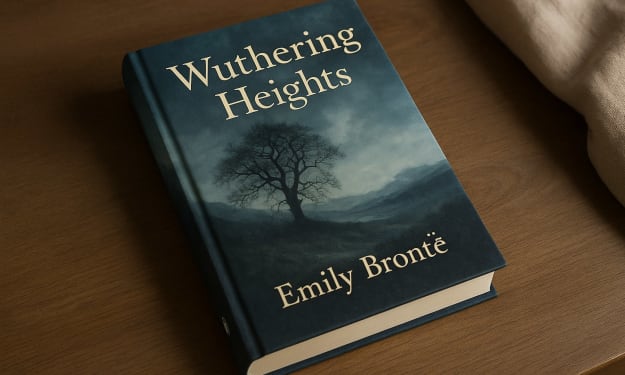
Book review: Wuthering Heights by Emily Brontë
It’s not often that I find myself so haunted by a novel long after I’ve closed its final page, but reading Wuthering Heights by Emily Brontë left me with a lingering intensity that is difficult to shake off. From the very first chapter, the book plunges into a moody, brooding atmosphere that seems to wrap itself around the reader like the Yorkshire moors it so vividly describes.
By Caleb Fosterabout a year ago in BookClub
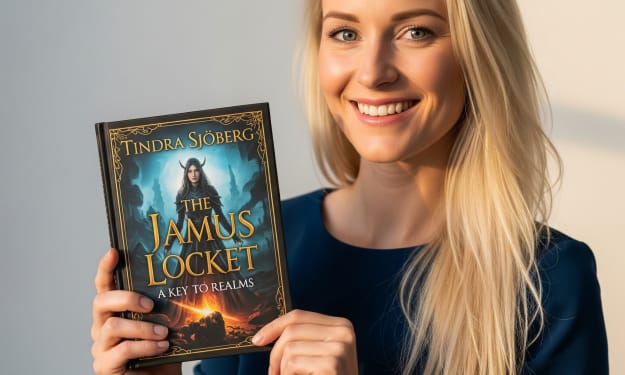
The Author's Ascent: Cultivating the Confidence to Create Imaginative Worlds and Captivate Readers. AI-Generated.
Introduction To dream of becoming a successful book author is to stand at the base of a towering mountain, its peak shrouded in the mists of self-doubt and uncertainty. The path to the summit is not merely paved with words but fortified with an unwavering belief in one's own creative power.
By Alexander Hyogorabout a year ago in BookClub
The letter that changed everything
Tania was 28, and from the outside, everything looked perfect. She worked as a customer relationship officer at a prestigious bank in Lahore. Her hair was always tied neatly, her heels clicked with authority, and her phone buzzed constantly with updates, approvals, and balance sheets. Her family was proud. Society approved. She was “settled.” But Tania knew she wasn’t happy. Her days felt like they were stitched from the same gray fabric—wake up, work, eat, sleep, repeat. She had started living for weekends, and even those disappeared in hours of mindless scrolling, shopping, and sleeping. Something inside her felt… dead. One rainy evening, while she was rearranging her old wooden cupboard in the storeroom, she stumbled upon a small blue box. It was dusty and taped shut. She almost threw it away but stopped at the last second. Her childhood initials were scribbled in pink on the top: “T.K.” She sat on the cold floor and opened it. Inside were dried pens, a faded diary, and a few origami stars. Beneath them all, she found an envelope addressed to: > "To Future Me — Please Read This When You’re Big. From: Your Little Self 💜" She laughed, but her hands trembled as she opened it. A letter in clumsy, oversized handwriting greeted her. --- > Dear Tania, I hope you are big and pretty and still writing stories. I hope you didn’t forget how we wanted to be a famous author. I hope you still believe in magic and love and happy endings. Please don’t be too busy to dream. If you are reading this, remember — you promised never to stop writing. Love, 12-Year-Old You 🌸 --- Tania stared at the letter until the words blurred with tears. It hit her like thunder — she had completely forgotten. She once wrote every night. She created stories about fairy queens, astronauts, broken hearts, and brave girls. Writing had been her escape, her passion, her everything. But somewhere between career goals and social expectations, she had buried her dream without even saying goodbye. That night, she dusted off her old laptop. The keyboard was sticky, the screen flickered, but she didn’t care. She opened a blank Word document and typed: > "Once upon a time, a little girl forgot her dream..." Words flowed like rain from a broken sky. She wrote until 2 a.m., smiling and crying at once. It wasn’t perfect, but it felt real. From then on, she made a promise to herself. One story every Sunday. No excuses. At first, she posted them on a quiet blog named “Letters to Myself”. No one read it. She had zero likes, zero comments. But she didn’t care. For the first time in years, she felt alive. Three months later, one of her stories—a raw piece about depression, love, and self-rediscovery—was shared on a mental health forum. It went viral. Tania was flooded with messages: “Thank you for putting this into words.” “I felt this in my soul.” “Please keep writing.” Suddenly, her blog had thousands of followers. A literary agent contacted her, asking if she had ever considered writing a book. With trembling hands, she said yes. Her debut novel, “The Forgotten Girl”, was published within the year. It was semi-autobiographical—a story of a woman rediscovering herself through the voice of her 12-year-old self. It became a bestseller. But more than the fame, it was the letters that mattered most. Girls from India, Pakistan, Egypt, Canada, and even Kenya sent her emails. Many said the same thing: “I used to dream too. Maybe it’s not too late.” Tania quit her bank job on her 30th birthday. Not because she was running away, but because she was finally running toward something that made her heart beat faster. She traveled. She gave workshops to schoolgirls on creative writing and self-belief. She started a mentorship program for women who wanted to write but didn’t know how. Two years later, while packing for a book tour in Turkey, she slipped that old letter back into her suitcase. It had yellowed with time but still smelled faintly of ink and dreams. She smiled as she reread it. And whispered softly to the air, “Thank you, little me. You saved us.”
By Shehzad khanabout a year ago in BookClub
The Girl, the Tiger, and the Elemental Bond. Content Warning.
In the heart of a forest untouched by time, where the trees whispered ancient secrets and rivers sang forgotten lullabies, lived a girl named Elara. She was no ordinary girl. Born during a celestial storm, her eyes shimmered like the stars, and the wind often played with her hair as if it knew her soul. Villagers believed she was chosen by the Elements — the powers of Fire, Water, Earth, and Air — to bring balance to the world one day. But Elara had no idea of her destiny. She only knew one thing — she felt different. One dusky evening, while wandering deeper into the woods than ever before, she heard a growl. Not one of fear, but power. Emerging from the shadows was a magnificent tiger — his fur glowing faintly like molten gold, eyes like burning sapphire. They stared at each other. Time paused. Instead of running, Elara stepped forward. The tiger didn’t attack — instead, he bowed his head, as if recognizing her. That night, under the silver moon, Elara dreamed of a time long ago — four guardians who kept the world in balance: a girl, a tiger, a mountain, and a storm. The vision ended with a prophecy: “When the Elements cry, the Bond shall rise.” When she awoke, the tiger was beside her, watching protectively. From that moment on, Elara and the tiger — whom she named Kael — became one soul. They ran through the forests, swam across rivers, climbed high cliffs, and slept beneath stars. The world was awakening, and so was the power within her. One evening, as thunder cracked the skies and the earth trembled, dark shadows descended upon the forest — the Elemental Spirits had gone rogue. The balance had been broken by greed and destruction from the world beyond the forest. Elara knew her time had come. With Kael roaring beside her, she called upon the winds — and they listened. She touched the ground — and it pulsed. Her voice whispered to the fire — and flames danced around her hands. The river bent to her path. In a blaze of power and light, Elara stood with Kael at the edge of the cliff, the elemental signs glowing in the air around her. She was no longer a girl. She was the Guardian. And as the storm cleared, and balance returned, legends whispered of the girl and the tiger who walked with the Elements… and still do, whenever the forest breathes.
By Qasim khanabout a year ago in BookClub
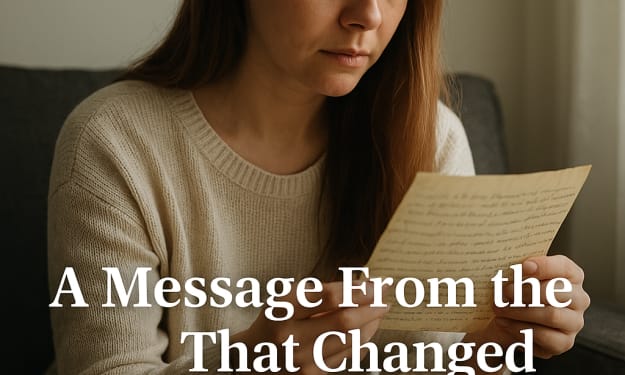
A Message From the Past That Changed My Life. AI-Generated.
GI never expected a dusty old envelope to unravel the tightly sealed parts of my heart. It wasn’t the sort of letter you’d expect to find in a forgotten drawer — especially not one addressed to me, in a handwriting I hadn’t seen in years. The message from the past wasn’t just ink on paper. It was a mirror. A voice. A moment that paused time and made me rethink everything I believed about life, love, and purpose. It all started on a rainy afternoon when I returned to my childhood home after nearly a decade. My mother had passed a few months earlier, and I was finally ready to sort through the memories she left behind. Her room still smelled faintly of jasmine — her favorite perfume — and each object held a piece of her soul. As I opened an old wooden box beneath her bed, I discovered letters. Most were written by her — grocery lists, holiday cards, a few recipes. But one was different. It was addressed to me, but not by her. The sender’s name on the back? "Dad." My heart froze. My father had died when I was 12. We didn’t talk about him much. My mother kept his memories sacred and locked away, protecting me from the grief she never really healed from. But now, here in my hands, was his letter. One I had never seen. --- ✉️ The Letter It began: > “Dear Future Me, If you’re reading this, then life has brought you far enough to find me again…” His words felt like a warm hug and a sharp knife all at once. He had written it knowing he might not be around to see me grow up. Every paragraph carried the weight of wisdom, humor, and fatherly love. He spoke about courage — not the loud kind, but the quiet bravery in choosing kindness. He wrote about forgiveness — how it's a gift we give to ourselves. And he ended with a promise: > “Even if I'm not beside you, my love will always walk with you. Don't forget to live — truly live — not just survive.” I broke down. I cried harder than I had in years. That letter didn’t just bring back a memory — it gave me direction. --- 🌿 The Shift For the longest time, I had been drifting. Doing what was expected — working, earning, surviving — but not really living. My relationships were surface-level, my passion for writing had gone quiet, and I hadn’t truly felt anything in a long time. But that letter was like a whisper from a soul who still believed in me. It reminded me of the person I once wanted to be — curious, compassionate, creative. I realized I had become so focused on being "practical" that I had forgotten the joy of chasing dreams. Over the next few weeks, I did something crazy: I took a break from work, enrolled in a creative writing course, and started volunteering at a local youth center. I began writing again — not for likes or shares, but from my heart. --- 🌟 The Message That Keeps Giving The most beautiful part of that message is how it keeps evolving with me. Every time I read it, I understand something new. It’s almost like he knew — like he wrote it not for the version of me at 12, but the one I’d become at 30. That one message from the past became my daily reminder that life isn’t just about plans and routines. It's about the moments — the raw, messy, unfiltered experiences that make us feel alive. It’s about reconnecting with what we’ve forgotten — not just people, but parts of ourselves. --- 💌 A Note to You Maybe you haven’t received a message from your past, but I believe life always sends us little reminders. Sometimes it’s a photo, a song, a smell, or a quiet thought just before sleep. When those moments come, don’t ignore them. They might be exactly what your soul has been waiting for. As for me, I still keep that letter in my wallet. Not as a crutch, but as a compass. A gentle push back to myself whenever I start to lose the way. ---
By Sophia Graceabout a year ago in BookClub
Book review: White Fang by Jack London
Reading White Fang by Jack London is like experiencing the wild through the eyes of a creature torn between nature and civilization, instinct and affection. It is a novel that engages not only the reader’s imagination but also one’s empathy, as it portrays a world where survival is unforgiving, yet the possibility of transformation and understanding lingers at the edge of every encounter. First published in 1906, White Fang stands as one of London’s most enduring and evocative works, a companion piece in many ways to his earlier novel The Call of the Wild, though it reverses the thematic trajectory—this time, from wilderness into the realm of human society.
By Caleb Fosterabout a year ago in BookClub
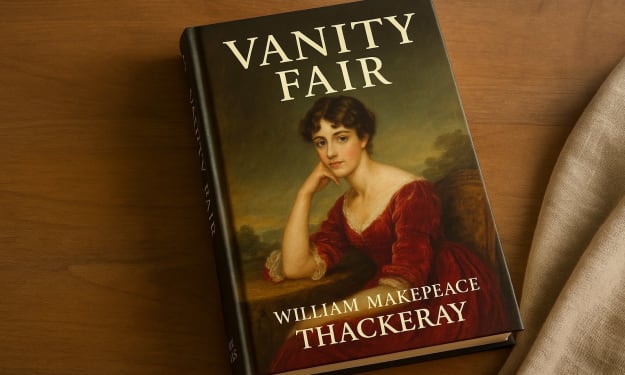
Book review: Vanity Fair by William Makepeace Thackeray
Reading Vanity Fair by William Makepeace Thackeray is like peering into a grand, gaudy mirror held up to early 19th-century English society—a mirror in which every vanity, ambition, flaw, and fleeting virtue is reflected with sharp clarity and biting wit. From the first few pages, I was struck not only by the brilliance of the prose, but by the narrator’s sly detachment and the sense that this was not just a story to be consumed, but a performance to be observed, interrogated, and remembered. First published serially from 1847 to 1848, this sprawling novel is often classified as a satire or a picaresque, and it defies easy categorization. While its tone is frequently comic and ironic, it is also deeply serious in its examination of morality, ambition, and human folly. It is aimed at readers who are not only lovers of rich narrative and vivid character but who appreciate the layered commentary that Thackeray weaves through every scene.
By Caleb Fosterabout a year ago in BookClub
Book review: Ulysses by James Joyce
Reading Ulysses by James Joyce is not so much engaging with a novel as it is stepping into a vast, breathing organism of language and consciousness. It is one of those books that demands complete surrender—not only of your attention but of your expectations of what a novel should be. When I first approached it, I knew I was about to embark on something monumental, but nothing quite prepared me for the intellectual rigor, emotional complexity, and linguistic beauty it contained. It is not a casual read, nor is it conventionally entertaining, but it is a deeply transformative literary experience.
By Caleb Fosterabout a year ago in BookClub