Fiction
FADING ROSES: A TALE OF LOVE AND BETRAYAL
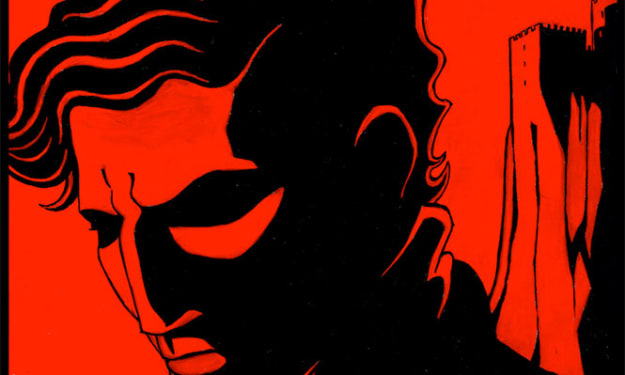
In the picturesque town of WilTheir once shared dreams of a family and a life together now seemed like distant memories. She felt like a spectator in her own love story. Resentment began to fester, and doubts crept into her heart.One evening, as the sun dipped below the horizon, Alice confronted Robert. Tears welled in her eyes as she poured out her heart, confessing her loneliness and her longing for the man she had fallen in love with years ago.lowbrook, nestled beneath the shadow of the majestic Blue Ridge Mountains, lived a couple whose love story was whispered about in hushed tones. Alice and Robert were the epitome of a fairytale romance.Their story began on a crisp autumn day when the leaves painted the town in hues of red and gold. Alice, a charming florist with an enchanting smile, caught the eye of Robert, a struggling musician playing his guitar on a street corner. The moment their eyes met, the world seemed to stand still.
By Rodah Moraa3 years ago in BookClub
"Embracing Compassion, Justice, and Unity The Quran's Timeless Message for Humanity"
Its teachings on humanity and the global community offer a profound vision of compassion, justice, and interconnectedness that continues to inspire and guide people of various backgrounds and faiths. As we delve into the Quran's best parts about humanity and the world, we will explore themes such as:
By Shabih Ali3 years ago in BookClub
Igniting the Flames of Knowledge: My Journey with Fahrenheit 451
In the tender years of middle school, I found solace in the labyrinths of words. To me, books were bridges to fantastical worlds or enlightening realms. It was during this pivotal phase that I stumbled upon Ray Bradbury's magnum opus, "Fahrenheit 451". Many of my peers grumbled about another assigned reading, but this one captivated me. While I already cherished literature, this masterpiece confronted me with a haunting dystopia, challenging me to reevaluate the role of books in our lives and society. In the gray ashes of Bradbury’s world, where books were deemed dangerous enough to be burnt, I found myself reflecting on the quiet power they held. A world void of books, where firemen didn't extinguish flames but ignited them, resonated deeply within me. Here was a society that didn't ban books due to ignorance, but with a terrifying awareness. It made me reflect: Why would anyone want to annihilate knowledge? How perilous could the power of words be? As I delved deeper into the life of Guy Montag, the protagonist, I encountered disturbing parallels between his world and ours. Montag's society was consumed by superficial entertainment and conversations, numbing their minds and estranging them from their own humanity. It made me question: Was my own generation, increasingly bound to screens and fleeting distractions, distancing itself from the enlightening warmth of literature? Yet, it wasn't just the external societal critique that left an indelible mark. "Fahrenheit 451" beckoned me to introspect. Just as Montag metamorphosed from an obedient fireman into a curious seeker, my relationship with books underwent a transformation. I began to see them not merely as pastime companions, but as silent rebels against a world teetering on the brink of intellectual complacency. Each book I consumed thereafter was not just an escape, but a rallying cry for preserving the sanctity of thought and questioning norms. Bradbury didn't merely paint a grim future; he offered hope. The image of the "Book People" - individuals who committed entire books to memory to pass down through generations - fortified my belief in the resilient spirit of human beings. They weren’t just preserving texts; they were safeguarding humanity’s legacy, its history, its soul. I wanted to be more than just a consumer of stories; I too wanted to be a "Book Person", not in the literal sense, but as a torchbearer of the importance of literature in society. As I turned the last page of "Fahrenheit 451", a profound realization dawned. Books aren’t just paper and ink. They're vessels of collective wisdom, embodying the struggles, hopes, and dreams of countless generations. In a world teeming with noise, they are the harmonious whispers reminding us of our shared humanity. Today, years after my first encounter with Bradbury's cautionary tale, I find myself an advocate for the written word, urging others to discover, appreciate, and protect our literary heritage. "Fahrenheit 451" did not just change how I viewed books; it redefined my role as a reader in society. In its blazing pages, I discovered a mission: to ensure that the flames of knowledge, curiosity, and introspection never become extinguished.
By M Dannenfelser3 years ago in BookClub
The Worst of Us
My evaluation of a book that changed me led to this conclusion: it was two books. And the books are about the same thing...sort of. There is a singular period of time that must be learned in every history class. That is WW2 and the Holocaust. These two books are about that time.
By Bugsy Watts3 years ago in BookClub
Book Club: The Two Princesses of Bamarre
Princess Meryl is bold and fearless, and Princess Adelina (Addie) is timid and cowardly. All their lives, Meryl has been the adventurer and protector and Addie has been content to support and admire her sister from her shadow. When the Gray Death, a fatal illness plaguing the kingdom of Bamarre, comes for Meryl, Addie needs to step up to the plate and seek the cure.
By Rebekah Conard3 years ago in BookClub
My Literary Doppelganger
Books have been an important part of my life since I can remember. As a child with a disability, I had a fairly isolated upbringing, so I found the companionship I lacked in works of fiction. As such, the list of books that have influenced me is a long one!
By Morgan Rhianna Bland3 years ago in BookClub